
North Dakota: The Murder of Sophia Eberline
Most disturbing crime of every state in U.S.A.

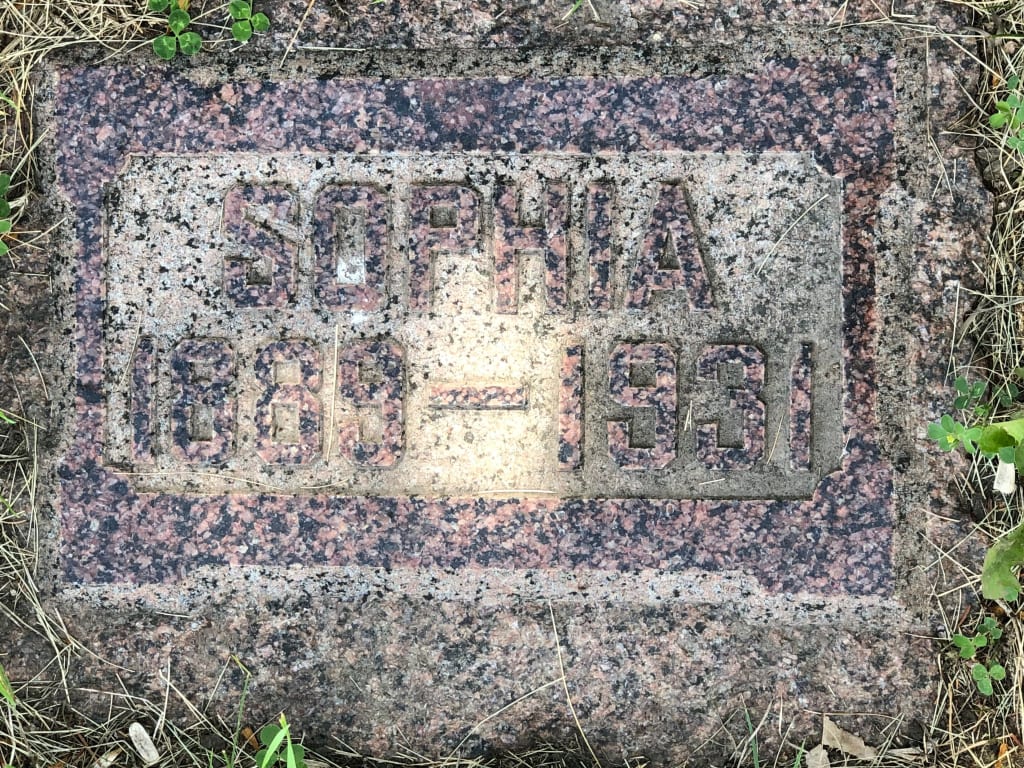
Sophia Eberlein, (1889–October 2, 1931), was a German from Russia emigrant beaten to death by her second husband Jacob Bentz in her home in Harvey, North Dakota. According to author William Jackson, the ghost of Sophie might be haunting a library built on this location.
In the small town of Harvey, North Dakota, a grim event from the early 20th century continues to haunt local memory. The murder of Sophia Eberline in 1931 is remembered as a case marked by betrayal and sorrow—a tragedy that not only took a life but also left a lasting impact on an entire community.
Sophia Eberline was a woman whose life had been defined by resilience and hope. Born in 1889 and having emigrated from Russia, she had built a new life in America. Sophia was known for her warmth and dedication to her family. After her first husband’s death, she remarried Jacob Bence, hoping to find stability in a changing world. However, beneath the surface, tensions were brewing. Sophia’s new life was marred by the challenges of adapting to a different culture, financial hardships, and personal conflicts that would eventually culminate in tragedy.
On October 2, 1931, while Sophia was asleep in her modest home, a confrontation arose that would have irreversible consequences. Jacob Bence, her second husband, became involved in a dispute that escalated beyond control. Witnesses later recounted that the incident appeared to stem from longstanding frustrations and a breakdown in communication within the household.
As the night progressed, Bence took actions that shocked those who would later learn of them. In a moment that remains difficult to comprehend, he struck Sophia with a heavy object—a hammer—inflicting injuries that proved fatal. In the aftermath, Bence attempted to stage the scene, hoping to mask the true nature of his actions and cast them as an unfortunate accident.
News of Sophia Eberline’s death spread quickly throughout Harvey, leaving residents in disbelief and sorrow. Investigators, working in an era with limited forensic technology, faced significant challenges in reconstructing the events of that night. Nonetheless, the case generated an outpouring of public emotion. Friends and neighbors, many of whom had known Sophia well, expressed their grief and demanded accountability for the loss of a beloved community member.
The murder of Sophia Eberline became a focal point for discussions about domestic strife and the pressures faced by immigrant families during the early decades of the 20th century. Many in the community felt that Bence’s actions were emblematic of deeper societal issues—frustrations that could arise when cultural differences and economic hardships converged in a turbulent era.
For decades, the murder of Sophia Eberline has been remembered as a cautionary tale in North Dakota. Local historians and community leaders have used her story as a reminder of the importance of addressing domestic conflicts before they spiral into irreversible tragedy. Her death sparked calls for better support systems for families in distress, a lesson that resonates even today.
Educational programs in Harvey have since incorporated discussions about conflict resolution and mental health, drawing on the painful legacy of Sophia’s untimely death. While modern society has made significant strides in addressing domestic violence and offering support to those in need, the echoes of this long-ago tragedy still serve as a reminder of past challenges.
Today, Sophia Eberline is commemorated in Harvey as a symbol of the struggles and resilience of earlier generations. A modest memorial stands in a local park, where annual remembrances honor her life and the lessons learned from her death. For many, her story is not only one of loss but also of the hope that future generations will be better equipped to resolve conflicts and support one another in times of need.
About the Creator
Keep reading
More stories from Sandun Nayanajith and writers in Criminal and other communities.
North Carolina: The Chapel Hill Tragedy
The three victims of the 2015 shooting were Deah Shaddy Barakat, a second-year student in the University of North Carolina School of Dentistry, Yusor Mohammad Abu-Salha, who was set to enroll in UNC to study dentistry the fall after the shooting and Razan Mohommad Abu-Salha, a sophomore at the North Carolina State University College of Design.
By Sandun Nayanajithabout a year ago in Criminal
The Silence Behind Room 307
M Mehran The rain fell heavily over the quiet town of Ravenshade, turning the narrow streets into rivers of shimmering reflections. Most people had already gone home, locking their doors against the stormy night. But inside the old Hawthorne Hotel, the lights of Room 307 still glowed faintly. That room would soon become the center of one of the most chilling criminal mysteries the town had ever known. A Crime That Shocked the Town At 11:42 PM, the hotel receptionist heard a loud crash echo from the third floor. At first, she assumed a guest had dropped something. But minutes later, a terrified scream shattered the silence. When the police arrived, they found the door to Room 307 half open. Inside, the scene was disturbing. A wealthy businessman named Daniel Mercer lay lifeless on the floor beside a broken glass table. The room looked untouched—no signs of forced entry, no robbery, no struggle. Yet Mercer was clearly murdered. Detective Aaron Cole, a veteran investigator known for solving impossible cases, stepped into the room carefully. Years of experience had taught him that the smallest detail could expose the biggest lie. But this case felt different from the beginning. The Impossible Mystery The first strange detail was the door. It had been locked from the inside. The second strange detail was the window. Closed. Sealed. Impossible for anyone to escape through. This meant one thing: whoever killed Mercer had either vanished into thin air… or was still in the hotel. Cole began questioning the staff and guests. Mercer had checked in earlier that evening, arriving alone and carrying only a black leather briefcase. According to hotel records, he had ordered dinner to his room and made two phone calls. After that, nothing. But one witness changed everything. A young waitress named Clara said she saw someone leaving the hallway near Room 307 shortly before the scream. “A man in a gray coat,” she told police. “Tall. Wearing a hat. I didn’t see his face.” The problem? No guest registered at the hotel matched that description. A Secret Hidden in Plain Sight Detective Cole examined Mercer’s belongings carefully. Inside the briefcase were documents related to a major financial investigation. Mercer had been working with authorities to expose a massive corporate fraud operation involving millions of dollars. Someone powerful clearly had a reason to silence him. But how did the killer enter and leave the locked room? That question haunted Cole. Until he noticed something unusual. The bathroom mirror. It wasn’t aligned with the wall like normal hotel mirrors. When Cole touched its edge, it shifted slightly. Behind it was a hidden service panel used by hotel maintenance workers decades ago. A narrow passage ran between the walls of the building. Suddenly, the “impossible crime” wasn’t impossible anymore. The Killer Revealed The passage led to a storage room on the same floor. Inside, detectives discovered a gray coat hanging on a hook. And inside the pocket was a hotel keycard. The card belonged to Victor Hale—the hotel’s night manager. When police confronted him, Hale tried to stay calm. But the evidence was overwhelming. Hale had once worked for the same corporation Mercer was investigating. If Mercer exposed the fraud scheme, several powerful executives—and their accomplices—would face prison. Hale was paid to ensure that never happened. Using the old maintenance passage, he entered Mercer’s room through the hidden panel, confronted him, and killed him before escaping back through the wall. He then locked the door from the inside using a simple wire trick through the gap under the door. A perfect crime. Or so he thought. Justice in the Darkness When Hale finally confessed, he revealed something chilling. Mercer had refused to stay silent even when threatened. “He said the truth was worth dying for,” Hale admitted quietly. The investigation that followed exposed the entire fraud network Mercer had been trying to reveal. Several high-ranking executives were arrested, and millions of dollars in stolen funds were recovered. But for Detective Cole, the victory felt incomplete. Mercer had paid the ultimate price. The Lesson Behind the Crime Criminal cases like the Room 307 murder remind us that crime is rarely random. Behind every shocking act lies a chain of decisions, secrets, and motives. Sometimes the truth hides in shadows. Sometimes it hides behind a mirror. But as Detective Cole often said: “Every crime leaves a whisper of the truth. You just have to listen carefully.” And in the silent hallway of the Hawthorne Hotel, the whisper of justice had finally been heard.
By Muhammad Mehran6 days ago in Criminal
Twinkle, Babyheart, & Lubasa
I'm still under the impression from the documentary I watched yesterday and two particular episodes from it wouldn't leave my mind, so I'm just going to write this to purge and share this knowledge with anyone who cares to know. Fair warning: this is really heavy.
By Lana V Lynxa day ago in Criminal



Comments
There are no comments for this story
Be the first to respond and start the conversation.