
No, Walter Sickert is Not Jack the Ripper
Debunking a popular theory on one of the oldest cold crime cases

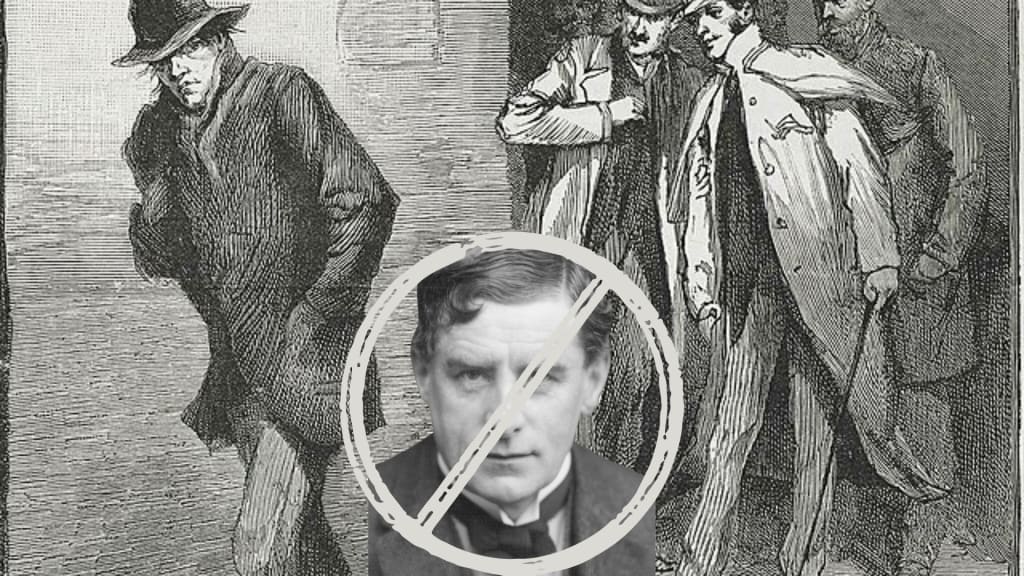
Jack the Ripper is one of the oldest and most puzzling true crime cases in the world. Theories have abounded about whom the infamous serial killer could be and what motivated them to do it. No one has yet been able to crack the case, despite several high-profile authors claiming to have done just that.
Part of the reason is that these Ripperologists, as they are known, look at the evidence and use the pieces that fit their narrative. If something doesn't fit with their theory, the fact is ignored or twisted into a pretzel to ensure that they can "prove" their point.
Most Ripperologists form their theories around the evidence, not the other way around.
Which is why it is easier to debunk the theories from the other subset of the group. It is not difficult to see where they were coming from and how they butchered the evidence to fit their view.
After examining the evidence and putting it against the theory that Walter Sickert was Jack the Ripper, it became obvious that the claim did not hold water. There are too many inconsistencies and holes that it's amazing the theory was written as a nonfiction book and then published by a big name, traditional publishing house.
Swiss cheese has fewer holes.
It is nearly impossible for Walter Sickert to be Jack the Ripper. The evidence doesn't support the theory, and neither does his actions. Though there is certainly something to be said about his obsession with serial killers.
The Murders
Things were dangerous for women during The Victorian Era, particularly the late 1880s and early 1890s. During this time, there were a lot of attacks against them. Then there were the Whitechapel murders.
The Metropolitan Police believe that Jack the Ripper was responsible for at least eleven of the murders. Though, there was some debate about how many were actually conducted by one person. Still, most people believe that the number of murders the infamous serial killer committed were between five and eleven, very few ventures outside those parameters.
Most leave his victims to the canonical five.
The canonical five are made up of Mary Ann Nichols, Annie Chapman, Elizabeth Stride, Catherine Eddowes, and Mary Jane Kelly. These women all were murdered and had internal organs removed.
There is an exception to the mutilation modus operandi. Stride suffered a clear-cut incision, but no internal organs were removed on September 30, 1888. This led to speculation that either she was not a victim of "The Ripper" or they were caught in the process.
One of the reasons Stride is considered one of the canonical five is because less than an hour later, Eddowes' body was discovered. Her left kidney and uterus were removed.
Kelly's body was found on November 9, 1888. She is believed to be the last victim of The Ripper. The most significant difference between her murder and the others is that she was found in her bedroom, while the others were found on the streets of Whitechapel.
Some Ripperologists have suggested that the women were sex workers. There is no evidence of this being the case. Rather, the ladies all seemed to enjoy time at the pubs.
During the time of the murders, letters from The Ripper were sent to the press and to the police. Many of them were hoaxes. Only one is considered to be truly from the killer, it is signed From Hell and came with part of a kidney.
How did the Walter Sickert theory gain such widespread attention? That came thanks to a crime fiction bestselling author.
The Sickert Theory
Several authors have suggested that Walter Sickert might be Jack the Ripper. None quite as high-profile as New York Times Bestseller Patricia Cornwell.
She spent millions of dollars, allegedly her own money, in pursuit of figuring out who Jack the Ripper was. It should also be noted that she was able to have two books published from this research, Portrait of a Killer and Ripper: The Secret Life of Walter Sickert.
Cornwell ended up focusing in on Walter Sickert for reasons that are unclear. Though some point out that she focused a lot on his paintings. She claimed that the paintings were replications of The Ripper's murders.
When it comes to evidence, she provides little.
She claimed that Sickert had surgery to fix a fistula on his penis, which rendered him unable to have sex. Which led to him being more misogynistic and angry towards women.
Her theory also suggests that he had a falling out with a friend. Fellow painter James Abbott McNeill Whistler was close to Sickert at one point.
Around the time of the Whitechapel murders, Whistler got married and decided to cut his former friend out of his life. Sickert did not take kindly to this and blamed his former pal's wife for the estrangement.
Her biggest piece of evidence though comes from a stamp. She had it analyzed for DNA, and it came back a match for Sickert. This proved her case, at least according to Cornwell.
But there were issues with the evidence she presented and what she chose to ignore.
Debunking The Sickert Theory
When it comes to disproving Cornwell's theory, it is relatively easy to do. Some critics have said that she likely focused on the first suspect she heard about and decided it must be him. She told some people that she'd only come to believe that Sickert was The Ripper about a year before her book was published.
Further research would have shown her that Sickert did not have a fistula on his penis, rather his it was his anus. And the idea that he could not or did not have coitus is incorrect, he fathered a child with his mistress.
Her contention that Whistler ending his friendship with him set Sickert off is also verifiably false. During the Jack the Ripper murders, the two remained on friendly terms. Their friendship continued for nearly a decade after the Whitechapel murders ended.
And the true end of their friendship came not because of Whistler getting married, but because Sickert socialized with a man suing his friend.
As for the DNA evidence, it is not as surefire as Cornwell would have readers believe. It was mitochondrial DNA, which means that it could have matched between 1 and 10% of the population. Meaning, while it didn't rule Sickert out, it certainly isn't the smoking gun that she hoped it would be.
Aside from the DNA evidence not being as conclusive as hoped, most of The Ripper letters sent were hoaxes. Even if Sickert sent a letter to the police or press, that would not mean he was the killer overall.
Even his paintings weren't necessarily inspired by Jack the Ripper. Many believe they were actually inspired by another serial killer of the time, The Camden Murders.
The final nail in the coffin for the Sickert theory is that he was not in Whitechapel for at least four of the five canonical murders. This would remove him as a suspect without a doubt.
Cornwell claimed that the criticism of her theory stemmed from misogyny and her not being British. She also claimed that Ripperologists would rather have the mystery not solved.
However, most people who call themselves a Ripperologists do want the case solved. They just won't accept an answer that does not adhere to the evidence.
About the Creator
Edward Anderson
Edward writes queer led stories that show that the LGBTQIA+ characters lives are multifaceted.
Reader insights
Outstanding
Excellent work. Looking forward to reading more!
Top insights
Compelling and original writing
Creative use of language & vocab
Easy to read and follow
Well-structured & engaging content
Excellent storytelling
Original narrative & well developed characters
Expert insights and opinions
Arguments were carefully researched and presented
Eye opening
Niche topic & fresh perspectives
Heartfelt and relatable
The story invoked strong personal emotions
Masterful proofreading
Zero grammar & spelling mistakes
On-point and relevant
Writing reflected the title & theme
Keep reading
More stories from Edward Anderson and writers in Criminal and other communities.
The Digital Gallows
"The clock has struck three, the coffee is cold, and the shadows are beginning to speak. Welcome back to the desk of The Night Writer. Tonight, we’re scrolling through a ghost story written in high-society ledger ink. But be careful—what you find might not be the truth, but the trap."
By The Night Writer 🌙 5 days ago in Criminal



Comments
There are no comments for this story
Be the first to respond and start the conversation.