
McDonald's Hot Coffee Case
The McDonald's Hot Coffee Case: The Truth Behind the Myth
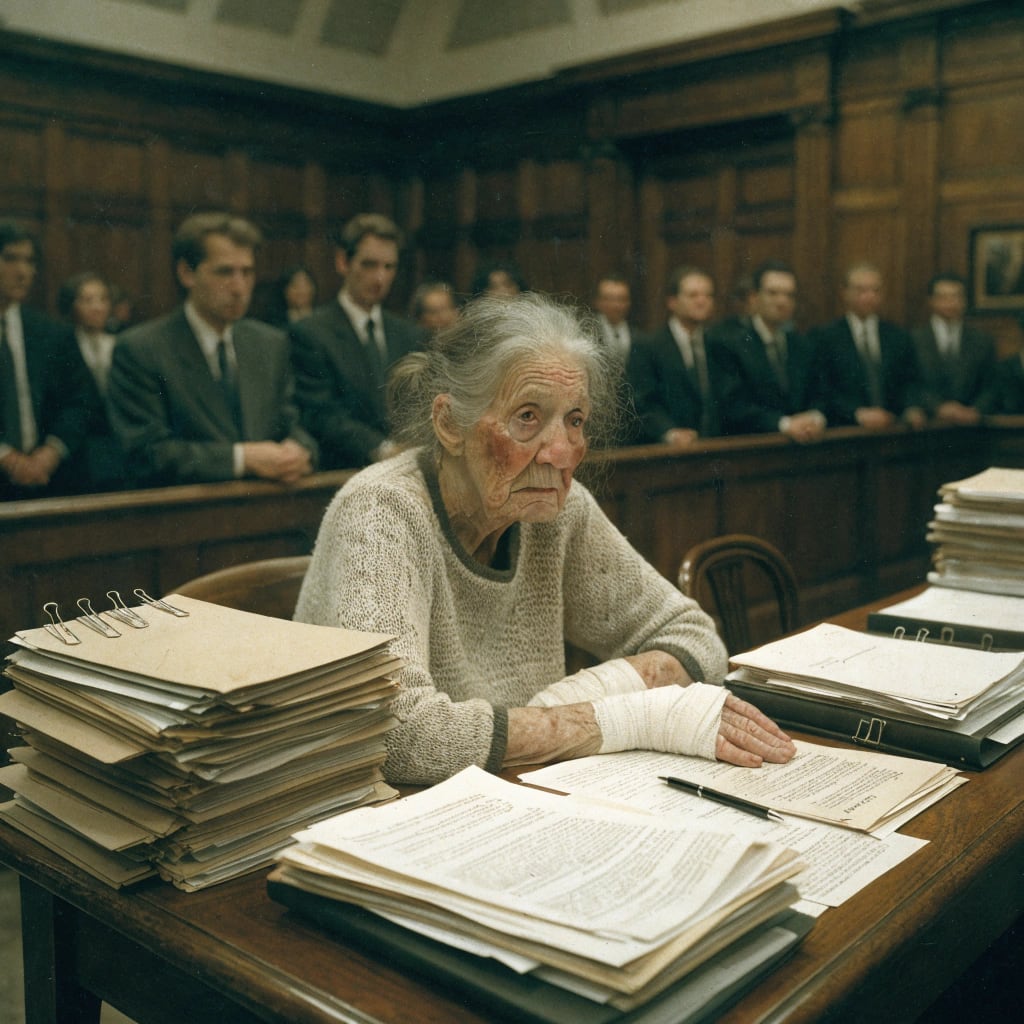
Here is the true story of the McDonald's Hot Coffee Case (Liebeck v. McDonald's Restaurants), widely misunderstood as a frivolous lawsuit but actually a case of severe injury and corporate negligence.
The McDonald's Hot Coffee Case: The Truth Behind the Myth
For years, late-night comedians and the media used this story as the ultimate example of a "frivolous lawsuit" and American greed. The narrative was: "A clumsy woman spilled coffee on herself and got millions."
The reality was much darker.
1. The Incident
On February 27, 1992, Stella Liebeck, a 79-year-old woman, was in the passenger seat of her grandson’s car in Albuquerque, New Mexico.
Crucial Fact: The car was not moving. Her grandson had pulled over and parked the car so Stella could add cream and sugar to her coffee.
The car did not have cup holders. Stella placed the cup between her knees to pry off the lid. As she tugged at it, the cup collapsed, dumping the entire contents onto her lap.
2. The Horrific Injuries
Stella was wearing cotton sweatpants, which absorbed the boiling liquid and held it against her skin.
The coffee was not just "hot"; it was served at 180–190°F (82–88°C).
At this temperature, liquid causes full-thickness (third-degree) burns in 3 to 7 seconds.
Stella suffered third-degree burns over 6% of her body, including her inner thighs, buttocks, and genital area. She suffered lesser burns over 16% of her body.
She spent 8 days in the hospital and underwent painful skin grafting operations. She lost 20% of her body weight (dropping to 83 lbs) and required medical care for two years.
3. Why She Sued (The $800 Offer)
Stella did not run to a lawyer immediately. She simply wanted McDonald's to do the right thing.
Her medical bills were roughly $11,000.
She wrote a letter to McDonald's asking them to check the temperature of their coffee and to cover her medical expenses (asking for about $20,000 to cover current and future treatments).
McDonald's Response: They offered her a mere $800 and refused to pay a penny more.
Insulted by the offer and the severity of her injuries, she retained an attorney and sued for "gross negligence."
4. The Trial: Shocking Evidence
During the trial, documents and testimony revealed facts that turned the jury against the corporation:
Dangerous Policy: McDonald's corporate manual required coffee to be held at 180–190°F. Experts testified that coffee at home is usually drunk at 135–140°F.
Prior Knowledge: McDonald's admitted they had received over 700 prior reports of people (including children) being burned by their coffee over the previous decade.
Callousness: A McDonald's quality control manager testified that the number of burn victims was "statistically insignificant" compared to the billions of cups they sold, so they had no intention of lowering the temperature. They argued that super-heated water extracted more flavor from the beans, saving money.
5. The Verdict and the "Millions"
The jury found McDonald's 80% responsible for the incident (and Stella 20% responsible for the spill).
Compensatory Damages: They awarded Stella $200,000 (reduced to $160,000 due to her 20% fault) to cover her pain and bills.
Punitive Damages: This is where the famous "millions" came from. The jury wanted to punish the company for ignoring the safety of their customers. They asked: "How much does McDonald's make from coffee in one day?" The answer was about $1.35 million.
The jury awarded $2.7 million in punitive damages—essentially equivalent to two days of coffee sales—to send a message to the corporation.
6. The Aftermath
The judge later reduced the punitive damages from $2.7 million to $480,000 (three times the compensatory amount).
McDonald's and Stella eventually reached a secret settlement out of court to avoid years of appeals (believed to be less than $600,000).
The Legacy:
Stella Liebeck was not greedy; she was a victim of a product sold at a temperature capable of melting skin in seconds. Because of her lawsuit, many food chains lowered their serving temperatures and improved the design of their lids to be more secure.
About the Creator
Keep reading
More stories from mohamed hasan and writers in Criminal and other communities.
Inside the Sordid World of Jeffrey Epstein and What His Troubling Emails to Women Really Reveal
There’s something almost hypnotic about the Epstein document archive. Sitting down to explore it isn’t just research—it’s immersion. Hours disappear as you scroll through emails, attachments, and fragments of conversations that hint at a larger system operating behind the scenes. The sheer volume alone is overwhelming. And yet, paradoxically, what’s most striking isn’t what’s there. It’s the constant awareness that much more may still be missing.
By Lawrence Leasea day ago in Criminal
No Arrests Made in the Nancy Guthrie Case
The disappearance of Nancy Guthrie, an 84‑year‑old grandmother from Tucson, Arizona, has captured national attention over the past two weeks. Recent law enforcement activity, including the detaining of three people, has raised questions and hope among the public and Nancy’s family. But as of now, no one has been arrested in connection with her disappearance, and the investigation continues.
By sehzeen fatima7 days ago in Criminal


Comments
There are no comments for this story
Be the first to respond and start the conversation.