
Lone Star Lawlessness: A History of Crime and Justice in Texas
A 50-part series where A.I. and I dive into historical crime in every state
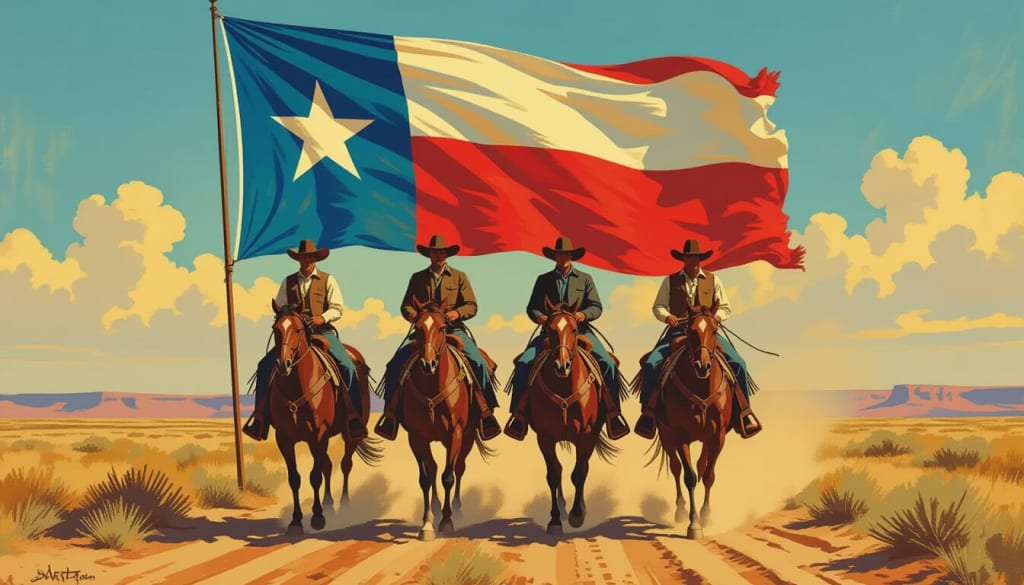
Few places in the United States embody the duality of law and lawlessness like Texas. From its rough frontier birth to its sprawling modern cities, Texas has always been a place where freedom and rebellion run side by side. The history of crime in the Lone Star State is as much a story of its people’s courage and ambition as it is of greed, desperation, and survival. Across nearly two centuries, Texas has evolved from a wild borderland into one of the most complex criminal landscapes in America — shaped by outlaws, oilmen, lawmen, and organized syndicates alike.

Frontier Justice and the Outlaw Era (1830s–1880s)
Before Texas joined the Union in 1845, it was a republic — a vast and often violent frontier where disputes were settled by the gun. The early decades were defined by cattle rustlers, bandits, and vigilante justice. Outlaws like Sam Bass, the infamous train robber of the 1870s, became folk legends. Billy the Kid and John Wesley Hardin roamed the region, their exploits spreading through dime novels that helped romanticize violence and rebellion.
In response, the Texas Rangers were formed — one of America’s oldest law enforcement agencies. Their tactics were as controversial as they were effective. They hunted fugitives, tamed borderlands, and established order where little existed, but they also became known for brutality toward Indigenous peoples and Mexican communities. The era reflected the state’s central paradox: a deep respect for justice, born from a culture that revered self-reliance and individual might.
Prohibition, Oil, and the Rise of Organized Crime (1900s–1930s)
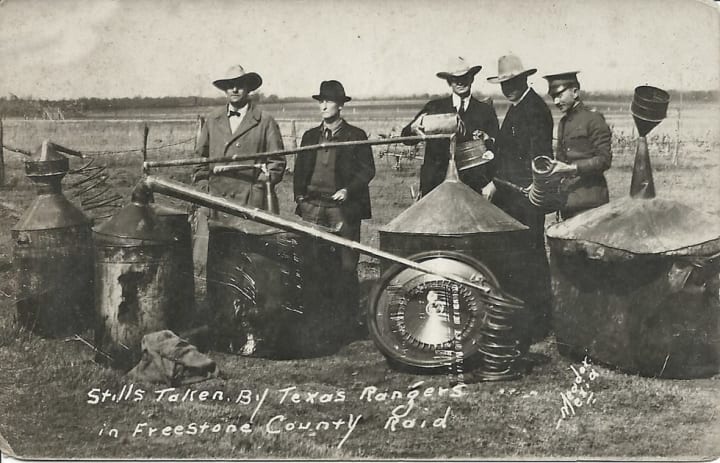
By the early 20th century, Texas was transforming. Oil discoveries in places like Spindletop and East Texas brought enormous wealth — and with it, opportunity for crime. During Prohibition (1920–1933), the state became a hub for bootlegging and smuggling operations. The Gulf Coast provided access to maritime routes for rumrunners, while border towns like El Paso and Laredo became known for liquor and vice.
The Great Depression saw outlaw figures like Bonnie Parker and Clyde Barrow emerge from Dallas. Their robberies of banks and small stores captured national headlines and reflected the public’s anger toward failing institutions. Yet behind the sensational stories lay real suffering — the poverty of the Dust Bowl years and the desperation that turned crime into a livelihood for some.

The Dixie Mafia, Corruption, and the Mid-Century Underworld (1940s–1970s)
After World War II, Texas’s criminal landscape changed from gunslingers to syndicates. The Dixie Mafia, a loosely connected network of criminals operating across the South, found fertile ground in Texas’s growing cities. They were involved in gambling, bootlegging, and contract killings.
Houston and Dallas became centers for racketeering and vice. Nightclubs, gambling parlors, and brothels operated under the radar, often protected by corrupt local officials. In Galveston, the Maceo crime family ran illegal casinos and entertainment clubs that attracted celebrities — and police protection. Historians often refer to this period as “Free Galveston,” a city openly run by organized crime until the Texas Rangers shut it down in the late 1950s.
Meanwhile, political corruption plagued smaller towns and county seats. The intersection of wealth, oil, and power created a perfect storm — where justice could often be bought. Yet this era also saw the modernization of Texas law enforcement, with new forensic tools, training academies, and cooperation with federal agencies.

Cartels, Border Wars, and the Modern Texas Crime Network (1980s–Present)
By the 1980s, the frontier had changed — but the fight for control hadn’t. The War on Drugs turned Texas into one of the most important battlegrounds in the U.S. States like Texas became transit hubs for cocaine, heroin, and marijuana smuggled from Mexico. The Gulf Cartel, Juárez Cartel, and later the Sinaloa and Los Zetas organizations entrenched themselves along the Texas-Mexico border, transforming towns like Laredo, McAllen, and El Paso into flashpoints for trafficking, violence, and law enforcement crackdowns.
Human trafficking and weapons smuggling also rose in the early 21st century. Criminal enterprises diversified — from cybercrime to fuel theft. Yet as these networks grew more global, Texas continued to rely on its old mix of local justice and federal might. The Texas Rangers, FBI, DEA, and state police have cooperated on major task forces targeting cartel-linked operations and domestic gangs like the Texas Syndicate and Mexican Mafia.

Conclusion: Justice, Identity, and the Texas Paradox
The criminal history of Texas is not just about violence or greed — it’s about evolution. From the dusty outlaws of the 19th century to the cartels of the modern borderlands, each era has forced Texans to redefine justice and survival. The state’s mythos — of rugged independence and defiance — has always walked a thin line between law and lawlessness.
Yet in that balance lies Texas’s enduring strength: a place where justice is not just a system but a code — tested, tempered, and, in many ways, forged by its own history of crime.
References:
Beittel, J. S. (2020). Mexico: Organized crime and drug trafficking organizations (CRS Report R41576). Congressional Research Service.https://crsreports.congress.gov/product/pdf/R/R41576
Federal Bureau of Investigation. (n.d.). Organized crime. FBI.gov. https://www.fbi.gov/investigate/organized-crime
Texas State Historical Association.Texas State Historical Association. (n.d.). Sam Bass (1851–1878). TSHA Handbook of Texas Online. https://www.tshaonline.org/handbook/entries/bass-sam
Drug Enforcement Administration. (2020). National drug threat assessment 2020. U.S. Department of Justice. https://www.dea.gov/sites/default/files/2021-02/DIR-008-21%202020%20National%20Drug%20Threat%20Assessment_WEB.pdf
DEA maps show where Mexican drug cartels hold sway in Texas (2017). https://www.chron.com/news/nation-world/article/Series-of-DEA-maps-show-where-Mexican-drug-10832842.php
Diego Carlino. Gangsterinc.org (2019). https://gangstersinc.org/2019/05/12/deep-in-the-heart-of-texas-the-rise-of-the-italian-mafia-in-the-lone-star-state/
Photo Courtesy Freddie Pryor. Texas Highways (2020). https://texashighways.com/travel-news/traces-of-texas-throwback-thursday-texas-rangers-find-illegal-moonshine-stills/
About the Creator
xJRLNx
Im a dude letting out his madness with the help of Ai.
The Wrongful Conviction of Lynn DeJac
Start The case of Lynn DeJac stands as one of the most disturbing examples of wrongful conviction in modern American criminal justice—and also one of the most powerful demonstrations of how DNA profiling can uncover the truth years after a verdict has been sealed.Lynn DeJac was an American woman living in **Buffalo**, where she was raising her teenage daughter, **Crystallynn Girard**. By 1993, Lynn was in a troubled relationship with her boyfriend, **Dennis Donohue**. Their relationship would become central to a case that would eventually expose serious failures in police investigation and courtroom standards.
By Kure Garba6 days ago in Criminal



Comments
There are no comments for this story
Be the first to respond and start the conversation.