
Shadows & Cityscapes: How Organized Crime Helped Shape America
A Dive into Crime with A.I and I


When people talk about organized crime in America, the focus is usually on violence, corruption, and gangsters like Al Capone, John Gotti, and many others. But the truth is more complex. While organized crime caused harm and fear, it also played a strange part in building America’s cities, industries, and even laws.
This story is about how different ethnic groups—Irish, Italian, Jewish, Asian, African American, Latino, and others—each played a role in shaping the country from the shadows.
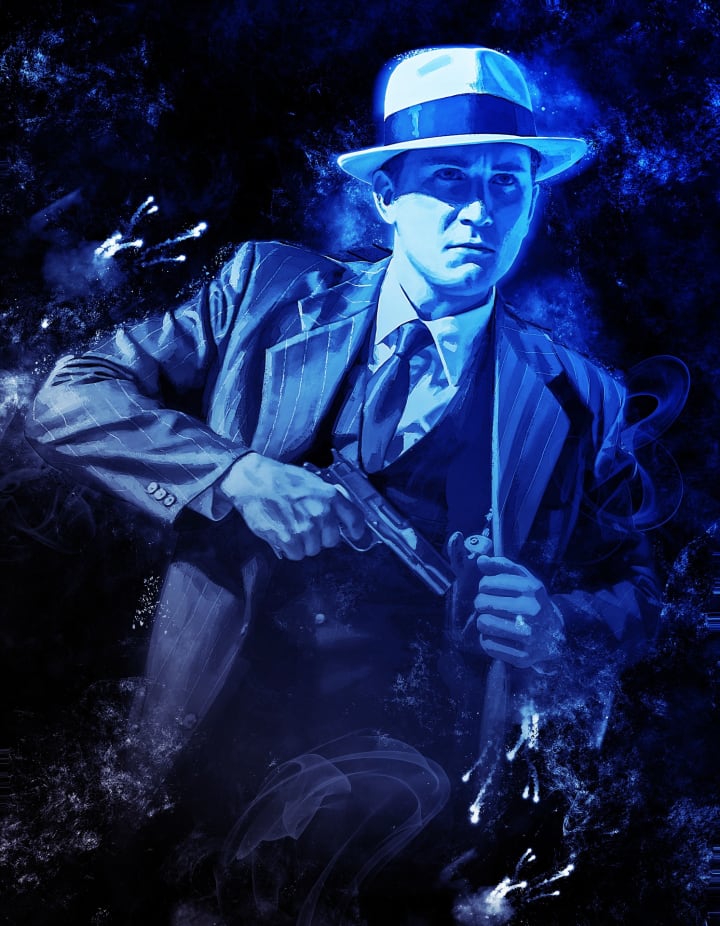
Prohibition: America’s Illegal Boom
When the U.S. banned alcohol from 1920 to 1933, it opened the door for criminals to make huge profits. Organized crime became a nationwide industry overnight.
Bootleggers smuggled whiskey across borders, built underground distilleries, and ran thousands of secret bars called speakeasies. This wasn’t just about drinking—it was an underground economy that employed drivers, brewers, lookouts, and corrupt officials.
Groups like the Purple Gang in Detroit (mostly Jewish), and Capone’s Chicago Outfit (mostly Italian) dominated cities and even worked together when profits were on the line. (Wikipedia)
Ironically, the chaos of Prohibition forced the federal government to modernize. It led to the creation of better law enforcement systems and eventually to laws like the RICO Act that targeted entire criminal organizations.

When Crime and Business Merged
As America grew, so did the mob’s ambitions. Organized crime wasn’t just about guns and whiskey anymore—it became about power, money, and influence.
Mobsters realized they could invest their illegal profits into legal businesses: trucking, construction, real estate, and entertainment.
In Las Vegas, for example, Italian and Jewish crime figures helped build the early casinos and hotels, turning the desert into a world-famous city. (PBS.org)
Of course, much of that came with violence and corruption, but it also poured money into roads, buildings, and local economies that helped shape American cities.
Immigrant Networks
Later, other ethnic groups also formed powerful crime networks as new waves of immigration arrived.
Chinese American tongs and gangs, like the Ghost Shadows and Fuk Ching, operated in New York’s Chinatown from the 1970s to the 1990s. They ran gambling, protection rackets, and smuggling operations, often exploiting vulnerable immigrants—but also filling a gap where the law failed to protect them.
Russian and Eastern European groups emerged after the fall of the Soviet Union, getting involved in fraud, arms dealing, and real estate schemes. (FBI Archives)
Latino and African American organizations, often labeled as gangs rather than “mafia,” also influenced local economies and politics, particularly in major cities. Though often viewed only through a criminal lens, they reflected deeper issues of poverty, exclusion, and survival—just like the earlier immigrant groups.

How Organized Crime Changed America
Despite all the destruction, organized crime left behind systems and lessons that shaped the country’s growth:
- Labor Unions and Workers’ Rights: Mob involvement in unions was corrupt, but it also forced governments to regulate and strengthen workers’ rights. America’s modern labor laws grew partly as a reaction to this abuse.
- Law Enforcement: Reform Federal agencies like the FBI had to evolve because local police couldn’t handle nationwide criminal networks. Organized crime pushed the government to become more efficient and better coordinated.
- Political Reform: Corruption scandals - especially during the 1940s and 1950s—exposed how deep mob money ran in politics, leading to investigations, anti-corruption laws, and public transparency.
- Cultural Influence: From movies to slang, food to music, the legacy of organized crime became part of American culture. Even the way we understand “the American Dream”—making it from nothing, by any means—has roots in these immigrant stories.

The Real Cost
It’s important to remember that any progress came with pain. Organized crime brought fear, addiction, and corruption to communities. People were exploited, businesses destroyed, and lives lost.
At the same time, those same neighborhoods were often ignored or mistreated by the government, so crime sometimes became the only form of “order” people could rely on. It’s a controversial cycle that still echoes in modern America.

The Legacy of the Underworld
Organized crime didn’t build America in the way steelworkers or farmers did—but it shaped the country from the edges.
It forced the government to evolve, changed cities forever, and reflected both the best and worst parts of the human story: survival, ambition, greed, loyalty, and power.
Each ethnic group that took part—Irish, Italian, Jewish, Chinese, African American, Latino, Russian, and more—added a chapter to this hidden history. Together, they tell a story not just about crime, but about how people on the outside can still change the world, even from the shadows.
References:
- Federal Bureau of Investigation. (n.d.). Eurasian organized crime. FBI News Stories Archive. https://archives.fbi.gov/archives/news/stories/2009/february/orgcrime_021309
- Federal Bureau of Investigation. (n.d.). History of La Cosa Nostra. FBI.gov. https://www.fbi.gov/investigate/organized-crime/history-of-la-cosa-nostra
- National Institute of Justice. (1994). Chinese transnational organized crime: The Fuk Ching. U.S. Department of Justice, Office of Justice Programs. https://nij.ojp.gov/library/publications/chinese-transnational-organized-crime-fuk-ching
- Office of Justice Programs. (1990). Organized crime in the United States: A review of the public record. U.S. Department of Justice. https://www.ojp.gov/library/publications/organized-crime-united-states-review-public-record
- PBS – American Experience. (n.d.). Las Vegas: The syndicate. PBS.org. https://www.pbs.org/wgbh/americanexperience/features/lasvegas-syndicate
About the Creator
xJRLNx
Im a dude letting out his madness with the help of Ai.
Killer Mike, Young Thug and others petition Supreme Court in death sentence of man who had rap lyrics used against him in court
The usage of lyrics to condemn a man to death is wrong. Rappers like Killer Mike who articulates the nature of the game well showed his prowess with the legal documents.
By Skyler Saunders5 days ago in Criminal



Comments
There are no comments for this story
Be the first to respond and start the conversation.