

In the heart of the ancient kingdom of Virelia stood a monument unlike any other. A towering obelisk, obsidian black and etched with symbols too old to decipher, loomed over the square in the capital city of Iskareth. The locals called it the Pillar of Truth. For generations, people believed that the stone bore the laws and virtues upon which the kingdom was founded — justice, unity, and honor.
But the truth was far more dangerous.
Queen Sereva, young and idealistic, ascended the throne after her father's sudden death. She was beloved by the people, hailed as a reformer destined to bring light into the cobwebbed corners of Virelia’s rule. Yet even as she moved through the marble halls of the palace, she felt the pull of secrets — whispers from behind carved doors, parchment burned before reading, old men smiling too easily.
Her curiosity turned to obsession when she overheard an argument between her most trusted advisors, Lord Thandrel and Lady Viora.
“You will not tell her,” Viora hissed. “The Pillar is sacred.”
“It’s a lie,” Thandrel replied. “She deserves to know. They all do.”
That night, Sereva summoned Thandrel to her chamber. She demanded answers. At first, he resisted. But then he looked into her eyes and saw not a child, but a queen with iron in her spine.
He told her everything.
The Pillar of Truth, erected six centuries ago, did not record virtues. It recorded the crimes that forged the kingdom — the genocide of the Naelori, the burning of the Dreywood libraries, the betrayal of the other royal families. The inscriptions were not in praise, but in guilt. The language was not lost, but buried, known only to a secretive circle of elders who vowed to protect the myth.
The lie had become a foundation. If it crumbled, so would Virelia.
Sereva was sick with rage. Her ancestors had carved their sins into stone, then built a kingdom on their ashes. And they’d named it truth.
She wanted to expose it. She wanted her people to see the truth and reshape their future. But when she called a council and revealed what she had learned, the room erupted not in horror, but resistance.
“You will unravel the realm,” Lady Viora warned. “They do not want truth. They want certainty.”
Even Thandrel, once an ally, hesitated. “It is dangerous to fight history. The people may love you now, but they will not thank you if their world burns.”
Sereva dismissed them all.
That night, she climbed the narrow spiral staircase to the top of the Pillar herself. The wind howled around her, but she stood firm. From this vantage point, the city shimmered in the moonlight. Peaceful. Unaware.
She raised her voice to the stars.
“I will not reign over a kingdom built on lies. I will speak the truth. And if stone must shatter, let it shatter.”
The next morning, the obelisk was roped off and cloaked in heavy cloth. Workers, under Sereva’s orders, began to chisel away the outer layers, revealing the true inscriptions beneath.
The outcry was immediate. Crowds gathered. Some cursed the queen. Others wept.
Then came the riots.
Temples that had praised the virtues of the Pillar were desecrated. Nobles who had long benefited from the myth fled the capital. Farmers burned their tax documents, declaring them illegitimate under a false legacy. Across Virelia, monuments were torn down, books rewritten, cities renamed.
For a time, chaos reigned.
And yet, from the ruins, something new stirred.
Poets wrote verses not in praise of ancient kings, but in honor of the Naelori and the Dreywood. Children learned the true names of those who came before them. A new generation rose, not bound by the weight of invented righteousness, but with eyes open to the cost of empire.
Years later, in the twilight of her reign, Queen Sereva stood once more before the Pillar.
It was half its height now, many of its markings translated into the common tongue, etched on plaques surrounding its base. The name had changed. No longer the Pillar of Truth — it was now called The Reckoning Stone.
A child approached her, holding a journal.
“Your Majesty, my class is writing about the old kingdoms,” he said shyly. “May I ask... were you scared?”
She smiled softly. “Terrified.”
“But why do it?”
Sereva knelt to meet his eyes. “Because truth doesn’t need to be comfortable to be necessary. It only needs to be heard.”
And so the lies carved in stone became the truth that shaped a future. Not one of blind pride, but of hard-earned understanding.
Because truth, once buried, can still grow in the cracks.
About the Creator
Keep reading
More stories from Said Hameed and writers in Criminal and other communities.
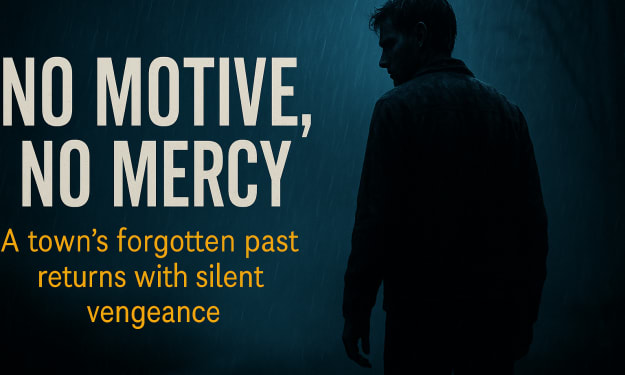
No Motive, No Mercy
The rain fell hard over Hollow Bridge, a small town nestled in the shadows of the Cascade Mountains. The kind of place where everyone knew everyone—or thought they did. Life moved slow there. Predictable. Until the night of the Hollow Bridge killings.
By Said Hameed8 months ago in Criminal
She Killed Her Sister When She Gave The Teen's Virginity to Her Boyfriend
Any person who can rape and kill an innocent member of their family is truly depraved. One who later admits they enjoyed it is truly demonic. Yet, a woman who took her criminal behavior to the depths of depravity is not even behind bars.
By Criminal Matters3 days ago in Criminal


Comments
There are no comments for this story
Be the first to respond and start the conversation.