
Leopold and Loeb: The Privileged Killers Who Shocked Chicago
Nathan Leopold and Richard Loeb, two brilliant young men from affluent Chicago families, used their intelligence and privilege to plot what they believed would be the perfect crime. Influenced by a distorted interpretation of Nietzschean philosophy, they kidnapped and murdered 14-year-old Bobby Franks in 1924, sparking nationwide outrage. Their case, marked by chilling confessions and a high-profile trial, revealed the dark side of intellectual arrogance and the consequences of a morally unchecked elite.

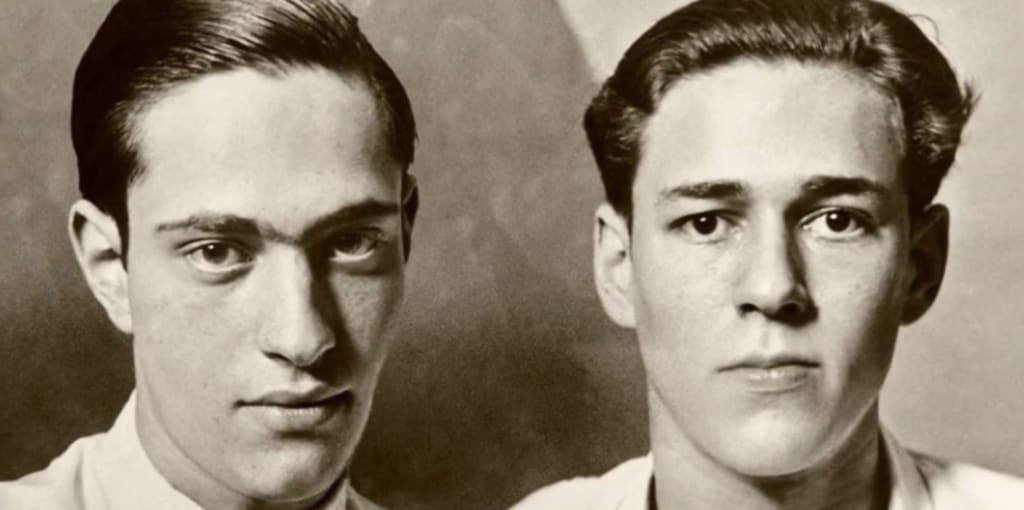
The Leopold and Loeb case remains one of the most infamous criminal cases in American history, capturing the nation's attention with its shocking blend of privilege, intellectual arrogance, and cold-blooded murder. This tale of two wealthy University of Chicago students who sought to commit the perfect crime still resonates today, offering profound lessons about morality, justice, and the human condition. This article delves into the details of the crime, the ensuing trial, and the enduring legacy of the case.
The Crime of the Century
In 1924, Nathan Leopold and Richard Loeb, two affluent and highly intelligent young men, set out to commit what they believed would be the perfect crime. Both 19 years old at the time, Leopold and Loeb were products of Chicago's elite society. Leopold, a child prodigy with an IQ of 210, and Loeb, the youngest graduate from the University of Michigan at 17, shared a fascination with Nietzschean philosophy, particularly the concept of the "superman" who is above the law.
Driven by this warped ideology, they meticulously planned the kidnapping and murder of 14-year-old Bobby Franks, a distant relative of Loeb's. On May 21, 1924, they lured Franks into their car, bludgeoned him with a chisel, and disposed of his body in a culvert near Wolf Lake in Indiana. To create a false trail, they sent a ransom note to the boy’s family, demanding $10,000.
The Breakthrough
Despite their elaborate planning, Leopold and Loeb made several critical errors that led to their capture. A pair of eyeglasses found near Franks' body, which were unique due to their unusual hinge mechanism, were traced back to Leopold. Furthermore, Leopold’s and Loeb’s alibis began to crumble under police scrutiny. Eventually, both confessed to the crime, each attempting to place the primary blame on the other.
The news of their arrest and confession shocked the nation. The idea that two highly educated young men from prominent families could commit such a heinous crime solely for the thrill of it was beyond comprehension for many. The case quickly became known as the "Crime of the Century."
The Trial of the Century
The trial of Nathan Leopold and Richard Loeb was as sensational as the crime itself. Clarence Darrow, one of the most famous defense attorneys in American history, represented them. Darrow’s involvement added another layer of intrigue to the case. Known for his opposition to the death penalty, Darrow faced the daunting task of saving his clients from execution in a trial that seemed destined to end in their deaths.
Darrow’s defense strategy was revolutionary. He argued that Leopold and Loeb were mentally ill and therefore not fully responsible for their actions. He brought in a team of psychiatric experts to testify about their psychological conditions, attempting to provide a scientific explanation for their criminal behavior. Darrow also focused on the brutality of the death penalty, delivering a passionate 12-hour summation that is still studied in law schools today.
In a surprising move, Darrow convinced Leopold and Loeb to plead guilty, thus avoiding a jury trial and placing their fate solely in the hands of Judge John R. Caverly. On September 10, 1924, Judge Caverly sentenced both men to life imprisonment for the murder plus 99 years for the kidnapping, sparing them the death penalty. The judge cited their age and the mitigating evidence of their mental state as reasons for his decision.
The Aftermath and Legacy
The aftermath of the Leopold and Loeb case left a lasting impact on the American legal system and society at large. The case highlighted the complexities of criminal psychology and the influence of upbringing and privilege on criminal behavior. It also sparked a nationwide debate on the ethics of the death penalty, with Darrow’s arguments contributing significantly to the discourse.
In prison, Leopold and Loeb continued to capture public interest. Loeb was killed by a fellow inmate in 1936, while Leopold, after years of exemplary behavior and numerous contributions to prison education programs, was released on parole in 1958. Leopold moved to Puerto Rico, where he lived quietly until his death in 1971.
An Enduring Story
The Leopold and Loeb case remains a poignant reminder of the dangers of intellectual hubris and the importance of ethical responsibility. It underscores the idea that no one is above the law, regardless of their social standing or intellectual prowess. The case also serves as a testament to the power of the legal system to balance justice with mercy, as exemplified by Darrow's impassioned defense and Judge Caverly's nuanced sentencing.
To conclude, the story of Nathan Leopold and Richard Loeb is a multifaceted tale of privilege, crime, and justice that continues to captivate and educate. It challenges us to consider the moral and psychological underpinnings of criminal behavior and the role of the legal system in addressing such complexities. As we reflect on this historic case, we are reminded of the enduring power of justice and the human capacity for both great intellect and profound error.
About the Creator
Jane Doe
As a passionate storyteller, I captivate readers with engaging, well-researched articles across genres from criminality and poems to lifestyle and more....
Join me for insights, tips, and narratives that inform and entertain.
Former DOJ Officials Break Silence on Kiernan Major Case
Through a swarm of vehicle and body doubles, elaborate disguises, sophisticated misdirection, and all-around flawless tradecraft, two senior U.S. Justice Department officials out of the Washington D.C. office met with our investigative team in a Los Angeles area home to blow the whistle on what they called "one of the most dishonest and disgraceful" cases they had ever reviewed. Our four-hour interview still feels as though it was much stranger than fiction—surrounded ostensibly by hundreds of security personnel who blocked all traffic to and from the property and implemented a stunning variety of physical and technical expertise to draw attention of potential emergency personnel and bystanders elsewhere, our team was in total awe of the immense and rather imposing capabilities of this security team. We often were unable to even focus on the interviews as we struggled to grasp whether this was reality or possibly figment of our imagination. In spite of our childish fascination, our team was able to gather a fresh and highly credible perspective that raises grave concerns about the 2022 federal indictment of Kiernan Major and many of those allegedly involved in it.
By Charlie A. Miller3 days ago in Criminal
A Transparent Look at Vocal Challenges and Top Stories
Almost three years ago, we shared a resource article that served as a place for people to suggest new challenge prompts. We thought it would be a good idea to refresh that thread, and take the opportunity to answer a few common questions about top stories, how challenges are judged and how submissions are reviewed.
By Vocal Curation Team3 days ago in Resources


Comments
There are no comments for this story
Be the first to respond and start the conversation.