
Killer Known As The Predator
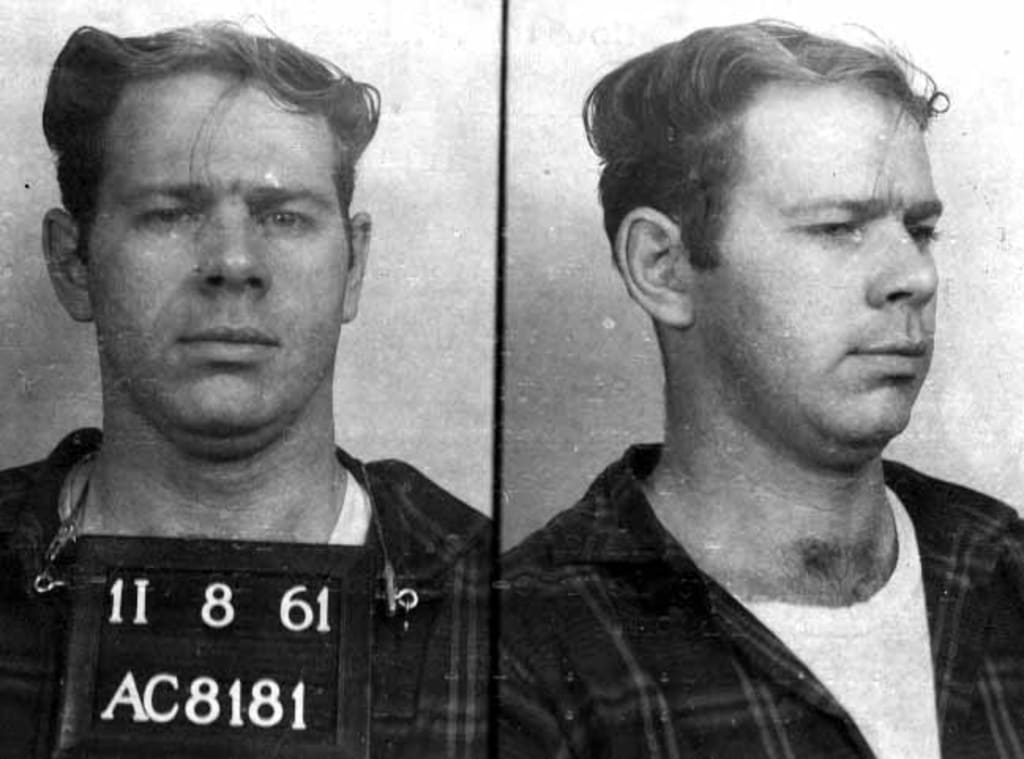
Story of serial killer Robert Garrow

A very difficult childhood
Robert Garrow was born on March 4, 1936, near the village of Dannemora in upstate New York. His father was a mineworker and a heavy drinker taking out his frustration on his son. His mother Margaret Garrow was well known in Mineville and had a hostile, callous disposition. She was a cruel person who beat her children. There were times when Robert was beaten unconscious. He had no formal education and worked on neighboring farms from the age of 7 his pay being collected by his mother.
Soon Robert began having sexual contact with the animals on the farm – cows, horses, sheep and dogs. At 15 he was sent to reform school for punching his father in the face and when he was released a year later he joined the Air Force. In the military, he was ridiculed for bed-wetting. He stole money from an Air Force sergeant, received a court-martial and was sentenced to six months in a military prison in Florida. When he attempted to escape he was caught and sentenced to one year in another military stockade in Georgia.
Crimes committed and becoming a fugitive
Returning to upstate New York he married a local girl Edith in June of 1957. The couple moved to Albany where Garrow got a job in a fast-food restaurant. It was not long after this that he was arrested for burglarizing the store. In 1961 he was arrested for raping a teenage girl after he had knocked out her boyfriend with the butt of a pellet gun. Garrow was eventually captured and sentenced to 10 to 20 years in prison. He was sent to Clinton State Prison, better known as Dannemora for New York’s toughest inmates. He spent about 8 years there and was released in 1968 and began working in a bakery. In 1972 he was arrested in Syracuse, New York on charges of unlawful imprisonment and drug violations.
In 1973 Garrow was accused of sexual assault on two little girls in Geddes, New York. On the morning of May 31, 1973, two girls in colorful dresses walked down a deserted street in upstate Geddes, New York. They were unaware of the stocky, bullish-looking man watching them from a car. Seeing that they were the kind of girls he preferred the man stepped out of his car. He looked around carefully to be sure there was no one about. The man began following the girls. One girl was 9 and the other 11 years old.
They glanced about but thought nothing threatening about the man behind them and besides the town was safe. When the man was close enough to his intended victims he called out, “Stop!” The girls turned about and he said, “Police!” while holding a phony badge which he then put back in his pocket. He told them he was a police officer from nearby Camillus and that they had to go with him to the police station to help find a lost dog. He was insistent on this point and took the girls to his car. For a while, he drove aimlessly until he came to a place in the fields where there were no houses or farms nearby.
Parking his car on Maple Road in Camillus he took the girls out of his car and walked them up to the top of a nearby hill and laid a blanket on the grass.He then ordered the 9-year-old girl to come to him. The girl froze and looked at her friend neither of them knew what the man wanted. He then pulled out a plastic handgun which looked real. He stuck it in the girl’s face and again ordered her to come to him. He later told the jury that he had the girls play with him and that one of them committed an act of sodomy, orally. However, the girls were lucky in the fact that their ordeal lasted only three hours and that he let them live. This was Robert Francis Garrow, The Predator. After he was released on bail, Garrow disappeared and never showed for the scheduled court date. An arrest warrant was issued and on that day, Garrow officially became a fugitive.
Campers in danger
It was a morning in 1973 on July 29th when a group of friends Phil Domblewski, Carol Ann Malinowski, David Freeman and Nick Fiorello went camping in the Adirondacks near Wells, New York. They all were from Schenectady and knew each other from high school. The friends pitched their tents near Old Route 8, south of the village of Speculator.
Just a few miles away from where they were camped Robert Garrow was driving northward in an orange-colored VW Hatchback. Garrow spotted the teenagers’ campsite he pulled over grabbed his .30-caliber rifle and walked into the campsite. Walking over to the first tent Garrow pointed his rifle at Carol Ann and David who were still in their sleeping bag. He asked them for some gas. Then he rounded up all four campers and told them to siphon some gas from their car. Phil objected and Garrow marched them all into the woods saying, “I’ve killed before and I will again if I have to!”
Seeing that physically he was a big man the teenagers felt frightened. Once in the woods, he tied them all up against separate trees out of sight of one another. The girl was tied up last. First, he attacked Domblewski slashing him several times across the chest before plunging the knife into the boy’s chest. Hearing the final gasps for life Carol cried out, “What are you doing to him?” Meanwhile, the two other boys had managed to untie themselves and escaped. They ran for help as Garrow walked deeper into the woods. Minutes later a dozen men from the nearby town started searching for the killer. Domblewski’s body was still tied to the tree and blood was everywhere. Garrow had left his knife behind on the ground next to the body. Unfortunately, the killer had managed to escape in his orange VW and the hunt was on.
However, the Adirondack Park was immense with lakes, streams and rolling hills. The mountains having 50 high peaks and miles of trails. It was just the place to hide. After he had killed Domblewski Garrow drove through the Adirondack Park keeping to isolated dirt roads until the State Police spotted him on the night of July 31. The police chased the VW through the thick trees at break-neck speed mowing down trees and bushes along the way. In an area called Coon Creek Garrow crashed his car and jumping out ran through the woods. He managed to elude the two pursuing troopers and disappeared into the wilderness.
The manhunt
Meanwhile, the New York State Police brought in hundreds of troopers, several helicopters, bloodhounds and platoons of local law enforcement. A command post was set up near the base of Mt. Pleasant. Garrow’s wife and child were located and brought to the scene. Domblewski’s friends identified the killer through photos and the abandoned VW was traced to Garrow. The next day an arrest warrant charging him with murder was issued by the Wells Town Court. There was some suspicion that Garrow was also responsible for another murder involving a camper a few weeks before. A Harvard student Daniel Porter 23 of Concord, Massachusetts had been found murdered in the park and his girlfriend Susan Petz, 20 of Skokie, Illinois was missing. Porter’s body had been found on July 20th about 25 miles from the scene of the Domblewski murder.
The police had Garrow’s wife and son, Robert Jr. plead with him to give up through giant loudspeakers while helicopters flew above. At this time Garrow was continuing northward, carrying his rifle and walking in and out of streams to confuse the bloodhounds. On August 7 Garrow was bold enough to visit his sister Agnes who lived in Mineville. His sister stated that during the visit his right hand had been injured and was bleeding. He told her there had been some trouble and a guy had been stabbed. She had no idea where he was headed for and by the time the police descended upon her home Garrow had managed to escape one more time. The police doubled forces almost to the Canadian border. Then on August 10 a conservation officer who was part of the stakeout team staking out Garrow’s sister’s house saw Mrs Mandy’s son carrying food into the woods behind the house. Cops went to investigate and Garrow emerged and took flight. When he didn’t stop the police opened fire and hit the suspect several times. Garrow fell to the ground. After 11 days and the largest manhunt in New York State history, Robert Garrow was in custody.
Three murders
Garrow met with his court-appointed attorneys Francis Belge and Frank Armani of Syracuse. However, Garrow was uncooperative and claimed loss of memory when critical subject matter arose. Late in August of 1973, the attorneys decided to try once more. Garrow was already a suspect in several other homicides. Alicia Hauck, 16 had disappeared on her way home from high school in Syracuse on July 11, 1973. On that day Garrow had been spotted near her school. However, her body had been found. Then on July 20th in Weavertown, New York the body of camper Daniel Porter was found tied to a tree and stabbed in the same way Domblewski was later to be killed. Porter’s girlfriend Susan Petz had not yet been found. Since he was arrested Garrow insisted he had nothing to do with the missing girls.
The two attorneys begged for cooperation. Finally, Garrow admitted to picking up Alicia Hauck who was hitchhiking. He stated that they had had sex on a hill behind an apartment complex and when she got hysterical and tried to run away he had hit her with his knife. When Belge asked if he had killed the girl Garrow replied that he thought so and took the body of Alicia Hauck and hid it in the Oakwood Cemetery in Syracuse. As far as he knew the body was still there.
Then Garrow went on to describe how he had killed Daniel Porter in late July. He said he had stabbed him during a fight and then kidnapped his girlfriend Susan Petz. He kept her with him for four days sexually assaulting her. On the last day she tried to escape and they fought each other. Finally, he stabbed her and threw her body down the airshaft of a mine. Since these confessions were confidential between client and attorney the attorneys could not reveal to anyone where the girls bodies were to be found.
Finding two bodies
Belge and Armani decided to corroborate their client’s confession and drove to Mineville to search for the mineshaft in which Garrow said he had tossed the body of Susan Petz. It was late August and the weather was stifling. Having located a mine shaft that looked promising Belge holding on to Armani’s hand lowered himself into the cool darkness. He located the body at the bottom of the air shaft and took photos. The two attorneys dilemma was that they were bound by law not to reveal what their client had told them. At Oakwood Cemetery both attorneys found the body of Alicia Hauck behind a shed. Belge saw that her skull had been torn from her body and he placed the skull above the girl’s shoulders. The attorney had now also altered a crime scene and tampered with evidence but was still convinced of his confidentiality.
The trial begins and a guilty verdict
Lake Pleasant is an Adirondack town located 40 miles from Amsterdam, New York. Tourists come here to enjoy the lakes, hike or relax in the beauty of the Adirondacks. There are dozens of cottages and summer homes along the shores of Lake Pleasant. Along State Route 8 the county municipal offices consist of a courthouse, a sheriff’s office and a jail. Since his capture on August 9, 1973, Garrow had been confined to a wheelchair after he was shot several times. Starting on May 9, 1974 people were called for jury duty in Hamilton County under the supervision of Attorneys Belge and Armani. By early June the jury had been selected and the trial began on June 10.
The three teenagers Nick Fiorello, Daniel Freeman and Carol Malinowski testified about their experiences the day Phillip Domblewski was murdered. There were many articles of evidence introduced as well as crime scene photos. Finally, on June 17 the defence began its case with its first witness Robert Garrow. First Garrow was asked about his childhood and early years. Then he recounted to the court about his many problems with the law and being arrested for crimes like rape, sodomy, and burglary. His eight years in prison at Auburn and Dannemora where he had sex with other prisoners both oral and anal. He told the court that when he got out of jail in 1968 he committed a series of rapes in the Syracuse area some with very young girls. He also recounted the incident in May of 1973 where he sexually abused two girls one 9 and one 11.
Afterwards, Garrow told the court about the killing of Daniel Porter and his girlfriend Susan Petz. He told them how he had done the killings and that he had held the girl hostage afterwards killing her and throwing her body in a mine shaft. Then went on to describe how he had met Alicia Hauck, what he had done with her, how he had killed her and how he had disposed of her body in the cemetery. Alicia Hauck’s body had finally been found in December of 1973. Garrow went on to inform the court that he had had conversations with his attorneys about where the victims could be found months ago and that his attorneys had brought him photos of the dead girls to identify. For the next three days Garrow testified to a series of seven rapes and four murders. On June 27, 1974, the jury found Garrow guilty of murder in the first degree and on July 1 he was sentenced to 25 years to life in prison. Garrow was transported to upstate Clinton prison in Dannemora near the Canadian border. Constantly complaining about feeling paralysis in his left leg and on painkillers he began his jail sentence.
Escape from prison
Garrow’s first few years of imprisonment were at Dannemora and Auburn Prison always claiming that he received unfair treatment and was the victim of police brutality. He also said that he was partially paralyzed by the gunshot wounds he suffered during his capture in 1973 and filed a $10 million lawsuit against New York State citing these and other complaints. Afterwards, Garrow was transferred from Dannemora to the less secure facility at Fishkill, New York. Fishkill Correctional Facility is located outside the village of Fishkill in Dutchess County. It was built in 1896 on 600 acres of farmland and became a medium-security prison during the 1960s. Fishkill also contained the notorious Matteawan State Hospital for the Criminally Insane. Fishkill Correctional was criticized for its security procedures and due to his medical condition, Garrow was placed in a housing unit called the Elderly and Handicapped section, better known as the E & H building.
It was the night of September 8, 1978, when Garrow placed a dummy constructed from rags and wire on his cell bed. He placed a .32 caliber automatic handgun into his waistband and walked out of his cell. It was later discovered that the gun had been smuggled into prison in a fried chicken bucket. (Garrow’s 18- year-old son, two inmates and an inmate’s wife were later arrested and charged in the incident). Because the E & H Building had less security Garrow was able to walk out of the ward.
Exiting the building he went to a chain-link fence and managed to climb up it and down onto the other side. Afterwards, Garrow crawled to the edge of the woods several hundred yards away. Hiding in the underbrush he observed the prison. It was morning when guards discovered him missing. The Corrections Emergency Response Team (CERT) was called out from Greenhaven. The squad was made up of specially trained personnel to handle prison emergencies. Soon word got out of this notorious prisoners escape and people were frightened. Roadblocks were set up everywhere. What everyone didn’t know was that Garrow was right there he had found a hole in the ground and crawled in and covered himself with brush and leaves. He lay there for three days. On the third day, a CERT team member found a portable transistor radio through which serial number they found out it belonged to Garrow.
Dead before he hit the ground
Now they knew that Garrow had not gone far. On September 11 at 6 PM in the evening Greenhaven Correction Officer Dominic Arena, 25, made another search through the fields on the western edge of the prison. Nearby was Interstate 84 and anybody could have picked up Garrow. Waking through the bush Garrow heard a movement and suddenly Garrow emerged from his hiding place and began firing his automatic handgun. Arena was hit in the leg and fell to the ground. The CERT team started up with shotguns, rifles and handguns. Garrow was hit with a barrage of gunfire. He was dead before he hit the ground. An autopsy showed that three .38-caliber bullets had pierced his heart and lungs. Garrow was buried in Oakwood Cemetery in Syracuse, New York not far from where Alicia Hauck was murdered.
About the Creator
Rasma Raisters
My passions are writing and creating poetry. I write for several sites online and have four themed blogs on Wordpress. Please follow me on Twitter.
Keep reading
More stories from Rasma Raisters and writers in Criminal and other communities.
Killer With The Clown Face
Chloroforming a victim and the torture On May 22, 1978, Jeffrey Ringall had returned home to Chicago from a winter vacation in Florida. Walking through New Town a popular area of Chicago his path was blocked by an Oldsmobile. The heavy-set man in the car started chatting with Ringall and finally invited him for a ride around town while sharing a joint. Delighted to be able to escape the cold Ringall got into the Olds. Halfway through the joint the man suddenly grabbed Ringall and shoved a rag doused in chloroform over his face. He lost consciousness and during moments of reawakening tried to decide what was happening to him only to be chloroformed again.
By Rasma Raisters5 years ago in Criminal
They Tortured Her For 44 Days: The Disturbing Case Of Junko Furuta
No case has haunted Japan as much as the murder of Junko Furuta. It was a crime so brutal and cruel that it forced a nation to question the justice system esxpecially when it comes to juvenile offenders. Why are juvenile offenders protected by the law? The law was so disappointing that it protected the perpetrators and not the victim.
By Megha Pavanagd7 days ago in Criminal
Lycan Lore
As the students of my 10am mythology class take their seats, I decide to steer the day's curriculum away from Greek and dive into a Western European discourse on the misaligned beliefs of the Werewolf. A tale of truth or fiction. No one really knows.
By Lamar Wigginsabout 15 hours ago in Fiction




Comments
There are no comments for this story
Be the first to respond and start the conversation.