
Junk Food Eaters Leave Better Fingerprints at Crime Scenes
When planning the perfect crime, watch what you eat!

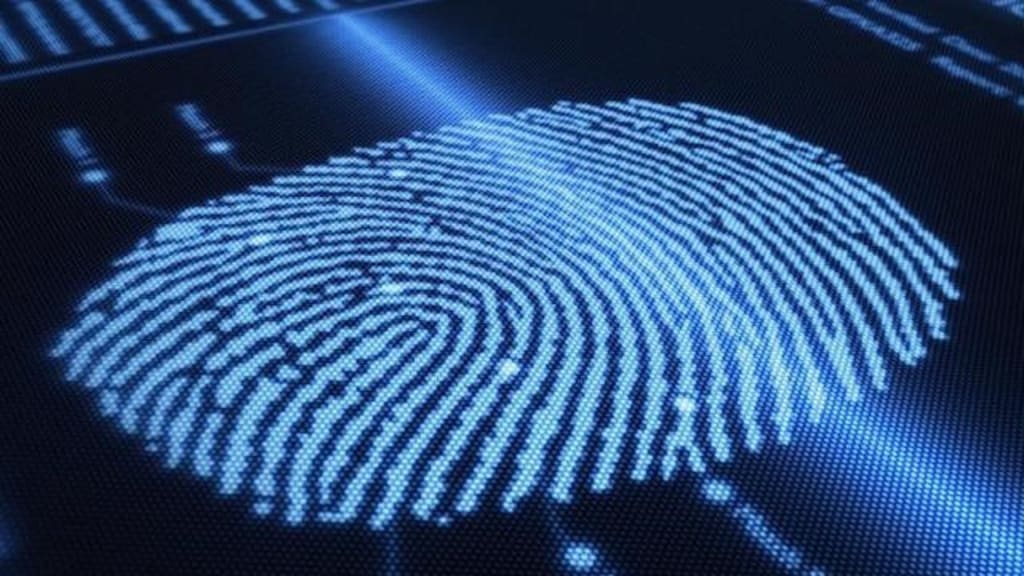
When planning the perfect crime, watch what you eat. People with diets higher in processed foods leave better fingerprints. This makes them more likely to be caught by the Police.
Processed foods tend to use higher amounts of salt as a preservative. People who eat a lot of junk food are likely to leave sweaty fingerprints that are high in salt content. This combination results in “sticky fingers” which are more corrosive to metals. The higher the salt content then the better the fingerprint.
According to Dr. John Bond, an Honorary Research Fellow at the University of Leicester Forensic Research Centre and a Northamptonshire Police Scientific Support Officer, his forensic fingerprinting technique allows scientists to “visualize fingerprints” even if the actual print no longer exists.
CERA (Cartridge Electrostatic Recovery and Analysis) applies a large voltage of electricity to the metal. Ceramic beads coated with a fine carbon powder, such as used in a photocopier, are added to the surface to reveal the previously undetected prints. The high salt content emitted through the fingertip pores corrodes the metal and makes it easier to enhance the resulting original fingerprint impressions.
Dr. Bond and his colleagues were able to prove the benefit of this fingerprinting method by firing a small caliber metal cartridge casing such as Police would find at a crime scene. In support of their research, these scientists were able to find and enhance a useable fingerprint on the spent cartridge casing.
In terrorist situations where a metal fragment or piece of a bomb is recovered, this method can be used to recover fingerprints. This is invaluable in situations that would normally destroy all forensic evidence. One example is the historic Lockerbie bombing which opens new opportunities for investigators to test items handled by the bomber.
Though Dr. Bond’s technology has been available since 2008, it is a little known forensic fact that eating junk food places the perpetrator of a crime at a higher risk of being caught. This is even if the original evidence has been exposed to extreme heat or waterlogging. It is proving to be helpful in lifting prints from everyday items such as ATM machines and soda cans. This technique can be used decades after the initial crime because the prints are imprinted into the metal.
Dr. Bond’s Visualizing Fingerprints on Metal was voted one of the top 50 inventions of 2008 by Time Magazine. In 2009, it was named one of the inventions most likely to change the world by BBC Focus Magazine.
So remember, if you are planning the perfect crime, clean up your diet!
Throughout history, fingerprints have been used as identifiers. As far back as 1000 B.C., they were used on official documents as a signature. In 1686, Macello Malpighi, a professor at the University of Bologna, in Italy, noticed the common patterns of fingerprints. Johannes Evengelista Purkinje documented nine specific patterns of fingerprints in 1823.
In 1858, William Herschel, a magistrate in India, began using fingerprints as a signature on contracts. He noticed no two fingerprints were alike and could be used for identification purposes. For the first time, Dr. Henry Faulds, a doctor in Tokyo, used fingerprints to identify the specific person who left a stray bottle lying around the lab in 1880.
Police began keeping fingerprints on file in 1896. This same year, a bloody fingerprint found on a doorframe in Argentina helped Police to identify a murderer. Following Argentina, Scotland Yard founded the Fingerprint Bureau in 1901. Paris came on board in 1902. America began using fingerprints in forensics in 1903 in New York.
In 1924, the Federal Bureau of Investigation (FBI) assumed the cataloguing of fingerprints. By 1971, their registry had grown to over 200 million fingerprints on file. The Automated Fingerprint Identification Systems (AFIS) scanned and stored fingerprints electronically starting in 1990. The FBI began transferring their fingerprint files to an electronic system in 1999. Today, millions of criminal fingerprints are stored around the world.
About the Creator
Cate Rhys
Born and raised in Louisiana. Cajun wife. Mother. Foodie. Nature lover.
Push To Prevent Catapults Being Bought By Children
MP’s have been warned to put new legislation in place that will help to close a loophole in the law which allows people including children to legally buy weapons which is capable of killing wildlife. The alert was issued during a briefing in parliament which set out growing evidence that catapults were being misused against animals and to damage other people’s private property. The Naturewatch Foundation who hosted the session expanded on their message that at the moment there is a completely unregulated system where people of any age can buy weapons and there are no meaningful controls on sale or power.
By Ashish Prabhu6 days ago in Criminal
A Transparent Look at Vocal Challenges and Top Stories
Almost three years ago, we shared a resource article that served as a place for people to suggest new challenge prompts. We thought it would be a good idea to refresh that thread, and take the opportunity to answer a few common questions about top stories, how challenges are judged and how submissions are reviewed.
By Vocal Curation Team4 days ago in Resources



Comments