
John Hinckley: Driven to Madness
The trial that changed the U.S. legal system
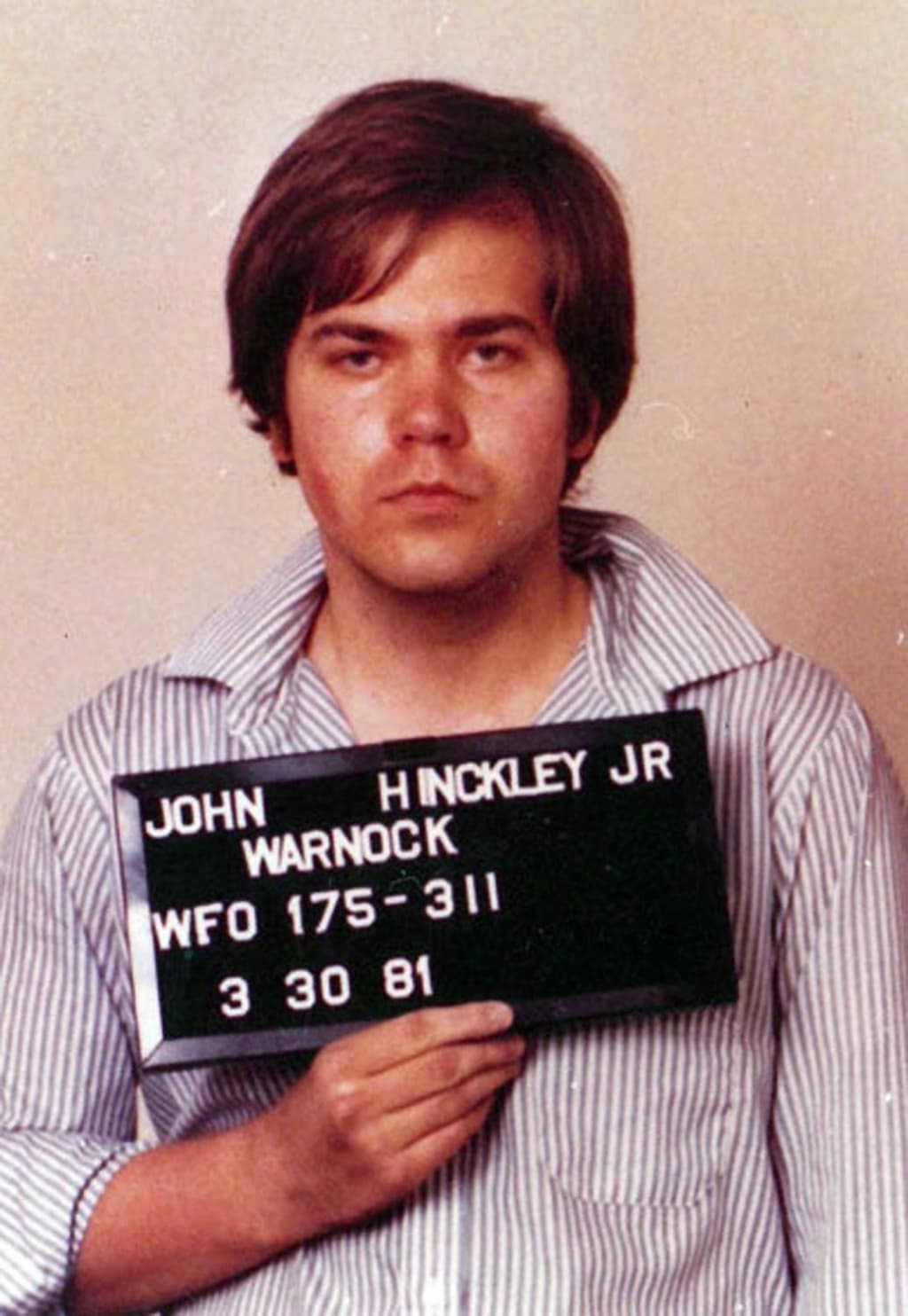
On March 30, 1981, President Ronald Reagan was leaving the Hilton Hotel in Washington D.C. after giving a speech at a labor convention. It was just another day for Reagan...or so he thought.
The Shooting
As he departed the hotel, a series of shots rang out nearby. In a chaotic sequence, Reagan was quickly ushered away into a nearby car while the shooter, 25 year old John Hinckley Jr. was tackled by the Secret Service. When the dust settled, Reagan was critically wounded and three others had been wounded as well: White House Press Secretary James Brady, Police Officer Thomas Delahanty, and Secret Service agent Tim McCarthy.
Hinckley's prime motivation in shooting Reagan was his obsession with actress Jodie Foster. Hinckley first discovered Foster when he saw the movie Taxi Driver a few years prior and he became enamored with her. Over the years, he sent her countless love letters and phone calls. On the day of the shooting, Hinckley wrote one more letter to Foster, stating that he planned to win her over by killing Reagan.
Hinkley faced 13 charges in federal court, which included attempted murder and assault with a deadly weapon. His attorney, Vince Fuller, tried to work out a plea deal, but the prosecution wouldn't budge. This left Hinckley with only one option: The insanity defense.
The Trial
Fuller opened the defense's case with John's parents discussing his childhood and struggles with mental illness. From there, Fuller brought in numerous psychiatrists who testified in further detail about Hinckley's mental state. The primary defense psychiatrist, Dr. William Carpenter, interviewed Hinckley extensively and believed that he was suffering from schizophrenia. Carpenter also testified that Hinckley was losing his sense of identity and replacing it with various movie characters, one of whom was Travis Bickle, the protagonist of Taxi Driver. To reinforce that idea, Fuller closed the defense's case with a rather unique exhibit: The movie Taxi Driver in its entirety.
Prosecutor Roger Adelman countered with experts of his own who testified that although Hinckley had his issues, insanity was not one of them. In addition, Adelman introduced Hinckley's extensive flight routes across the country over the years to show that he was capable of making and carrying out intricate travel plans.
The closing arguments were intense on both sides. The prosecution went first, with Adelman recounting the day of the shooting and Hinckley's calculated actions. He also held the gun used in the shooting and waved it around the courtroom as he implored the jury to hold Hinckley accountable. Fuller was up next for the defense. He opted to focus more on Hinckley's past, especially his unhealthy obsession with Jodie Foster. Fuller emphasized how Hinckley's mental state deteriorated over the years until finally reaching its breaking point.
After closing arguments concluded, it was officially in the hands of the jury. After three days of deliberations, they finally arrived at a verdict: Not Guilty by Reason of Insanity for all 13 counts.
The Aftermath
The verdict sent shockwaves throughout the nation. Many people felt that the jury got it wrong, and that the legal system was too lenient in its guidelines for establishing insanity. Over the next few years, Congress enacted a series of reforms which swapped the burden of proof from the prosecution to the defense in such cases. In addition, any defendant who raised this defense would now have to show that they were suffering from a mental disease rather than merely losing control in the moment.
Hinckley spent approximately 40 years in a mental institution before being released in June of 2022. He currently has a YouTube channel with over 40,000 subscribers.
Sources:
https://www.famous-trials.com/johnhinckley/537-home
http://law2.umkc.edu/faculty/projects/ftrials/hinckley/hinckleytranscript.htm#Fuller
About the Creator
Keep reading
More stories from Daniel Kilkelly and writers in Criminal and other communities.
Bad Heart or Bad Husband? Florida v. Adam Kaufman
In November of 2007, Adam Kaufman called 911 and said that his wife Lina was unresponsive on their bathroom floor. By the time first responders arrived, there was little they could do and Lina had sadly passed away. At first, nothing significant came of it. Miami-Dade Medical Examiner Bruce Hyma conducted the autopsy, and listed her cause of death as "undetermined". That would all change 18 months later when Hyma changed the manner of death to "homicide". Adam was promptly arrested and charged with 2nd degree murder. He could be sentenced to life in prison if convicted.
By Daniel Kilkelly6 months ago in Criminal
Federal Law Enforcement Shooting in Minneapolis Sparks National Debat
## **Federal Law Enforcement Shooting in Minneapolis Sparks National Debate** In early 2026, a serious incident unfolded in Minneapolis when federal law enforcement officers shot a civilian during a large-scale operation in the city. The event immediately drew public attention and ignited widespread discussion about the role of federal agencies, public safety, and accountability. The shooting occurred in a residential area, creating fear and confusion among residents and prompting strong reactions from local leaders and community groups.
By America today 5 days ago in Criminal


Comments
There are no comments for this story
Be the first to respond and start the conversation.