
Joel Rifkin: New York's Most Horrifyingly Prolific Serial Killer
Behind the quiet facade of a troubled life, Joel Rifkin’s brutal killing spree went unnoticed for years, leaving a trail of murdered women and a city in fear.

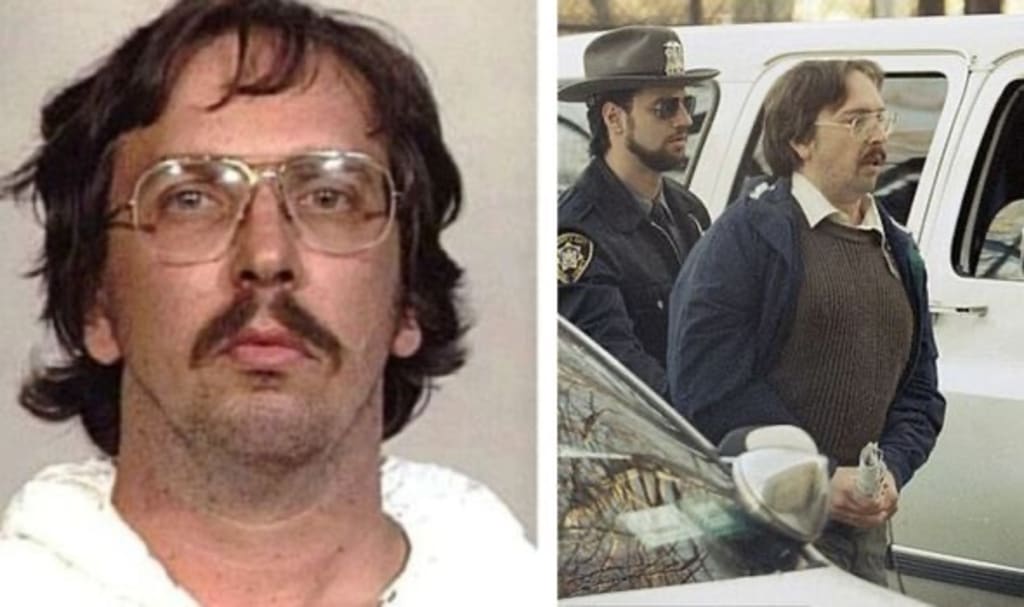
Joel Rifkin, a name now synonymous with one of the most chilling crime sprees in modern New York history, is often remembered for the sheer brutality of his actions and the terrifying span of time during which he eluded authorities. Rifkin, a man who, on the surface, seemed to be an ordinary figure living an average life, harbored a deeply disturbed nature that would eventually lead him to become one of the most prolific serial killers in American history.
A Troubled Upbringing
Joel Rifkin was born on January 20, 1959, in New York City. From an early age, his life was marked by emotional turmoil. His parents, both of whom were initially successful, had a strained and tumultuous marriage, and Rifkin would later claim that his mother was cold and emotionally distant. He was often described as a loner during his childhood and adolescence, and his social struggles would only intensify as he grew older.
Rifkin’s early years were a constant battle for attention and affection. His mother’s neglect and his father’s emotional withdrawal created a fertile ground for the formation of his antisocial behaviors. Growing up in East Meadow, a suburban area on Long Island, he was an unremarkable child in appearance and personality—bland, unassuming, and without close friends. Still, beneath the surface, there was something much darker taking shape.
Rifkin’s interests and hobbies reflected his growing detachment from society. He spent much of his time collecting dead animals, a sign of his budding interest in death and violence. These early indicators would go unnoticed by most, and it wasn’t until much later that the terrifying depths of his psyche would be fully understood.
The Shift to Darker Paths: A Life of Crime Begins
By the early 1980s, Joel Rifkin was in his early twenties, and his personal life was in disarray. He struggled with a range of issues, from poor job prospects to increasing isolation. He attempted college but failed to graduate, and his adult life was marked by a series of dead-end jobs. Despite his lack of success in more conventional pursuits, Rifkin had found a way to satiate his deepening urges: he began frequenting the streets of New York, visiting prostitution hotspots in search of sexual encounters.
It was here, on the seedy streets of Manhattan, that Rifkin would meet his victims. In the beginning, his crimes were not as lethal as they would become. He began to regularly visit prostitutes, initially engaging in these encounters as a way to satisfy his sexual needs. However, it wasn’t long before Rifkin’s violent tendencies came to the forefront.
Over time, Rifkin’s encounters with prostitutes grew darker. He started to develop a pattern in which he would hire sex workers, but instead of simply paying for the services, he would end up strangling them. His first confirmed murder was in 1989, when he killed a prostitute named Tiffany Bresciani. Rifkin’s methods were cold and calculating: he would strangle his victims, often using ligatures, and leave their bodies in remote areas.
At first, these killings seemed like isolated incidents, and they didn’t draw much attention from law enforcement. But as Rifkin’s body count began to rise, a more disturbing pattern emerged. Over the course of the next several years, Rifkin would go on to kill at least 17 women, with some estimates suggesting that the true number could be even higher. The victims were almost all prostitutes, women on the fringes of society who were often overlooked by the authorities.
The Hunting Ground: Long Island and Manhattan
Rifkin’s choice of victims was a deliberate one. Prostitutes, often vulnerable and marginalized, made for easy targets. They were less likely to be missed, their disappearances often going unnoticed by those around them. Rifkin’s victims were predominantly women who worked the streets of Manhattan, Brooklyn, and Long Island. It was in these areas where he would troll for his next prey.
The killings were not random acts of violence, but rather part of a deliberate and calculated pattern. Rifkin’s method of operation (MO) involved picking up the women, taking them to secluded areas, and then strangling them. After killing them, he would often dispose of their bodies in remote locations. Some victims were dumped in nearby forests, while others were left in waterways. Many of the bodies were dismembered, making identification difficult for authorities.
Rifkin’s ability to blend in with the urban landscape made him a difficult figure to track. He would often drive around in his truck, a vehicle that became a symbol of his deadly exploits. He knew the city and its surroundings intimately, which allowed him to evade the police for years. In fact, his movements were so careful that it took nearly a decade before authorities started connecting the dots between the killings.
The Breakthrough: Arrest and Conviction
By the early 1990s, law enforcement had begun to take notice of the rising number of missing women, many of whom were linked to prostitution. A task force was established to investigate the string of disappearances, and they quickly began to see a disturbing pattern in the cases. The connection between the victims was too strong to ignore: they were all women who had been murdered and discarded in similar ways.
Rifkin’s downfall came in 1993, when he was finally caught. He was pulled over by police in Mineola, Long Island, after a routine traffic stop. At the time, he had a dead body in the back of his truck. The body was that of a woman named Melissa Barthelemy, one of Rifkin’s last victims. When the police searched his truck, they discovered not just the body, but a series of disturbing items that pointed directly to his involvement in the murders.
Rifkin was arrested and charged with the murder of Melissa Barthelemy. Further investigation into his life and activities revealed the horrifying extent of his crimes. He was linked to the murders of at least 17 women, though Rifkin himself later admitted that the actual number may have been much higher.
At trial, Rifkin’s defense team attempted to portray him as someone with a troubled past, hoping to mitigate his sentence. However, the evidence against him was overwhelming. He was convicted of the murders of nine women and sentenced to 203 years in prison without the possibility of parole.
The Aftermath: A Nation Shocked
The case of Joel Rifkin left a deep scar on New York and the nation as a whole. The scale of his crimes, combined with his methodical and remorseless approach to murder, shocked even the most seasoned investigators. Rifkin became infamous not just for the brutality of his actions, but for his ability to blend into society for so long without raising suspicion.
Rifkin’s story is a stark reminder of how hidden evil can lurk behind the most unassuming facades. He was not a man who stood out in any way—he was not a man with a violent or criminal history, and he certainly didn’t look like the type of person society would expect to commit such heinous acts. But beneath the surface, he harbored a deep-seated hatred for women and a desire to kill that would fuel his actions for years.
Today, Joel Rifkin remains incarcerated, serving a life sentence for his crimes. He is still regarded as one of the most prolific serial killers in U.S. history. The investigation into his murders and the lives he destroyed remains a chilling testament to the darkness that can reside within a human being.
Thank you for reading! If you find this piece interesting, please leave a heart, comment, or even subscribe! Your support means a lot to me!
About the Creator
Victoria Velkova
With a passion for words and a love of storytelling.
Keep reading
More stories from Victoria Velkova and writers in Criminal and other communities.
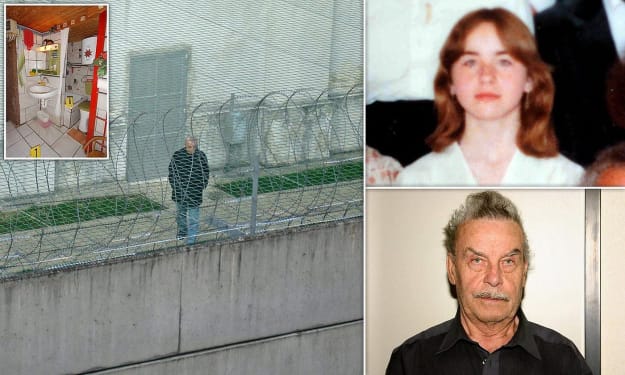
Stefan Fritzl: The Boy Who Survived 18 Years in Captivity with His Mother
The story of Stefan Fritzl is one of unimaginable suffering, endurance, and survival. Born into one of the most horrifying and notorious cases of imprisonment and abuse, Stefan spent the first 18 years of his life in a dark and confined cellar beneath his family's home. His mother, Elisabeth Fritzl, had been held captive by his father, Josef Fritzl, for over two decades in the same grim space, enduring years of abuse, while Stefan was born in captivity, never knowing the outside world until he was finally freed. Their story is a chilling reminder of the depths of human cruelty and the incredible strength of the human spirit.
By Victoria Velkovaabout a year ago in Criminal
Frozen in the Andes: The Haunting Survival Story of Flight 571
On October 13, 1972, a small aircraft carrying a group of young rugby players, their friends, and family members took off from Montevideo, Uruguay, heading toward Santiago, Chile. The journey was meant to be a simple trip across the Andes Mountains for a friendly rugby match. Spirits were high inside the plane. Laughter, excitement, and youthful energy filled the cabin.
By imtiazalam4 days ago in Criminal
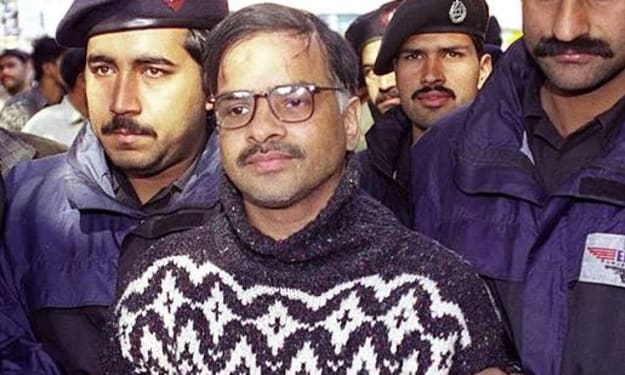
Javed Iqbal: The Monster Who Murdered 100 Boys in Six Months
Javed Iqbal Mughal stands as one of the most horrifying and prolific serial killers in modern history earning the grim distinction of being Pakistan's worst serial killer. Born around 1961 in Pakistan Iqbal came from a relatively affluent background. His family provided him with significant privileges early in life by his late teens his father had purchased a villa for him and gifted him a powerful 200cc motorbike. These luxuries would later become tools in his predatory schemes.In the early 1990s Iqbal's dark tendencies first came to light when he was arrested following allegations from one of his victims. He faced accusations of sexually abusing young boys luring them to his residence with promises of food money or shelter. However, the case did not result in lasting consequences—no formal charges stuck, and he was released. This brush with the law left a deep scar on Iqbal. He later claimed that the stress and humiliation his mother endured during his arrest and the surrounding scandal contributed to her suffering a fatal heart attack. Consumed by grief and rage Iqbal vowed revenge—not directly against the authorities, but against society itself. He declared his intention to inflict the same level of anguish on 100 other mothers by taking their sons' lives.
By Kure Garba5 days ago in Criminal
My First Time Skiing and I Got Lost, Alone, in the French Alps
Looking back, I can trace some of my life’s biggest adventures to a simple action from my sister. She’d introduced me to Tommy (a very long time ago), a colleague of hers, who had overshared his penchant for Italian-looking women, and I ticked that box.
By Chantal Christie Weiss3 days ago in Humans


Comments
There are no comments for this story
Be the first to respond and start the conversation.