
Jeffrey Epstein: The Ghost That Haunts Trump's White House Return
A Dead Man's Legacy Challenges the Authority and Unity of MAGA Nation
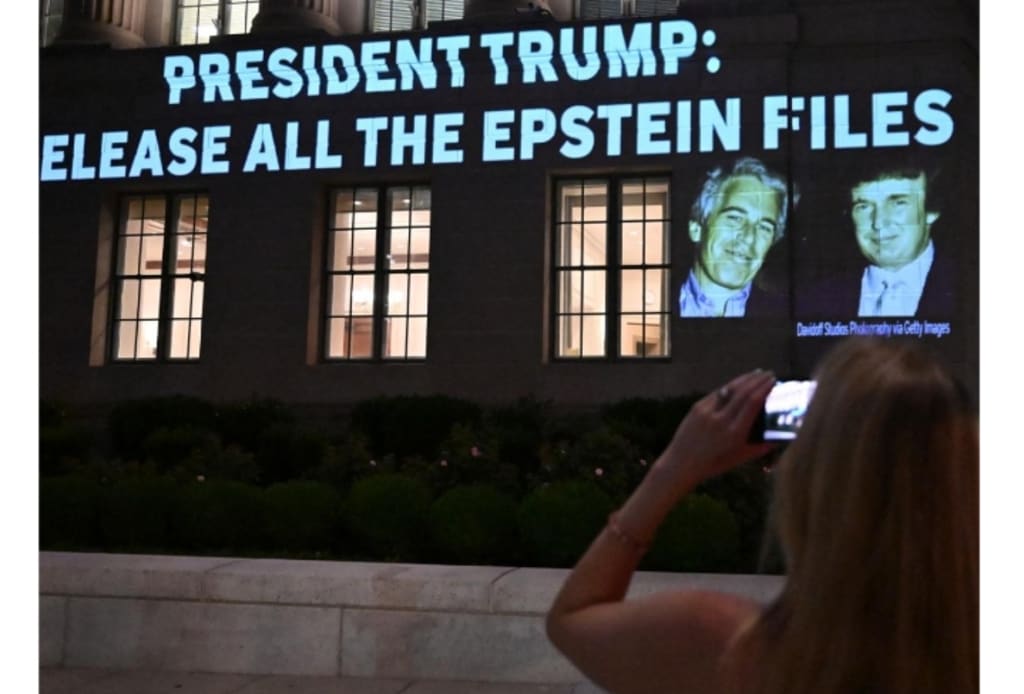
For the first time in Donald Trump's political career, a narrative is taking shape that even his most loyal supporters are unwilling to buy. That narrative centers around a man who died six years ago—Jeffrey Epstein. As Trump seeks a return to the White House, Epstein's legacy has emerged as a potent force shaking the very foundation of Trump’s authority and the unity of the MAGA movement.
Outside the U.S. Chamber of Commerce building in Washington D.C., a woman recently held a placard demanding the release of all files related to Epstein by President Trump. This is not an isolated protest. It symbolizes a growing unrest, not among liberals or left-wing activists, but among Trump's own MAGA loyalists.
The red "Make America Great Again" (MAGA) hat is not just merchandise—it's a movement, a belief system, and, until now, a symbol of unity. Trump, who has always claimed ownership over this ideology, once silenced critics by declaring that he created MAGA, and therefore he defines it. This tactic has worked time and again—until now.
---
Epstein: The Unwanted Phantom in Trump’s Comeback
Jeffrey Epstein, the disgraced financier and convicted sex offender, died in 2019 under mysterious circumstances while awaiting trial. His death, ruled a suicide, only intensified conspiracy theories that he was murdered to protect powerful individuals linked to his alleged crimes. Trump’s supporters were once enthusiastic promoters of this theory, which claimed Epstein had a "black book" containing names of elite figures—some allegedly involved in heinous activities on his private island involving underage girls.
Many MAGA voices, including Vice President J.D. Vance and Trump’s own son, Donald Trump Jr., gave life to this theory. It became a cornerstone of their narrative: that an elite liberal cabal was abusing power and silencing threats. Yet now, the same supporters are outraged to find Trump and his administration seemingly stepping back from that narrative.
Attorney General Pam Bondi, once vocal about the need for full transparency in the Epstein case, has shifted tone. She now insists there is “nothing more to see” and urges the public to move on. Trump himself recently referred to the Epstein story as “boring” and accused those pushing it of being “bad people.” On his social platform, Truth Social, he dismissed Epstein-related theories as "nonsense" and referred to those who still believe in them as "former supporters."
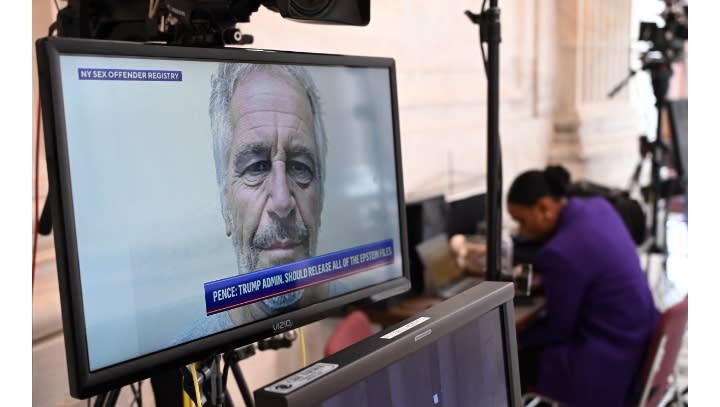
This shift has triggered an internal rebellion. Devoted allies and staunch loyalists are now questioning Trump's intentions. MAGA influencers who once praised him are now expressing anger and suspicion. The trust that Trump spent years building is showing rare signs of fracture.
---
A Conspiracy That Consumed the Conspiracist
Ironically, Trump has long thrived on conspiracy theories. One of his earliest political moves was the notorious “birther” claim, which falsely alleged that President Obama was born in Kenya and thus ineligible for the presidency. Despite the release of Obama's birth certificate, Trump and his followers kept the fire burning for years.
This tactic worked well for energizing the base and discrediting opponents. But as the Epstein narrative grows, Trump is finding himself on the wrong side of a conspiracy theory he once helped cultivate.
The FBI recently released a short memo claiming no evidence was found that Epstein was murdered or that he tried to blackmail powerful individuals. Many MAGA supporters find this explanation unconvincing, especially after Bondi had publicly stated she possessed a “truckload” of documents and a “black book” with the names of elite offenders. Now, the very system they once sought to expose is seemingly being protected by Trump himself.
Some speculate that Trump's hesitation to release more information stems from self-preservation. Could Epstein’s files include Trump’s name? There is no concrete evidence to support this, but the speculation has gained momentum—especially after high-profile tech billionaire Elon Musk publicly suggested as much during a disagreement with Trump.
---
Growing Dissent Within the MAGA Ranks
Inside Trump’s inner circle, even the most loyal are breaking rank. Speaker of the House Mike Johnson, known for his unwavering support of Trump, is now demanding full transparency from the Justice Department regarding Epstein’s death. Several Republican lawmakers have voiced distrust in the administration’s version of events, publicly expressing doubt over the "suicide" narrative.
Influential conservative figures like former Fox News host Megyn Kelly and right-wing radio personality Charlie Kirk recently hosted an event with over 7,000 attendees. When they asked the crowd if they believed the government's explanation that "there’s nothing to see here," the response was a resounding "No."
This public rejection is unprecedented. Trump's ability to control the narrative is slipping. And for a movement built on suspicion of the elite, it's dangerous territory when their own leader is perceived as part of the cover-up.
---
A Dangerous Turn: Conspiracy Against the King?
Perhaps the most dangerous development is the birth of a counter-conspiracy—that Trump is actively suppressing Epstein’s secrets to protect himself. While there's no definitive proof linking Trump to Epstein’s criminal activities, the two did know each other, and photos of them together exist. The suggestion alone is enough to inflame the MAGA base, already primed to believe in elite corruption.
If Trump continues to deny the relevance of the Epstein case and refuses to release the promised documents, this theory may solidify into a damaging belief. The same strategy Trump used to question Obama’s legitimacy is now being used against him.
---
A Movement at a Crossroads
What began as a ghost story about a disgraced financier has transformed into a political crisis for Donald Trump. For the first time, his grip on the MAGA movement appears weakened. He's fighting on two fronts: one against external critics and another against the internal disillusionment of his base.
Trump's dismissal of the Epstein case as "boring" and "nonsense" may work for the media cycle, but it doesn’t erase the suspicion. The refusal to release key documents only adds to the unease. His supporters are not asking for entertainment—they’re demanding answers.
And in this case, the dead are speaking louder than the living.
About the Creator
Keep reading
More stories from Ikram Ullah and writers in Criminal and other communities.
🕯️ The Haunting Silence of Hedviga Golik: Forgotten for Decades
The Haunting Silence of Hedviga Golik: Forgotten for Decades In May 2008, an astonishing discovery was made in Zagreb, Croatia. Three tenant representatives, unlocking a loft apartment at Medveščak 77, found the mummified remains of a woman—Hedviga Golik—still sitting in her armchair, wrapped in blankets beside a table with her old television and a half-finished cup of tea. She had died quietly—possibly in 1966, though officially last seen in 1973—and gone entirely unnoticed for 35–42 years .
By Ikram Ullah6 months ago in Criminal
A Mother's Love Lost
It was December 30th, 1988, just two days before the New Year. Jack Dale Walker had convinced a coworker to drive him out to the trailer where his girlfriend lived. Hansel Norton, the co-worker, had known Jack for barely three full weeks. Hansel was trying to be a good friend to this new friend. So, Jack, was young, only 22 years old and appeared to be love sick for the girl who was the mother of his baby.
By Cassie Moore4 days ago in Criminal
Inside the House of Skulls: The Full Timeline of the Jonathan Gerlach Investigation
INVESTIGATION TARGET: JONATHAN C. GERLACH INCIDENT LOCATION: 100 WASHINGTON AVENUE, EPHRATA PA CHARGES: ABUSE OF CORPSE (x100), THEFT, DESECRATION STATUS: INCARCERATED ($1M BAIL) KEYWORDS: #HouseOfSkulls #JonathanGerlach #EphrataCrime #MountMoriah
By Sunshine Firecrackera day ago in Criminal



Comments
There are no comments for this story
Be the first to respond and start the conversation.