
Jack the Ripper: The Enigma of Whitechapel
Uncover the chilling mystery of Jack the Ripper and his impact on Whitechapel in 1888

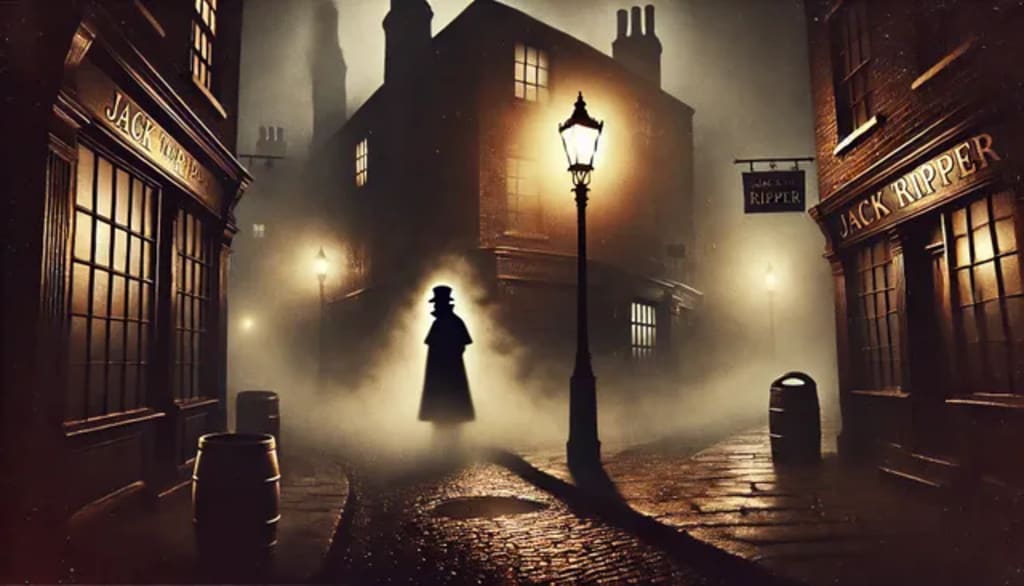
In the bustling district of Whitechapel, London, in 1888, a dark and macabre mystery unfolded, leaving an indelible mark on the history of crime.
This was the stage where a serial killer, known as Jack the Ripper, carried out a series of brutal murders that terrorized the population and confounded the police. Despite intense efforts to unmask the perpetrator, his identity remains an enigma to this day.
This narrative explores not only the gruesome facts but also the psychological and social impact of Jack the Ripper's crimes, delving into the psyche of a killer whose shadow still lingers.
The Context of Whitechapel
Whitechapel, at the heart of London's East End, was a district known for its narrow streets, noisy factories, and predominantly working-class population. Poverty and overcrowding were commonplace, and despair hung heavy in the air.
The nights in Whitechapel were especially dark, dimly lit by gas lamps that cast eerie shadows in the alleyways. It was in this environment that Jack the Ripper found the perfect setting for his heinous crimes.
The Victims
The horror began in August 1888, when the mutilated body of Mary Ann Nichols was discovered. She was followed by four other confirmed murders: Annie Chapman, Elizabeth Stride, Catherine Eddowes, and Mary Jane Kelly.
All the victims were women, mostly prostitutes, suggesting a pattern in the killer's selection. The bodies showed signs of extreme mutilation, a clear indication of the brutality and lack of remorse of the killer.
Each murder increased the sense of panic and despair in the community. News of the crimes spread quickly, and the press, eager for sensational details, soon turned Jack the Ripper into an infamous character. Newspapers filled their pages with speculations and theories, fueling a collective hysteria that gripped London.
The Investigation
The Metropolitan Police, known as Scotland Yard, faced an unprecedented challenge. Despite tireless efforts and the formation of a special investigative team known as the "Ripper Squad," capturing the killer proved monumental.
The lack of advanced forensic technology, combined with the scant cooperation from Whitechapel's residents, greatly hindered the investigation.
Numerous letters arrived at police offices, many claiming to be from Jack the Ripper himself. The most famous of these missives was the "From Hell" letter, which came with a small package containing a piece of a human kidney.
Although the authenticity of these letters has been debated, they contributed to the creation of the mythical figure of the Ripper.
The Profile of the Killer
Speculations about Jack the Ripper's identity have spanned a wide range of theories, from the possibility of a doctor with anatomical knowledge to the hypothesis of a member of the royal family. Notable suspects included Montague John Druitt, a barrister with suicidal tendencies, and Aaron Kosminski, a Polish barber with mental health issues.
However, none of these suspects have been conclusively identified as the killer. The absence of definitive evidence and the elusive nature of the criminal have kept the mystery alive, leaving historians and amateur sleuths in a state of perpetual search.
Psychological and Social Impact
Jack the Ripper's murders left an indelible mark not only on Whitechapel's history but also on its psychological and social fabric. The community lived under a shadow of fear and distrust, and the figure of the Ripper became a symbol of absolute evil.
The case also highlighted the harsh realities of life in London's East End, drawing attention to the extreme poverty and desperation that prevailed in the area. The victims, mostly marginalized and vulnerable women, reflected a society that had failed to protect its most defenseless citizens.
The mystery of Jack the Ripper remains one of the most intriguing and chilling enigmas in the history of crime. Despite advances in criminology and exhaustive investigations, the true identity of this ruthless killer remains hidden in the shadows of Whitechapel.
His story is a grim reminder of the darkest corners of human nature and how one individual can leave a lasting impact on the collective psyche.
Jack the Ripper's legacy is a testament to the power of fear to perpetuate itself through time and an invitation to reflect on the social conditions that allow such horrors to occur.
Meanwhile, the search for the truth continues, and the figure of the Ripper still lurks on the edge of our historical consciousness, a specter challenging us to unravel the deepest mysteries of humanity.
Related Articles:
About the Creator
Jose Mejia
I am an accountant and blogger, combining years of finance experience with a love for technology. On my blog, I break down complex accounting regulations and tech trends into accessible and inspiring content for everyone.
Keep reading
More stories from Jose Mejia and writers in Criminal and other communities.
Andrei Chikatilo: The Butcher of Rostov
In the shadowy annals of criminal history, few names evoke as much dread as Andrei Chikatilo, known infamously as the “Butcher of Rostov.” Between 1978 and 1990, Chikatilo perpetrated a series of brutal murders, claiming the lives of at least 52 people.
By Jose Mejia2 years ago in Criminal
Michigan Synagogue Shooting: Fear, Faith, and Survival
Places of worship are meant to feel safe. People gather there to pray, reflect, and share quiet moments with their community. For many families, a synagogue is more than a building. It is where children learn traditions, where people celebrate holidays, and where comfort is found during difficult times.The michigan synagogue shooting shattered that sense of safety in an instant. What began as an ordinary day quickly turned into confusion and fear. Families inside the building suddenly faced a situation no one expects in a place meant for peace.
By Muqadas khan2 days ago in Criminal
Top tipple tricks
Been thinking a lot about drinking, lately. Not least because of a recent episode of over-indulgence and the inevitable after effects. Some readers may recall the earlier articles I wrote about beating the booze. Here I set out an experiment in techniques for cutting down on my alcohol intake. The experiment was successful, the techniques worked, and I have armed myself with an arsenal of weapons in the war against the demon drink. I have yet to fire the first round however. It's all a question of timing (perhaps procrastination).
By Raymond G. Taylor7 days ago in Psyche



Comments
There are no comments for this story
Be the first to respond and start the conversation.