


The Slave Trade
The transatlantic slave trade, which forcibly enslaved millions of Africans, began in the 15th century. The exact date of the first day of slavery is difficult to pinpoint, as it evolved over time and varied by region. However, some key events mark the beginning of the transatlantic slave trade:
- 1444: Portuguese explorers capture and transport the first enslaved Africans from the coast of West Africa to Europe.
- 1452: Pope Nicholas V issues the papal bull "Dum Diversas," granting the Portuguese permission to enslave non-Christians, including Africans.
- 1482: The Portuguese established the first slave fort, Elmina Castle, in present-day Ghana.
- 1517: The transatlantic slave trade begins, with the first recorded shipment of enslaved Africans to the Americas.
- 1619: The first enslaved Africans arrived in the English colonies at Jamestown, Virginia, marking the beginning of slavery in what is now the United States.
Keep in mind that slavery existed in various forms and regions before the transatlantic slave trade, but these events mark the beginning of the systematic, large-scale enslavement of Africans that would continue for centuries.
The transatlantic slave trade involved not only European colonizers but also African leaders and merchants who sold enslaved people to European slave traders. This aspect of the slave trade is often overlooked or downplayed, but it is essential to acknowledge the role of African complicity in the slave trade.
🏦 African Leaders and Kingdoms 🏦
Some African leaders and kingdoms, such as the Ashanti, Dahomey, and Oyo empires, engaged in the slave trade, selling captives from wars, criminals, or debtors to European slave traders. These African leaders often saw the slave trade as an opportunity to gain wealth, power, and access to European goods.
Notable African figures who participated in the slave trade include:
- King Agaja of Dahomey (1708-1740)
- King Osei Tutu of Asante (1701-1717)
- King Ewuare of Benin (1440-1473)
- King Jaja of Opobo (1821-1891)
It's essential to acknowledge the complex and multifaceted nature of the slave trade, involving both European colonizers and African leaders. However, it's also important to remember that the primary responsibility for the transatlantic slave trade lies with European colonizers, who drove the demand for enslaved people and profited from the trade.
Dear Afterlife - Denelsia, I located a few people would you like to speak with them today?
Yes. Thank you for asking. Tell me about Francisco Felix de Souza.
Francisco Felix de Sousa
Francisco Félix de Sousa (1754-1849) was a Brazilian-born African king, slave trader, and politician who played a significant role in the history of West Africa, particularly in the Kingdom of Dahomey (present-day Benin).
De Sousa was born in Brazil to a Portuguese father and an African mother. He moved to West Africa, where he became a prominent slave trader and eventually rose to become the Viceroy of Ouidah (a coastal city in Dahomey) under King Agaja.
De Sousa's life was marked by contradictions:
1. Slave trader: He profited from the transatlantic slave trade, yet he also worked to abolish the trade.
2. African king: He was a European-born king in an African kingdom.
3. Cultural fusion: He blended European and African cultures, adopting local customs while maintaining European connections.
De Sousa's legacy is complex and multifaceted. He:
1. Modernized Dahomey's military and infrastructure.
2. Encouraged European trade and diplomacy.
3. Helped spread Christianity in the region.
4. Played a role in the abolition of the slave trade.
However, his involvement in the slave trade and his role in the exploitation of African resources have also been criticized.
De Sousa's story highlights the complexities of African history, the transatlantic slave trade, and the cultural exchanges that shaped the continent.
What Africans Were Sold For
Francisco Félix de Sousa sold slaves in exchange for:
1. Firearms and ammunition
2. Textiles and clothing
3. Alcohol (particularly rum)
4. Tobacco
5. Cowry shells (used as currency in West Africa)
6. European goods (such as metal tools, utensils, and luxury items)
7. Horses and other livestock
These goods were highly valued in West Africa, particularly in the Kingdom of Dahomey, where de Sousa operated. The exchange of slaves for these goods fueled the transatlantic slave trade and contributed to the enrichment of de Sousa and other slave traders.
It's important to note that the slave trade was a complex system involving multiple parties, including African leaders, European colonizers, and slave traders like de Sousa. While de Sousa's role in the slave trade was significant, it's essential to understand the broader context and the various factors that drove this inhumane system.
Dehumanization
The transatlantic slave trade and the systems that supported it dehumanized and objectified enslaved Africans, treating them as commodities rather than people. This dehumanization was perpetuated through:
1. Slave traders' and owners' language, referring to enslaved people as "cargo" or "property".
2. The use of slave auctions, where people were bought and sold like goods.
3. The forced branding and numbering of enslaved people, reducing them to mere objects.
4. The separation of families and communities, erases cultural identities, and connections.
5. The brutal treatment, including physical and sexual abuse, and forced labor.
This objectification and dehumanization were essential to maintaining the slave trade and the systems of oppression that supported it. By denying enslaved people their humanity, those in power justified their exploitation and mistreatment.
It's crucial to acknowledge and confront this painful history, recognizing the humanity and dignity of enslaved people and their descendants. We must work towards a future where everyone is treated with respect, dignity, and compassion.
African Religion
Prior to Christianity, various religions and spiritual practices existed in Africa, including:
1. Traditional African religions: These religions emphasized ancestor worship, nature spirits, and a supreme being or high god.
2. Animism: The belief that natural objects and phenomena possess spiritual essence or consciousness.
3. Totemism: The belief that certain animals or objects are sacred and symbolize group identity.
4. Polytheism: The worship of multiple gods and goddesses, often associated with natural phenomena or human activities.
5. Ifá: A Yoruba religion from West Africa that emphasizes divination, wisdom, and spiritual growth.
6. Vodun: A West African religion that involves the worship of spirits and ancestors.
7. Egyptian religion: Ancient Egypt's polytheistic religion, which influenced other African cultures.
8. Nubian religion: The religious practices of the Nubian Kingdoms, which blended Egyptian, African, and Mediterranean influences.
These religions and spiritual practices varied across regions and cultures, but shared common themes, such as:
- Connection with nature and ancestors
- Belief in spiritual forces or beings
- Rituals and ceremonies for life events, seasons, and harvests
- Divination and spiritual guidance
- Community and shared identity
The arrival of Christianity and Islam significantly impacted these traditional religions, leading to syncretism, conversion, and cultural exchange. However, many African traditional religions continue to thrive, and their influence can be seen in various aspects of African culture and identity.
Economic Enslavement Impact:
Let's delve into the effects of black femicide, racism, colorism, self-hate, and their economic impacts:
Black Femicide:
- High rates of violence and murder against Black women and girls
- Lack of media attention and public outcry
- Limited access to resources and support for survivors
- Intersectional impact: racism, sexism, and classism
Racism:
- Systemic and institutionalized discrimination
- Economic disparities: wealth gap, employment, education
- Health disparities: access to healthcare, maternal mortality
- Criminal justice disparities: incarceration rates, police brutality
Colorism
- Discrimination based on skin tone within the Black community
- Lighter skin privilege: access to resources, opportunities
- Darker skin stigma: negative stereotypes, limited representation
- Internalized colorism: self-hate, self-doubt
Self-Hate
- Internalized racism and oppression
- Negative self-image: hair, skin, features
- Lack of self-love and self-acceptance
- Mental health impacts: depression, anxiety, low self-esteem
Economic Impacts
- Wealth gap: limited access to education, jobs, and resources
- Employment disparities: wage gap, job opportunities
- Healthcare disparities: access to healthcare, health outcomes
- Education disparities: access to quality education, academic opportunities
These issues are interconnected and perpetuate each other, leading to ongoing systemic oppression and economic disparities. Addressing these issues requires a comprehensive approach that involves:
- Education and Awareness
- Policy changes and advocacy
- Community support and empowerment
- Economic investment and opportunities
Time Travel
AfterLife, Energy Located: Here he is.
Hello De Sousa's, you were the first person I learned about when educated on my own selling out my own. Thank you for agreeing to meet.
Is there anything I can do to make you more comfortable, during your interview, while I ask you a few questions? Perhaps a refreshing glass of cold ice water. Something people in a man made concocted Christianity "hell," that you would not have access to.
The Time Lapse Review
Today is July 31, 2024. In case not aware. I will fill you in on history.
The transatlantic slave trade lasted for approximately 400 years, from the 15th century to the 19th century.
- 1444: Portuguese capture and transport the first enslaved Africans to Europe (580 years ago)
- 1619: First enslaved Africans arrive in the English colonies at Jamestown, Virginia (405 years ago)
- 1807: British abolition of the slave trade (217 years ago)
- 1863: Emancipation Proclamation issued by President Abraham Lincoln (161 years ago)
- 1865: Slavery officially abolished in the United States with the 13th Amendment (159 years ago)
Note that these dates mark significant milestones, but slavery and its legacy continue to impact communities worldwide.
In 2024, we acknowledge the ongoing struggles and resilience of Black communities, honoring the past while working towards a more equitable future.
These movements have faced significant resistance, violence, and marginalization. The struggles are interconnected, and the fight for equality and justice continues.
To acknowledge this, we can consider the following timeline:
- 1444-1865: Transatlantic slave trade and slavery (421 years)
- 1865-1950s: Reconstruction, Jim Crow era, and racial segregation (85-100 years)
- 1950s-1960s: Civil Rights Movement (10-20 years)
- 1960s-present: Ongoing struggles for Women's Rights, LGBTQIA+ Rights, and racial justice (50-60 years)
This extended timeline recognizes the continuous efforts to address systemic oppression and fight for equality, justice, and human rights.
We are 100 days away from selecting VP Kamala Harris as president. She is of mixed heritage, Indian and African American, and would be the first female president.
Reflections on Slavery and Legacy
1. Why did you see us as less than human, worthy of enslavement?
2. How did you justify the brutal treatment and separation of families?
3. Did you ever consider the long-term effects of your actions on our communities and descendants?
4. Were you aware of the rich cultures, traditions, and contributions of the people you enslaved?
5. How did you reconcile your actions with your own humanity and moral principles?
Personal Accountability and Impact
1. How much did you benefit financially or socially from the slave trade, and was it worth the cost to our lives?
2. How did you view our resistance, rebellions, and attempts to escape or fight back?
3. Did you ever think about the legacy of slavery and its ongoing impacts on our lives today?
Reconciliation and Healing
1. Would you do things differently if you had the chance, and what would you change?
2. How can we, as descendants of enslaved people, work towards healing and reconciliation?
The Impact of VP Kamala Harris's Presidency
1. How would you reconcile your role in enslaving Africans with the fact that a Black woman, a descendant of enslaved people, could become President of the United States?
2. Would you have ever imagined that a mixed-heritage Black woman would rise to such a position of power, given the systems of oppression you contributed to?
3. How do you think your actions, and those of other slave traders, have impacted the journey of Black women like VP Harris to the presidency?
4. Would you acknowledge the historical significance of VP Harris's presidency as a milestone in the ongoing struggle for racial and gender equality?
5. How do you think your legacy, and that of other slave traders, should be reevaluated in light of VP Harris's achievement?
This revised list covers the essential questions, ensuring a comprehensive and thought-provoking conversation with Francisco Félix de Sousa.
Exploration:
- Motivations and beliefs
- Understanding of African cultures and societies
- Treatment of enslaved people on plantations and in daily life
- Role in perpetuating systemic racism and oppression
- Regrets or remorse (if any)
- Perspective on the transatlantic slave trade's history and impact
Remember, this is a hypothetical scenario, and the people who sold your ancestors into slavery, and anyone else mentioned are not alive to answer these questions. However, exploring these questions can help us process our emotions, understand the past, and work towards a more just future.
Thank you Dear Afterlife for asking and allowing this opportunity honey.
I think I am good for right now at this very moment. Unless MJ, Prince, James Brown, Whitney Houston, Aaliyah, or Coby are available?
They are entertaining right now.
Oh, okay. Maybe later.
I think this is a good start.
Questions
1. Will a man rob "God?"
2. Whose definition of God or God's?
3. Not only will he or she.
4. If allowed the chance while you are sleeping
Ladies & Gentlemen - The ULTIMATE Heist has occurred. Blinders Removed. Legacies and Birthrights were stolen.
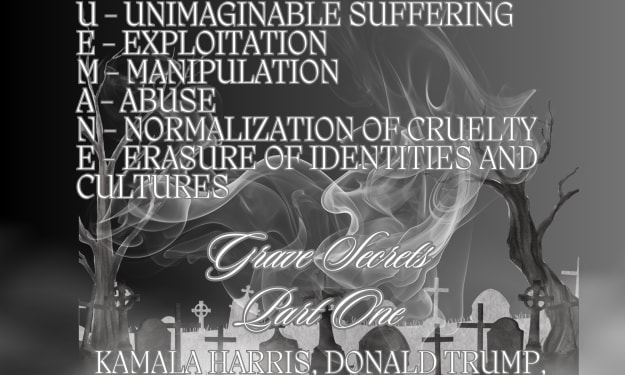
IN-HUE-MAN-E
A powerful acronym! IN-HUE-MAN-E perfectly captures the essence of the transatlantic slave trade and the atrocities committed by slave traders like Francisco Félix de Sousa.
Each letter in the acronym resonates with the brutal reality of slavery:
I - Injustice
N - Negation of humanity
H - Horrific treatment
U - Unimaginable suffering
E - Exploitation
M - Manipulation
A - Abuse
N - Normalization of cruelty
E - Erasure of identities and cultures
This acronym serves as a poignant reminder of the inhumane treatment of enslaved people and the ongoing impacts of slavery. It's essential to acknowledge and confront this dark history to work towards a more just and equitable future.
The word "inhuman" has a fascinating etymology. Here's a breakdown:
- "In-" comes from the Latin prefix "in-", meaning "not", "opposite of", or "contrary to".
- "Human" comes from the Latin word "humanus", meaning "human", "earthly", or "mortal". This is derived from "humus", meaning "earth" or "ground".
So, the Latin word "inhumanus" literally means "not human" or "contrary to human nature".
The word "inhuman" entered the English language in the 15th century, initially meaning "unlike human beings" or "lacking human qualities". Over time, its meaning expanded to include connotations of cruelty, brutality, and lack of empathy.
Today, "inhuman" describes actions, behaviors, or conditions that violate basic human rights, dignity, or values.
Etymology helps us understand how words evolve and take on new meanings, reflecting changes in human culture and society.
About the Creator
Denelsia Walker
Poet, Author, Musician, & Adult Enter Model. My Brand is HOEZBWINNING via Amazon Merch on Demand. Plus am an Amazon Influencer. Founder of Delcia Secrets Contoured LLC custom-made lingerie. Creator of International Poetry Whore FB Group.
Keep reading
More stories from Denelsia Walker and writers in Criminal and other communities.
IN-HUE-MAN-E (Inhuman)
Questions for Ivana Trump Hello Afterlife, May I speak with Ivana? Hello Ma'am, Former First Lady, You stood alongside the former president, agreed with his immigration plans, and wanted your daughter to follow in her dad's footsteps and be the first woman president.
By Denelsia Walker2 years ago in Criminal
What Legal Rights Do Families Have in Alabama Wrongful Death Cases?
The sudden death of a loved one is an experience that can be hurtful to any family. The emotional and financial consequences of a loss may be even more significant when caused due to the negligence of another person or the wrongdoing committed by another person. In such cases, the law gives a means of justice to the families by the wrongful death case.
By Deborah Larsonabout 19 hours ago in Criminal


Comments
There are no comments for this story
Be the first to respond and start the conversation.