
HOW THE CIA FOUND OSAMA BIN LADEN.
How OSAMA BIN LADEN was found by the CIA.
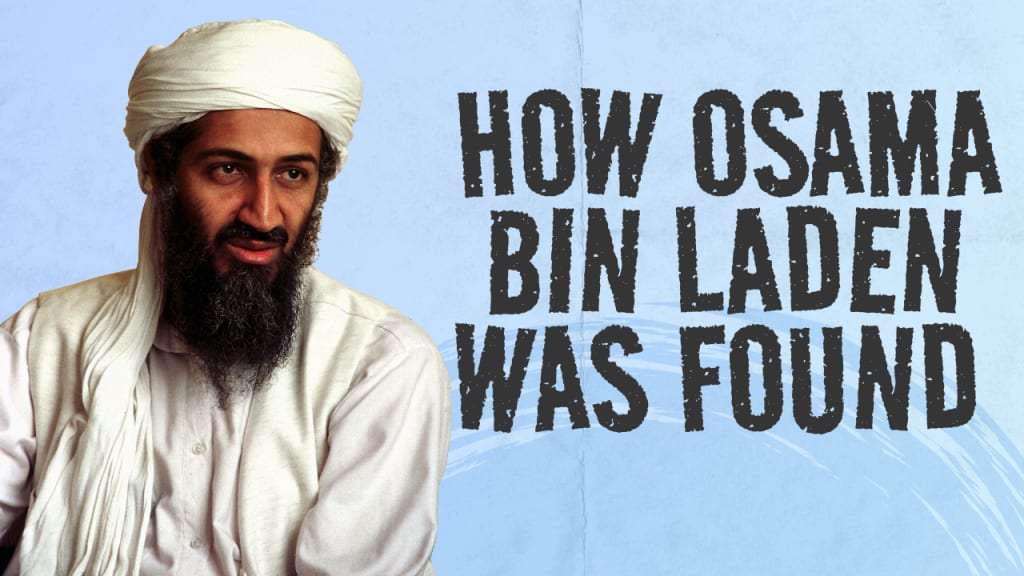
In the final days leading up to the 2004 US presidential election, a recently released tape emerges, capturing significant attention in the media. The election, primarily centered around foreign policy choices following the September 11 attacks, saw George Bush and John Kerry as the key contenders. This particular tape, attributed to "Al Jazeera," showcases a resurfaced Osama bin Laden, assuming a more explicit role in claiming responsibility for the attacks. The deliberate staging of this recording portrays bin Laden's attempt to present himself as a legitimate figure directly addressing the nation he had targeted. This unsettling occurrence serves as a poignant reminder that the world's most sought-after individual may harbor a sense of relative security in his undisclosed location.
Simultaneously, within the confines of the CIA headquarters in Virginia, a specialized unit devoted to tracking down Osama bin Laden faced mounting frustration as virtually every lead had grown cold. This was particularly exasperating considering that, nearly three years prior, they believed they were on the verge of capturing him. As the 2001 US invasion of Afghanistan drew to a close, al-Qaeda fighters were driven into the rugged terrain of the country's eastern region, seeking refuge in the fortified caves of Tora Bora. American intelligence agencies suspected bin Laden to be among them. Assisted by the United States, local Afghan tribes maneuvered through treacherous landscapes while facing heavy aerial bombardment. However, when the battle was eventually won, bin Laden had cunningly eluded capture, leaving the CIA empty-handed. Only about 20 individuals were apprehended, highlighting a missed opportunity to apprehend the leader of al-Qaeda.
Nonetheless, among those detained, one individual ultimately provided a vital breakthrough for investigators. Prior to his capture, Mohammed al-Qahtani was an unfamiliar name to the authorities. He vehemently denied any affiliation with al-Qaeda, claiming his presence in Afghanistan was solely driven by his passion for falconry. However, when his fingerprints were matched within the investigative database, a startling revelation emerged. It was discovered that a few weeks before the September 11 attacks, al-Qahtani had attempted to enter the United States. Carrying a substantial sum of $2,800 and traveling on a one-way ticket, his suspicious behavior had prompted a customs agent to deny him entry, suspecting potential illegal immigration intentions. Moreover, investigators became aware of a phone call originating from Orlando Airport to an al-Qaeda-linked number in the United Arab Emirates on the same day. This monitored telephone line, coupled with al-Qahtani's presence at the airport, triggered a frantic scramble to establish any possible connections.
Diligent FBI agents meticulously sifted through volumes of airport surveillance footage, seeking additional leads, eventually yielding success. They identified a rental car, attributed to Mohamed Atta, the mastermind behind the September 11 attacks and the pilot of American Airlines Flight 11, which struck the North Tower of the World Trade Center. It was concluded that Atta had been awaiting al-Qahtani's arrival at the airport. Speculation emerged that al-Qahtani was intended as one of the hijackers on United Airlines Flight 93, the ill-fated aircraft that failed to reach its intended target, crashing in Pennsylvania as courageous passengers fought to regain control. Armed with this knowledge, al-Qahtani underwent intensive interrogation, joining a cohort of al-Qaeda detainees whose revelations over the ensuing months and years gradually unveiled a clearer understanding of the intricate workings within the extremist group.
In March 2002, Abu Zubaydah, a logistical figure within al-Qaeda, was apprehended. During his capture, he provided the CIA with crucial intelligence, disclosing that Khalid Sheikh Mohammed, al-Qaeda's operational commander, had orchestrated the attacks on American soil. A year later, Mohammed himself was also arrested. In a significant revelation, Qahtani unveiled that in July 2001, in preparation for the attacks, Khalid Sheikh Mohammed introduced him to an individual previously unknown to the CIA: Abu Ahmed al-Kuwaiti. Al-Kuwaiti assumed the role of training Qahtani in operational security. These revelations served to enhance investigators' comprehension of al-Qaeda's organizational structure, comprising operatives with varying degrees of training, a command and planning layer, and bin Laden as the overarching leader. However, the whereabouts of bin Laden remained a persistent mystery.
To gain a more comprehensive understanding, the CIA diligently mapped out relationships, seeking insights into individuals in close proximity to bin Laden and how he communicated from his concealed sanctuary. They also scrutinized bin Laden's private network, including his family members, yet no discernible contact between bin Laden and these relatives could be established. Nevertheless, it became evident that bin Laden continued to disseminate messages. Over the subsequent years, new audio tapes surfaced, confirming his communication with key figures within al-Qaeda's leadership. Consequently, the CIA devised a strategy focused on identifying the courier network, individuals responsible for transporting vital information.
In mid-January 2004, a man named Hassan Ghul was apprehended by Kurdish security forces. Upon his arrest, Ghul was found in possession of a letter addressed to bin Laden. Subsequently, he was transferred to American custody, where he underwent interrogation, providing vital information that shed light on a key individual already under the agency's scrutiny. According to Ghul, this person, Abu Ahmed al-Kuwaiti, served as bin Laden's personal courier. As investigators redirected their focus towards Kuwaiti, conflicting accounts emerged regarding his role within al-Qaeda. While Ghul described Kuwaiti's involvement as significant, highlighting his familiarity with both Khalid Sheikh Mohammed and his successor Abu Faraj al-Libbi, Khalid Sheikh Mohammed himself denied the prominence of Kuwaiti, claiming that the individual had retired and become inactive. In May 2005, Abu Faraj al-Libbi was also apprehended in Pakistan, and he vehemently refuted any significant role played by Kuwaiti. Concurrently, investigators questioned a guide known as Hambali, the former leader of al-Qaeda's Southeast Asian affiliate group, who asserted that Kuwaiti indeed held a position of importance, managing a safe house in Karachi during the time when the Taliban were fleeing Afghanistan.
The contradictory statements regarding Kuwaiti's involvement only served to deepen the intrigue surrounding him. The challenge, however, lay in the limited information available about Kuwaiti himself. Even the name itself was not definitively identifiable, as it was an alias translating to "Father of Ahmed from Kuwait." While significant information was garnered from prisoner interrogations, it is important to note that the techniques employed during these interrogations, including so-called enhanced interrogation techniques such as torture and waterboarding, were highly controversial. A 2014 Senate Intelligence Committee report concluded that these methods proved ineffective and did not contribute to obtaining information about bin Laden. Moreover, the manner in which the CIA operated outside the bounds of legal frameworks raises concerns about potential harm to national security, a complex issue beyond the scope of this account.As investigators found themselves once again at an impasse, the next breakthrough would not originate from their own efforts.
In 2007, the CIA finally obtained the long-awaited breakthrough regarding the true identity of the individual known as the Kuwaiti. Surprisingly, this pivotal information did not emerge from the agency's own investigative efforts but rather from an undisclosed foreign intelligence service. The revelation unveiled that the Kuwaiti's actual name was Ibrahim Saeed Ahmed, a Pakistani individual whose family had recently relocated to Kuwait. However, despite the crucial identification, it would still take several more years for the CIA to successfully track down and locate Ibrahim Saeed Ahmed.
In June 2010, a significant development occurred when the Kuwaiti and his brother modified their communication methods by altering their cell phones. This change in their communication practices enabled the authorities to determine the approximate location of their calls. The National Security Agency (NSA) had received a list of telephone numbers suspected to be associated with the Kuwaiti from a third country, which were subsequently intercepted and monitored. Amidst the vast volume of conversations being analyzed, one particular individual emerged as he matched the Kuwaiti's profile. This person spoke a combination of Arabic and Pashto, the language commonly spoken in northwestern Pakistan. During a conversation with a friend in the Persian Gulf, the individual skillfully evaded questions regarding his whereabouts, responding enigmatically that he was with the same people he had been with before.
Furthermore, investigators observed that this person took elaborate precautions to avoid being tracked. His cell phone remained deactivated for most of the time, and it appeared that he only inserted the battery when he was in the vicinity of the city of Peshawar. As the evidence increasingly pointed to this individual being the Kuwaiti, efforts were initiated to surveil him on the ground. In August 2010, a Pakistani CIA agent successfully identified him while he was in his car in Peshawar. Subsequently, the Kuwaiti was covertly monitored as he made his way home.
The investigators were taken aback by the sheer scale of the house they encountered. Initially, they had anticipated monitoring Kuwaiti until he led them to bin Laden's hideout. However, as they surveyed the imposing compound where Kuwaiti resided, a startling possibility arose – they wondered if they had already stumbled upon the very location where bin Laden himself dwelled. While the certainty of this speculation eluded Washington at that moment, the long-sought pursuit of the man responsible for the September 11 attacks had reached its final phase. The task now shifted from intelligence agents to a specialized team of units, who were bracing for the unknown as they prepared to raid the compound.
On May 1st, 2011, at 11:00 PM local time, two Black Hawk helicopters, equipped with covert stealth technology, took off from Jalalabad Air Field, embarking on a critical mission to apprehend bin Laden. Complicating matters further, the United States government had deliberately chosen not to inform Pakistan about the operation, necessitating that the Navy SEALs operate undetected—a daunting prospect considering that bin Laden's complex neighbored a Pakistani military academy.
The account of how this daring raid transpired is truly captivating. That concludes our narrative for now, but be sure to explore additional captivating content like this from our collection. Thank you for your viewership, and we appreciate your continued support.
About the Creator
Reader insights
Outstanding
Excellent work. Looking forward to reading more!
Top insights
Expert insights and opinions
Arguments were carefully researched and presented
Easy to read and follow
Well-structured & engaging content
Compelling and original writing
Creative use of language & vocab
On-point and relevant
Writing reflected the title & theme
Eye opening
Niche topic & fresh perspectives
Masterful proofreading
Zero grammar & spelling mistakes
Excellent storytelling
Original narrative & well developed characters
Keep reading
More stories from Ahmed Abdullah and writers in Criminal and other communities.
The Wheels of Destiny
Once upon a time, in a small village surrounded by beautiful fields and rolling hills, there lived a young boy named Aryan. Aryan's family didn't have much money, and they struggled to make ends meet. But Aryan had something special inside him—a spirit that never gave up and a heart filled with big dreams.
By Ahmed Abdullah3 years ago in Fiction
The $23,000-a-Day Question: Ephrata spends $8.5 million a year for police. What are we actually buying?
The Invoice Arrives Every year, Ephrata property owners receive a tax bill. A massive chunk of that bill goes to one place: The Police Department. We are told this is the price of safety. We are told that we have a "Gold Standard" department that warrants premium funding.
By Sunshine Firecracker3 days ago in Criminal
Man Escaped Death Row, But He Could Not Escape Death: The Story of Troy Leon Gregg
The story of Troy Leon Gregg is one of the most haunting and ironic episodes in the history of the American criminal justice system. It is a narrative that seems almost fictional in its cruel symmetry: a man sentenced to die by the state escapes death row mere hours before his scheduled execution only to lose his life later that same night in a violent confrontation. Gregg’s story continues to resonate not only because of its dramatic events, but also because of the deeper questions it raises about fate, justice, violence, and the limits of human escape.Troy Leon Gregg was a death row inmate in the state of Georgia, convicted of serious crimes that ultimately led to a capital sentence. After years of legal proceedings and appeals, his execution date was set. For the prison system it was meant to be the final chapter in a long process. For Gregg, however the night before his execution would take an unexpected and shocking turn.
By Kure Garbaabout 13 hours ago in Criminal


Comments
There are no comments for this story
Be the first to respond and start the conversation.