
How did prisoners escape from the most powerful prison in human history (Alcatraz)?
They Escaped the Inescapable… Or Did They? Alcatraz was America’s most secure prison—cold, isolated, escape-proof. But in 1962, three men vanished into the night after a year of secret digging, crafting tools, and building a raft from stolen raincoats. The FBI said they drowned. A letter in 2013 said otherwise: “I’m still alive.” Was it the perfect escape… or the perfect mystery?

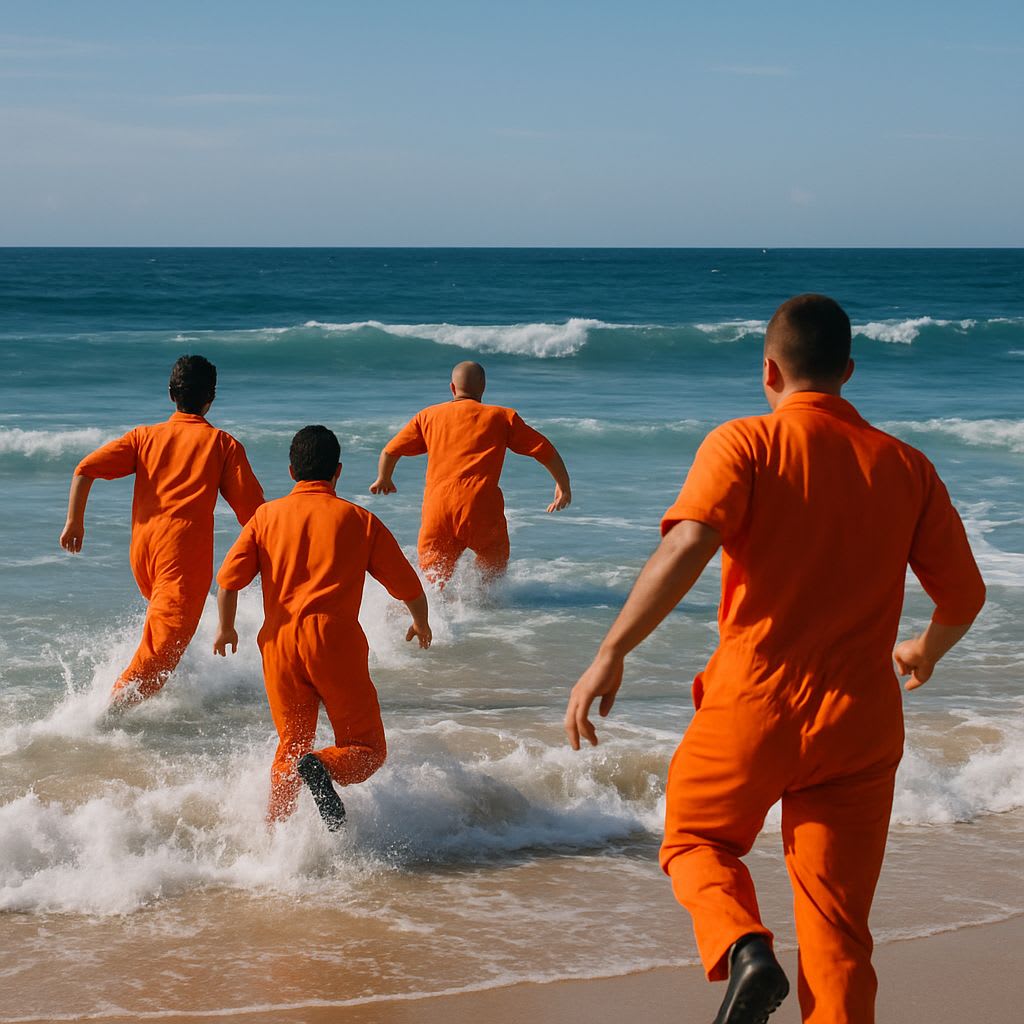
In 2013, a letter arrived at the San Francisco Police Department. The sender claimed to be the mastermind behind the infamous escape from Alcatraz prison and offered to turn himself in—on one condition: he would receive proper medical treatment, as he was now over 80 years old and seriously ill. Strangely, the police responded within just one hour, accepting his offer and stating that they were waiting for him, promising to provide the best care possible. However, the man never contacted them again. Whether it was just a game or he died, no one knows. The escape remains one of the most brilliant and daring in human history.
Alcatraz Prison, often referred to as “Hell on Earth,” was established in 1934 and designed to be the most secure facility in the world—not only to prevent escape but also to break the spirits of inmates. Those sent there had committed additional crimes while already imprisoned in other U.S. facilities. Located on a desolate island about 2 kilometers off the coast of San Francisco, the prison was surrounded by freezing waters, strong currents, and, according to popular belief, sharks—rumors spread by authorities to discourage escape attempts.
Life inside was pure torment: tiny cells, constant surveillance, one shower per week, limited meal and recreation time, and forced labor. Even the guards were among the worst—officers who had behaved badly elsewhere were sent to Alcatraz as punishment. This created a deeply hostile environment between prisoners and guards.
Despite all this, the impossible happened.
The story began in 1961, when an inmate named Allen West noticed a ventilation duct above his cell that seemed to lead to the prison’s roof. He realized he would need a team to pull off an escape, so he partnered with another inmate, Frank Morris, a man with an exceptional IQ of 133. They also brought in two brothers, John and Clarence Anglin, whose cell was nearby.
The four began secretly digging through the back walls of their cells using smuggled spoons and forks. Behind their cells, they discovered an unused corridor filled with drainage pipes, which could lead them to the roof. They covered the holes in their walls with cardboard and plaster structures painted to match the wall color and hung clothes to conceal them further. Since guards never entered the cells, the ruse worked perfectly.
They dug each night at 9 PM—during the daily hour when prisoners were allowed to sing and play music to lift their spirits. The noise masked the sound of digging. Over six months, they slowly widened the holes, disposing of the debris through the ventilation openings into the corridor.
Meanwhile, Frank developed a plan for escape by sea. Using old prison magazines, he had memorized instructions on how to build a raft and life vests from household materials. They gathered 22 stolen raincoats from the prison’s storage during the summer months when such coats weren’t needed, stitched them together, and created a rubber raft and vests. They even built an air pump using parts from a discarded accordion.
To cover their absence during nightly work on the roof, they crafted realistic dummy heads made from soap, paper, toothpaste, and real hair collected from the prison barber. Each night, they placed the heads on their pillows and climbed through the ventilation holes.
After two months of preparing the raft and cutting the metal bars covering the final exit vent, they were ready. On the night of June 11, 1962, at exactly 10:00 PM, the lights went out and the prison fell silent. Frank, the Anglin brothers, and Allen West put their dummy heads in place and prepared to escape. However, Allen couldn't squeeze through his hole—he had sealed it the night before and had gained weight over the months. The others told him they couldn’t wait and left without him.
The trio climbed to the roof, reached the outer fence, cut through it, and made their way to the shore. There, they inflated the raft using the homemade pump and launched into the freezing waters, heading toward freedom.
The next morning at 7:30 AM, a guard discovered something was wrong when he tapped one of the Anglin brothers to wake him and the fake head rolled onto the floor. Panic spread as they realized three prisoners had escaped. The prison was put on high alert, but the escapees were never found. The authorities later claimed they had drowned, although evidence suggested otherwise—life vests were found on the opposite shore, and years later, a photograph surfaced in 1975 allegedly showing the Anglin brothers alive.
Then in 2013, Frank Morris himself reportedly sent a letter saying he was ready to surrender—under the condition of medical care—but he vanished again and never followed up.
The escape was so embarrassing to the authorities that they kept details of the plan secret for 20 years. A year after the escape, a film was released depicting the story, using surprisingly accurate details that had never been officially disclosed. In the same year, Alcatraz was shut down for good. The infamous slogan carved into the rock—“On the rock of Alcatraz, your dreams of freedom will be crushed”—was replaced with a new one:
"Dreams of freedom were shattered on the rock of Alcatraz—forever."
The prison was converted into a tourist attraction.
Ultimately, the only one who didn’t make it was Allen West—the very man who discovered the ventilation shaft and helped plan the escape. Ironically, without him, the world might never have known the full details of the most ingenious prison escape in modern history.
About the Creator
Ink pulse(different angle)
Storyteller of truth and mystery. I write gripping true crime stories, documentaries, and fascinating facts that reveal the unusual and the unknown. Dive into the world where reality meets suspense and curiosity.
Keep reading
More stories from Ink pulse(different angle) and writers in Criminal and other communities.
Military robbery | The most dangerous armed operation in the world (the reason for arming the police)
On the morning of February 28, 1997, a fleet of news helicopters flew toward a bank in a quiet neighborhood in North Los Angeles. When they arrived, they pointed their cameras at the bank’s parking lot and began broadcasting live. What appeared on the screens was a bank robbery—expected to be routine, like thousands before it—but this time, it was completely different.
By Ink pulse(different angle)6 months ago in Criminal
Study reveals Louisiana State Police uses force disproportionately against Black people
It’s not the NYPD or LAPD that’s the news for using excessive force but the Louisiana State Police Department. In cases where women have been dragged on the pavement by a cop with a chip in his shoulder to the fact that cops chase after whomever is speeding, only the numbers tell the tale.
By Skyler Saunders4 days ago in Criminal
Hunting 'Deadshitdaddy': The Instagram Account Selling Bones from the House of Skulls
The Digital Storefront in Ephrata While Jonathan Gerlach was physically robbing graves 70 miles away in Yeadon, he was simultaneously building a thriving brand in the heart of Ephrata Borough. Using the handle "deadshitdaddy" on Instagram and maintaining active profiles in private Facebook groups like "Human Bones and Skull Selling Group," Gerlach allegedly turned his residence at 100 Washington Avenue into an online boutique for the macabre.
By Sunshine Firecracker4 days ago in Criminal



Comments
There are no comments for this story
Be the first to respond and start the conversation.