

The name Hannibal Lecter has become synonymous with the ultimate horror: a brilliant, cultured, and sophisticated serial killer who indulges in the most unthinkable of acts—cannibalism. Made famous by Thomas Harris’s novels and Anthony Hopkins’s chilling portrayal in The Silence of the Lambs, Lecter is a fictional character. However, the real world has seen its share of monstrous individuals who rival even Lecter in their depravity. These real-life Hannibal Lecters not only killed but also consumed their victims, blurring the line between humanity and pure evil. This article delves into the dark and disturbing stories of serial killers who ate their victims, exploring their motives, methods, and the psychological underpinnings of their crimes.
The Psychology of Cannibalism: Why Do Killers Eat Their Victims?
Cannibalism, or anthropophagy, is one of the most taboo acts in human society. While it has been practiced in certain cultures for ritualistic or survival purposes, the idea of consuming another human being for pleasure or power is deeply unsettling. For serial killers, cannibalism often serves as a way to exert ultimate control over their victims, to desecrate their humanity, or to fulfill a twisted fantasy.
Psychologists suggest that cannibalistic killers often suffer from severe mental disorders, including paraphilias (sexual deviances) and psychosis. For some, consuming their victims is a way to "absorb" their strength or essence. For others, it is a means of achieving a perverse sense of intimacy. Regardless of the motive, these acts reveal a profound detachment from societal norms and a descent into pure savagery.
Jeffrey Dahmer: The Milwaukee Cannibal
Perhaps the most infamous real-life Hannibal Lecter is Jeffrey Dahmer, also known as the Milwaukee Cannibal. Between 1978 and 1991, Dahmer murdered and dismembered 17 young men, often engaging in necrophilia and cannibalism. His crimes were marked by a chilling level of premeditation and a desire to create "zombies" who would never leave him.
Dahmer’s modus operandi involved luring victims to his apartment, drugging them, and then strangling or stabbing them to death. He would then dismember their bodies, keeping certain body parts as trophies and consuming others. Dahmer claimed that he ate his victims’ muscles to feel closer to them, a grotesque attempt at connection that underscores his profound loneliness and detachment from reality.
Despite his horrific crimes, Dahmer’s case raises questions about the intersection of mental illness and criminal responsibility. Diagnosed with borderline personality disorder and schizotypal personality disorder, Dahmer’s actions were driven by a combination of sexual deviance, a desire for control, and a warped sense of love. His story remains a haunting reminder of the depths of human depravity.
Albert Fish: The Brooklyn Vampire
Albert Fish, often called the "Brooklyn Vampire" or the "Werewolf of Wysteria," was a serial killer, cannibal, and sadomasochist who terrorized the United States in the early 20th century. Fish targeted children, often writing letters to their families detailing the gruesome acts he committed against their bodies. His crimes were so horrifying that even seasoned law enforcement officers were left shaken.
Fish’s most infamous crime was the murder of 10-year-old Grace Budd in 1928. He lured her away from her family under the pretense of taking her to a birthday party, only to kill her and consume her flesh over the course of several days. In a letter to Grace’s mother, Fish chillingly described how he roasted and ate her body, stating, "It took me 9 days to eat her entire body."
Fish’s motivations were rooted in a combination of religious delusions and a lifelong obsession with pain and suffering. He believed that by torturing and consuming his victims, he was fulfilling a divine mission. His case remains one of the most disturbing in criminal history, a testament to the terrifying potential of the human mind.
Andrei Chikatilo: The Butcher of Rostov
Andrei Chikatilo, known as the "Butcher of Rostov," was a Soviet serial killer who murdered at least 52 women and children between 1978 and 1990. Chikatilo’s crimes were marked by extreme violence, including mutilation, disembowelment, and cannibalism. He often targeted vulnerable individuals, such as runaways and prostitutes, luring them to secluded areas before attacking them.
Chikatilo’s cannibalism was not as systematic as Dahmer’s or Fish’s, but he did consume parts of his victims’ bodies, particularly their tongues and genitals. He claimed that eating these body parts gave him a sense of power and control, allowing him to overcome the feelings of inadequacy and impotence that plagued him throughout his life.
Chikatilo’s case is particularly chilling due to the sheer scale of his crimes and the inefficiency of Soviet law enforcement at the time. It took over a decade for authorities to apprehend him, during which time he continued to kill with impunity. His trial and eventual execution in 1994 brought a grim sense of closure to one of the darkest chapters in Soviet criminal history.
Issei Sagawa: The Celebrity Cannibal
While most cannibalistic killers are reviled, one man managed to turn his horrific crime into a bizarre form of celebrity. Issei Sagawa, a Japanese student studying in Paris, murdered and ate parts of his classmate, Renée Hartevelt, in 1981. Sagawa’s crime was meticulously planned; he shot Hartevelt in the neck, consumed parts of her body over several days, and attempted to dispose of the remains.
What sets Sagawa apart from other cannibalistic killers is his notoriety. After being declared legally insane and deported to Japan, he became a minor celebrity, writing books, appearing on television shows, and even starring in a pornographic film. Sagawa’s case raises uncomfortable questions about society’s fascination with evil and the commodification of crime.
The Legacy of Real-Life Hannibal Lecters
The stories of Jeffrey Dahmer, Albert Fish, Andrei Chikatilo, and Issei Sagawa are more than just macabre tales of horror. They force us to confront the darkest corners of the human psyche, to grapple with the idea that such evil can exist in the world. These real-life Hannibal Lecters challenge our understanding of morality, sanity, and the nature of evil.
In the end, the real-life Hannibal Lecters serve as a grim reminder of the potential for darkness within us all. Their crimes are a testament to the fragility of the human mind and the terrifying consequences when that fragility is pushed to its limits. As we delve into their stories, we are forced to confront the uncomfortable truth that monsters are not just the stuff of fiction—they walk among us, hidden in plain sight.
About the Creator
Keep reading
More stories from Anthony Maghanga and writers in Criminal and other communities.
What Triggers A Serial Killer?
Serial killers have long fascinated and frightened society. From their twisted psychology to the gruesome nature of their crimes, the question remains: what triggers a serial killer? While each case is unique, patterns exist in their backgrounds, life histories, and psychological makeup that explain what drives their killing sprees.
By Anthony Maghangaabout a year ago in Criminal
Javed Iqbal: The Monster Who Murdered 100 Boys in Six Months
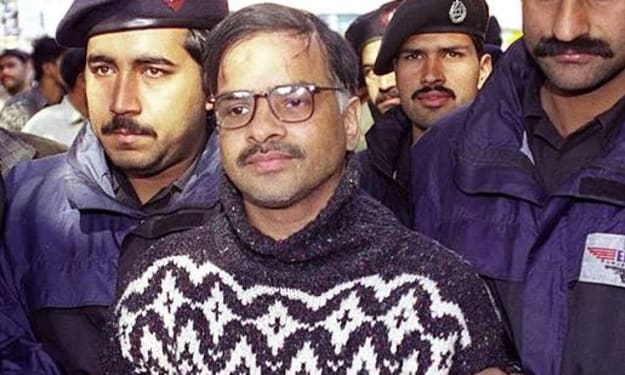
Javed Iqbal Mughal stands as one of the most horrifying and prolific serial killers in modern history earning the grim distinction of being Pakistan's worst serial killer. Born around 1961 in Pakistan Iqbal came from a relatively affluent background. His family provided him with significant privileges early in life by his late teens his father had purchased a villa for him and gifted him a powerful 200cc motorbike. These luxuries would later become tools in his predatory schemes.In the early 1990s Iqbal's dark tendencies first came to light when he was arrested following allegations from one of his victims. He faced accusations of sexually abusing young boys luring them to his residence with promises of food money or shelter. However, the case did not result in lasting consequences—no formal charges stuck, and he was released. This brush with the law left a deep scar on Iqbal. He later claimed that the stress and humiliation his mother endured during his arrest and the surrounding scandal contributed to her suffering a fatal heart attack. Consumed by grief and rage Iqbal vowed revenge—not directly against the authorities, but against society itself. He declared his intention to inflict the same level of anguish on 100 other mothers by taking their sons' lives.
By Kure Garbaa day ago in Criminal
Elon Musk
I was born in South Africa, in a household where strictness and violence were the norm. While other kids played, I hid. I was beaten at school, ignored during recess, and once thrown down the stairs, ending up in a hospital bed. But these challenges didn't crush me. They made me stronger.
By Tariq Pathan 7 days ago in Criminal



Comments
There are no comments for this story
Be the first to respond and start the conversation.