
H.H. Holmes and the murder castles
Details of one the most prolific serial killers of the late 19th Century

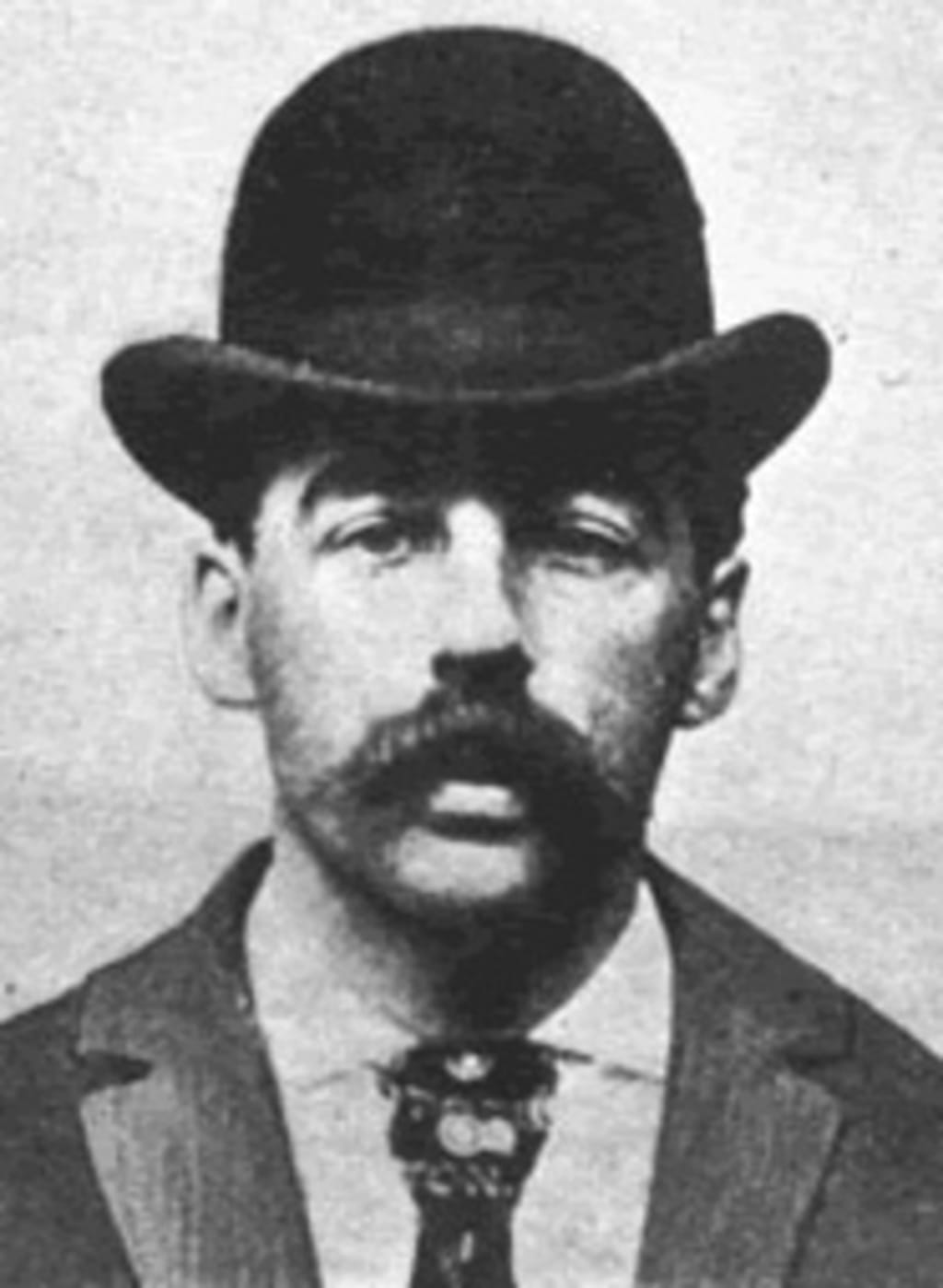
H.H. Holmes, also known as Herman Webster Mudgett, was a notorious serial killer who operated in the late 19th century in the United States. He is believed to have killed between 9 and 200 people, though the actual number of his victims is uncertain due to the nature of his crimes and the fact that he often disposed of their bodies in a secretive manner.
Holmes was born on May 16, 1861, in Gilmanton, New Hampshire. He was the son of Levi Horton Mudgett and Theodate Page Price. His parents were devout Methodists, and his father was a farmer and town treasurer. Holmes showed an early aptitude for science and medicine, and after completing high school, he enrolled in the University of Vermont's medical program.
In 1884, Holmes moved to Chicago, where he continued his studies at the University of Michigan's medical school. It was during this time that he began his criminal activities. He started by stealing cadavers from the school's anatomy lab and selling them to medical schools and labs. He then moved on to insurance fraud, faking the death of a man named Benjamin Pitezel and collecting the insurance money.
In 1893, Holmes constructed a building in Chicago that he called the "World's Fair Hotel." It was later dubbed the "Murder Castle" due to the numerous hidden rooms, trap doors, and secret passageways that he had built into it. Holmes used the hotel to lure in young women who were visiting the World's Columbian Exposition, a world's fair that was held in Chicago that year.
Holmes would hire these women to work in the hotel, and then he would kill them. He would often asphyxiate them with gas in specially designed rooms, which he called "the secret hanging chamber" and "the air-tight chamber." He also used a variety of other methods to kill his victims, including poisoning, suffocation, and dismemberment.
After killing his victims, Holmes would dispose of their bodies in a variety of ways. He sometimes burned them in a furnace or used acid to dissolve them. He also buried them in the hotel's basement, which was equipped with quicklime and other chemicals to aid in the decomposition process.
Holmes was eventually caught in 1894 after police began investigating the disappearance of Benjamin Pitezel, whom Holmes had killed as part of his insurance fraud scheme. He was arrested in Boston and extradited to Philadelphia, where he was tried and convicted of the murder of Pitezel. He was later sentenced to death by hanging.
Holmes confessed to killing 27 people, though it is believed that the actual number of his victims is much higher. Some estimates put the number at over 200. After his death, Holmes' body was buried in a cement-encased grave to prevent anyone from stealing it and using it for medical experiments.
In the years since his death, H.H. Holmes has become a notorious figure in American history and true crime lore. His gruesome crimes have been the subject of numerous books, movies, and documentaries, and he is often cited as one of the most prolific serial killers in history. Despite the passage of over a century since his crimes were committed, the legend of H.H. Holmes continues to fascinate and horrify people to this day.
About the Creator
Keep reading
More stories from Eric Williams and writers in Criminal and other communities.
Death of a Porn King
The Mitchell Brothers, James Lloyd "Jim" Mitchell and Artie Jay Mitchell, were influential figures in the adult entertainment industry during the 1970s and 1980s. They gained notoriety as pioneers of the pornographic film industry in the United States, particularly in the San Francisco Bay Area. Their story is a fascinating blend of entrepreneurship, legal battles, controversy, and tragedy. In this response, I will provide an overview of the Mitchell Brothers and their significant contributions to the adult entertainment industry.
By Eric Williams3 years ago in Criminal
The Impossible Prison Break - Alcatraz Escape
FBI officers were stunned. This was a prison where even if a prisoner was left out in the open, escape seemed impossible. Yet somehow, right under the noses of the authorities, three inmates managed to break out. What was even more shocking was that for nearly 10 hours, the prison authorities had no idea they were missing.
By Imran Ali Shah4 days ago in Criminal
Jennifer Kesse: The Unidentified Man and the Vanished Car
The disappearance of Jennifer Kesse remains one of the most perplexing and heartbreaking unsolved missing persons cases in Florida. On January 24 2006 the 24-year-old finance manager vanished from her condominium complex in Orlando without a trace. Nearly two decades later her whereabouts are still unknown, no arrests have been made and the mystery continues to captivate true crime enthusiasts and haunt her family.Jennifer Joyce Kesse was a bright, ambitious young woman living in Orlando Florida. She worked as a finance manager at Central Florida Investments, a timeshare company in Ocoee. Having graduated with a finance degree she had built a stable life, purchasing her own condo in the gated Mosaic at Millenia community near the Mall at Millenia—a place she chose partly for its security features, including a guard. Jennifer was described by loved ones as responsible, family-oriented,and safety-conscious. She maintained close ties with her parents,Drew and Michelle Kesse and her boyfriend Rob Allen.
By Kure Garbaabout 20 hours ago in Criminal
Unofficial Challenge: Black History Celebration
Forward: February 28th, 10:53 PM, EST... The final hour of Black History Month, 2026. Hello fellow writers. I've had this challenge waiting in my drafts for most of the month. But I held off on publishing it, until now.
By Sam Spinelli7 days ago in Writers




Comments
There are no comments for this story
Be the first to respond and start the conversation.