


The Tragic Case of George Stinney: A Young Life Cut Short
The story of George Stinney Jr. is one of the most heartbreaking and unjust cases in American legal history. At just 14 years old, Stinney became the youngest person in the 20th century to be executed in the United States, convicted of a crime he did not commit. His case is a chilling example of racial injustice, the failure of the legal system, and the devastating effects of prejudice. The tragic nature of Stinney’s life and death has left a lasting legacy, prompting questions about justice, fairness, and the protection of children's rights.
The Crime
In March of 1944, two white girls—Betty June Binnicker, aged 11, and Mary Emma Thames, aged 7—were found brutally murdered in the small town of Alcolu, South Carolina. The two girls had disappeared while riding their bicycles on the morning of March 24, and their bodies were discovered later that day in a muddy ditch, having been bludgeoned to death. The crime shocked the town, and local authorities, desperate to solve the case, began their investigation.
The initial search was broad, but soon attention shifted to the Stinney family, who were Black, living in a segregated neighborhood on the outskirts of town. George Stinney Jr., a quiet and reserved young boy, was soon singled out by law enforcement. The reasons for his selection were not clear, but one key factor was his race—he was Black in a community where racial tensions were high, and a white girl's murder needed a "suspect" to satisfy the public's demands for justice.
The Arrest
On March 24, 1944, George Stinney was arrested after being questioned by the local police. The details surrounding his arrest remain deeply troubling. Stinney, who had been walking near the scene of the crime, was picked up by police officers, allegedly because a local white man had claimed to have seen him talking to the two girls before they went missing. However, there was no physical evidence linking Stinney to the crime, and his arrest seemed to be based more on his race and his proximity to the victims than on any actual evidence of wrongdoing.
George's parents, who were not notified of his arrest until after it happened, were not allowed to see their son during the interrogation. The police, under great pressure from the local community, interrogated Stinney without the presence of an attorney or any adult who could represent his interests. Stinney, who was likely terrified and confused, gave a brief confession. The confession, however, was highly questionable. It was a vague, contradictory statement, and Stinney later claimed that it was coerced. At the time of his confession, Stinney was only 14 years old and had no formal understanding of his legal rights.
The Trial
What followed next was an astonishing miscarriage of justice. George Stinney's trial was conducted less than three months after the murders, and it lasted only a few hours. The trial was held in front of an all-white jury, which was a stark reflection of the racial segregation that defined the South during that era. The prosecution presented no physical evidence linking Stinney to the crime, nor did they offer a coherent narrative of how the murder took place. Stinney's defense attorney, a man named Charles Plowden, did little to defend him. In fact, Plowden hardly made an effort to cross-examine witnesses or present any substantial evidence in favor of Stinney's innocence.
The prosecutor, in turn, made a racially charged argument, appealing to the prejudices of the all-white jury. There were no African Americans allowed to serve on juries in South Carolina at the time, ensuring that the trial was conducted in an atmosphere of racial hostility. In just a few hours, the jury deliberated for less than ten minutes before returning a guilty verdict. There was no real evidence of Stinney’s guilt, and the trial was a stark violation of his right to a fair trial.
The Execution
Just 83 days after his arrest, George Stinney was sentenced to death. His execution was set for June 16, 1944, at the South Carolina State Penitentiary in Columbia. At the time, South Carolina still used the electric chair as a method of execution, and Stinney, who was small and frail, was far too young and too small to fit the electric chair properly.
To execute him, the authorities placed a metal helmet over Stinney’s head and strapped him into the chair. The chair was designed for an adult, and the straps did not fit Stinney’s small body. The horrific nature of the execution, combined with the fact that it was carried out on a child who had been denied any semblance of justice, left a deep scar in the conscience of the nation. George Stinney's death was a grim reminder of how racial prejudice and an unjust legal system could destroy a young life with impunity.
Posthumous Reexamination
The case of George Stinney remained largely forgotten for decades, overshadowed by the broader racial issues of the time. However, in the 1980s and 1990s, as civil rights movements gained ground, a renewed focus on racial injustices in the American South began to shed light on the Stinney case. Over the years, a number of legal and historical scholars began to reexamine the case, and new evidence came to light suggesting that Stinney had been innocent all along.
In 2014, 70 years after his execution, the case was reopened by a South Carolina judge. A motion for a new trial was filed, claiming that the conviction was unjust and that Stinney had been wrongly convicted of a crime he did not commit. New evidence was presented, including testimony from those who had known Stinney as a child and from forensic experts who argued that it was physically impossible for Stinney to have committed the murders in the manner described by the prosecution. Moreover, it was revealed that Stinney’s original confession was likely coerced.
The judge ruled in 2014 that the trial had been a complete failure of justice. The conviction was vacated, and George Stinney was posthumously exonerated. This decision marked an important step in acknowledging the profound injustice that had occurred, though it could never undo the damage done to Stinney and his family.
The Legacy of George Stinney
The case of George Stinney highlights many of the worst aspects of America’s criminal justice system, particularly as it pertains to race. It demonstrates how racism, particularly in the Jim Crow South, could lead to wrongful convictions and executions, even in the face of clear evidence of innocence. The legal system failed George Stinney at every turn—by denying him a fair trial, by permitting a coerced confession, and by subjecting him to a racially biased jury.
Today, the name George Stinney is often used as a symbol of the failures of the criminal justice system, particularly in the context of racial discrimination. His case has led to important discussions about juvenile justice, the death penalty, and the rights of children within the legal system. George Stinney was just a child when he was executed—his death remains a tragic reminder that the justice system must continually evolve to ensure fairness for all, regardless of race or age.
Summary
George Stinney’s case is a haunting reminder of the dangers of racial prejudice and systemic injustice. At just 14 years old, Stinney was wrongfully convicted of murdering two white girls and executed in an unfair trial that lasted mere hours. His conviction was based on a coerced confession, a biased all-white jury, and a rushed investigation that ignored the principles of justice. Stinney’s execution remains the youngest in the history of the United States, and his posthumous exoneration in 2014 was a belated attempt at justice. His story is a testament to the importance of ensuring fair trials, especially for minors, and serves as a stark reminder of the deep racial divisions that have plagued the American justice system throughout its history.
About the Creator
Biographies
I love to write on different type of topics on vocal.media.
Keep reading
More stories from Biographies and writers in Criminal and other communities.
Nicole Virzi: Biography and Case Overview
Nicole Elizabeth Virzi is a woman from Allegheny County, Pennsylvania, who gained national attention after being charged with the murder of a newborn infant and the abuse of another child. The case against her has drawn significant media attention due to the horrific nature of the crimes and the charges she faces, including homicide, aggravated assault, and child endangerment. Authorities have indicated that they will pursue the death penalty in this case.
By Biographiesabout a year ago in Criminal
Boosie Badazz Will Not Go To Prison Over His Federal Gun Case
In 2023, law enforcement authorities sought to have Boosie Badazz locked down for gun charges. Because he is a convicted felon, he may not possess any firearms. At a traffic stop, officials found multiple guns following seeing a handgun in the waistline of Boosie’s trousers.
By Skyler Saunders5 days ago in Criminal
Inside the House of Skulls: The Full Timeline of the Jonathan Gerlach Case
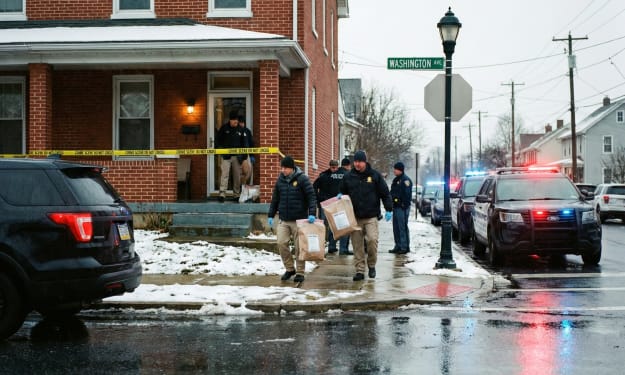
The Tuesday Morning Raid It started on Tuesday, January 6, 2026. Residents of Washington Avenue in Ephrata, Pennsylvania, are used to quiet mornings. But that day, the street was lined with unmarked cars. These weren't Ephrata police cruisers; they were detectives from the Yeadon Police Department in Delaware County, backed by state authorities.
By Sunshine Firecrackerabout 16 hours ago in Criminal



Comments