
Gaza Under Fire: Latest Escalation and the Human Cost
Intense strikes, mass displacement, and mounting international outrage as Gaza City faces its heaviest assault yet

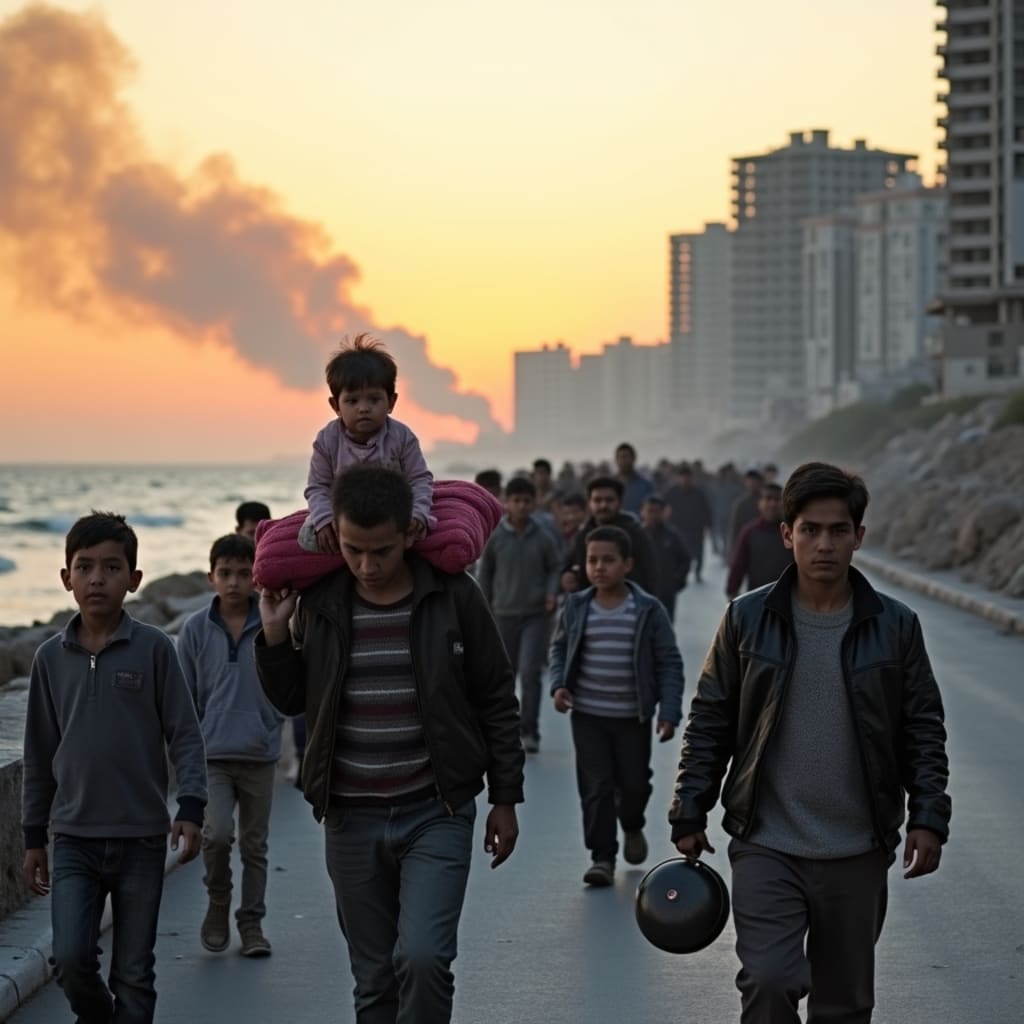
Gaza Under Fire: Latest Escalation and the Human Cost
Gaza City — In the past week the long-running war in Gaza has surged into what international monitors and residents describe as one of its most destructive phases. Israeli forces have intensified bombardments and ground operations in and around Gaza City, razing high-rise towers, demolishing alleged underground militant infrastructure, and forcing hundreds of thousands of civilians to flee for their lives. Local health authorities report dozens killed in single nights of strikes, and humanitarian agencies warn that famine and lawlessness are deepening across the territory. Reuters+1
Residents who have managed to escape describe streets turned into corridors of ruin: collapsed buildings, smouldering rubble, and long lines of families carrying whatever they can. Many say they have nowhere safe to go. Aid agencies have repeatedly accused the warring parties of obstructing relief — Israel blames Hamas for diverting or failing to protect aid, while Palestinian groups allege blockades and deliberate denials of assistance. The result is a worsening humanitarian catastrophe with hospitals overwhelmed, food supplies exhausted, and children at risk of death from malnutrition. UN OCHA - OPT+1
The Israeli government says its operation is aimed at dismantling Hamas’s military capabilities and freeing hostages taken during the October 7, 2023 attacks. Military spokespeople have pointed to the destruction of tunnel networks, weapons caches, and command centers hidden beneath urban infrastructure. Palestinian authorities and independent observers, however, say the scale and methods of the assault have inflicted disproportionate harm on civilians and civilian infrastructure, a charge that has intensified international scrutiny. Recent independent legal reviews and United Nations inquiries have moved to label aspects of the campaign as potentially amounting to war crimes or even genocidal conduct — allegations Israel rejects and calls politically motivated. Reuters+1
International diplomacy is struggling to keep pace with the crisis. In the U.N. Security Council, efforts to pass firm ceasefire resolutions have been repeatedly blocked; the United States recently used its veto power for the sixth time to block a ceasefire demand, prompting sharp criticism from many countries and human rights groups who say diplomatic paralysis is enabling continued devastation. As the U.N. General Assembly prepares for votes on Palestinian recognition by dozens of states, global divisions over how to halt the fighting and deliver aid have grown more pronounced.
On the ground, the displacement is staggering. Authorities estimate that up to half a million people have fled Gaza City alone in recent weeks to seek refuge in the south or in overcrowded camps, though figures vary by source. Those who remain are trapped in precarious conditions — without reliable water, electricity, or shelter — and many report being constantly on the move to avoid fresh strikes. Aid convoys that do arrive face security risks and logistical hurdles; some supplies intended for civilians have been reported looted or intercepted. Humanitarian groups repeatedly warn that without a durable pause and safe corridors, relief efforts will continue to fall short of needs. Reuters+1
The conflict’s human stories are stark and small in scale but immense in tragedy: medical staff struggling to treat crush injuries and malnutrition with dwindling supplies, parents bargaining for a single warm meal for their children, and families searching through rubble for loved ones. Meanwhile, rhetoric in both Israel and Gaza hardens, with public demonstrations and political pressures making compromises more difficult. There are growing calls from civil society, international courts, and humanitarian agencies for accountability and immediate measures to protect civilians, but translating appeals into action has so far proven elusive. The Guardian+1
What comes next is uncertain. Military planners on both sides suggest the operation could continue for weeks or months, while some diplomatic actors push for an internationally supervised ceasefire and an urgent expansion of humanitarian corridors. For civilians caught between the artillery and the headlines, however, time is measured in days and meals — and the immediate need is for safe passage, food, medicine, and water. Until those basics are secured, the human toll will keep rising, and the wider political repercussions — including shifts at the U.N. and possible recognitions of Palestinian statehood by multiple countries — will ripple through global diplomacy. Reuters+1
About the Creator
Wings of Time
I'm Wings of Time—a storyteller from Swat, Pakistan. I write immersive, researched tales of war, aviation, and history that bring the past roaring back to life
Keep reading
More stories from Wings of Time and writers in Criminal and other communities.
The Day Israel Was Expelled from the United Nations
The Day Israel Was Expelled from the United Nations The idea of the United Nations expelling Israel has long been debated in diplomatic and activist circles, but as of 2025, it has never come close to reality. Yet, imagining such a scenario offers a valuable lens to understand the geopolitical balance of power, the limits of international law, and the possible consequences for global stability. If the UN General Assembly and Security Council were to succeed in removing Israel’s membership, the ripple effects would transform international relations overnight.
By Wings of Time 4 months ago in Criminal
Multinational Crisis
Part One: Nigeria You have all heard about Nigerians, Nigeria in general. The infamous scammer country. But let’s have a real conversation. Let me give you some extremely boring stats, so we are on a level playing field, on my thoughts. I’ll be as brief as possible considering, no one wants an hour long dissertation on economic issues.
By Alexandra Grantabout 21 hours ago in Criminal
Oklahoma Murder for Hire
Murder for hire in 1988 must have been a real monster of a time to find for a woman who was bored, and just lazy. A woman that claimed she was abused, knew how to work a young man up, back in those days it was much easier to find “a knight in shining armor”. Men all over wanted to be one, no man how scuzzy they really were.
By Cassie Moore2 days ago in Criminal



Comments
There are no comments for this story
Be the first to respond and start the conversation.