
From Struggle to Success: Remarkable Story
drug dealer

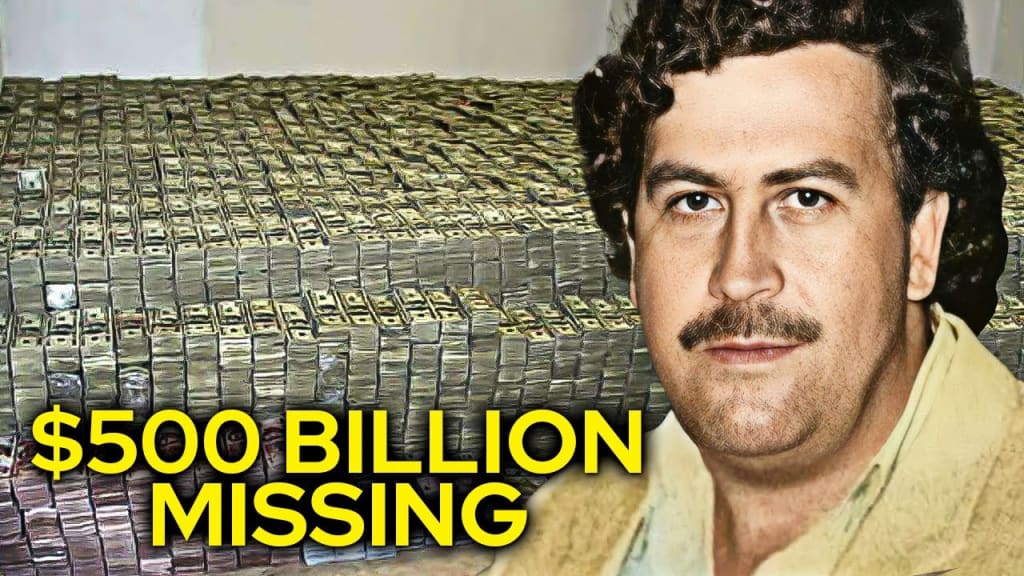
Pablo Escobar was a notorious Colombian drug lord who was the leader of the Medellín Cartel, one of the most powerful and dangerous drug cartels in the world during the late 20th century. His criminal empire was involved in the production, trafficking, and distribution of massive amounts of cocaine.
Escobar's rise to power and his struggle can be traced through several key phases:
Early Years and Criminal Beginnings:
Pablo Emilio Escobar Gaviria was born on December 1, 1949, in Rionegro, Colombia. He grew up in Medellín in a lower-middle-class family.
Escobar started his criminal career by engaging in petty crimes, such as stealing tombstones and selling fake lottery tickets.
Cocaine Empire and the Medellín Cartel:
In the late 1970s, Escobar became involved in the cocaine trade, capitalizing on the growing demand for the drug in the United States.
He formed the Medellín Cartel along with other key figures, including Carlos Lehder and the Ochoa brothers.
The cartel quickly became a dominant force in the global drug trade, controlling a significant portion of the cocaine production and distribution.
Violence and Terror:
Escobar was responsible for a wave of violence in Colombia, ordering the killings of numerous individuals, including law enforcement officials, rival drug traffickers, and innocent civilians.
He employed a strategy known as "plata o plomo" (silver or lead), giving individuals the choice of taking a bribe or facing assassination.
Government Pursuit:
As Escobar's influence and wealth grew, he became a target of both Colombian and U.S. authorities.
The Colombian government, with the assistance of the United States, launched efforts to capture or kill Escobar and dismantle the Medellín Cartel.
Manhunt and Surrender:
Escobar went on the run in 1991, evading authorities for several months.
In 1992, he surrendered to Colombian authorities under the condition that he would serve his sentence in a self-designed prison known as "La Catedral."
Death:
In 1993, Escobar escaped from La Catedral after it became clear that the government was planning to move him to a more secure facility.
He was subsequently hunted down by Colombian law enforcement and killed in a rooftop shootout in Medellín on December 2, 1993.
Pablo Escobar's life and criminal activities have been the subject of numerous books, movies, and television series. While some view him as a Robin Hood-like figure, others see him as a ruthless criminal responsible for immense suffering and violence. His legacy continues to be a complex and controversial topic.vPablo Emilio Escobar Gaviria, born on December 1, 1949, in Rionegro, Colombia, became one of the most infamous and powerful drug lords in history. Here is an overview of Pablo Escobar's history:
Early Life:
Escobar grew up in Medellín in a modest family. His father was a farmer, and his mother was a schoolteacher.
In his early years, he engaged in small-scale criminal activities, such as selling contraband cigarettes and stealing tombstones.
Cocaine Trade Involvement:
In the late 1970s, Escobar entered the illegal drug trade, initially smuggling cocaine into the United States using small airplanes.
He quickly rose through the ranks, establishing connections with other drug traffickers and forming the Medellín Cartel.
Medellín Cartel:
The Medellín Cartel, founded in the late 1970s, became a dominant force in the global cocaine trade during the 1980s.
Escobar, along with key associates like Gustavo Gaviria, Jorge Ochoa, and his brother Roberto Escobar, controlled the production, transportation, and distribution of large quantities of cocaine.
Violence and Terror:
Escobar's reign was marked by extreme violence. He ordered the assassination of numerous individuals, including politicians, judges, police officers, and rival drug traffickers.
The use of bombings, assassinations, and kidnappings was common as part of his strategy to maintain control and eliminate threats.
Political Influence and Bribery:
Escobar was known for his ability to infiltrate and corrupt various levels of Colombian society, including politicians, law enforcement officials, and government agencies.
The strategy of "plata o plomo" (silver or lead) gave people the choice of accepting bribes or facing violence.
Manhunt and Surrender:
As pressure from Colombian and U.S. authorities intensified, Escobar went into hiding in 1991.
In 1992, he surrendered to Colombian authorities with an agreement to serve his prison sentence in a self-designed facility called "La Catedral."
Escape and Death:
Escobar's influence inside La Catedral grew, and there were allegations of continued criminal activities from within the prison.
In 1992, after the Colombian government decided to move him to a more secure location, Escobar escaped.
A manhunt ensued, and on December 2, 1993, Escobar was located and killed in a rooftop shootout in Medellín.
Legacy:
Pablo Escobar's life and criminal empire have left a lasting impact on Colombia and the history of the international drug trade.
His story has been the subject of numerous books, documentaries, and television series, such as "Narcos."
Pablo Escobar's life is a complex and controversial tale that involves crime, violence, corruption, and the challenges faced by Colombian society during a tumultuous period in its history.
About the Creator
Shazee Tahir
Storyteller | Fantasy & Self-Love Writer | WIP: Action Superhero Series
Stickers, Support & More
Keep reading
More stories from Shazee Tahir and writers in Criminal and other communities.
Murder
The murder of 14-year-old Emmett Till in 1955 brought nationwide attention to the racial violence and injustice prevalent in Mississippi. While visiting his relatives in Mississippi, Till went to the Bryant store with his cousins, and may have whistled at Carolyn Bryant. Her husband, Roy Bryant, and brother-in-law, J.W. Milam, kidnapped and brutally murdered Till, dumping his body in the Tallahatchie River. The newspaper coverage and murder trial galvanized a generation of young African Americans to join the Civil Rights Movement out of fear that such an incident could happen to friends, family, or even themselves. Many interviewees in the Civil Rights History Project remember how this case deeply affected their lives.
By Shazee Tahir2 years ago in Criminal
Ken Childs and the Shadow Network Behind Celebrity Surveillance
Hollywood is no stranger to intrigue. Behind the red carpets, blockbuster premieres, and glamorous headlines lies a parallel world where privacy is fragile and information can be extremely valuable. Over the years, celebrities have faced stalkers, hackers, and fraud schemes designed to exploit their wealth and visibility. Recently, reports circulating online have drawn attention to a controversial narrative involving private investigator Ken Childs and allegations that place him near the center of a disturbing story about celebrity surveillance.
By Shane Smith3 days ago in Criminal
Worth the Wait: Puerto Viejo, Costa Rica
Beach bumming in a small Caribbean beach town sounded like a perfect way to end our 6-month trip through Mexico and Central America. Or so we thought. The foul, fishy stench of rotten seaweed hit our nostrils as we stepped from the cramped bus and looked out at a rather depressing, empty, and underwhelming black sand beach. It was pouring with rain, and we had to quickly fish out our ponchos. We thought, this couldn’t be it, could it?
By Sh*t Happens - Lost Girl Travel5 days ago in Wander




Comments
There are no comments for this story
Be the first to respond and start the conversation.