
Former Japanese Prime Minister Shinzo Abe is No More!
Reason of Shinzo Abe Death

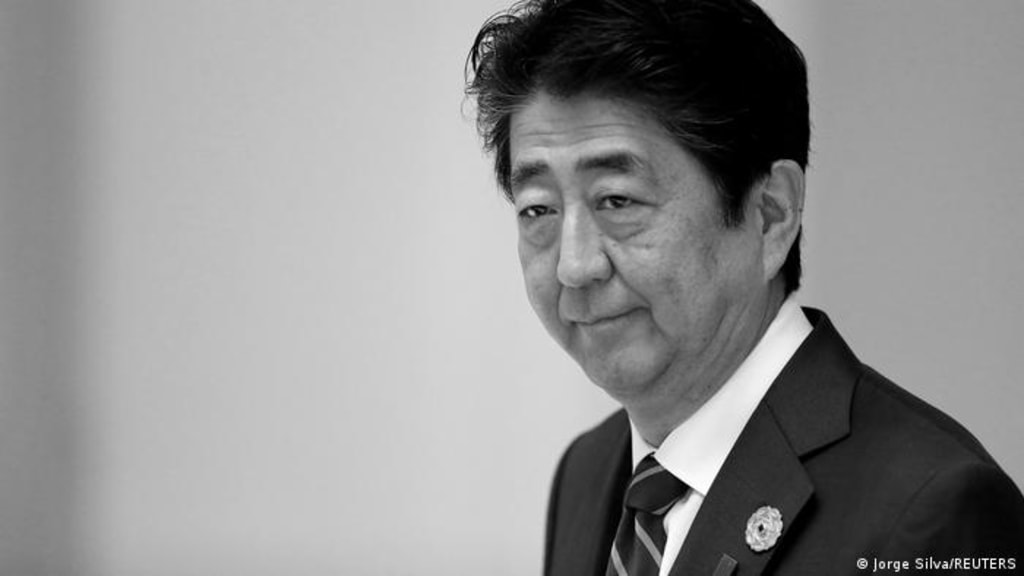
It was 8th of July 2022.
Former Japanese Prime Minister Shinzo Abe was assassinated. It was a shocking incident on many counts. First of all, in a country like Japan, these are rare occurrences. The rate of gun violence is so low there that Japan is among the Top 10 Most Peaceful Countries in the World. Secondly, such political assassinations in our world are very rare. Especially in developed countries. The last time a political figure of this level was assassinated in a developed country was in Sweden in 1986. When the Swedish Prime Minister was assassinated. So obviously, when it happened in 2022, it was immensely shocking. Shinzo Abe had close ties with India. Many Indians mourned his death. On the other hand, in countries like China and South Korea, some people celebrated his death. Come, let's understand this assassination. And Shinzo Abe's legacy in today's video. "Shocking news out of Japan, the former Prime Minister Shinzo Abe was assassinated. Gunned down during a campaign event."
Mr Shinzo Abe is no longer with us." "This brutal and cowardly murder of Shinzo Abe shocks the whole world." Shinzo Abe was the leader of Japan's Liberal Democratic Party. The elections were scheduled to be held in a few days. So he was campaigning for his political candidate. During which, he was assassinated. The crowd gathered there was shocked at that. Shinzo's security team was also present there. But they hadn't put up any checks or barriers. So the assassin could come quite close to Shinzo. And shot him from a distance of a few meters with his handmade gun. After firing, he didn't even try to escape. He was caught by the security officials, and now he is under police custody. His name is Tetsuya Yamagami. He is 41 years old. He had worked in the Japanese Navy, and perhaps the most bizarre thing is that he claims that the reason behind this assassination is not political; he didn't have any political motive. He's not even a politically active person. According to Yamagami, he carried out this assassination because his mother went bankrupt because of large donations to a religious group. And this Japanese religious group was allegedly promoted by Shinzo Abe. The assassin claims that he wanted to kill the leader of the religious group initially. But it wasn't possible. So he targeted Shinzo Abe.
He is 41 years old. He had worked in the Japanese Navy, and perhaps the most bizarre thing is that he claims that the reason behind this assassination is not political; he didn't have any political motive. He's not even a politically active person. According to Yamagami, he carried out this assassination because his mother went bankrupt because of large donations to a religious group. And this Japanese religious group was allegedly promoted by Shinzo Abe. The assassin claims that he wanted to kill the leader of the religious group initially. But it wasn't possible. So he targetted Shinzo Abe. The Associated Press has reported that the assassin had no issues with the political ideologies of Shinzo Abe. This incident was condemned by Japanese Prime Minister Fumio Kishida saying that such barbaric and malicious acts will not be tolerated at all. And that it goes against the very foundation of democracy. On Japanese social media, the hashtag 'We Want Democracy Not Violence' was trending. The leaders of other countries responded similarly. UK's Prime Minister Boris Johnson had called it a despicable attack. US President Joe Biden had said that on 10th July, all US flags would be hoisted at half-staff. In honour of Shinzo Abe. Although some Chinese nationalists and South Koreans, were celebrating his assassination. But their politicians didn't respond similarly. The South Korean President called the attack an 'unacceptable act of crime.' The Spokesperson of the Chinese Foreign Ministry said that this unaccepted incident should not be associated with the Chinese-Japanese relationship. When he was asked about the response on Chinese social media, he did not comment. Historically, China and South Korea have quite a complicated relationship with Japan. Shinzo Abe is considered to be a leader who had an aggressive stance in terms of foreign policies.
Shinzo Abe was a part of a vast political dynasty in Japan. Several members of his family have remained in the top political positions in Japan for many years. Shinzo Abe's maternal grandfather, Nobusuke Kishi, was the first Japanese Prime Minister to visit India. In a column in an Indian newspaper, he wrote, that there used to be a time when Japan was not a developed country. During such times, Prime Minister Nehru, presented Prime Minister Kishi, as the Japanese Prime Minister to the people of his country. And said that he respected him a lot. Friends, Nobusuke Kishi had actually played an immensely important role in the foundation of the Liberal Democratic Party in 1955. The political party Shinzo Abe belonged to. Since then, this political party has been in power in Japan for most of the time. Except for 2 small periods. Shinzo's great uncle, Nobusuke's brother, Eisaku Sato, was also a Japanese Prime Minister. In addition to them, Shinzo's paternal grandfather, Abe Kan, was an elected member of the House of Representatives. Shinzo's father, Abe Shintaro, was the Foreign Minister of Japan for a while. As I told you, several members of the family have been in power in politics. It's a vast dynasty. But the two people on whom we need to focus the most are the two grandfathers. Because even though they are related, their ideologies were vastly different. One ideology of a hawk, an aggressive stance, and the other of peace, of the dove. The symbol of peace was Shinzo's paternal grandfather, Kan Abe. He opposed the militarist government. He was actively campaigning to prevent Japan's involvement in World War II. There was a clear reason for that. Because had Japan not participated in the war, then the Japanese bombing of Pearl Harbour would have been avoided. And the American government's response to it, the bombing of Hiroshima and Nagasaki, could have been prevented.
The 2.5 million Japanese who lost their lives in the war, could have been saved. Here, if you'd like to know more about World War II, I'd suggest that you listen to the audiobook on WWII on KUKU FM. It has all the details. In case you don't know, KUKU FM is a brilliant platform for audio learning, on which you can listen to many such audiobooks. Normally, it costs ₹399 per year, but if you used the coupon code DHRUV50, you will get 50% off. So the annual cost of KUKU FM for you would be only ₹199. To access their entire library. The link to it is in the description below. You can go check it out. Let's get back to the topic. On the other hand, Shinzo's maternal grandfather, Nobusuke Kishi, was serving under the Japanese Emperor Showa. He was known for his ruthless rule. Kishi was nicknamed the Monster of the Showa Era. Later, on 7th December 1941, he had signed the Declaration of War and thus announced the war against America. As we know now, Japan lost in World War II, And the leaders of the US, China, and the UK, met in Germany on 26th July 1945, to discuss the terms of surrender for Japan. On 2nd September, Japan surrendered unconditionally. And the conditions laid across by the other countries, of bringing democratic reforms in the country, were accepted. Japan's Constitution was rewritten. Article 9 of this Constitution, was very important. According to it, the Japanese people would aspire for international peace always. They forever renounce war, as a sovereign right of the nation and the threat or use of force as means of settling international disputes. Going into a war would not be Japan's way to resolve any issue. So, the land, sea, and air forces, as well as other war potential will never be maintained. So the question arises, Which path did Shinzo Abe take? His paternal grandfather or maternal? He rarely mentions Kan Abe. But Kishi's militarist attitude, was something he talked about with pride. Even on record, he said Shinzo Abe had actually tried really hard to amend the Japanese Constitution to remove Article 9. His stance was aggressive and in favour of the military. Before him, several Japanese Prime Ministers, have apologised to other countries because of the war crimes committed by Japan during World War II in several countries. But Shinzo Abe's stance had been quite the opposite, either he forwent mentioning Japanese horrors, or tried to negate them. To refute their existence. It is estimated that during World War II about 200,000 Asian women were kidnapped, confined, and treated as slaves, for the Japanese soldiers in 'comfort stations'. In 2015, Shinzo had to face criticism, because he tried to downplay the issue of 'comfort women'. Another major controversy in his political career was in 2007, when several corruption allegations were made against him. His government was criticised for nearly 50 million missing pension records. Apart from these, Japan is trying to sue South Korea at the World Trade Organisation because South Korea has placed a ban on Japanese imports. The reason behind this ban was the 2015 nuclear disaster in Fukushima. The South Korean government doesn't want the radioactive, contaminated food, gets imported from Japan to South Korea. But Japan considers it to be unfair and so they are suing South Korea. So you can now understand why the South Koreans are against Japan. The issue of comfort women that I mentioned, from where were those women kidnapped? From countries like South Korea and China. So the Chinese and South Korean people have a strong opinion about this. But despite these events, Shinzo Abe could build his image as a successful politician. A significant reason for it was Abenomics. Basically, Shinzo Abe's economic policies. When he came into power the second time, in 2012, over the past five preceding years, 2007-2012, Japan was losing its position as Asia's largest economy. India and China had overtaken Japan. To revive his country's economy, he took drastic measures in his second term, which are now known as Abenomics. There were three major strategies. Making it easier for everyone to get loans. Billions of dollars were spent on enormous infrastructure projects, and on giving cash hand-outs to people. to boost productivity. Such as reducing red tape, and encouraging women to participate in the economy. Encouraging senior citizens to work as well. So that it could boost the economy. These decisions resulted in irrefutable economic growth and a decrease in the unemployment rate. Though the Abenomics weren't successful on all counts. They didn't get strong control over inflation and wage growth. Even so, it is still considered a more or less successful strategy. His efforts to revive the economy are acknowledged. Overall, Shinzo Abe left behind a rich legacy.
About the Creator
Faraz
I am psychology writer and researcher.
Inside The Br@ tal Methods Of N@ zi Secret Police GESTAPO
They worked deep undercover with a name feared as words moved across Nazi occupied Europe. Gestapo: short form of Geheime Staatspolizel, or Secret State Police: the steel fist of Hitler and his machine of terror, entrusted with the job of tracking down foes of the Reich. However their actions behind the scenes were more terrible than many would ever imagine. In contrast to ordinary police, Gestapo never faced any supervision, did not present any warrant, and acted freely. Their methods was cruel: they could arrest a person because somebody whispered something, because a neighbour pointed an accusing finger, even because he shared a joke. Upon arrest individuals just vanished off the face of the earth with some never being heard of once again... (more)
By Live World Storiesabout 5 hours ago in Criminal
Inside the House of Skulls: The Full Timeline of the Jonathan Gerlach Investigation
INVESTIGATION TARGET: JONATHAN C. GERLACH INCIDENT LOCATION: 100 WASHINGTON AVENUE, EPHRATA PA CHARGES: ABUSE OF CORPSE (x100), THEFT, DESECRATION STATUS: INCARCERATED ($1M BAIL) KEYWORDS: #HouseOfSkulls #JonathanGerlach #EphrataCrime #MountMoriah
By Sunshine Firecracker4 days ago in Criminal
So You Decided To Become a Nurse Practitioner:
So you decided to become an "Advanced Practice" nurse. Congratulations!... is what I would say if this was a good idea. Grad school? In this economy? What were you thinking? Likely it was something along the lines of either 1) “I've seen these other chucklefucks do it— Why can't I?” or even 2) “I've got a nice career, I should shake it up. I miss feeling like I have no clue what I'm doing.”
By Sandor Szabo2 days ago in Fiction



Comments
There are no comments for this story
Be the first to respond and start the conversation.