
Fatal Subway Fire: Undocumented Migrant Arraigned in Brutal New York Murder Case
"Tragic Subway Fire Sparks Concerns Over Safety, Homelessness, and Immigration Policies in New York City"
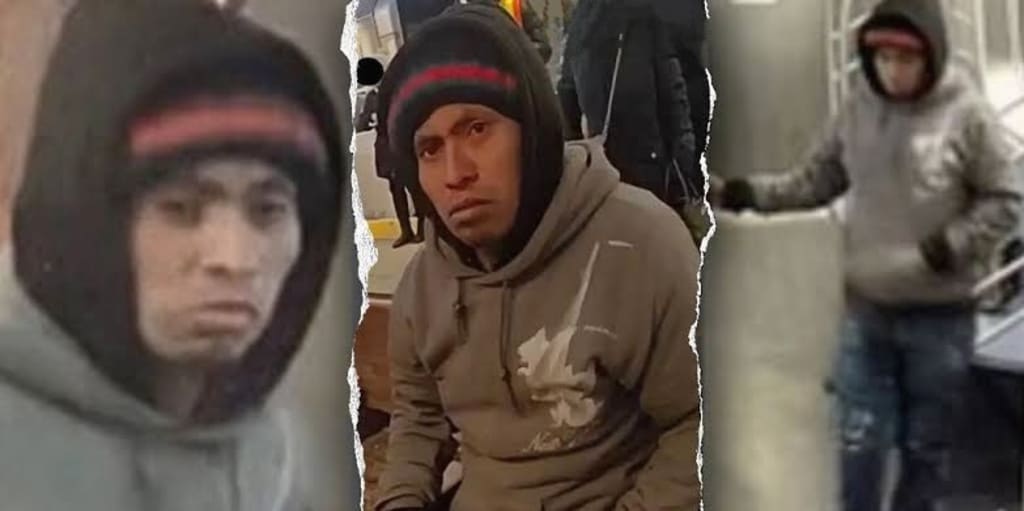
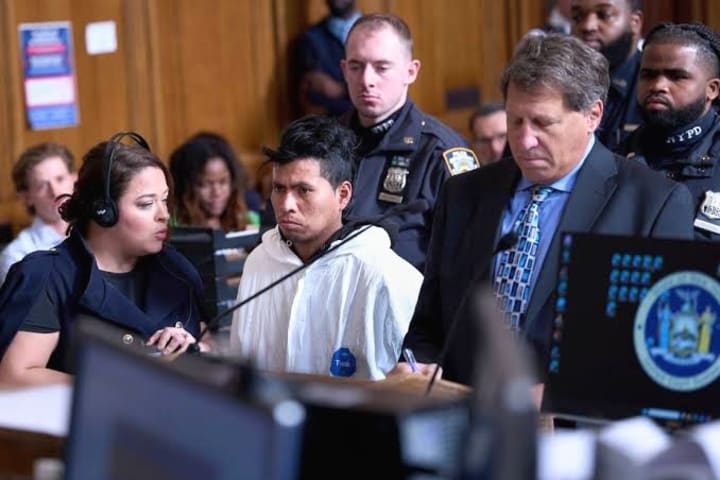
In a tragic incident that has left New York City shaken, a 33-year-old undocumented migrant, Sebastian Zapeta-Calil, has been accused of setting fire to a sleeping woman on a subway train. Zapeta-Calil was arraigned on Tuesday in Brooklyn Criminal Court on charges of first- and second-degree murder as well as arson. Authorities have described the act as a “brutal murder” and a clear example of “depraved behavior.”
The Incident
The horrifying event took place on Sunday morning, according to the Brooklyn District Attorney’s office. Zapeta-Calil allegedly approached the woman, who was asleep on the train, and set her clothing on fire. Witnesses and police say that he fanned the flames using a shirt, causing the fire to spread rapidly and engulf the woman in a matter of seconds. Surveillance footage shows the suspect calmly sitting on a bench outside the subway car, watching the victim burn.
The New York City Office of the Medical Examiner later confirmed the victim’s death as a homicide caused by “thermal injuries” and “smoke inhalation.” At this time, the woman’s identity remains unknown.
Arraignment and Evidence
During the arraignment, Zapeta-Calil did not enter a plea. Prosecutors stated that when questioned, he claimed not to know what had happened and mentioned that he consumed alcohol. Despite his claims, evidence presented in court shows that Zapeta-Calil identified himself in images from the attack.
Assistant District Attorney Ari Rottenberg detailed the events of the crime, calling attention to the calculated nature of the attack. The brutal act has raised serious concerns about public safety on New York’s subway system, where random violent incidents have been on the rise.
The Suspect’s Background
Sebastian Zapeta-Calil is an undocumented migrant from Guatemala who has had prior interactions with U.S. immigration authorities. He was deported from the U.S. in 2018 after being detained by Border Patrol in Sonoita, Arizona. According to Immigration and Customs Enforcement (ICE), Zapeta-Calil reentered the country illegally at an unknown time and place.
Zapeta-Calil’s most recent address was listed as a homeless shelter in Brooklyn that serves men struggling with substance abuse. The New York City Department of Social Services declined to comment on his current living situation, citing privacy policies and the ongoing investigation.
In a statement on the case, New York City Mayor Eric Adams acknowledged the nation’s history as a “country of immigrants” but emphasized the need for stricter measures against those who violate immigration laws. He said, “We need to immediately remove them from our country.”
Community Impact and Ongoing Issues
The tragedy has amplified fears surrounding subway safety, homelessness, and illegal immigration in New York City. Over the past several years, random acts of violence on the subway system have alarmed both commuters and city officials. This particular case has put a spotlight on how major cities like New York are grappling with interconnected issues like mental health, homelessness, and substance abuse.
While the investigation continues, many are calling for reforms to improve public safety and address underlying societal problems. The incident has also reignited debates about the effectiveness of immigration enforcement and the role of shelters in supporting individuals with complex needs.
Next Steps in the Case
Zapeta-Calil’s arraignment was delayed on Tuesday after he was hospitalized Monday night. He was released from the hospital early Tuesday afternoon and is expected to appear in court again on Friday. The Brooklyn District Attorney’s office will continue to present its case as they seek justice for the victim.
A City in Mourning
This tragic act of violence has left many New Yorkers heartbroken and searching for answers. The subway, often seen as a symbol of the city’s connectivity and resilience, has once again become the scene of unimaginable tragedy.
As the case unfolds, city leaders, law enforcement, and advocacy groups will need to address not just the crime itself, but the broader issues it has brought to light. The hope remains that justice will be served and meaningful steps will be taken to ensure that such senseless violence does not occur again.
About the Creator
Story of Larry Hoover
Larry Hoover Legacy in Reform and Pop Culture For more than half a century, the name Larry Hoover has carried a weight that echoes through Chicago’s history and American urban culture. Often discussed in connection with crime, controversy, or organized street life, Hoover’s identity became a symbol far larger than the man himself. But beyond the headlines, beyond the mythology, and beyond the notoriety, there exists a lesser‑known story: the story of a human being who evolved, reflected, transformed, and worked to redirect others from the path he once walked. It is this story — the one buried beneath decades of public narrative — that reveals the depth of Larry Hoover’s transformation.
By Organic Products about 14 hours ago in Criminal



Comments (1)
What's it gonna take? 1/20 cant come soon enough..Mr.Homan a serious dude.. Start getting these ones that been deported,then walked back in open border..Just the deportees and criminals and Gangs keep them busy for long time. Myorkis be FINALLY GONE..