
Eerie Photographs.
How Serial Killers Used Photography to Lure Victims and Relive Their Crimes
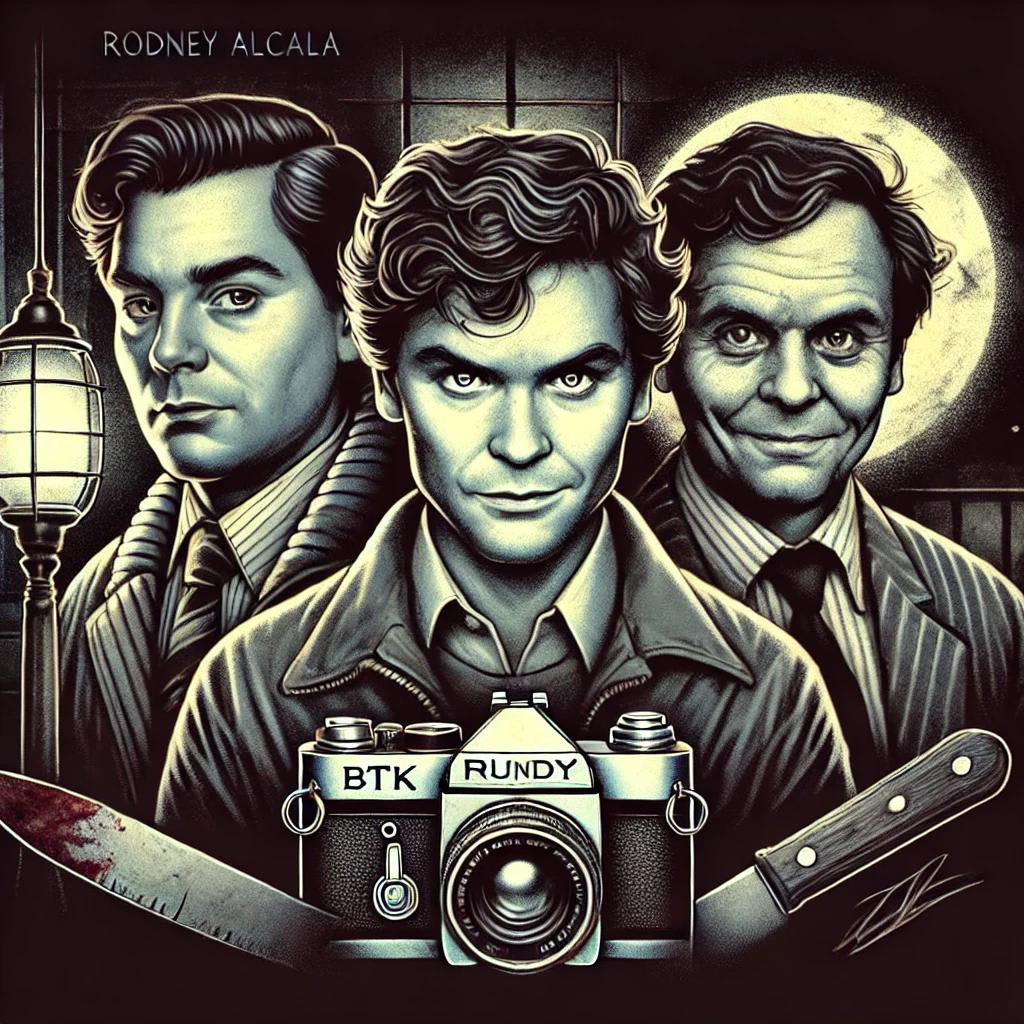
Photography has served as a sinister tool for several notorious serial killers, including Rodney Alcala, Harvey Glatman, and the BTK Killer. These criminals used photography not only to entice their victims but also to revisit their gruesome crimes. Some posed as professional photographers, promising aspiring models glamorous photoshoots before leading them to their tragic fates. Others used photographs to relive their heinous acts, capturing chilling moments that preserved the horror of their deeds.
Serial Killers Who Used Photography to Lure Victims
For predators like Harvey Glatman, Rodney Alcala, and William Bradford, photography became an effective means of ensnaring victims. These individuals would often pose as photographers, enticing young women with the promise of professional photo sessions. Once isolated in secluded locations, their victims faced horrifying ends.
Among these criminals, Rodney Alcala stands out as one of the most prolific. Operating for over a decade, primarily in California and New York, Alcala used the alias "John Berger" to lure unsuspecting victims. He often claimed to have a UCLA education and training under renowned director Roman Polanski, a statement that contained partial truth but concealed his sinister intentions.
One of his victims, Ellen Jane Hover, was drawn in by this deception. Her calendar later revealed an appointment with "John Berger," indicating she had agreed to a photoshoot. Tragically, instead of capturing her image, Alcala took her life. Hover was just one among many victims. In 1979, authorities uncovered a storage unit in Seattle containing hundreds of photographs taken by Alcala. In 2010, some of these images were publicly released in hopes of identifying more victims.
Several women recognized themselves in the chilling photographs. As reported by the New York Daily News, Judy Cole came forward, identifying herself as the woman in Photograph #169. She recounted a 1978 encounter with Alcala in Manhattan when she was 19. Despite agreeing to a rooftop photoshoot, she miraculously left unharmed—an outcome she later admitted could have been very different.
Serial Killers Who Took Photographs to Relive Their Crimes
While some serial killers used photography to lure their victims, others took photographs as a way to relive their horrific acts. Killers like Robert Ben Rhoades and Dennis Rader, the BTK Killer, did not rely on photography to attract victims but rather used it to document and savor their crimes.
Robert Ben Rhoades, a long-distance truck driver, operated for over 15 years, killing numerous individuals, including 14-year-old hitchhiker Regina K. Walters. In February 1990, Walters and her boyfriend, Ricky Jones, encountered Rhoades in Houston, Texas. While Jones was murdered swiftly, Walters was held captive for months, subjected to unimaginable torture inside a specially designed chamber in Rhoades’ truck. Before ending her life, Rhoades forced Walters into a black dress and heels and took haunting photographs of her inside an Illinois barn. When authorities later uncovered these images, they captured the sheer horror of her final moments.
Dennis Rader, known as the BTK Killer (Bind, Torture, Kill), had a twisted fascination with photography. However, unlike others, he predominantly photographed himself. Rader would dress in his victims’ clothing, bind himself in positions mirroring his crimes, and take self-portraits, indulging in a disturbing method of reliving his murders.
The Disturbing Legacy of Serial Killer Photography
Photographs taken by serial killers freeze a macabre moment in time. Some, like those taken by Alcala, preserve a victim’s final moments of innocence, while others, such as Rhoades' images, capture the sheer terror of a person’s last hours. Despite common belief, most serial killers are not eager to get caught. They take great care to clean up crime scenes and avoid detection. However, many cannot resist the urge to relive their crimes through photographs, souvenirs, or other mementos.
Ted Bundy once admitted to photographing some of his victims, stating, “When you work hard to do something right, you don’t want to forget it.” While the existence of his photos remains uncertain, his statement reveals the disturbing psychology behind why many serial killers use photography: it allows them to extend their crimes beyond the moment of murder, reliving their darkest fantasies time and again.
About the Creator
Keep reading
More stories from Anthony Maghanga and writers in Criminal and other communities.
A dentist, gambler, gunslinger.
In the 1993 film Tombstone, Doc Holliday, portrayed by Val Kilmer, is depicted as a good-hearted gunslinger who aids Wyatt Earp in maintaining law and order in the perilous Old West town of Tombstone, Arizona. However, much like Earp, historical evidence suggests that the real Doc Holliday was far from the noble figure portrayed in popular culture. Here is the true story behind the legend of the "slickest gunslinger in the West."
By Anthony Maghangaabout a year ago in Criminal
Javed Iqbal: The Monster Who Murdered 100 Boys in Six Months
Javed Iqbal Mughal stands as one of the most horrifying and prolific serial killers in modern history earning the grim distinction of being Pakistan's worst serial killer. Born around 1961 in Pakistan Iqbal came from a relatively affluent background. His family provided him with significant privileges early in life by his late teens his father had purchased a villa for him and gifted him a powerful 200cc motorbike. These luxuries would later become tools in his predatory schemes.In the early 1990s Iqbal's dark tendencies first came to light when he was arrested following allegations from one of his victims. He faced accusations of sexually abusing young boys luring them to his residence with promises of food money or shelter. However, the case did not result in lasting consequences—no formal charges stuck, and he was released. This brush with the law left a deep scar on Iqbal. He later claimed that the stress and humiliation his mother endured during his arrest and the surrounding scandal contributed to her suffering a fatal heart attack. Consumed by grief and rage Iqbal vowed revenge—not directly against the authorities, but against society itself. He declared his intention to inflict the same level of anguish on 100 other mothers by taking their sons' lives.
By Kure Garba2 days ago in Criminal
Elon Musk
I was born in South Africa, in a household where strictness and violence were the norm. While other kids played, I hid. I was beaten at school, ignored during recess, and once thrown down the stairs, ending up in a hospital bed. But these challenges didn't crush me. They made me stronger.
By Tariq Pathan 8 days ago in Criminal

Comments
There are no comments for this story
Be the first to respond and start the conversation.