
Crucial New Evidence Could Finally Solve the Mystery of D.B. Cooper's Identity
The FBI may have closed the infamous 51-year-old skyjacking case, but one man claims to have the solution.

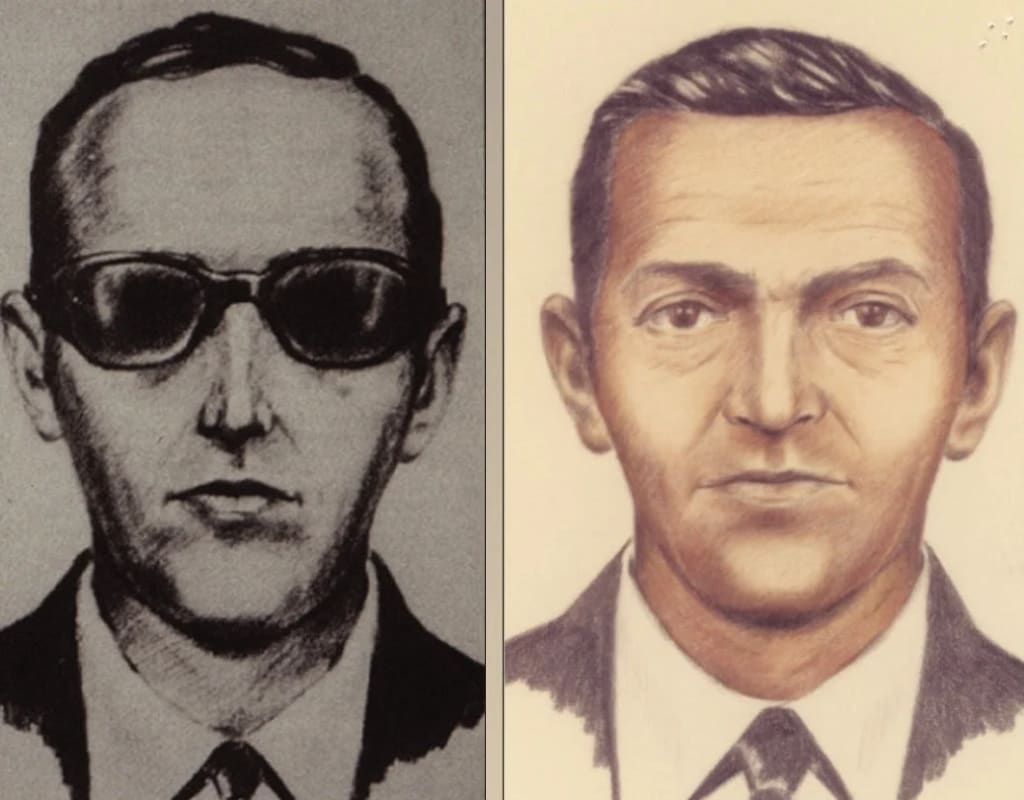
The Mystery of D.B. Cooper: Could We Finally Have the Answer?
More than 50 years ago, an unidentified man pulled off one of the most daring heists in U.S. history. Known as D.B. Cooper, he hijacked a plane, collected a ransom of $200,000, and parachuted into the night. His identity and fate remain a mystery, even after decades of investigation.
Now, a man named Eric Ulis believes he might have the key to solving the case. A former blackjack player, Ulis is suing the FBI to gain access to a piece of evidence—a tie Cooper left behind. He is convinced that analyzing the particles found on the tie could finally reveal the skyjacker’s identity.
Who Was D.B. Cooper?
The story begins on November 24, 1971, the day before Thanksgiving. A man, described as white, in his mid-forties, with brown eyes and black hair, bought a one-way ticket on Northwest Orient Airlines Flight 305 from Portland to Seattle. He paid $18.52 in cash and gave the name Dan Cooper. Back then, airport security was minimal, so he boarded the plane without any checks.
Shortly after takeoff, Cooper handed a note to a flight attendant, Florence Schaffner. At first, she assumed it was just another flirtatious note from a passenger, which was sadly common for attendants at the time. But Cooper leaned in and told her to read it. The note stated that he had a bomb.
Cooper opened a briefcase to reveal wires and red sticks, convincing Schaffner that the threat was real. He then calmly laid out his demands: $200,000 in $20 bills, four parachutes, and a fuel truck waiting at the Seattle airport for the plane’s next destination.
The Hijacking
Cooper’s behavior during the hijacking was calm and calculated. He drank bourbon, smoked cigarettes, and spoke politely to the crew. When the plane landed in Seattle, his demands were met. He let the passengers go but kept a few crew members onboard as the plane took off again, this time heading south toward Mexico City.
During the flight, Cooper instructed the pilots to fly low and slow—below 10,000 feet and under 200 knots. He had the plane’s aft stairs lowered mid-flight, and somewhere over the dense forests of the Pacific Northwest, he jumped out into the night, taking the money with him.
The Investigation
The FBI launched an extensive investigation, searching forests, rivers, and mountains. They found no trace of Cooper or the parachute. A significant break came in 1980 when a boy discovered three bundles of decomposed $20 bills along the Columbia River. The serial numbers matched the ransom money. However, this discovery raised more questions than answers. How did the money end up there? Did Cooper survive the jump?
Modern Sleuthing: Eric Ulis’ Theory
In recent years, amateur detectives have kept the D.B. Cooper mystery alive. One of the most dedicated is Eric Ulis, who believes he has pinpointed where Cooper worked before the hijacking. His theory revolves around tiny metal particles found on the black tie Cooper left behind on the plane. These particles, he argues, are unique to a specific manufacturer in Pennsylvania that dealt with titanium-antimony alloys in the 1960s and 1970s.
Ulis is suing the FBI to gain access to the tie and its particles for further testing. He hopes this evidence could confirm his theory and finally identify the skyjacker.
Why Does the Mystery Fascinate Us?
The D.B. Cooper story continues to captivate people for several reasons. First, it’s unsolved. In a world where technology often solves mysteries quickly, the Cooper case stands out as a puzzle that remains incomplete. Second, Cooper’s crime was audacious yet relatively victimless. He didn’t hurt anyone during the hijacking, and his calm demeanor made him seem more like a clever anti-hero than a violent criminal.
True crime enthusiasts enjoy speculating about Cooper’s identity and fate. Did he survive the jump? Was he a skilled parachutist, or did he perish in the wilderness? Could the tie’s particles hold the final clue?
Possible Outcomes
Many theories about D.B. Cooper’s fate exist. Some believe he died during the jump, as the weather was harsh and the terrain unforgiving. Others think he survived and lived quietly under a new identity. The money found in 1980 adds another layer of intrigue—was it lost accidentally, or left as a clue?
Experts agree that solving the case is unlikely unless new, undeniable evidence emerges. This could be a confession from a relative of Cooper, backed by hard proof like a stash of the ransom money, or breakthroughs in analyzing the existing evidence, like the tie.
Will We Ever Know the Truth?
The FBI officially closed the D.B. Cooper case in 2016, but that hasn’t stopped citizen detectives like Ulis from pursuing answers. Whether his lawsuit succeeds or not, the fascination with D.B. Cooper is unlikely to fade.
Even if the case is never solved, Cooper’s daring escape will remain one of the most intriguing chapters in U.S. criminal history. It’s a tale of mystery, risk, and the enduring human desire to uncover the truth.
About the Creator
Keep reading
More stories from Lynn Myers and writers in Criminal and other communities.
War on Drugs
In the shadowy underbelly of the ongoing War on Drugs, a chilling narrative unfolds – one that lays bare the grim realities of the drug trade and the heart-wrenching consequences it leaves in its wake. At the epicenter of this dark and twisted saga stand figures like Dexter Lee Williams, whose actions etch a haunting reminder of the depths to which humanity can plummet when ensnared by the tantalizing allure of power and profit.
By Lynn Myers2 years ago in Criminal
Iran Protests: Causes, Dynamics, and Their Impact on Society and Politics
**Iran Protests: Causes, Dynamics, and Their Impact on Society and Politics** Iran has experienced recurring waves of protests over the past years, reflecting deep social, economic, and political tensions within the country. These demonstrations are not isolated events but part of a broader pattern of public frustration that has emerged as Iranians respond to rising living costs, restrictions on personal freedoms, political grievances, and dissatisfaction with governance. The protests vary in size, intensity, and duration, yet they share common roots that reveal much about the challenges facing Iranian society today.
By America today 3 days ago in Criminal
The Family Funkhouser
There's a family in Oklahoma that had the misfortune of having five of it's 13 children go to prison, 4 of them were here in Oklahoma. What kinds of misfortunes could have plagued such a family? Reader,s let me tell you, it's Oklahoma and there were a number of things that can crop up to snatch away someone so quick it hurts.
By Cassie Moore6 days ago in Criminal


Comments (1)
I was wondering what resources you used? for additional reading.