
Chasing Shadows: Maury Terry’s Hunt for the Truth Behind Son of Sam
The Reporter Who Uncovered a Conspiracy—Or Lost Himself in One

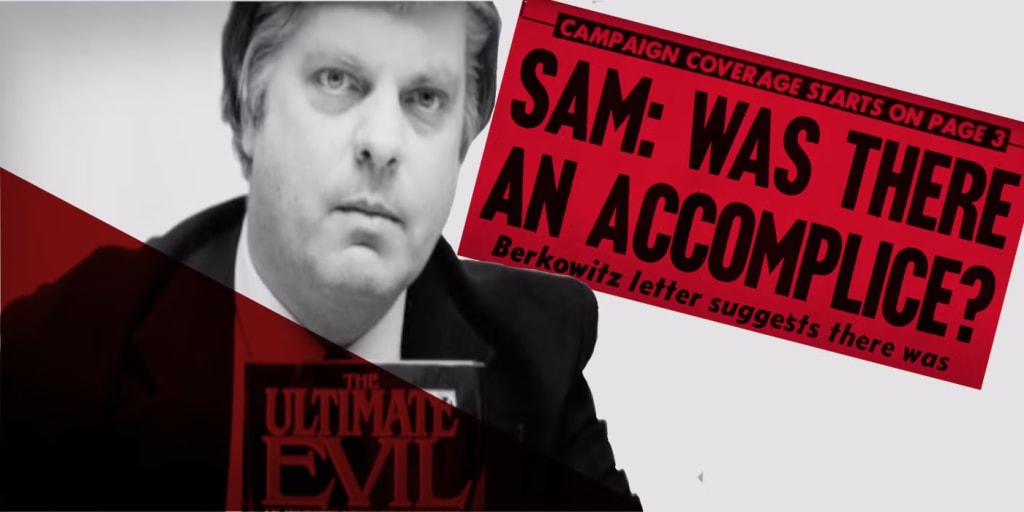
The Summer That Changed Everything
I was seventeen, a high school senior born and raised in a county north of New York City. The city was a place I was familiar with. It was the place where we took a couple of school field trips a year—the place where my uncle, a Catholic priest, had his parish in Little Italy, and the place I started my law enforcement career. But that year, the city seemed to be losing its mind. The summer of ’77, the Son of Sam was out there still. For nearly a year, killing couples, taunting cops, and turning every stoop and side street into a death zone. My friends and I had never really talked about the case, but I was very interested. I watched the 10 O’clock news on WNEW Channel 5, “Do You Know Where Your Children Are?” every night, following the Son of Sam. We all checked the shadows on our way home. After all, this killer had a car, and we were not far from the city. That’s when I first heard the name Maury Terry. Back then, he was just a byline, or a guy on a TV talk show, a guy who wouldn’t let the story die. I didn’t know it yet, but he’d spend the rest of his life chasing the same ghosts that prompted my interest in true crime years later.
The City In Fear (Fear City)
New York, summer 1976. The city’s on edge. The Big Apple had a new name. They called it Fear City. A killer is stalking young couples, firing a .44 Caliber Bulldog revolver into parked cars on lovers' lanes. He leaves behind taunting letters signed “Son of Sam.” The press goes wild. The city, already battered by blackouts, crime, and a shrinking police force due to the city’s fiscal crisis, is gripped by fear.
When the police arrested David Berkowitz in August 1977, the city breathed a sigh of relief. Berkowitz confesses, spinning a story about a demon-possessed dog. The case is closed. A bunch of cops get accolades and promotions. The headlines move on.
But there is someone who can’t move on. Who, you ask? You guessed it. Maury Terry.
The Man Who Wouldn’t Let Go
Maury Terry never wore a badge, but he had the instincts of a cop and the stubbornness of a bulldog. He was the kind of reporter who’d show up with a notebook and a thousand-yard stare, asking questions that, well, seemed to produce more questions. For more than twenty years, Terry chased the shadows behind the Son of Sam murders, convinced that the story the city accepted was only half the truth.
He paid for it—personally, professionally, and sometimes, you get the sense, spiritually. But he never stopped. And that’s why, even now, his work refuses to die.
The First Doubts
Terry’s doubts start with the basics. Witnesses describe shooters who don’t look like Berkowitz. Sometimes the killer is tall and blond, while at other times they are short and dark-haired. The police sketches look like a lineup, not a single suspect. And the timing—Berkowitz couldn’t have been in two places at once for some of the shootings.
Terry starts digging. He talks to witnesses, reads police reports, and follows up on leads the cops seemed to ignore. He finds connections between the Son of Sam shootings and a string of arsons, animal sacrifices, and cult activity in Yonkers, where Berkowitz lived and Terry is from. The deeper he goes, the stranger it gets.
The Ultimate Evil
In 1987, Terry published “The Ultimate Evil: The Search for the Sons of Sam.” It’s a monster of a book, packed with interviews, timelines, and a theory that sounds like a horror movie: Terry believes Berkowitz was part of a satanic cult, and the Son of Sam murders were ritual killings carried out by a group.
Terry names names. He links the cult to the Process Church of the Final Judgment, a shadowy group with roots in the UK. He draws lines between the Son of Sam case and other unsolved murders across the country, even suggesting ties to Charles Manson and his “Family”.
The book gets attention, but not the kind Terry hoped for. The NYPD dismisses his claims. Most journalists roll their eyes. But a small group of true crime junkies, amateur sleuths, and what you might call conspiracy theorists latch onto Terry’s work. For them, he’s a hero—a guy who refused to accept the easy answer.
The Evidence: What Terry Got Right
Terry wasn’t just spinning yarns. He had evidence—some of it solid, some of it circumstantial, but all of it worth a second look.
First, the witness descriptions. Multiple people saw shooters who didn’t look like Berkowitz. Some described a woman at the scene. Others saw two men together. The police sketches, when lined up, look like a rogues’ gallery.
Second, the letters. The Son of Sam letters are full of references to “the children,” “Papa Sam,” and other cryptic phrases. Terry believed these were code words used by the cult. He found similar language in other unsolved cult related cases.
Third, Berkowitz himself. After his conviction, Berkowitz started talking. In letters and interviews, he claimed he didn’t act alone. He named other members of the group, although he never revealed everything he knew. Some of his claims matched details Terry had already uncovered.
Fourth, the pattern of the crimes. The shootings happened in different boroughs. The killer seemed to know when and where the police would be, suggesting the use of lookouts in addition to the shooter.. Terry argued that only a group could pull this off.
Finally, the connections to other crimes. Terry found links between the Son of Sam shootings and unsolved murders in North Dakota, California, and elsewhere. The victims were often young women, killed in ritualistic ways. The police never made these connections, but Terry did.
The Pushback: The Critics Speak
Not everyone bought Terry’s theory. The NYPD, for one, stuck to their guns: Berkowitz acted alone. They said the witness descriptions were unreliable, the cult connections were a stretch, and Berkowitz was just trying to mess with people’s heads.
Joe Borelli, the NYPD Captain who led the Son of Sam task force, later the Chief of Detectives, told the press,
“We followed every lead. We looked at the cult angle. In the end, the evidence pointed to Berkowitz, and only Berkowitz.”
But years later, Borelli admitted to filmmaker Joshua Zeman,
“There were things that didn’t add up. Some of the witness statements, the timing of the shootings… I can see why Maury kept digging.”
Ed Zigo, another detective on the case, was more blunt:
“Maury Terry was a pain in the ass. He made our job harder. But he was thorough. I’ll give him that.”
John Santucci, Queens District Attorney at the time, said,
“We had to close the case. The city needed closure. But I can’t say every question was answered.”
Mario Merola, Bronx District Attorney, was clear in public:
“We have our man. The people of New York can sleep easy.”
But an unnamed assistant DA later admitted,
“We had a confession, a mountain of evidence, and a city that wanted this over. But there were loose ends. There always are.”
The Biggest Detractor: Det. Joe Coffey Of the NYPD Omega Task Force
One of Terry’s most vocal critics was Detective Joe Coffey of the NYPD’s Omega task force. Coffey, a legend in New York law enforcement, didn’t mince words about Terry’s theories.
Coffey said,
“Maury Terry was a good writer, but he was no cop. He took many rumors and half-truths and spun them into a conspiracy. The Son of Sam case was solved. Period.”
Coffey’s skepticism wasn’t just a matter of professional rivalry. He saw Terry’s work as a distraction from real police work, and he made it clear in interviews and public appearances that he thought Terry’s cult theory was, in his words, “nonsense.”
The Yonkers Detective: A Report Ignored
Terry wasn’t alone in his suspicions. A detective from the Yonkers Police Department—Detective Richard “Rich” Johnson—also dug into the strange goings-on in Berkowitz’s Yonkers neighborhood. Johnson compiled a detailed report for prosecutors, outlining possible cult activity, suspicious fires, and unexplained deaths linked to Berkowitz’s circle.
Johnson’s report landed on the desks of New York prosecutors. The outcome? The report was quietly shelved. Officially, the case was closed, and the Yonkers leads were never fully investigated. Johnson later told a reporter,
“We had more questions than answers, but nobody wanted to open that door. The city needed closure, not more chaos.”
The Journalists: Colleagues and Critics
Terry’s fellow journalists were split. Some admired his grit, even if they thought he went too far.
Joshua Zeman, director of the Netflix docuseries “The Sons of Sam,” said,
“Maury was relentless. He was the kind of reporter who wouldn’t let go, even when everyone else had moved on. That’s admirable, but it can also be dangerous. You start to see patterns everywhere.”
Jimmy Breslin, the legendary New York columnist who received one of the Son of Sam letters, once said of Terry,
“He’s got guts, I’ll give him that. But sometimes, you can get lost in your own story. You start chasing ghosts, and pretty soon, the ghosts are chasing you.”
Lawrence D. Klausner, author of “Son of Sam: Based on the Authorized Transcription of the Tapes, Official Documents and Diaries of David Berkowitz,” was more blunt:
“Terry’s theories are fascinating, but they’re built on sand. The evidence just isn’t there.”
But not everyone dismissed him. Maurice Carroll, a veteran New York Times reporter, said,
“Terry asked the questions the cops didn’t want to answer. That’s what a good reporter does. Even if you don’t buy his theory, you have to respect the work.”
The True Crime Community: A House Divided
The true crime world is split. Some see Terry as a pioneer, others as a cautionary tale.
Paul Giamatti, who narrated the Netflix series, summed it up:
“Maury Terry was both a hero and a warning. He showed us what happens when you refuse to let go of the truth—and what it costs.”
Carl Denaro, a Son of Sam survivor, has said,
“I don’t think Berkowitz shot me. I believe Maury. There’s more to this story.”
Terry Sullivan, a former prosecutor and author, said,
“Terry’s work is important, even if you don’t buy the cult theory. He forced us to look at the cracks in the system.”
Debbie Egan-Chin, a New York Daily News photographer who covered the case for years, said,
“Maury was always around, always asking questions. He never let the story die. That’s rare.”
But not everyone was impressed. Some saw Terry as a conspiracy theorist who got in over his head.
Michael Blood, Associated Press reporter, wrote,
“Terry’s book reads like a fever dream. There’s a difference between asking tough questions and seeing conspiracies everywhere.”
Ken Auletta, New Yorker writer, said,
“Terry’s obsession blinded him. He stopped being a reporter and became a crusader. That’s when you lose the plot.”
The Toll of Obsession
Chasing the Son of Sam case took a toll on Terry. He lost friends, burned bridges, and spent years fighting to be taken seriously. He became a fixture on late-night radio and TV, always pushing his theory, always looking for the missing piece.
He never found it. Terry died in 2015, still convinced he was right. Some say he wasted his life. Others say he was a hero—a guy who refused to let the truth get buried.
The Netflix Effect
In 2021, Netflix released “The Sons of Sam: A Descent into Darkness,” a documentary series based on Terry’s life and work. Suddenly, a new generation discovered his story. The series didn’t take sides—it showed Terry’s brilliance and his flaws, his evidence and his blind spots.
For many viewers, the show raised more questions than answers. Was Terry right? Did Berkowitz have help? Or was Terry just another guy who got lost in the darkness?
The Legacy: Why Maury Still Matters
Here’s the thing: whether you believe Terry or not, his work changed the way we look at the Son of Sam case and how we view high-profile criminal cases. He forced people to ask hard questions. He showed that the official story isn’t always the whole story. And he reminded us that sometimes, the truth is messier than we want to admit.
Terry’s legacy isn’t just about the Son of Sam. It’s about the dangers—and the necessity—of asking questions nobody wants to answer. It’s about the thin line between obsession and dedication. And it’s about the cost of chasing shadows, even when the world tells you to stop.
The Case Today: Unanswered Questions
So, was Maury Terry right? The answer depends on who you ask.
The NYPD still says Berkowitz acted alone. The case is closed. But Berkowitz himself, now a born-again Christian serving life in prison, still hints at a larger conspiracy. He has given interviews stating that he was part of a group, but he won’t name names.
Some of the people Terry accused are dead. Others have disappeared. The cults he wrote about have faded into the background, replaced by new fears and new obsessions.
But the questions remain. Why were the police accused of ignoring so many leads? Why did the witness descriptions vary so much? Why did Berkowitz confess so quickly, and why did he start talking about a cult only after he was locked up for good?
The Reporter’s Code
Maury Terry wasn’t perfect. He made mistakes. He chased leads that went nowhere. He trusted the wrong people. But he never stopped asking questions. In a world where most people are happy to take the easy answer, that counts for something.
If you walk away from this story with anything, let it be this: the truth is rarely simple. The easy answer is almost never the whole answer. And sometimes, the only way to find the truth is to chase the shadows, even if it means losing yourself along the way.
Epilogue: The Last Word
I never met Maury Terry. But I know his type. I’ve seen guys like him in the back of courtrooms, in the corner booths at diners, or hanging around the precinct giving the Desk Sergeant agita. They’re the ones who can’t let go, who keep digging when everyone else has moved on.
Maybe Terry was right. Maybe he was wrong. But he never stopped looking. And in the end, that’s what separates the honest investigative reporters from the rest—the refusal to let the story end just because someone says it’s over.
So here’s to Maury Terry, the man who chased shadows. The city may have moved on, but the questions he asked still echo in the dark.
Remember, folks. Every crime has a story. My Mission. Tell it.
Sidebar: Timeline of the Son of Sam Case and Maury Terry’s Investigation
1976
- July: First Son of Sam shooting in the Bronx.
- October: Second attack in Queens.
- Letters begin arriving at the press and police.
1977
- April: Son of Sam letter sent to columnist Jimmy Breslin.
- July: Last known Son of Sam shooting.
- August: David Berkowitz was arrested in Yonkers. He confesses, case closed.
Late 1970s–1980s
- Terry begins his own investigation, interviewing witnesses and collecting evidence.
- Yonkers Detective Richard “Rich” Johnson compiles a report on cult activity and suspicious deaths, but prosecutors shelve it.
1987
- “The Ultimate Evil” is published, laying out Terry’s cult theory and connecting Son of Sam to other unsolved crimes.
1990s–2000s
- Terry continues to push his theory, appearing on radio, TV, and at true crime conferences.
- Berkowitz gives interviews from prison, hinting at a larger conspiracy.
2015
- Maury Terry dies, still convinced he was right.
2021
- Netflix releases “The Sons of Sam: A Descent into Darkness,” bringing Terry’s work to a new audience.
Sidebar: Key Players
Maury Terry
- Investigative journalist, author of “The Ultimate Evil,” and the man who wouldn’t let the Son of Sam case rest.
David Berkowitz
- The Son of Sam, convicted of eight shootings, later claimed he was part of a cult.
Joe Borelli
- NYPD detective led the Son of Sam task force. Later NYPD Chief of Detectives.
Ed Zigo
- NYPD detective helped arrest Berkowitz.
Joe Coffey
- NYPD Omega task force detective, an outspoken critic of Terry’s theories.
Richard “Rich” Johnson
- Yonkers Police Detective compiled a detailed report on cult activity and suspicious deaths linked to Berkowitz; prosecutors shelved his report.
John Santucci
- Queens District Attorney during the case.
Mario Merola
- Bronx District Attorney publicly declared the case closed.
Jimmy Breslin
- A New York Daily News columnist received a letter from the Son of Sam.
Joshua Zeman
- Filmmaker and director of “The Sons of Sam” Netflix series.
Carl Denaro
- Son of Sam survivor, supporter of Terry’s theory.
The Book
"The Ultimate Evil: The Search for the Sons of Sam" Maury Terry (Author), Joshua Zeman (Introduction)
This post may contain affiliate links. If you click on these links and make a purchase, I may earn a commission at no additional cost. I only recommend products or services that add value to my readers.
If you enjoy my writing, would you consider a $1.00 tip or more using the Vocal Media tipping link? Thank you!
Please subscribe to MJonCrime on YouTube, where you can access the MJonCrime podcast and video content.
About the Creator
MJonCrime
My 30-year law enforcement career fuels my interest in true crime writing. My writing extends my investigative mindset, offers comprehensive case overviews, and invites you, my readers, to engage in pursuing truth and resolution.
Story of Larry Hoover
Larry Hoover Legacy in Reform and Pop Culture For more than half a century, the name Larry Hoover has carried a weight that echoes through Chicago’s history and American urban culture. Often discussed in connection with crime, controversy, or organized street life, Hoover’s identity became a symbol far larger than the man himself. But beyond the headlines, beyond the mythology, and beyond the notoriety, there exists a lesser‑known story: the story of a human being who evolved, reflected, transformed, and worked to redirect others from the path he once walked. It is this story — the one buried beneath decades of public narrative — that reveals the depth of Larry Hoover’s transformation.
By Organic Products about 16 hours ago in Criminal



Comments
There are no comments for this story
Be the first to respond and start the conversation.