
Charles Ponzi: The Con Artist Who Promised the American Dream
How one man fooled thousands with postage stamps and became the namesake of the world's most infamous scam.

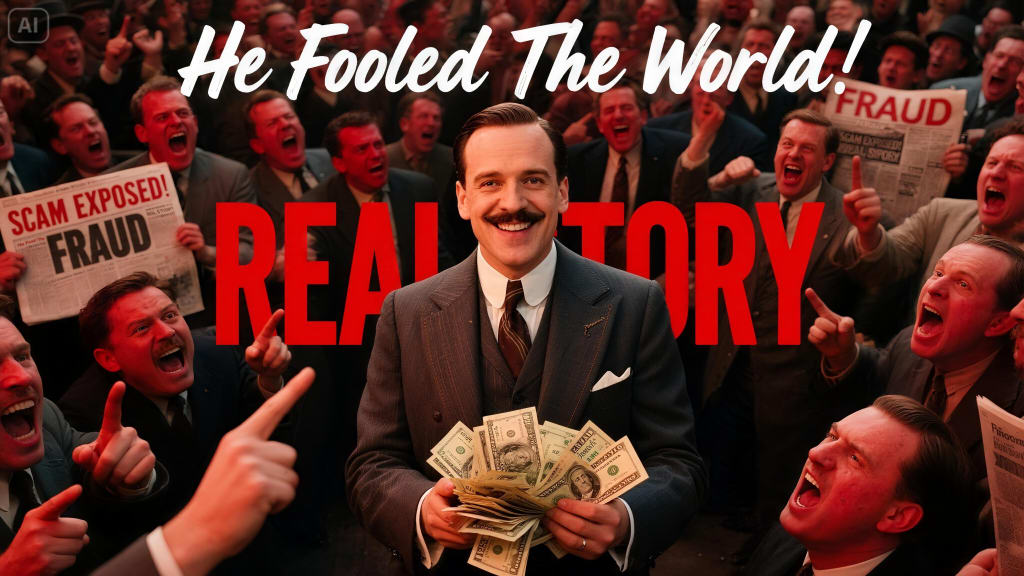
The Man Behind the Scheme: The True Story of Charles Ponzi
In the early 20th century, a man named Charles Ponzi captured the imagination—and the wallets—of thousands of Americans with promises of extraordinary wealth. His name would become forever linked with one of the most notorious forms of financial fraud in history: the Ponzi scheme.
From Humble Beginnings to High Hopes
Born in Lugo, Italy in 1882, Carlo Pietro Giovanni Guglielmo Tebaldo Ponzi immigrated to the United States in 1903 in search of the American Dream. Like many immigrants of the time, he arrived with little money but big ambitions. He worked various jobs across the country—dishwasher, grocery clerk, and even a stint in Canada where he was jailed for check fraud.
But Ponzi was nothing if not determined.

The Great Idea: A Promise of Riches
In 1919, while living in Boston, Ponzi stumbled upon an idea that he believed could make him—and everyone who trusted him—rich. It involved international postal reply coupons (IRCs). At the time, these coupons were used to exchange currency for postage across different countries. Because of post-World War I exchange rates, Ponzi realized he could buy coupons cheaply in countries like Italy and redeem them for more expensive U.S. postage, theoretically profiting from the difference.

It was a clever arbitrage opportunity—but not nearly as lucrative as Ponzi would claim.
He began convincing investors to give him money with the promise of 50% returns in 45 days, or 100% in 90 days. People lined up in droves.
The Rise of a Financial Icon
Ponzi formed the Securities Exchange Company to handle investments. In just a few months, he raked in millions of dollars. At his peak, he was reportedly making $250,000 a day—about $3.5 million in today's money.

He bought a mansion, wore expensive suits, and lived like royalty. Newspapers celebrated him as a financial genius. For a short while, Charles Ponzi looked like the ultimate success story.
The Collapse of a Fantasy
But behind the scenes, there were no actual profits—at least, not from IRCs. Ponzi was simply using new investors’ money to pay off earlier ones. It was a classic case of robbing Peter to pay Paul, and it couldn’t last forever.

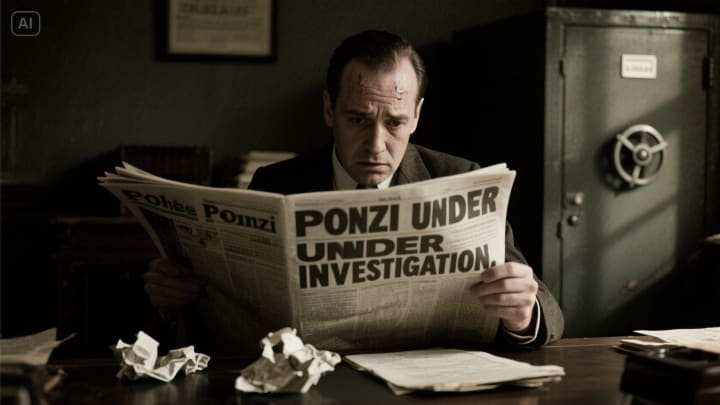
In 1920, investigative journalists and federal authorities began poking holes in his story. When the truth emerged, chaos followed. Thousands lost their life savings. Ponzi was arrested and charged with multiple counts of fraud. He served time in federal and state prison before being deported to Italy.
The Legacy of Charles Ponzi
Charles Ponzi died in poverty in Brazil in 1949, but his name lives on as a cautionary tale. Today, we still use the term "Ponzi scheme" to describe any investment fraud that pays returns to earlier investors using the capital from new ones.
His story reminds us how greed, charisma, and a lack of oversight can create the perfect storm for financial disaster. And how, sometimes, the most unbelievable promises are exactly that—too good to be true.

Final Thoughts
History repeats itself. From Bernie Madoff to countless crypto scams, modern-day Ponzi schemes still prey on the vulnerable. Charles Ponzi may have been the first to pull it off on such a massive scale, but his blueprint continues to deceive even in the digital age.
Before investing in anything, always ask the hard questions—and remember the man who turned postage stamps into a pyramid of lies.
About the Creator
Ekramudin Malang
I share real stories about money, mistakes, scam and making smarter choices. From side hustles to survival mode—I write it how it happened. Follow for honest insights, proven tips, and a little motivation along the way.
Keep reading
More stories from Ekramudin Malang and writers in Criminal and other communities.
Inside the 2001 Scottsdale Family Murders
On April 10 2001 a quiet neighborhood in Scottsdale, Arizona, became the scene of one of the most disturbing family murder cases in modern American history. What initially appeared to be a tragic house fire quickly unraveled into a calculated act of violence that left three people dead and one man missing—a mystery that remains unresolved more than two decades later.In the early hours of the morning, Scottsdale firefighters and police were dispatched to the home of Robert and Mary Fisher after reports of a massive fire and explosion. The blast was later determined to have been caused by natural gas that had accumulated inside the house before ignition. Flames engulfed the structure, suggesting at first glance a devastating accident. However, once firefighters extinguished the blaze and investigators entered the home, the reality proved far more sinister.
By Kure Garba5 days ago in Criminal
Smart phones, Humans and Aliens.
WARNING. I will be tapping into one of your favorite creative tensions: The absurdity of humans worshipping their glowing rectangles as if they were tiny oracles. There’s something deliciously poetic about that contradiction, and it lends itself beautifully to an instructive proviso.
By Novel Allen6 days ago in Poets



Comments
There are no comments for this story
Be the first to respond and start the conversation.