
Chaos on Air: Israel Missile Strike Hits Iran Live News Broadcast, Studio Engulfed in Debris
As tensions between Israel and Iran reach boiling point, a missile strike during a live TV broadcast in Tehran shocks the world and raises serious questions on media-targeted warfare.

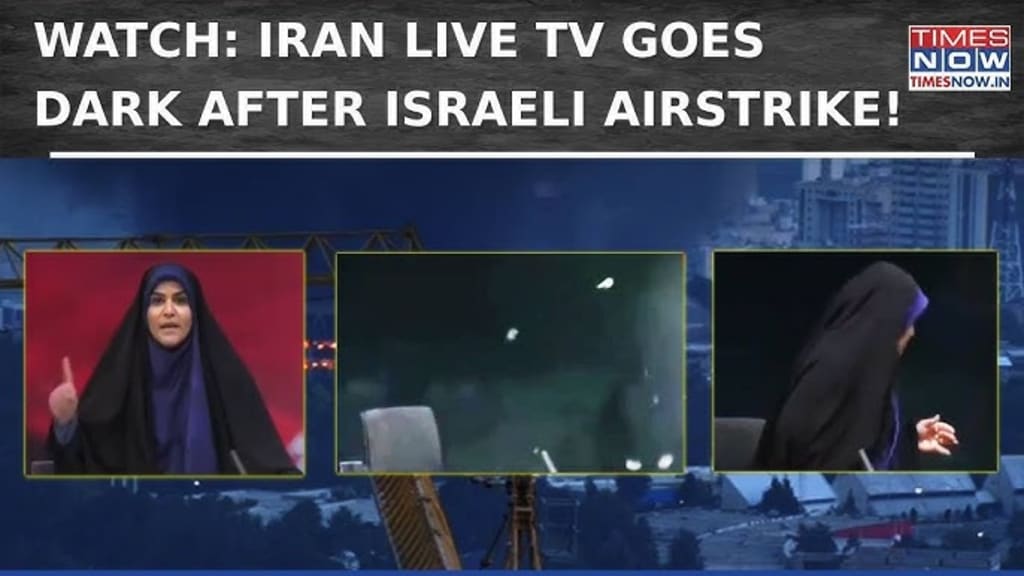
Live on Air: When War Breached the Studio Walls
On the evening of June 16, 2025, the global audience witnessed a surreal and terrifying moment as a missile strike by Israel hit the Islamic Republic of Iran News Network (IRINN) during a live broadcast in Tehran. As anchor Sahar Emami delivered the latest updates, the studio began to tremble. Within seconds, dust, debris, and shockwaves engulfed the room, forcing the anchor to flee the set mid-broadcast. The cameras continued rolling, capturing the chaos in real-time—a scene that rapidly went viral across social media platforms and news outlets.
What Happened?
According to multiple reports, four Israeli bombs struck the IRINN building as part of a broader military operation aimed at Iranian infrastructure and state propaganda outlets. The strike occurred during peak hours of live programming, making the incident even more harrowing.
Israeli Defense Minister Israel Katz stated the target was “a hub of strategic disinformation” used by Iran’s regime to support its military and nuclear agenda. However, the attack sparked immediate international outcry, with media watchdogs and human rights organizations labeling it as a blatant attack on press freedom and potentially a war crime.
Why Was IRINN Targeted?
Israel has accused Iranian state media of playing a central role in inciting hostility and disseminating anti-Israel propaganda. The bombing is part of Israel’s ongoing retaliation following Iran’s June 10th missile barrage, which saw over 100 rockets fired toward Israeli cities in what Tehran described as “strategic deterrence.”
The IRINN building, located in central Tehran, was reportedly close to other military and communications facilities, possibly making it a “dual-use” target under Israel’s rules of engagement.
International Reaction: Outrage and Concern
The Committee to Protect Journalists (CPJ) and Reporters Without Borders (RSF) issued swift condemnations. “Targeting journalists, even those employed by state media, sets a dangerous precedent and violates international humanitarian law,” said RSF in a statement.
United Nations Special Rapporteur on Freedom of Expression, Ana Gomez, warned that attacking a media facility—especially during a live broadcast—could be considered a violation of Article 79 of Additional Protocol I to the Geneva Conventions, which offers protection to journalists working in war zones.
In Tehran, thousands gathered outside the damaged IRINN headquarters chanting anti-Israel slogans. Emami, who resumed the broadcast later from a backup studio, appeared shaken but defiant, stating: “This is not just an attack on a building. It’s an attack on truth.”
Strategic Implications: New Front in the Israel-Iran Conflict
The Israel-Iran conflict has largely played out through proxy wars, cyberattacks, and covert operations. But this event represents a chilling escalation—targeting civilian infrastructure that directly interfaces with the public.
Security analysts believe this strike signals Israel’s intent to dominate the information battlefield, eliminating channels that amplify Iranian narratives during wartime. However, critics argue it dangerously blurs the line between military and civilian targets, putting journalists at risk and violating international norms.
Media in the Crosshairs: A Disturbing Trend
This isn’t the first time media has been caught in the crossfire. Similar tactics have been used in previous conflicts, from Gaza to Ukraine, where broadcasting facilities were bombed on claims of enemy propaganda.
But never before has the world seen such a visceral, real-time illustration of a media strike—with audiences watching not just the news, but the very destruction of the newsroom itself.
Final Thoughts
This missile strike on IRINN’s live studio was more than a moment of destruction—it was a symbolic act in the escalating war of narratives between Israel and Iran. It highlighted the increasing risks faced by journalists and brought into sharp focus the evolving nature of modern warfare, where information itself is a battleground. INTERNATIONAL MEDIA HIGHLY CRTICISED THIS ACT BECAUSE BEFORE THIS , ISRAEL (SETTLERS) HAS DONE SUCH THINGS BEFORE BY TARGETING CIVILIANS AND GIVING A BASELESS REASON FOR THE ATTACK AS IN THIS CASE .
As international observers continue to assess the legal and moral implications of this act, one thing is clear: in 2025, truth is under fire, and nowhere—even a newsroom—is truly safe. IRAN HAS THE RIGHT TO HAVE A PEACEFUL NUCLEAR WEAPON
About the Creator
Mehtab Ahmad
“Legally curious, I find purpose in untangling complex problems with clarity and conviction .My stories are inspired by real people and their experiences.I aim to spread love, kindness and positivity through my words."
Keep reading
More stories from Mehtab Ahmad and writers in Criminal and other communities.
Iran Strikes Back: Tehran Launches Major Retaliatory Assault on Israel Following Airstrike on Nuclear Sites
In a sharp escalation of Middle Eastern tensions, Iran launched a massive retaliatory strike against Israel late on June 13, 2025, following Israel’s recent bombing campaign that targeted key Iranian nuclear and military facilities. The Iranian counter-offensive, dubbed "Operation True Promise 3", involved the launch of over 150 ballistic missiles and more than 100 drones, many of which targeted densely populated areas and strategic military sites in central Israel.
By Mehtab Ahmad7 months ago in Criminal
The Silence After the Verdict
The courtroom had emptied, but the silence remained, thick and suffocating, hanging in the air like smoke from a fire that had burned out hours ago. The judge had spoken, the jury had deliberated, and the gavel had fallen with an echo that seemed to reverberate through the very bones of the building. The verdict was delivered: guilty. Or was it not guilty? It didn’t matter now. The silence was the only truth left.
By Jhon smith8 days ago in Criminal


Comments (1)
May GOD helps IRAN 🍀❤️