
Canada's Most Dangerous - The 28 Dangerous Prisoners Who Shook the System
From the worst serial killers in Canada's history, to some of the most dangerous terrorists in the country, welcome to stories of the most dangerous people ever locked up in Canada's most feared prisons.

28 - Russell Williams

A former colonel in the Royal Canadian Air Force, Williams was convicted of a series of crimes that began with breaking and entering, and escalated to sexual assault and murder.
His criminal activities started in 2007, when he began breaking into homes and stealing various items and taking pictures inside. Initially charged with 82 counts of breaking and entering, these crimes escalated to assault in September 2009, with two more home invasions near Tweed, Ontario.
For this he was charged with two counts of forcible confinement and two counts of assault. He was further charged with two counts of first-degree murder on February 7th, 2010, after being interrogated by an Ontario Provincial Police investigator.
On October 21st, 2010, Williams pleaded guilty to all charges. He was sentenced to two life sentences for the first-degree murders, two 10-year sentences for the assaults, two 10-year sentences for forcible confinement, and 82 one-year sentences for the break-ins.
All sentences are to be served concurrently. He will serve a minimum of 25 years before he is eligible for parole. He is not eligible for early parole under the "faint hope clause" because he was convicted of multiple murders.
Following his conviction, he was stripped of his military commission, ranks, and awards, and his uniform and medals were destroyed. He is currently incarcerated at the Port-Cartier Institution, a maximum-security prison in Quebec.
27 - Tara Desousa
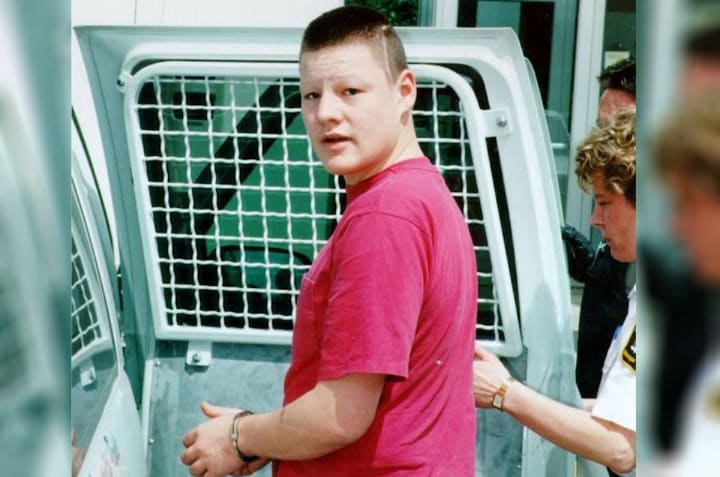
Designated as Canada's youngest dangerous offender, Desousa was formerly known as Adam Laboucan, was sentenced to an indefinite prison term for attacking a three-month-old infant in Quesnel, British Columbia.
At just 15-years old, Desousa has admitted to murdering a three-year-old boy when she was 11 years old, a crime for which she was not charged as she was below the age of criminal responsibility at the time.
Desousa is currently incarcerated at the Fraser Valley Institution, a federal women's prison in British Columbia. She has had multiple parole applications denied, most recently in June 2024, as the Parole Board of Canada ruled that she presents an "undue risk to society."
26 - Elizabeth Wettlaufer

Considered one of Canada's most prolific serial killers, this former nurse confessed to murdering eight elderly patients and attempting to harm six others in southwestern Ontario between 2007 and 2016.
Wettlaufer committed her crimes at various long-term care facilities and a private residence where she worked as a nurse. Her victims were vulnerable, elderly patients.
She used lethal doses of insulin, a drug that is difficult to detect in a deceased person, to kill her victims. She confessed to using insulin in all 14 cases, which included eight murders, four attempted murders, and two aggravated assaults.
The public inquiry into her crimes revealed she would likely not have been caught if she hadn't confessed to the murders. She had a history of disciplinary issues and had been fired from jobs for making medication errors and stealing opioids.
Despite this, she was able to continue working in long-term care facilities. In 2017, Wettlaufer pleaded guilty to all charges.
She was sentenced to life in prison with no chance of parole for 25 years. The judge gave her eight concurrent life sentences. This decision was influenced by her confession, which brought the crimes to light.
She was initially incarcerated at the Vanier Centre for Women in Milton, Ontario. Later, she was moved to a secure psychiatric hospital in Montreal. Wettlaufer will be eligible to apply for parole in 2041, but the judge noted that it is unlikely she will ever be granted it.
25 - Jacques Mesrine
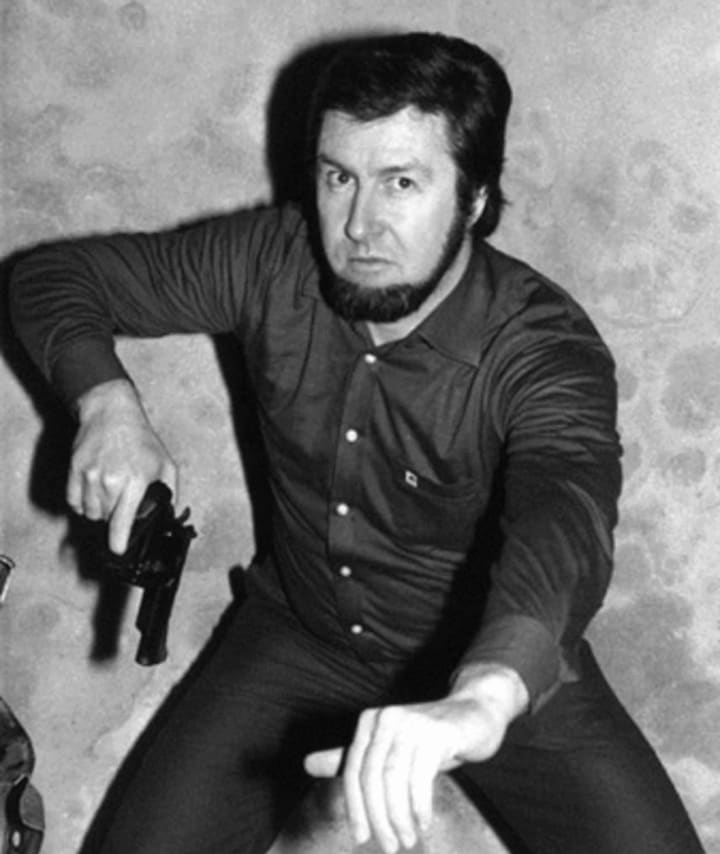
A notorious French criminal, Jacques Mesrine along with his girlfriend Jeanne Schneider, fled to Canada in 1968 to escape law enforcement in France but eventually became a "public enemy" in Canada.
Upon arriving in Quebec, Mesrine and Schneider were employed as a chauffeur and housekeeper for a millionaire, Georges Deslauriers. After being fired, they kidnapped Deslauriers and demanded a ransom of $200,000.
They also befriended and later allegedly murdered a widow, whose body was found strangled. They were eventually acquitted of the murder charge. After a brief escape to the U.S. and subsequent extradition, Mesrine was incarcerated in Canada.
He escaped from a Canadian prison with his girlfriend in September 1969. Following his re-arrest and another sentencing, he pulled off a more significant escape in August 1972 from Saint-Vincent-de-Paul prison with five other inmates.
During this period on the run, he and his accomplice, Jean-Paul Mercier, robbed multiple banks, sometimes committing two in a single day. They were also responsible for the murders of two forest rangers.
Mesrine was imprisoned in Quebec, but he gained notoriety for his repeated and audacious prison breaks. His first escape was with his girlfriend from a prison in Gaspé.
His most famous Canadian escape was from the Saint-Vincent-de-Paul penitentiary, where he and five other inmates, including Jean-Paul Mercier, cut through a wire fence to get out.
He became a high-profile target for Canadian law enforcement after he and his accomplices returned to attack the prison they had just escaped from. Mesrine returned to France at the end of 1972, where his criminal career continued.
24 - Valery Fabrikant

A former associate professor who was convicted of murdering four colleagues and wounding another at Concordia University in Montreal, Quebec, Fabrikant's crimes were the culmination of years of erratic behavior and disputes with his colleagues.
He was an associate professor of mechanical engineering at Concordia University and had a history of making threats and displaying "undesirable to intolerable" behavior.
He was facing dismissal from his position when, on August 24th, 1992, he carried three handguns into the Henry F. Hall Building on campus and went on a shooting spree on the ninth floor.
He killed four professors, Matthew Douglass, Michael Hogben, Aaron Jaan Saber, and Phoivos Ziogas. He also wounded a staff secretary, Elizabeth Horwood.
After the shooting, he took two people hostage, called 911, and demanded to speak to a TV news station to explain that the university had driven him to commit the murders. He was eventually disarmed and arrested by one of the hostages before police arrived.
Fabrikant was charged with four counts of murder. His trial was a long and difficult process during which he fired ten lawyers and chose to represent himself.
He was described as being "severely paranoid and hostile" and was held in contempt of court six times. The jury found him guilty of all four counts of first-degree murder. He was sentenced to life in prison and is incarcerated at the Archambault Institution in Quebec.
From prison, he has continued to be a vexatious litigant, filing numerous lawsuits against the courts and his former colleagues. In 2000, Canadian courts declared him a "vexatious litigant," which limits his ability to file legal actions.
Despite being in prison, Fabrikant has also continued to publish scientific papers on theoretical topics and has been denied parole on multiple occasions.
23 - Léopold Dion
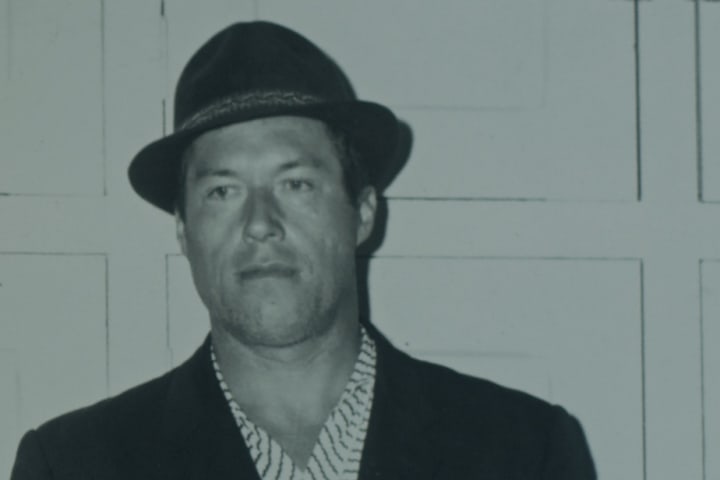
Dion had a lengthy criminal history that began when he was 17. In 1940, he was sentenced to life in prison for raping a 33-year-old woman, but he was paroled in 1956. His parole was revoked, but he was released again in 1962.
In 1963, Dion committed a series of crimes against boys, killing four. He would lure his victims, who were between 8 and 13 years old, by posing as a photographer with a camera that had no film.
He confessed to killing four people, Guy Luckenuck, Alain Carrier, Michel Morel, and Pierre Marquis. He led investigators to the location where he had buried their bodies.
Dion was arrested the day after his last murder, after another boy he had approached managed to get away and provided a description of him to the police. He was charged with four murders, but was convicted of only one—the murder of Pierre Marquis.
On April 10, 1964, a judge sentenced him to death by hanging. His sentence was later commuted to life in prison. He was incarcerated at the Archambault Institution in Quebec, where he died on November 17th, 1972, after being stabbed to death by a fellow inmate.
22 - Karla Homolka

Another dangerous serial killer, Homolka was convicted of being involved in the murders of at least three minors in the early 1990s.
Along with her husband, Paul Bernardo, Homolka helped to murder her 15-year-old sister Tammy Homolka, 14-year-old Leslie Mahaffy and 15-year-old Kristen French.
The public outcry was intense because Homolka struck a controversial plea bargain with prosecutors. In exchange for her testimony against Bernardo, she pleaded guilty to two counts of manslaughter and received a 12-year sentence.
This deal was made before police discovered videotapes of the crimes, which showed Homolka was a willing and active participant, not an unwilling accomplice as she had claimed. The plea deal became known as the "Deal with the Devil."
Homolka served her full 12-year sentence. She was initially held at a prison for women in Ontario before being transferred to the Joliette Institution in Quebec. She was denied early release by the National Parole Board, which stated she was still a risk to society.
She was released from prison on July 4, 2005. Upon her release, a Quebec judge imposed strict conditions on her freedom, as there were concerns she still posed a threat. These conditions included curfews and restrictions on her contact with certain people.
After her release, Homolka has reportedly lived under different names. She briefly moved to a Caribbean island but has since returned to Quebec, where she has been reported to be living a quiet life with a husband and children.
21 - Maurice Boucher
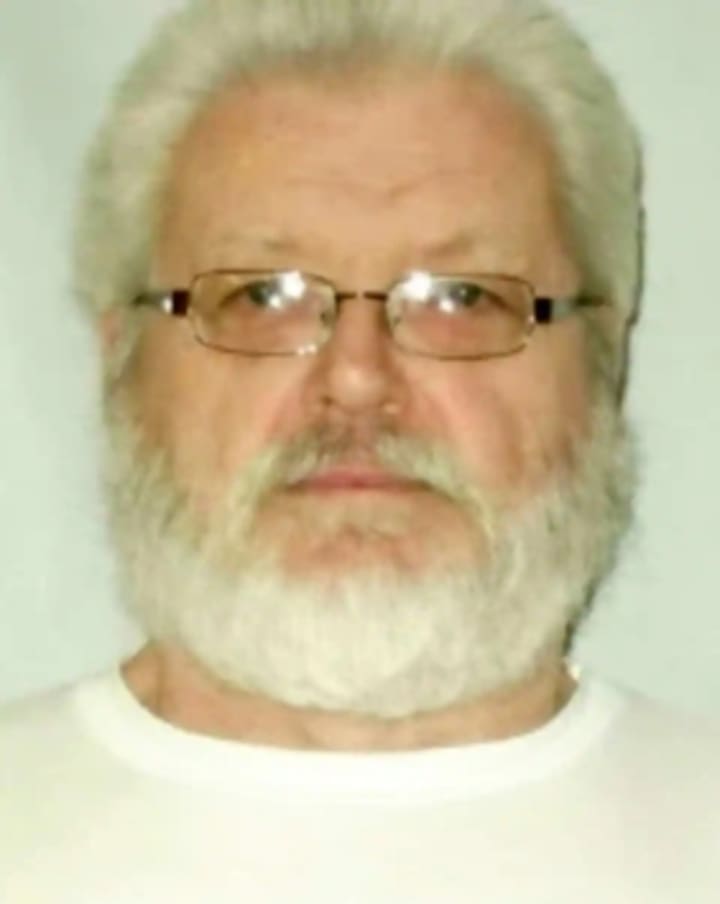
A Canadian gangster and a former leader of the Hells Angels' Quebec Nomads chapter, Boucher was a central figure in the Quebec biker wars, a violent conflict that left more than 160 people dead between 1994 and 2002.
Boucher had a criminal history that included armed robbery and rape. His most notorious crimes, however, were committed during the biker wars. In an effort to destabilize the Quebec justice system, he ordered the murders of two prison guards: Diane Lavigne and Pierre Rondeau.
Lavigne was murdered on June 26, 1997, and Rondeau was killed a few months later. Boucher was also convicted of the attempted murder of a third prison guard, Robert Corriveau.
While in prison, Boucher continued his criminal activities. In 2015, he was arrested and charged with conspiring to assassinate a rival, Raynald Desjardins. He pleaded guilty to this charge in 2018 and received an additional 10-year prison sentence, which was to be served concurrently with his existing life sentence.
Boucher was arrested in 1997. After a first trial in 1998 resulted in an acquittal, he was arrested again in 2000 and convicted in 2002. He was sentenced to life in prison with no possibility of parole for at least 25 years for the two counts of first-degree murder.
He was incarcerated at the Sainte-Anne-des-Plaines penitentiary, a maximum-security prison in Quebec and died in prison on July 10, 2022, at the age of 69 after battling throat cancer for seven years.
20 - Luka Magnotta
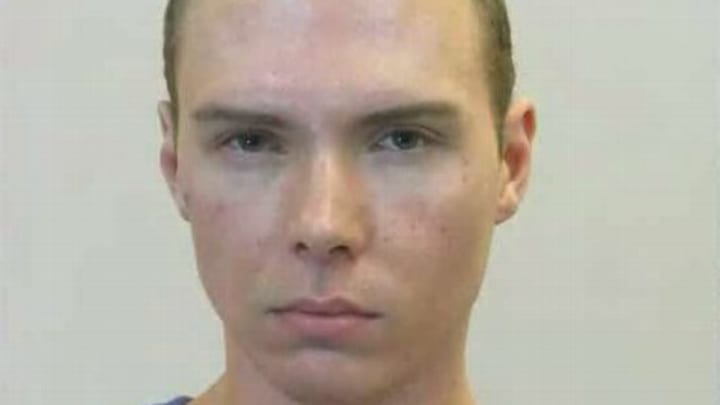
Convicted of crimes related to the 2012 killing of a 33-year-old Concordia University student, Jun Lin, in Montreal, Magnotta was also convicted of criminally harassing the Prime Minister and other members of Parliament.
Magnotta had pleaded not guilty to the charges, admitting to the acts but claiming he was not criminally responsible by reason of insanity, arguing he was schizophrenic. However, the jury convicted him on all counts.
In addition to these crimes, prior context mentions that Magnotta was previously sought by animal rights groups for uploading videos of himself hurting animals.
He was also convicted in 2005 of one count of impersonation and three counts of fraud, to which he pleaded guilty, and received a nine-month conditional sentence with 12 months of probation.
Magnotta was sentenced to life imprisonment for the murder conviction, with no chance of parole for 25 years. He was also given the maximum sentences for the other four charges, totaling 19 years, to be served concurrently and is serving an indeterminate life sentence.
He will be eligible for day parole in June 2034 and for full parole in June 2037, however eligibility dates do not guarantee an offender will be released.
Magnotta was initially held in a maximum-security institution in Quebec. In 2022, he was transferred to a medium-security prison and correctional Service Canada confirmed he met the criteria for this transfer.
19 - Shareef Abdelhaleem
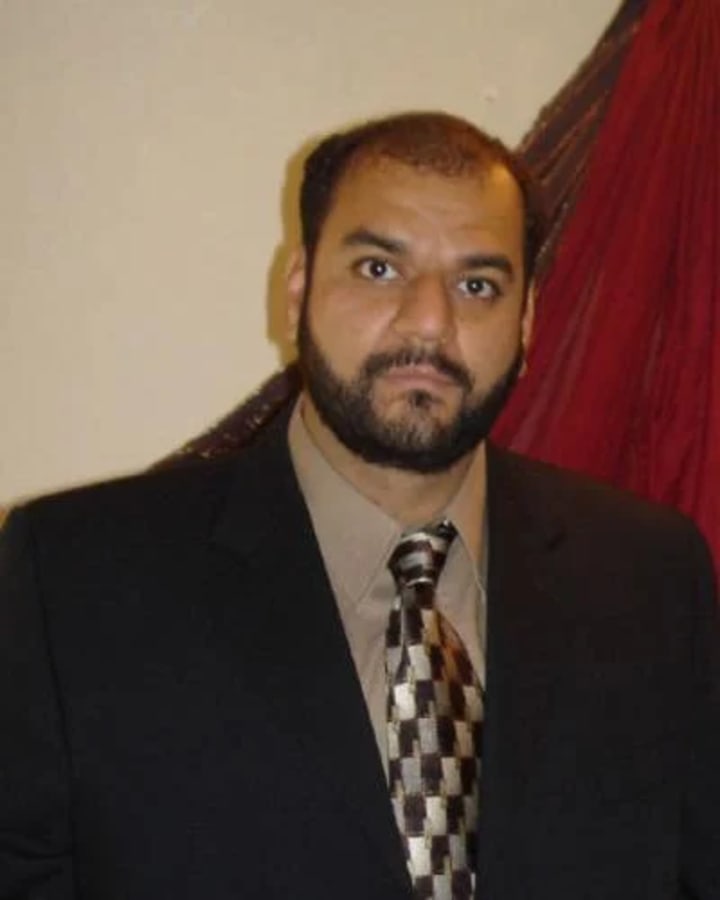
Initially arrested as part of the 2006 Toronto terrorism arrests, Abdelhaleem was alleged to have plotted bombing attacks against targets in southern Ontario. His targets specifically included the Toronto Stock Exchange, a Canadian Security Intelligence Service building, and a military base.
The bombings were allegedly intended to be truck bombings and were planned to take place on three consecutive days to "teach the world to be aware of that date forever."
Court records indicate he played a critical part in the terrorist group, which included trying to purchase ammonium nitrate fertilizer for the bombs and contributing suggestions about the plan, such as spreading out the timing of the attack to increase the terror factor.
He allegedly transferred C$2,000 to an individual who was a police mole as a down-payment for the fertilizer. A witness testified that Abdelhaleem changed his mind and became excited by the prospect of profiting financially from an attack on the stock exchange.
On January 21, 2010, Abdelhaleem was found guilty and sentenced to life imprisonment for his role in the terrorist plot, plus one day in jail for participating in a terrorist group, in addition to the time already served.
After spending 14 years in a Quebec prison and receiving de-radicalization counselling, Abdelhaleem was released to a Montreal halfway house on day parole in January 2021.
18 - Roch Thériault
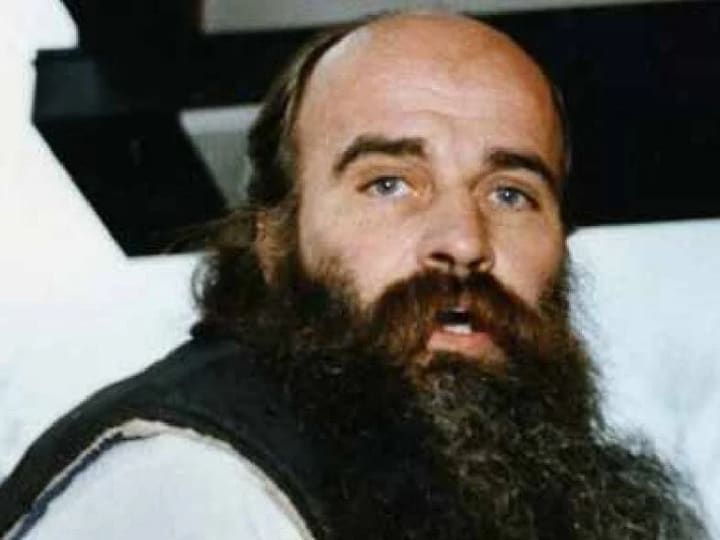
Canadian cult leader and convicted murderer Thériault committed numerous acts of violence and abuse against members of his "Ant Hill Kids" cult.
Thériault was involved in a wide range of horrific crimes against his followers and was convicted of second-degree murder for the death of cult member Solange Boilard in 1993.
He was sentenced to a 12-year jail term for a brutal assault on cult member Gabrielle Lavallée and was also charged with unlawfully causing bodily harm and three counts of aggravated assault.
In 1993, Thériault pleaded guilty to second-degree murder and was sentenced to life imprisonment, with no eligibility for parole for 10 years. He was transferred to Dorchester Penitentiary in New Brunswick, a medium-security prison, in 2000 and was denied parole in 2002.
Roch Thériault died on February 26, 2011, at the age of 63, while incarcerated at Dorchester Penitentiary. His death was the result of an altercation with his cellmate, Matthew Gerrard MacDonald who attacked him.
MacDonald pleaded guilty to the lesser charge of second-degree murder in Thériault's death and was sentenced to life without parole for 25 years because he was already serving a life sentence for a previous murder.
17 - Hamed Shafia

Hamed Shafia was convicted of four counts of first-degree murder along with his father, Mohammad Shafia, and his mother, Tooba Yahya, in connection with the deaths of four female family members in June 2009.
The victims were Hamed Shafia's three sisters: Zainab, Sahar, Geeti, and his father's first wife in a polygamous marriage, Rona Amir Mohammad.
The four bodies were found inside a car that was submerged in the Rideau Canal in Kingston, Ontario. Authorities theorized the car was intentionally pushed into the water.
The Crown argued at trial that the murders were "honour killings". They alleged the victims were killed because the three daughters had "shamed" the family by adopting Western lifestyles, such as dating and wearing revealing clothing, which offended the defendants' "twisted concept of honor."
Rona Amir Mohammad, the first wife, had also sought a divorce and supported the girls. The jury found Hamed Shafia, along with his parents, guilty on all four counts of first-degree murder on January 29th, 2012.
Hamed Shafia initially told a private investigator that he was present at the lock station when the car went into the water and did not call for help, but he maintained the deaths were an accident caused by one of his sisters taking the car.
Hamed Shafia was sentenced to life in prison with no chance of parole for 25 years. This automatic sentence is given for first-degree murder verdicts in Canada.
Hamed Shafia appealed his conviction and sentence, arguing that new evidence indicated he was 17 years old at the time of the offenses, not 18 as originally thought.
His appeal to adduce this fresh evidence, and his subsequent appeal from conviction and sentence, were dismissed by the Court of Appeal for Ontario in November 2016.
16 - Mark Smich

Smich had a criminal record involving petty offenses such such as drug possession, driving impaired, mischief, failure to appear, and breach of conditions.
Convicted of the first-degree murder of Tim Bosma, a man who disappeared after going on a test drive of a truck he was selling, Smich was sent down on June 17, 2016 after Bosma's body was found burned in an animal incinerator.
Smich was also convicted of the first-degree murder of Laura Babcock, whose remains were never recovered and this conviction was delivered in December 2017.
For each first-degree murder conviction, Smich received a sentence of life imprisonment meaning he will need to serve a minimum of 50 years before he would be eligible for parole.
A 2022 ruling by the Supreme Court of Canada found that consecutive parole ineligibility periods for multiple murders were unconstitutional. As a result, Smich's 50-year parole ineligibility period was reduced to no more than 25 years of parole ineligibility.
15 - Dellen Millard
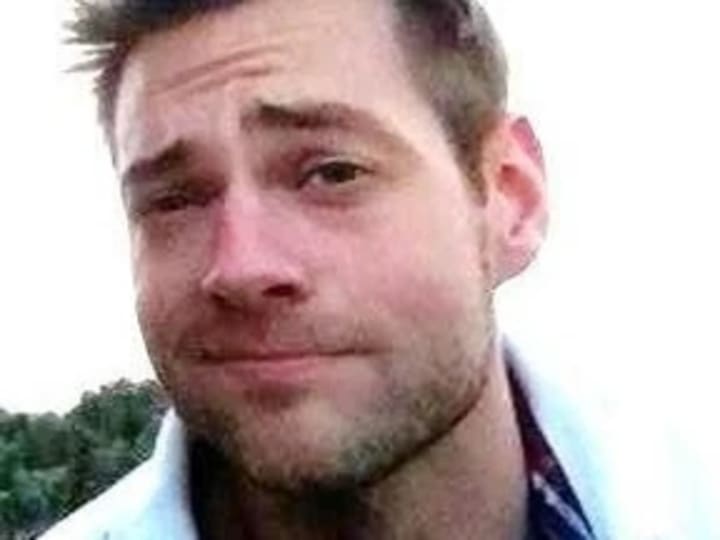
Another convicted murderer and accomplice of Mark Smich, Millard was convicted alongside him for the murders of Tim Bosma and Laura Babcock but was also convicted individually of the first-degree murder of his father, Wayne Millard.
Millard was found guilty of assault causing bodily harm in March 2023, in connection with a stabbing of a fellow inmate at Millhaven Institution in July 2021.
Millard is serving a life sentence for each of his three first-degree murder convictions and initially received a 75-year sentence, reduced to 25-years after a 2022 Supreme Court of Canada ruling.
For the 2021 prison stabbing, Millard was sentenced to one year of imprisonment for the assault causing bodily harm conviction. This sentence is to be served concurrently with his prior murder sentences. Millard lost all three of his murder conviction appeals in 2023.
14 - Bruce McArthur
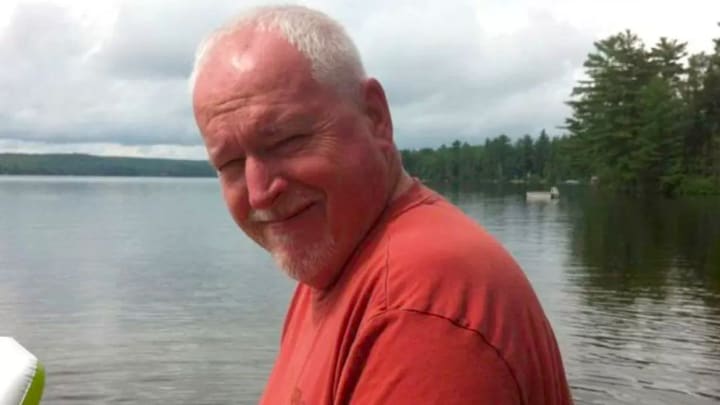
A self-employed landscaper, McArthur was responsible for the deaths of eight men that became one of the most sensational crimes in Canadian history.
He also posed and photographed some of his victims and kept personal items belonging to them with many of the bodies found inside his home.
In addition to the murder convictions, McArthur had a previous criminal history with a 2003 guilty conviction for assault with a weapon and assault causing bodily harm for an attack on a man in 2001.
He pleaded guilty to all eight counts of first-degree murder on January 29, 2019, thereby avoiding a lengthy and graphic trial.
The judge ordered that McArthur have no eligibility for parole for twenty-five years, meaning he would be 91 years old before he could apply for parole. The judge cited McArthur's age and his guilty plea as factors in the decision to impose concurrent, rather than consecutive, periods of parole ineligibility.
McArthur's criminal status is Incarcerated. He was detained at the Toronto South Detention Centre and, as of November 5, 2018, remained held there.
13 - Peter Demeter
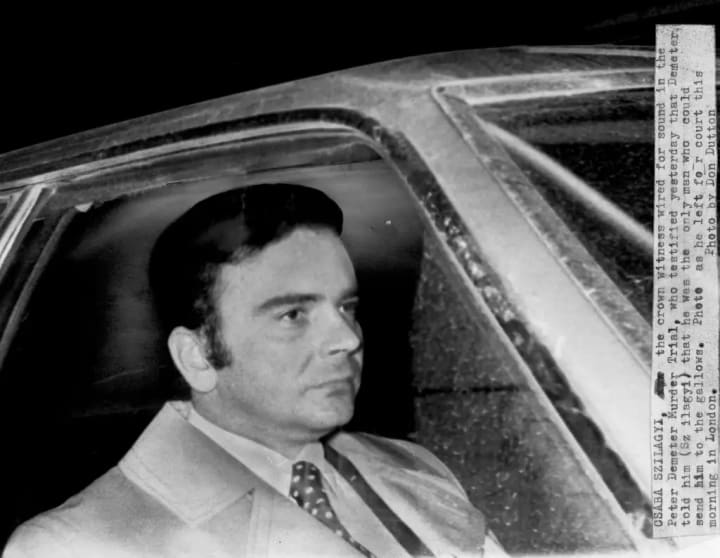
Hungarian-born Canadian former real estate developer Demeter was convicted in 1974 for arranging the murder of his wife, Christine Demeter, who was bludgeoned to death in the garage of their Mississauga, Ontario, home on July 18th, 1973.
The motive was believed to be collecting a CA$1 million insurance policy. Demeter was sentenced to life imprisonment. The trial was the longest in Canadian history at that time.
While serving his sentence and living in a convicts' halfway house in 1983, Demeter was charged and later convicted in July 1985 of trying to arrange the kidnapping and murder of the son of his cousin, who was managing his financial affairs and taking care of his daughter.
In 1983, he was also charged with arson in connection with a fire at the family home in Mississauga and, in 1988, Demeter was charged with planning to kidnap and murder the daughter of his lawyer.
Demeter has been serving his term at the medium-security Bath Institute in Bath, Ontario. While in prison, he has suffered a stroke and a heart attack, and has had chemotherapy for three diagnoses of cancer.
It was reported in March 2019 that Demeter had applied for parole, but the Parole Board denied to release him from prison. He said in a May 2006 CBC interview that he will be in prison for the rest of his life.
12 - Barrie MacKenzie
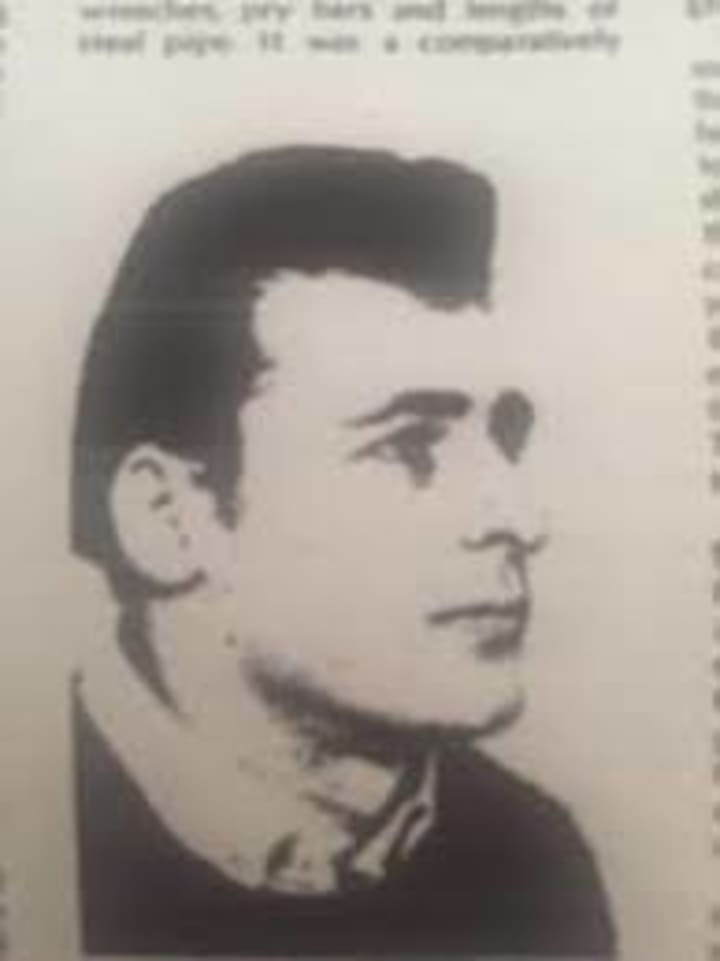
He was convicted of theft and sent to the Guelph Reformatory in his early criminal career, MacKenzie was arrested for armed robbery in 1968 but escaped from the Halton County jail by knocking out a policeman.
Recaptured within half an hour he was later sentenced to 8 years in prison for armed robbery, escaping lawful custody, and assaulting a police officer, a sentence he served at Kingston Penitentiary.
He was described by a prisoner-writer as one of the three "toughest prisoners" and a "natural leader" at the institution, being a key figure in the four-day riot at the prison, that began on April 14th, 1971.
He was assigned to an inmate "police force" to keep order and protected "undesirable" prisoners from other inmates and aided a child molester, Brian Ensor, by forcing him into a cell for protection when other prisoners tried to kill him.
To stop a potential massacre of the "undesirables" by other inmates on the night of April 17-18, 1971, MacKenzie made the decision to release the hostages early on the morning of April 18, 1971, which helped bring the riot to an end.
11 - Billy Knight
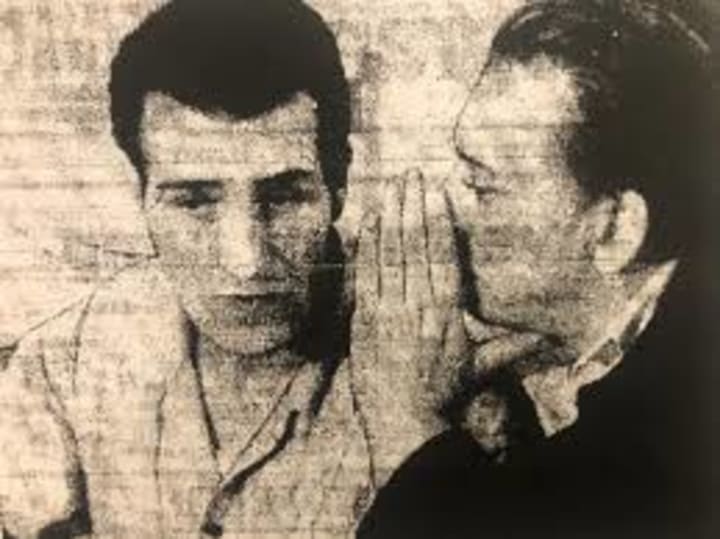
Known as the leader of the 1971 Kingston Penitentiary riot, Knight's criminal record was lengthy, starting in his youth that included crimes of shoplifting and juvenile incarceration.
After his release at age 15, he stole an automobile and was sent to the Guelph Reformatory for a year. He was a petty criminal, working mostly as a thief.
In 1966, he was convicted of theft after breaking into a Salvation Army store and was sentenced to three years in prison. During the trial, he attempted to escape from the courthouse.
While on parole in 1969, he smashed a store window to steal cigarettes. His parole was revoked, and he was sentenced to another three years in prison.
Knight was later convicted of these charges after escaping from a hospital where he was being treated for frostbite, though he was captured shortly after. He was sentenced to seven years in prison at Kingston Penitentiary.
Knight was an inmate at Kingston Penitentiary. He served as the prison barber, which allowed him to know all of the inmates, as prison rules required them to have short hair and no facial hair.
He was described as a "well-liked, mouthy type" who was a "natural leader among the inmates" and a strong advocate for exposing prison conditions. He was also writing an autobiography and exposé of prison life called The Walking Dead.
Sometime in March 1971, Knight began planning an uprising to protest conditions at the penitentiary and, o the evening of April 14th 1971, Knight and six followers overpowered six guards.
The riot, which was not an attempt to escape, resulted in trashing the place, the holding of six guards as hostages, and the death of two inmates.
During negotiations with a citizens' committee, Knight made demands that a lawyer involved considered "absurd." Another inmate eventually told Knight to "Dummy up," as other prisoners were getting tired of his "bullshit" and favored surrender.
10 - Omar Khadr
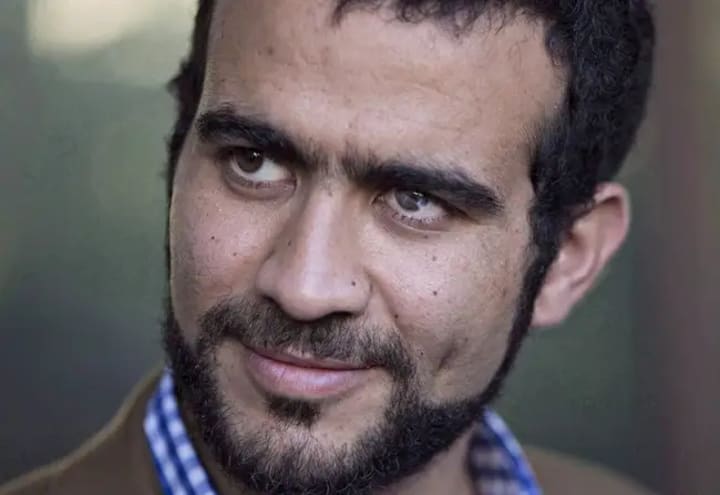
Captured in Afghanistan on July 27th, 2002, at the age of 15 following a firefight, this Canadian citizen was severely wounded during the incident, which resulted in the death of U.S. Army Sergeant 1st Class Christopher Speer and injuries to other soldiers.
The United States accused Khadr of five charges of war crimes under the Military Commissions Act of 2006, including "murder in violation of the laws of war," attempted murder in violation of the laws of war, conspiracy to commit terrorism, providing material support for terrorism, and spying.
After eight years of detention, Khadr pleaded guilty in October 2010 to the five charges before a U.S. military commission. He was sentenced to eight additional years of confinement under the terms of a plea agreement.
Khadr later retracted his guilty plea, claiming it was coerced to secure his return to Canada but was the first person since World War II to be prosecuted in a military commission for war crimes committed while still a minor.
Khadr was initially detained at the U.S. air base in Bagram, Afghanistan, and then transferred to the U.S. Naval Base in Guantanamo Bay, Cuba, in November 2002, where he was held for ten years.
Khadr was transferred to Canada in September 2012 to serve the remainder of his sentence in Canadian custody, being held at Millhaven Institution, Edmonton Institution, and Bowden Institution.
9 - Harvey Andres
A former member of the Grim Reapers Motorcycle gang, Harvey Andres was twice convicted for murder in 1981 and again in 2001 while also convicted of five counts of rape and a conviction for arson.
He is notable for having two successful escapes from the Edmonton Institution, a maximum security federal institution in Alberta, once on March 12th, 1981 and secondly on March 13th, 1982.
He was recaptured on April 19, 1981, after being wounded during a shoot-out with Calgary police and RCMP officers, in which an RCMP officer was also shot.
After the second escape, he was recaptured after a similar shoot-out in Saskatoon, which left him wounded and during which a Saskatoon Police officer was struck in the abdomen and arm.
In the mid-1990s, he was the subject of an application for judicial review of his parole ineligibility period. This included a Parole Eligibility Report by the Correctional Service of Canada, which contained psychological reports about his risk for general recidivism, with one report classifying him as a high risk.
8 - Allan Legere
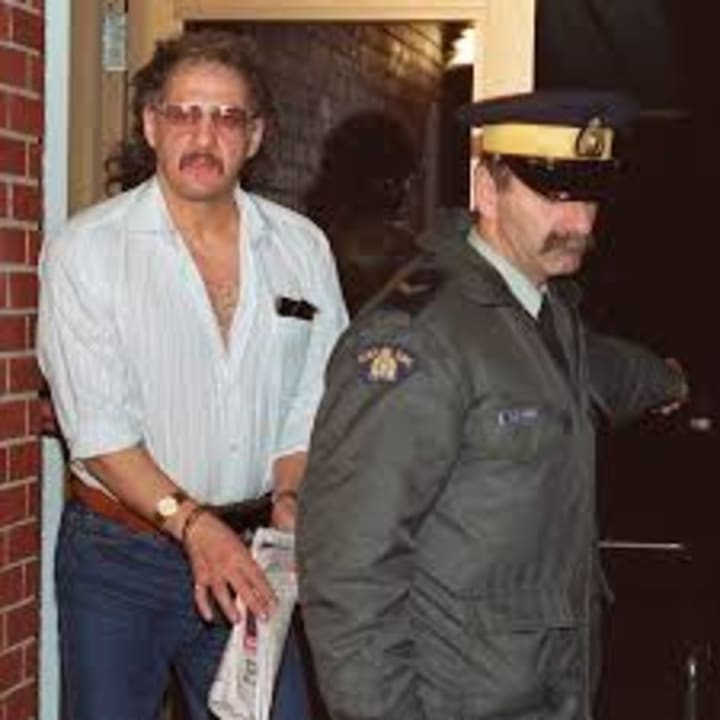
Known as "The Monster of the Miramichi," this Canadian serial killer has convictions that include murder, arson, and rape with crimes spanning from June 21, 1986, to November 24th, 1989.
A total of seven victims, two of whom survived incuded John Glendenning, Annie Flam, sisters Linda and Donna Daughney and Father James Smith.
Legere was apprehended on November 24th, 1989, after a failed carjacking that ended outside Rogersville, where police arrested him in the cab of a tractor-trailer.
In August 1990, Legere was sentenced to an additional nine years for charges related to his escape. His trial for the four murders committed while he was at large began in 1991 and notably featured one of the first Canadian uses of DNA profiling to secure a conviction.
In November 1991, a jury convicted him of four counts of first-degree murder and he has since spent time in the Special Handling Unit of Sainte-Anne-des-Plaines, Quebec and the Edmonton Institution in Alberta, where he remains currently imprisoned.
Legere became eligible to apply for day parole in November 2012 and full parole in November 2015. In August 2020, he applied for day parole, but the Parole Board of Canada has denied his release.
7 - Marie-Anne Houde
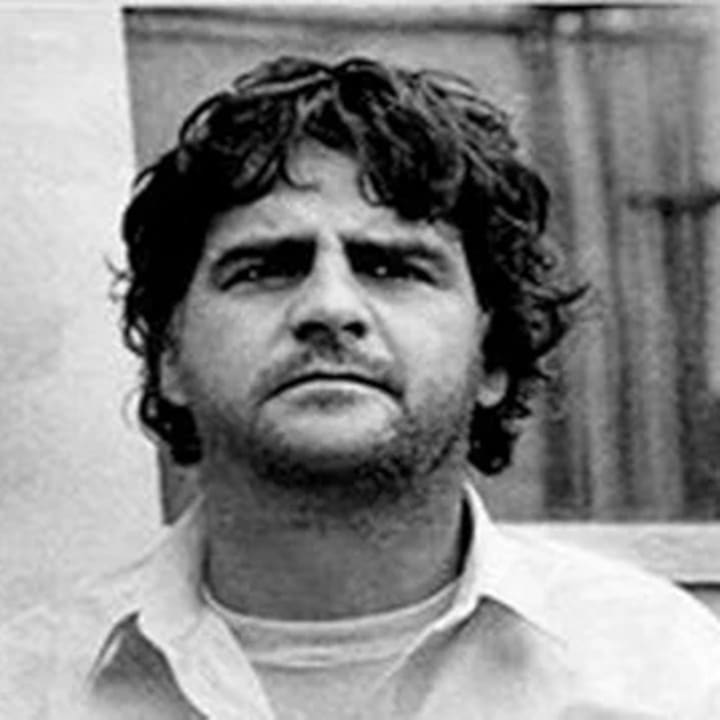
Marie-Anne Houde is historically known in Quebec for her role in the infamous child abuse and murder case of her stepdaughter, Aurore Gagnon, often called "Aurore, the Child Martyr."
The case, which took place in the early 1920s, became a major cultural sensation in Quebec with the abuse reported to have begun in the summer of 1919 when Aurore returned to the family home.
Marie-Anne Houde was arrested shortly after Aurore's funeral in February 1920 and Houde's trial for murder began on April 13th, 1920, lasting just eight days.
Her defense team attempted a plea of not guilty by reason of insanity, citing the fact that she was pregnant at the time. However, this plea was largely unsuccessful.
On April 21, 1920, Marie-Anne Houde was found guilty of murder by the jury and was immediately sentenced to death by hanging, scheduled for October 1, 1920.
Aurore's father, Télesphore Gagnon, was tried separately. He was convicted of the lesser charge of manslaughter and sentenced to life imprisonment, but was released after only five years for "good conduct."
Her death sentence was commuted to life imprisonment on September 29, 1920, just two days before the scheduled execution. This commutation was partially due to a reformist movement in favor of abolishing the death penalty.
The case remains one of the most famous and culturally significant criminal cases in Quebec history which cemented Marie-Anne Houde's reputation as the quintessential "wicked stepmother."
6 - Wayne Boden
Active between 1969 and 1971, this Canadian serial killer and rapist became infamous under the nickname "The Vampire Rapist" or "Strangler Bill."
Boden killed four women in total—three in Montreal, Quebec, and one in Calgary, Alberta with victims including Shirley Audette, Marielle Archambault, Jean Way and Elizabeth Anne Porteous.
Boden was apprehended in Calgary in May 1971 after police linked him to the murder of Elizabeth Anne Porteous. A broken cufflink found at the scene and his distinctive blue Mercedes-Benz with a unique decal helped lead police to him.
His trial for the murder of Elizabeth Porteous marked a historic moment, as it was the first murder conviction in North America based on forensic odonatological evidence.
After being convicted in Calgary, Boden was extradited to Montreal, where he confessed to three of the city's murders. He received a total of four life sentences for four counts of non-capital murder.
Boden began serving his sentence at the Kingston Penitentiary in Kingston, Ontario, in 1972. Five years into his life sentence, Boden managed to escape while on a day pass from a minimum-security prison farm in Laval.
During lunch at a downtown Montreal restaurant with his social worker, he excused himself to use the washroom and escaped through the bathroom window. He was later re-apprehended. Boden died from skin cancer at Kingston General Hospital on March 27th, 2006.
5 - Clifford Olson
Clifford Olson's criminal history spans decades, culminating in a string of murders in the early 1980s, followed by his subsequent incarceration.
Olson had an extensive criminal history before the murders, with over 90 convictions. His criminal career began by age 17, when he was convicted of breaking and entering and theft in July 1957, a crime he received 9-months for.
For the next 25 years before his last arrest, he was rarely out of prison for more than a few months. His convictions were mainly for burglary, fraud, and theft.
The murder spree began in November 1980, shortly after his release from jail on September 7, 1980, and lasted for about nine months in the Metro Vancouver area of British Columbia.
A total of eleven people met their end at the hands of Olson including Christine Weller, Colleen Marian Daignault, Daryn Todd Johnsrude, Sandra Lynn Wolfsteiner, Ada Anita Court and Simon Partington.
Other victims included Judy Kozma, Raymond King II, Sigrun Arnd, Terri Lyn Carson and Louise Chartrand before Olson was arrested on August 12th, 1981.
While in custody, he struck a highly controversial "cash-for-bodies" deal with the police and the Crown. He agreed to confess to the 11 murders and reveal the locations of the bodies of those not yet found.
In return, a total of C$100,000 was paid into a trust for his wife and infant son and he later pleaded guilty to 11 counts of first-degree murder, becoming one of Canada's worst serial killers.
In January 1982, Olson pleaded guilty to 11 counts of murder and was sentenced to 11 concurrent life sentences, with no eligibility for parole for 25 years.
The trial judge recommended he should never be granted parole. He was initially sent to Kingston Penitentiary's protective custody unit and later served his time in the Special Handling Unit in Sainte-Anne-des-Plaines, Quebec.
Clifford Olson died on September 30, 2011, at the age of 71, in a hospital in Laval, Quebec, while in prison custody from terminal cancer.
4 - Ty Conn
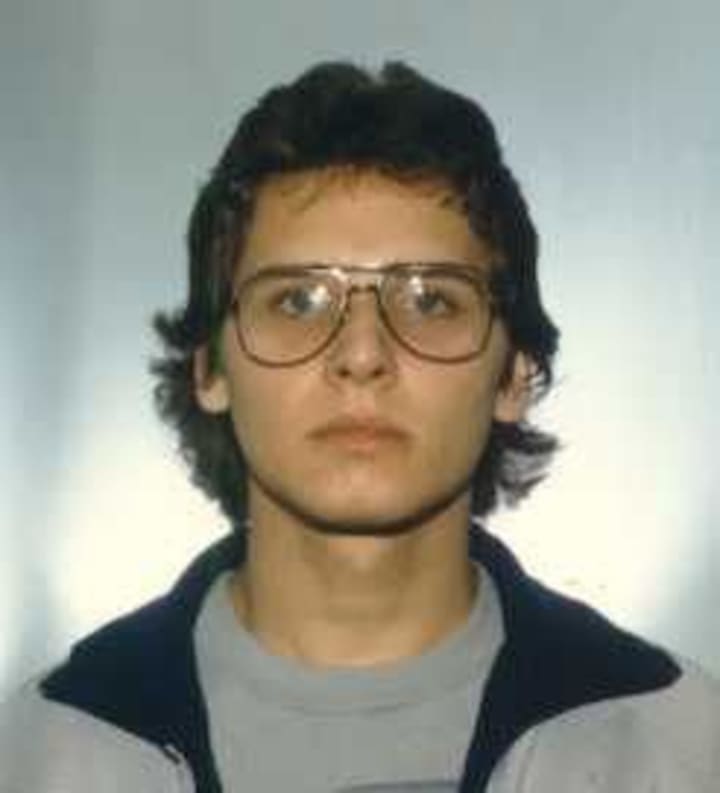
Conn's criminal history began early. He developed a habit of compulsive stealing during his time with his adoptive parents, starting with food and escalating to cars by his teens.
From age thirteen to his death at age 32, Conn was only "legally at large" for a total of sixty-nine days, having spent 18 of those 32 years in juvenile and adult prisons.
In 1998, Conn was transferred to Kingston Penitentiary after he had acted as an informant at the Millhaven Institution, advising staff that fellow inmates were planning an escape. He was placed in protective custody.
Conn escaped from Kingston Penitentiary on May 6, 1999, one of the most famous escapes in the prisons history, being the only time in the last half-century that a person successfully went over the wall of the highly secure prison.
He was the first inmate to escape in more than 40 years and used a ladder and a homemade grappling hook to scale the wall. He also used cayenne pepper to prevent dogs from following his scent.
Conn was found in a Toronto apartment building approximately two weeks after his escape and died from a self-inflicted gunshot wound from a stolen shotgun.
While some accounts state he committed suicide rather than be captured, other theories suggest he may have accidentally discharged the shotgun while speaking on the telephone to Theresa Burke, a CBC producer.
3 - Michael Rafferty
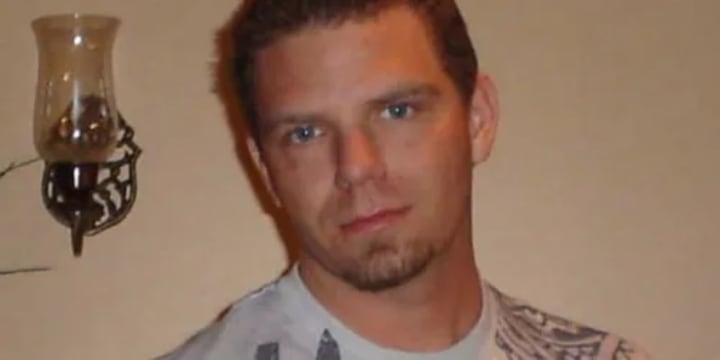
Rafferty and his accomplice, Terri-Lynne McClintic, were both convicted of first-degree murder in the case of eight-year-old Victoria Stafford who was murdered on April 8, 2009.
McClintic initially told police that Rafferty killed the girl, but later testified at his trial that she delivered the fatal blows.
During the trial, evidence that was not shown to the jury, due to a faulty search warrant, included what was found on Rafferty's laptop.
Rafferty was sentenced in 2012 to an automatic life term with no chance of parole for 25 years for first-degree murder. He also received concurrent 10-year sentences for kidnapping and sexual assault causing bodily harm.
He has been in custody since May 2009 and won't be able to apply for parole until May 19, 2034, yet he appealed his conviction, arguing that he was, at most, an accessory after the fact to murder and that the judge made errors.
The Court of Appeal for Ontario dismissed his appeal on October 24, 2016 and he was transferred from a maximum-security prison to a medium-security facility in March 2018.
2 - Robert Pickton

Often referred to as the Pig Farmer Killer, Pickton's criminal activities spanned from 1978 to 2001 in British Columbia, Canada. He targeted vulnerable women, often sex workers and those struggling with substance abuse, from Vancouver's Downtown East-side.
Pickton is believed to have murdered at least twenty-six women and later confessed to an undercover police officer that he killed forty-nine women.
The remains of many of the victims were discovered on his pig farm in Port Coquitlam and he was also charged with the attempted murder of a sex worker in 1997, whom he had stabbed multiple times, though this charge was later stayed.
Pickton was arrested in February 2002. He was eventually charged with 27 counts of first-degree murder and his trial began in January 2006.
In 2007, a jury found Pickton not guilty of first-degree murder but guilty on six counts of second-degree murder. He was sentenced to life in prison with no possibility of parole for 25 years.
Pickton served his life sentence at a maximum-security prison, Port-Cartier Institution in Quebec, where he had been incarcerated since 2018.
Pickton died on May 31, 2024, at the age of 74, following an assault by another inmate named Martin Charest who attacked Pickton with a broken broom handle, stating he did it "for the victims".
1 - Paul Bernardo

Often dubbed the "Scarborough Rapist" and, along with his ex-wife Karla Homolka, one of the "Ken and Barbie Killers," Bernardo was designated a dangerous offender, which usually results in an indeterminate sentence.
Between 1986 and 1990, Bernardo committed a series of assaults in Scarborough, Ontario. He would later admit to the assaults of at least 14 women in southern Ontario and at one point faced 53 charges.
In December 1990, Bernardo and Karla Homolka drugged and attacked Karla's younger sister, Tammy Homolka, while she was unconscious, she later died due to an allergic reaction to the drugs.
In June 1991, Bernardo kidnapped 14-year-old Leslie Mahaffy, and with Homolka, murdered her before he and Homolka kidnapped 15-year-old Kristen French from a church parking lot in 1992.
Bernardo was found guilty on all nine counts on September 1st, 1995 and sentenced to life imprisonment with no parole for 25 years for the two murder charges.
Bernardo began serving his life sentence on September 1st, 1995 and was initially admitted to Kingston Penitentiary for the first 28 years of his incarceration.
He was transferred from Kingston Penitentiary to Millhaven Institution in September 2013 following the closure of Kingston Penitentiary. He spent about a decade at Millhaven.
On May 29, 2023, Bernardo was transferred from Millhaven Institution to La Macaza Institution in Quebec. The transfer was approved after he demonstrated an ability to integrate on his range in Millhaven.
Bernardo has been classified as a "conformist," meaning he has been the victim of attempted and actual assaults but has not engaged in violence against other offenders or staff.
However, records show he was the instigator in nine incidents over two decades, and contraband has been found in his cell three times.
A 2014 risk assessment identified a "high probability of risk for violence towards a partner and a moderate risk of violence toward others." He is still assessed as a high risk to public safety and retains his Dangerous Offender designation.
Thanks for watching, we have hundreds more true crime videos and you can check out two of them in the boxes above, remember to subscribe with notifications as we have videos publishing every Saturday!
About the Creator
Vidello Productions
My name is William Jackson, a YouTube content creator and crypto enthusiast with over 161,000 subscribers and I make videos that are focused on the billionaire lifestyle and crime.
Content consists of top list videos.
Keep reading
More stories from Vidello Productions and writers in Criminal and other communities.
Ephrata Mayor Ralph Mowen & The 'House of Skulls': The Man Who Was Actually in Charge
The Great Escape Timing is everything. On Monday, January 5, 2026, Ralph Mowen walked out of Ephrata Borough Hall for the last time. After 30 years as Mayor, he was given a hero’s farewell. There were handshakes, a commemorative plaque, and speeches about his "legacy of service." He was the friendly grandfather of the Borough, the man who handed out candy at the Fair and cut the ribbons at the Rec Center. He got to retire on his own terms, with his reputation sparkling clean.
By Sunshine Firecracker2 days ago in Criminal
The Second Crime Scene: The 8 Bodies Found in the Ephrata Storage Locker
DOSSIER ENTRY: THE SECOND CRIME SCENE TARGET LOCATION: EPHRATA SELF STORAGE (FACILITY NAME REDACTED) SEARCH DATE: WEDNESDAY, JANUARY 7, 2026 EVIDENCE RECOVERED: 8 INTACT HUMAN CORPSES / SKELETAL REMAINS THEORY: "FINISHED GOODS WAREHOUSE" STATUS: VERIFIED (AFFIDAVIT OF PROBABLE CAUSE)
By Sunshine Firecracker4 days ago in Criminal
How to Succeed at the Benson Directory®
Congratulations and welcome to the Benson Directory® employee #22391! As our newest call handler, you will have the privilege of speaking with dozens of unique and interesting people on a daily basis as well as the opportunity to earn bonuses for high performance. Contained within this handbook you will find a set of ease to follow instructions designed to help you settle in to your new role and begin paving the way to success.
By S. A. Crawforda day ago in Fiction



Comments
There are no comments for this story
Be the first to respond and start the conversation.