
BTK: The Face of Evil Behind the Mask
The BTK Killer Case (USA)

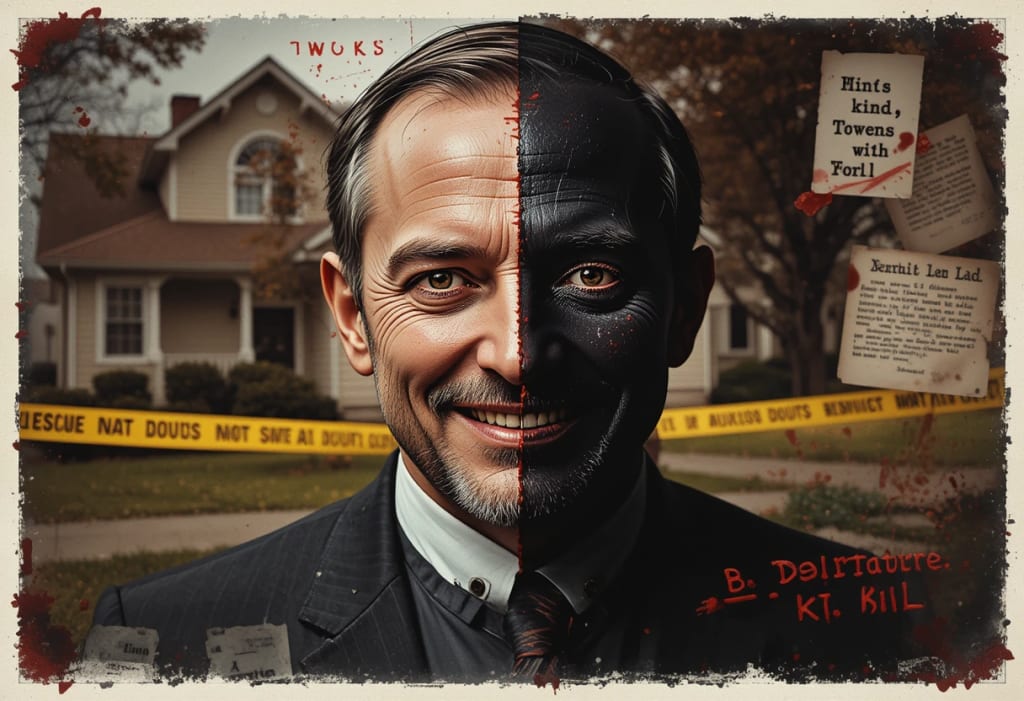
The BTK Killer—an acronym for "Bind, Torture, Kill"—is one of the most infamous and chilling serial killers in American history. Known for his gruesome crimes and eerie ability to maintain a seemingly normal suburban life, Dennis Rader, the man behind the BTK persona, evaded capture for over 30 years. This article delves into the horrific crimes, investigation, and ultimate capture of a man who shocked the world with his dual identity.
---
Early Life of Dennis Rader
Dennis Lynn Rader was born on March 9, 1945, in Pittsburg, Kansas, and raised in Wichita. From a young age, Rader displayed disturbing tendencies, including animal cruelty and sexual fantasies involving bondage and control. These early warning signs were masked by his otherwise ordinary demeanor. He served in the U.S. Air Force, married, and had two children. He worked as a compliance officer and even served as president of his local church congregation.
This façade of normalcy is what made the BTK Killer even more terrifying. Behind the mask of an average American family man was a cold-blooded murderer who terrorized the Wichita community for decades.
---
The First Murders
BTK's killing spree began on January 15, 1974, when he murdered four members of the Otero family in their home in Wichita, Kansas. Joseph and Julie Otero and two of their children were bound, tortured, and killed in a brutal attack that left the community in shock. The methodical and sadistic nature of the killings showed that the killer derived sexual gratification from his acts of control and torture.
Over the next several years, Rader would kill at least six more people: Kathryn Bright (1974), Shirley Vian (1977), Nancy Fox (1977), Marine Hedge (1985), Vicki Wegerle (1986), and Dolores Davis (1991). Each crime bore the chilling hallmarks of the BTK method—binding, torturing, and killing the victims, often in their own homes.
---
Taunting the Authorities
What made the BTK Killer particularly disturbing was his desire for attention and control over the narrative. In the months following his early murders, Rader began sending letters to the police and local news outlets. In his first letter, he confessed to the Otero family murders and included details that only the killer would know. He signed the letter with his chosen moniker: BTK.
These communications continued sporadically, filled with riddles, codes, and twisted poetry. Rader enjoyed playing a psychological game with investigators, craving notoriety and demanding credit for his crimes. His messages often referenced past serial killers, such as Jack the Ripper, and revealed a delusional belief that he was part of a dark elite group of killers.
Despite numerous clues, the authorities were unable to trace the killer. His ability to lie low between murders, maintain a respectable life, and avoid leaving digital footprints made him a ghost in the system.
---
A Deadly Silence
After the murder of Dolores Davis in 1991, BTK disappeared from public view. The trail went cold, and many feared that the killer had either died or moved away. The Wichita community slowly began to heal, but the specter of BTK lingered in the background, a haunting reminder of the killer who had never been caught.
For more than a decade, Dennis Rader lived quietly, working, raising his family, and participating in church functions. He seemed to have retired from his horrific acts, but the urge for attention would eventually bring him down.
---
The Return and the Capture
In 2004, after years of silence, BTK reemerged. The Wichita Eagle received a letter from someone claiming to be the BTK Killer. The communication included photos and a copy of Vicki Wegerle’s driver's license, details never released to the public. The killer was back, and he was baiting the police once again.
Over the next year, BTK sent more letters, packages, and puzzles. But in a fateful mistake, Rader asked the police whether a floppy disk could be traced back to him. The police responded anonymously in a newspaper ad, saying no. Trusting their response, Rader sent a disk that was traced to a computer at Christ Lutheran Church, where he was president. The disk metadata contained the name "Dennis" and a link to the church.
Police obtained a warrant to test a pap smear sample from Rader’s daughter and found a familial DNA match to evidence recovered from one of the crime scenes. On February 25, 2005, Dennis Rader was arrested near his home. After decades of terror, the BTK Killer had finally been caught.
---
Confession and Sentencing
Following his arrest, Rader confessed in chilling detail to the ten murders he had committed. During his trial, he spoke with disturbing calmness and lack of remorse, describing his crimes as if they were mundane tasks. He recounted how he stalked victims, broke into homes, and carried out his twisted rituals.
On August 18, 2005, Dennis Rader was sentenced to ten consecutive life terms—one for each of his victims—with no possibility of parole. He is currently serving his sentence at the El Dorado Correctional Facility in Kansas.
---
Legacy and Cultural Impact
The BTK case has had a profound impact on criminal psychology, law enforcement, and public awareness. Rader's ability to lead a double life has been studied extensively by psychologists and profilers, illustrating how some psychopaths can blend seamlessly into society.
His story has inspired numerous documentaries, books, and even fictional characters in films and television shows, such as Mindhunter and Criminal Minds. The case also highlighted the importance of evolving forensic technologies, particularly DNA evidence and digital forensics.
---
Conclusion
The BTK Killer case remains one of the most chilling reminders that evil can hide in plain sight. Dennis Rader was not a monster in appearance—he was a neighbor, a father, a church leader. But behind that mask was a predator driven by a dark obsession for control and recognition. His capture was a triumph of perseverance by law enforcement and a powerful lesson on the duality of human nature.
Even years later, the name BTK continues to strike fear, a haunting acronym for the unimaginable horrors one man inflicted—and the decades it took to bring him to justice.
About the Creator
Push To Prevent Catapults Being Bought By Children
MP’s have been warned to put new legislation in place that will help to close a loophole in the law which allows people including children to legally buy weapons which is capable of killing wildlife. The alert was issued during a briefing in parliament which set out growing evidence that catapults were being misused against animals and to damage other people’s private property. The Naturewatch Foundation who hosted the session expanded on their message that at the moment there is a completely unregulated system where people of any age can buy weapons and there are no meaningful controls on sale or power.
By Ashish Prabhu3 days ago in Criminal
Becca
"Everything is so... flat." Denille said stupidly as she looked around her new neighborhood. She looked around at the muted desert where even the smallest sign of life seemed to have given up. The plant life was shrubs that were half cooked by the heat and where there should have been a lawn, a mess of white rocks laid glistening in the sun. Even the sky looked stretched thin, like the sun had ironed it smooth. She’d moved from Riverside, where at least there were hills, but here in Barstow, everything felt baked and brittle.
By Sara Wilson7 days ago in Fiction



Comments (2)
A chilling account of Dennis Rader’s BTK crimes, capture, and lasting impact on criminal justice—hauntingly informative
The BTK case is truly mind-blowing. It's crazy how someone could seem so normal on the outside while committing such heinous crimes. I can't imagine the fear the Wichita community felt. How do you think law enforcement managed to stay motivated over the decades to finally catch this guy? And what do you think enabled him to keep his true nature hidden for so long?