
Bryan Kohberger’s Motive Still a Mystery — But Did Moscow Police Miss the Early Signs?
Unanswered questions remain as experts and the public dissect whether early red flags in Kohberger’s behavior were overlooked before the Idaho college murders.

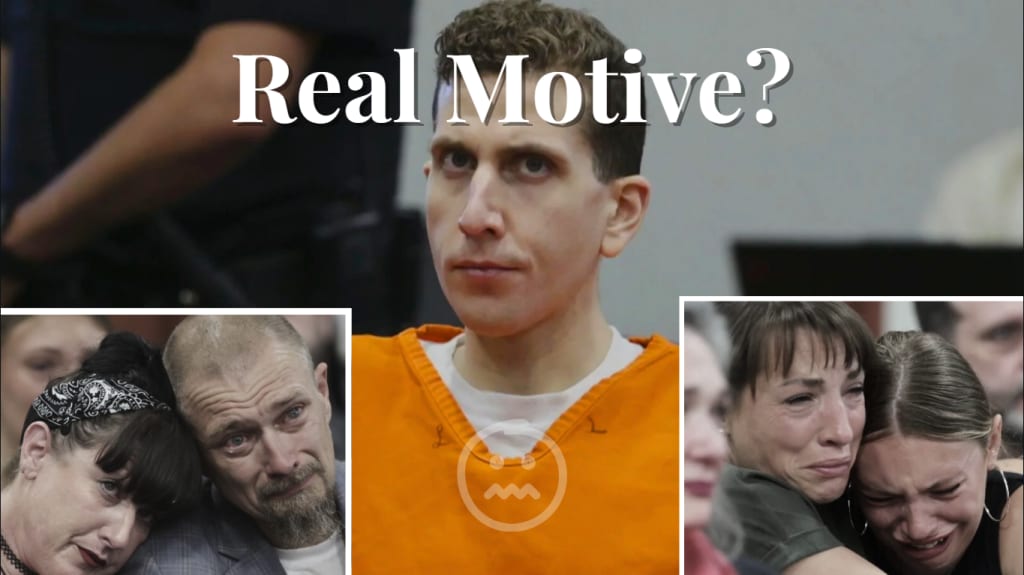
More than a year has passed since the shocking and senseless killings of four University of Idaho students, yet the mystery surrounding Bryan Kohberger’s motive remains one of the most unsettling elements of the case. As the investigation continues to unfold, a growing number of voices are questioning whether crucial warning signs in Kohberger’s behavior were missed by authorities before tragedy struck in Moscow, Idaho.
On the surface, Kohberger appeared to be a highly educated criminology PhD student — someone who should have understood the consequences of violent behaviour more than most. But beneath the academic persona, a darker, more troubling picture may have been hiding in plain sight.
The Night That Shattered Moscow
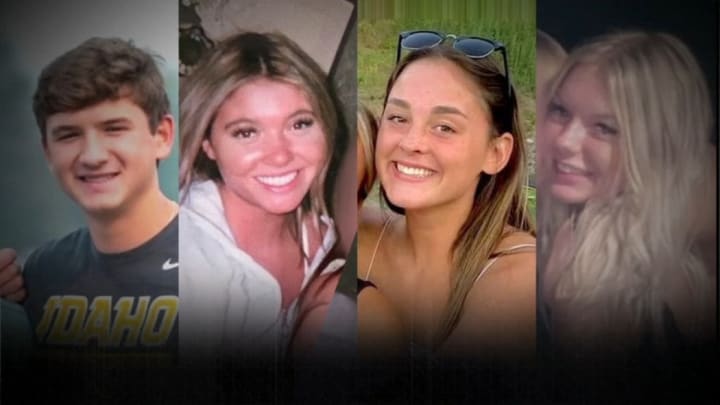
In the early hours of November 13, 2022, four young lives were brutally taken inside a rental home near the University of Idaho campus. Victims Kaylee Goncalves, Madison Mogen, Xana Kernodle, and Ethan Chapin were all stabbed to death in their sleep, with no signs of sexual assault or robbery. The randomness and brutality of the crime sent shockwaves across the country, and for weeks, law enforcement had no suspects — no arrests — and no clear motive.
The arrest of Bryan Kohberger, a criminology student at Washington State University, came as a stunning twist. Just miles from the crime scene, Kohberger lived a relatively quiet life in Pullman, Washington. But as details surfaced about his background, online activities, and behavior in class, many began to ask: Were there missed opportunities to stop him sooner?
Behavioral Red Flags
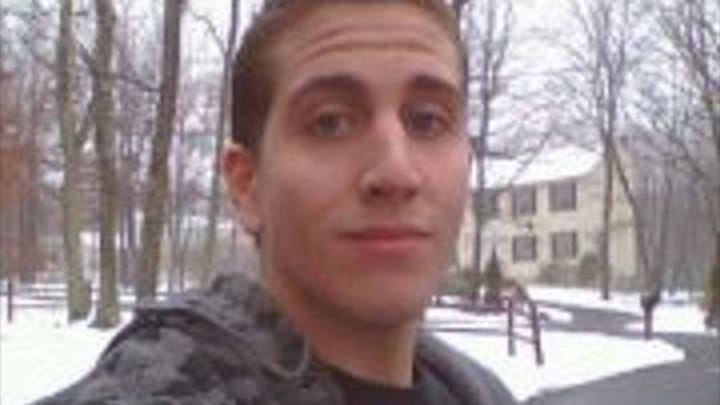
Former classmates and acquaintances have since described Kohberger as socially awkward, intense, and obsessively interested in criminal psychology — traits that, while not alarming in isolation, raise questions when viewed through the lens of what ultimately transpired. Some students recalled his tendency to dominate class discussions about crime, while others noted his strange questions about how criminals feel during their actions.
In a chilling Reddit post allegedly tied to Kohberger, a user once asked ex-cons to describe their thoughts and emotions during the commission of their crimes — a now-eerie sign that investigators say could reflect his attempts to understand how to “perfect” a criminal act.
Was this just academic curiosity? Or were these the early signs of something more sinister?
The Role of Law Enforcement
As pressure mounts on the Moscow Police Department and other authorities involved, criticism has intensified regarding the speed and direction of the initial investigation. Many in the community and beyond believe Kohberger’s proximity to the area and his unusual behavioural patterns should have raised more immediate red flags.
While hindsight is always clearer, critics point out that patterns of stalking, online surveillance, and behavioural changes may have provided clues. Some speculate that Kohberger may have targeted the victims after observing them online or in person — a theory supported by his cell phone tracking and digital footprint, which reportedly placed him near the crime scene multiple times before the murders.
The Elusive Motive
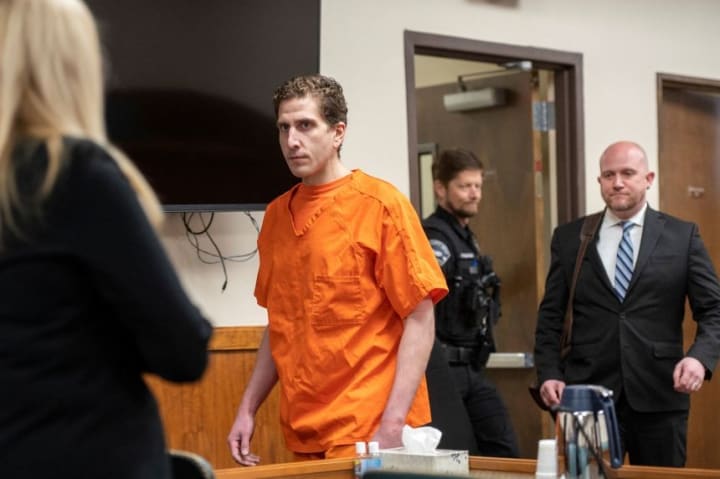
Perhaps the most haunting part of this case is that, to this day, Kohberger has not publicly offered any explanation for the alleged crimes. Prosecutors are building a case based on circumstantial and forensic evidence, but a clear motive remains elusive.
Was it about power? Rejection? A desire for notoriety? Or was this part of a deeper psychological unravelling? Without a confession or psychological evaluation that provides transparency, the motive remains speculative — fueling public curiosity and media frenzy.
Public Trust and Lingering Doubts
As the trial date looms and new information continues to surface, many are left questioning not only Kohberger’s intentions but also how society and law enforcement handle warning signs in individuals. The fear is that this may not be an isolated incident — that others exhibiting similar behaviours may also slip through the cracks if the systems designed to detect them are not strengthened.
Kohberger’s case forces us to examine our own understanding of criminal psychology and the limitations of even the most educated minds. It also sheds light on the need for stronger connections between educational institutions, law enforcement, and mental health resources — a network that could potentially intercept danger before it spirals into tragedy.
A Trial That Could Reshape Justice

As the court proceedings move forward, America will be watching. The trial is not just about holding one man accountable — it’s about uncovering a deeper truth, addressing the failures in communication, and ensuring that justice is not only served, but learned from.
For the families of the victims, the loss is immeasurable. For the rest of us, the question remains painfully clear: Could these lives have been saved if someone had seen the signs in time?
About the Creator
Keep reading
More stories from Bevy Osuos and writers in Criminal and other communities.
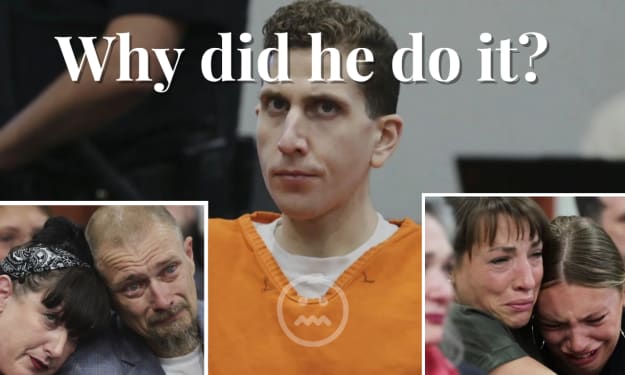
“Why Did Bryan Kohberger Do It?” The One Question That Still Haunts the Idaho 4 Case
On July 23, 2025, the gavel finally came down. Bryan Kohberger, the man accused of the brutal stabbing deaths of four University of Idaho students — Kaylee Goncalves, Madison Mogen, Ethan Chapin, and Xana Kernodle — was sentenced to life in prison without the possibility of parole. The courtroom was filled with heartbreak, rage, and heavy silence as Kohberger declined to speak — offering no apology, no explanation, no motive.
By Bevy Osuos8 months ago in Criminal
Rihanna Shot at Her Beverly Hills Home...
A frightening incident recently shook the entertainment world after gunfire erupted outside the Los Angeles home of global music superstar Rihanna. What began as an ordinary Sunday evening quickly turned into a terrifying situation when shots were reportedly fired toward the singer’s residence. The shocking event has since triggered a major police investigation and raised renewed concerns about the safety of high-profile celebrities.
By Shirley Oyiadom6 days ago in Criminal
Killer Mike, Young Thug and others petition Supreme Court in death sentence of man who had rap lyrics used against him in court
The usage of lyrics to condemn a man to death is wrong. Rappers like Killer Mike who articulates the nature of the game well showed his prowess with the legal documents.
By Skyler Saunders5 days ago in Criminal



Comments
There are no comments for this story
Be the first to respond and start the conversation.