
Behind the Wire: Urban Shadows, Rural Light
Survival on the Block



Urban Shadows, Rural Light
“A Country Boy Can Survive” (1982) by Hank Williams Jr. has always been my go-to song. It provided me with the strength and courage to confront my PREA abuser while incarcerated. The song holds a special place in my heart not only for its empowering message but also because of my personal connection to Hank Williams Jr. He resided in the Bitterroot Valley of Montana, the same place where I was living when I became justice impacted. Although the song never reached number one, it is considered one of his signature tracks.
Marginalized and justice impacted individuals, are primarily in urban areas as are people of color. The song addresses the changes in American lifestyle and society of the early 80s, reflecting rural concerns about the negative impacts of increasing urbanization. It praises the self-reliance and resilience of “country boys,” highlighting their ability to thrive despite the challenges posed by a rapidly urbanizing world.
Urban areas are typically envisioned as major metropolitan centers. Urban density can be defined by large, diverse groups of people concentrated around any significant city. The perception of what constitutes a metropolitan area varies between cities like New York City or Washington, DC, and places like Missoula or Billings, Montana. They are the largest cities in Montana. Billings houses over 120,000 while Missoula follows at over 75,000, with equally high homeless populations. Despite the differences in overall population, Montana’s cities boast diverse cultural groups like those found in NYC or DC.
Billings, Montana, an oil industrial town, hosts a large Latino worker population. In contrast, Missoula, Montana, a college town, is becoming increasingly ethnically diverse as it welcomes refugees although not fully declared as a sanctuary city. A review of prison and jail rosters from these two cities reveals a pattern of ethnic names. Additionally, the incarcerated homeless population appears on both rosters, often moving between the two cities in sync. They are drawn to the various programs aimed at getting unhoused individuals off the streets, as well as the numerous shelters available not only for individuals but also for unhoused families.
The song addresses an urban street mugging that results in the victim’s death for a relatively small sum of money. As someone who has been impacted justice, I often ponder whether $47 was worth a life in prison resulting from a homicide. The anger of the victim’s friend, portrayed by the singer, is palpable. He desires ‘country justice,’ wishing to take matters into his own hands and shoot the mugger. However, this raises the question of whether such an act would also be considered ‘street justice.’ It compels us to contemplate where the line between rural justice and urban street justice blurs and how these concepts intersect and merge.
Ultimately, the song demonstrates the power of music to tell a story that transcends cultural and societal boundaries, connecting people through shared emotions and experiences. It encourages listeners to reflect on their own lives and the broader social issues that impact their communities, inspiring them to find strength and resilience in the face of challenges. Through its narrative, the song addresses the rural concerns about the negative impacts of increasing urbanization and praises the self-reliance and resilience of “country boys” who thrive despite these challenges.
About the Creator
May Simmons
I'm May Simmons. I live on breathtaking Flathead Lake Polson Mt. I do lots of things - prison reform, buy local, crafts and writing. I am on FB and Twitter.
Keep reading
More stories from May Simmons and writers in Criminal and other communities.
Behind the Wire: Shadows of Oz
Prison is an unforgiving place. It grinds you down emotionally, physically, and spiritually. You might expect fellow incarcerated to support and uplift each other to succeed. However, that’s far from reality. Instead, the environment often fosters distrust and competition, making it even harder to maintain any sense of hope or even solidarity.
By May Simmons12 months ago in Criminal
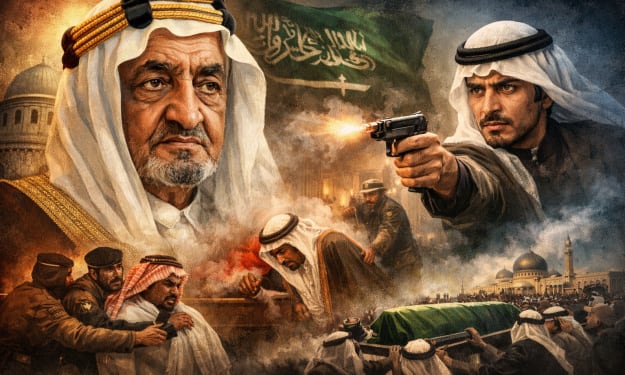
The Assassination of King Faisal: The Tragic Day a Saudi Monarch Was Killed by His Own Nephew
On March 25, 1975, the Arab world was shaken by the shocking assassination of King Faisal of Saudi Arabia. The respected monarch, known for his political wisdom and strong leadership in the Muslim world, was killed inside the royal palace in Riyadh by his own nephew, Faisal bin Musaid. The incident stunned both Saudi citizens and the international community, raising many questions about what circumstances led to such a tragic act within the royal family.
By Irshad Abbasi 8 days ago in Criminal
Inside the Case of Private Investigator Ken Childs, Accused of Powering One of Los Angeles’ Darkest Criminal Networks
Los Angeles has always been a city built on secrets. Behind the glamorous film premieres, multimillion-dollar mansions, and celebrity headlines lies an entire industry devoted to uncovering the truth — private investigators.
By Shane Smith6 days ago in Criminal
Hottest in the Office
Dear Rafi, You’re very distracting to work around. For the first second I saw you the other day, I thought you were some type of executive. It took a moment to realize no, you were just the new guy, dressed up for the job he wants. Be still, my heart.
By Gabriel Shames2 days ago in Pride



Comments (1)
Love this! The city casts a large shadow sometimes. Good!