
Are Humans Genetically a Killer?
The Ethics of Identifying Killer Genes: Balancing Science and Stigma

The Ethics of Identifying 'Killer Genes': Balancing Science and Stigma"
The human genome is a complex and fascinating entity that has fascinated scientists for decades. In recent years, researchers have made great strides in identifying genes that are associated with certain traits or diseases. One of the most controversial areas of genetic research is the identification of "killer genes" - genes that are believed to be associated with violent behavior.
While the idea of identifying genes that are associated with criminal behavior may seem like the stuff of science fiction, the reality is that it is already happening. A number of studies have found that certain genetic markers are more common among violent criminals than in the general population. However, the issue of "killer genes" is fraught with controversy, and raises a number of ethical and legal questions.
One of the biggest concerns surrounding the identification of "killer genes" is the potential for stigmatization. There is a fear that individuals who are identified as having these genes could be subject to discrimination, both in terms of employment and in their personal lives. This could lead to a situation where individuals are unfairly judged based on their genetic makeup, rather than on their individual actions or choices.
Another concern is that the identification of "killer genes" could lead to a situation where individuals are targeted for surveillance or other forms of monitoring. This could lead to a loss of privacy, and could be viewed as a violation of individual rights.
Despite these concerns, some argue that the identification of "killer genes" could be a valuable tool in the fight against crime. By identifying individuals who are more likely to engage in violent behavior, law enforcement officials could potentially intervene before crimes are committed. This could lead to a reduction in violent crime, and could ultimately save lives.
However, there are many who argue that the idea of "killer genes" is oversimplified, and that the issue of criminal behavior is far more complex than genetics alone. There are many social and environmental factors that contribute to criminal behavior, and it is important to take these into account when considering the issue of "killer genes."
Another concern is that the identification of "killer genes" could lead to a situation where individuals are unfairly targeted based on their genetic makeup. For example, if a particular gene is found to be associated with violent behavior, individuals who have that gene could be viewed with suspicion, even if they have never exhibited violent behavior.
There are also concerns about the accuracy of genetic testing, and the potential for false positives. If an individual is mistakenly identified as having a "killer gene," this could have serious consequences for their life and their reputation.
So where does this leave us? The issue of "killer genes" is a complex one, and there are no easy answers. On the one hand, the identification of genetic markers that are associated with violent behavior could potentially be a valuable tool in the fight against crime. On the other hand, there are concerns about stigmatization, discrimination, and violations of individual rights.
One way to address these concerns is to ensure that any genetic testing is conducted in an ethical and responsible manner. This means ensuring that individuals are fully informed about the risks and benefits of testing, and that their privacy and individual rights are respected at all times.
Another way to address these concerns is to focus on the underlying social and environmental factors that contribute to criminal behavior. This means investing in education, social programs, and other interventions that can help to address poverty, inequality, and other issues that can contribute to crime.
Ultimately, the issue of "killer genes" is one that requires careful consideration and ongoing dialogue. While the identification of genetic markers that are associated with violent behavior may offer some potential benefits, it is important to ensure that these benefits are weighed against the potential risks and ethical concerns. Only by taking a balanced and thoughtful approach can we
About the Creator
Love in the City Lights
Title: Love in the City Lights Chapter 1: The Chance Encounter In the bustling city of Verona, known for its vibrant streets and lively atmosphere, lived two individuals, Emily and Ethan, both trapped in the monotony of their everyday lives. Emily, a talented and ambitious photographer, was struggling to make a name for herself in the competitive industry. Ethan, a charismatic and witty writer, was stuck in a dead-end job, dreaming of penning his own novel.
By KIAN3 years ago in Confessions
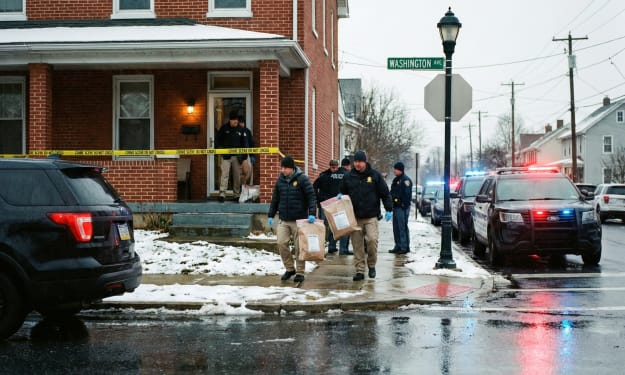
Inside the House of Skulls: The Full Timeline of the Jonathan Gerlach Investigation
INVESTIGATION TARGET: JONATHAN C. GERLACH INCIDENT LOCATION: 100 WASHINGTON AVENUE, EPHRATA PA CHARGES: ABUSE OF CORPSE (x100), THEFT, DESECRATION STATUS: INCARCERATED ($1M BAIL) KEYWORDS: #HouseOfSkulls #JonathanGerlach #EphrataCrime #MountMoriah
By Sunshine Firecracker2 days ago in Criminal
Don’t Ask. Don’t Tell. Until Someone Lives To Tell.
By an independent investigative researcher ⸻ A note to the reader This article relies exclusively on public records, court filings, sworn testimony, and contemporaneous reporting. It does not allege criminal coordination beyond what has been established in court. Its purpose is to examine patterns, parallels, and institutional blind spots that emerge when timelines are placed side by side. Patterns are not accusations. But patterns ignored become policy.
By SunshineChristina2 days ago in Criminal



Comments
There are no comments for this story
Be the first to respond and start the conversation.