
Amelia Dyer: Baby Killer
Amelia Dyer, the "Baby Farmer," was a 19th-century English serial killer who murdered infants in her care.
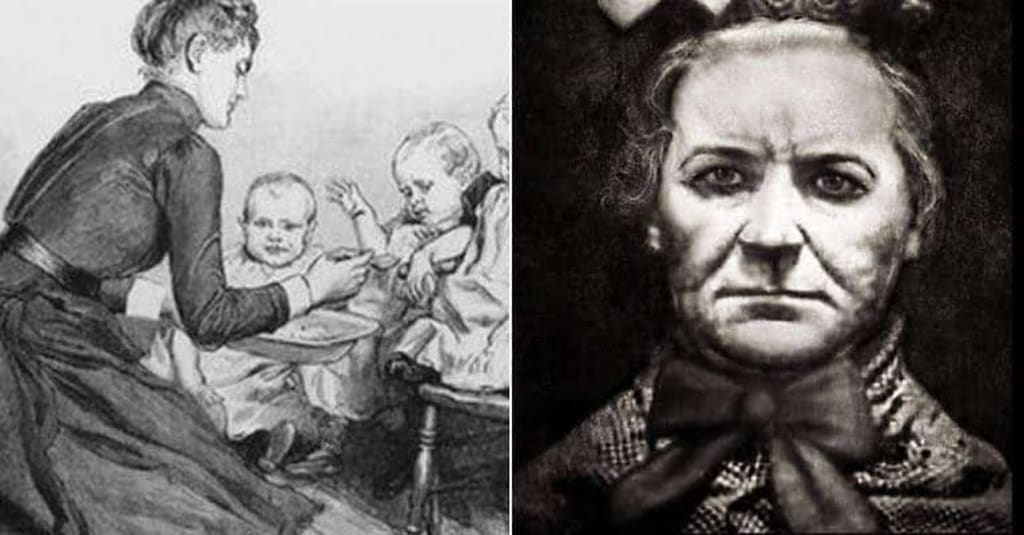
Amelia Dyerbalso known as the Baby Farmer was a notorious English serial killer who operated during the late 19th century. Her horrifying crimes involved the murder of infants under her care, shedding light on the dark and disturbing world of baby farming in Victorian England. This summary will delve into the life, crimes, and eventual downfall of Amelia Dyer a woman whose actions shocked society and prompted significant changes in child protection laws.Born Amelia Elizabeth Hobley on October 1837 in Pyle Marsh, Bristol, Amelia had a troubled upbringing. She was raised in a dysfunctional family and, at a young age, began showing signs of instability and cruelty. Despite her tumultuous childhood, Amelia managed to marry a brewer's assistant George Thomas, in 1861. However, their marriage was plagued by financial difficulties and personal issues, leading to George's eventual admission to an insane asylum. This period of turmoil marked the beginning of Amelia's descent into a life of crime.
Amelia Dyer's sinister career as a baby farmer began in the 1860s. Baby farming was a practice where mothers, often unwed and unable to care for their children, would pay caregivers to look after their infants. These caregivers were expected to provide food, shelter, and care in exchange for a fee. Unfortunately some baby farmers, including Dyer, saw this as an opportunity to make money at the expense of innocent lives.Amelia Dyer's modus operandi was chillingly calculated. She would take in infants from desperate mothers, promising to provide a safe and loving environment for the children. However her true intentions were far from benevolent. Instead, she subjected the infants to neglect, malnutrition, and abuse. Many of these defenseless children died under her care, and she disposed of their bodies in various gruesome ways, such as throwing them into the Thames River or burying them in her garden.
The true extent of Amelia Dyer's crimes only came to light in 1879 when a package containing the body of a murdered baby was discovered in the Thames. This shocking find led to an investigation that eventually linked Dyer to a series of infant deaths. However, she managed to avoid conviction by feigning insanity and spent some time in a mental institution. Tragically this stint in an asylum did little to deter her from her murderous activities.Amelia Dyer's reign of terror continued into the 1890s, during which she operated under various aliases to evade suspicion. Her crimes escalated, and her method of disposing of the infants' bodies became even more brazen, including throwing them into the Bristol Channel. It wasn't until 1896 that her gruesome activities caught up with her once and for all.
A key turning point in the case against Dyer was the discovery of a suspicious item of clothing in the Thames. This led investigators to a lodging house in Reading, where they found evidence connecting Dyer to the deaths of multiple infants. Upon searching her home, they uncovered a horrifying scene: remnants of baby clothing, phials of drugs, and letters from desperate mothers inquiring about the fate of their missing children.In April 1896, Amelia Dyer was arrested and charged with murder. During her trial, she confessed to killing dozens of infants providing gruesome details about her methods. She was found guilty of the murder of an infant named Doris Marmon and subsequently sentenced to death by hanging.
Amelia Dyer's trial and execution shocked Victorian society. Her case highlighted the need for reform in child protection laws and regulations surrounding baby farming. In the wake of her crimes significant changes were made to ensure the safety and welfare of infants placed in the care of others. This included the establishment of stricter licensing and inspection of baby farmers and the development of social services to support struggling mothers.In the annals of criminal history, Amelia Dyer stands as one of the most sinister figures of the Victorian era. Her gruesome crimes exposed the dark underbelly of baby farming a practice that had long gone unchecked. While her reign of terror ended with her execution in June 1896 the legacy of her crimes lived on in the reforms that sought to protect vulnerable infants from unscrupulous caregivers. Amelia Dyer's story serves as a chilling reminder of the depths of human depravity and the importance of safeguarding the most innocent and defenseless members of society.
About the Creator
Keep reading
More stories from Kure Garba and writers in Criminal and other communities.
French Ripper: Vacher's Reign
Joseph Vacher infamously known as The French Ripper was a ruthless serial killer who terrorized the French countryside in the late 19th century. His gruesome crimes and the subsequent trial shed light on the challenges of dealing with psychopathy and mental illness in a society ill-equipped to comprehend or manage such individuals.
By Kure Garba3 years ago in Criminal
Sergeant Isaac Woodard Jr.
His sacrifice must never be forgotten. BY LEAVIE SCOTT The Story of Sergeant Isaac Woodard Jr. February 12, 1946 began like a day of promise. After years of service in the Pacific during World War II, Sergeant Isaac Woodard Jr. stepped off a military bus wearing the uniform he had earned through courage and discipline. He had served his country faithfully from 1942 to 1946, working as a longshoreman in dangerous combat zones, unloading ships under enemy fire, and carrying out the labor that made the Allied war effort possible. He had been awarded medals for good conduct and bravery. He had survived the hazards of war. He had survived a world where the enemy’s bullets and bombs were a daily threat. Now his service was complete, and he was headed home.
By Organic Products 5 days ago in Criminal




Comments
There are no comments for this story
Be the first to respond and start the conversation.