
Albert Fish: The Boogeyman in Real Life
A sadistic killer who mutilated children, sent a letter to a victim’s mother detailing how he ate her daughter.

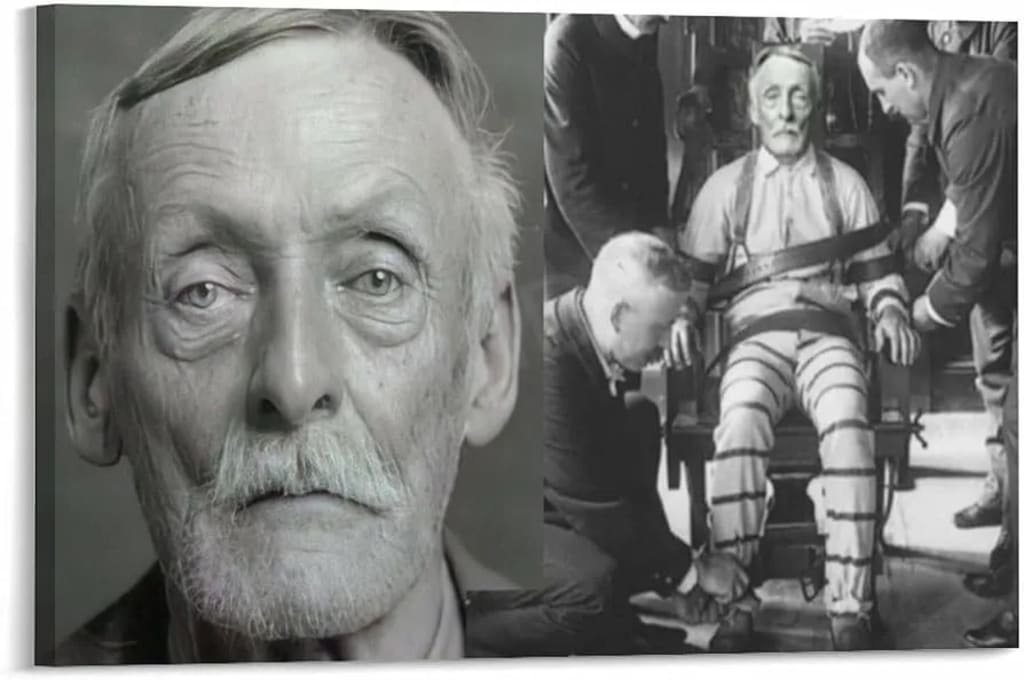
On a cold November afternoon in 1934, a young girl named Grace Budd disappeared from her home in New York City. Her parents, Delia and Albert Budd, had trusted an elderly gentleman who introduced himself as “Mr. Frank Howard.” He claimed to be a farmer looking to hire their eldest son, Edward, for work upstate. But when the time came to leave, Howard — real name Albert Fish — insisted on taking little Grace with him instead, promising to bring her back after a birthday party at his sister’s house.
She never returned.
For six years, her family was tormented by unanswered questions, until one day, a letter arrived. It was unsigned, rambling, and horrifying. In graphic detail, it described how Grace had been kidnapped, murdered, and eaten. The Budds turned the letter over to the police, and handwriting analysis led investigators straight to Albert Fish.
A Monster in Plain Sight
By the time of his arrest, Fish was an old man — small, frail, and seemingly harmless. But beneath his mild-mannered appearance lurked one of the most sadistic killers in history.
Born in 1870, Fish’s childhood was marred by tragedy and mental illness. His father died when he was young, and his mother sent him to an orphanage, where he endured horrific abuse. Instead of fearing pain, he learned to enjoy it. By the time he reached adulthood, he had developed a deep obsession with sadism, self-mutilation, and cannibalism.
Fish spent years drifting through cities, working odd jobs and blending into society while secretly preying on children. He claimed to have raped and murdered dozens — though only three murders were officially tied to him. He often targeted vulnerable victims, luring them with promises of candy or work, then subjecting them to unspeakable torture.
But even among his many crimes, the murder of Grace Budd stood out as the most horrifying.
The Murder of Grace Budd
When police arrested Fish, they confronted him with the letter he had sent to the Budd family. In it, he described how he had taken Grace to an abandoned house in Westchester County.
“I took her into an empty house in Westchester I had already picked out,” he wrote. “When all was ready, I went upstairs and stripped off all my clothes. I knew if I did not, I would get her blood on them. When I was ready, I went to the window and called her.”
He then described how he strangled the girl, dismembered her body, and cooked parts of her in a stew.
While the letter was gruesome enough, Fish’s own confession to the police was even worse. He admitted that he had been planning to kill Edward Budd, but when he saw Grace, he changed his mind. “She reminded me of a little angel,” he said — before describing in detail how he had cut her into pieces and eaten parts of her body.
Fish claimed that he had also eaten the flesh of other children, though police were never able to verify how many victims he had truly killed.
A Killer Who Enjoyed His Own Pain
As the investigation continued, detectives discovered that Fish wasn’t just a sadist — he also inflicted unimaginable pain on himself. In prison, X-rays revealed that he had driven over two dozen sewing needles into his own pelvis, leaving them lodged deep inside his body. He also admitted to whipping himself with belts studded with nails and stuffing raw wool soaked in lighter fluid into his anus before setting it on fire.
To many, Albert Fish wasn’t just a murderer — he was a real-life boogeyman.
Trial and Execution
Despite his claims of insanity, Fish was deemed fit to stand trial in 1935. His defense argued that he suffered from psychotic delusions and an uncontrollable urge to kill. One psychiatrist even testified that Fish believed he was fulfilling God’s will by torturing children.
The jury deliberated for just ten hours before finding him guilty of murder. They could have sentenced him to life in an asylum, but instead, they sent him to the electric chair — not because they thought he was sane, but because they believed he deserved to die.
On January 16, 1936, Albert Fish was executed at Sing Sing prison. Witnesses claimed he went to his death smiling, even helping the guards place the electrodes on his body. His final words before being electrocuted were:
“I don’t even know why I’m here.”
Ironically, due to the numerous needles embedded in his body, the first electric jolt short-circuited, requiring a second shock to finish the job.
The Legacy of a Nightmare
Even among history’s most infamous serial killers, Albert Fish stands out as one of the most disturbing. His crimes weren’t just about killing — he took pleasure in the suffering, the fear, and even the act of eating his victims.
His case has inspired countless horror stories, films, and nightmares. But for the families of his victims, there was no fiction — only unimaginable horror and heartbreak.
To this day, Albert Fish remains one of the most twisted monsters to ever walk the earth.
Thank you for reading!
if you find this piece interesting, please leave a clap, comment, or even subscribe! Your support means a lot to me!
About the Creator
Victoria Velkova
With a passion for words and a love of storytelling.
Keep reading
More stories from Victoria Velkova and writers in Criminal and other communities.
Kelly Anne Bates Was Slowly Tortured For Weeks Before Being Murdered
Content Warning This article contains graphic descriptions of extreme physical abuse, torture, and domestic violence that may be disturbing to some readers. Reader discretion is advised.
By Victoria Velkovaabout a year ago in Criminal
The Cemetery of the Living”: The Harsh Reality Inside El Salvador’s Infamous Prison
For many migrants deported from the United States during the administration of **Donald Trump**, the journey did not end when their plane touched down in their home countries. For some, particularly those sent back to **El Salvador**, the ordeal had only just begun. Many deportees—suspected of gang connections or criminal activity—found themselves locked inside some of the most notorious prisons in Central America, facilities critics have described as nothing less than a “cemetery of the living.”
By Irshad Abbasi 3 days ago in Criminal




Comments
There are no comments for this story
Be the first to respond and start the conversation.