
Alaska: The Enigma of Edward Krauss
Most disturbing crime of every state in U.S.A.

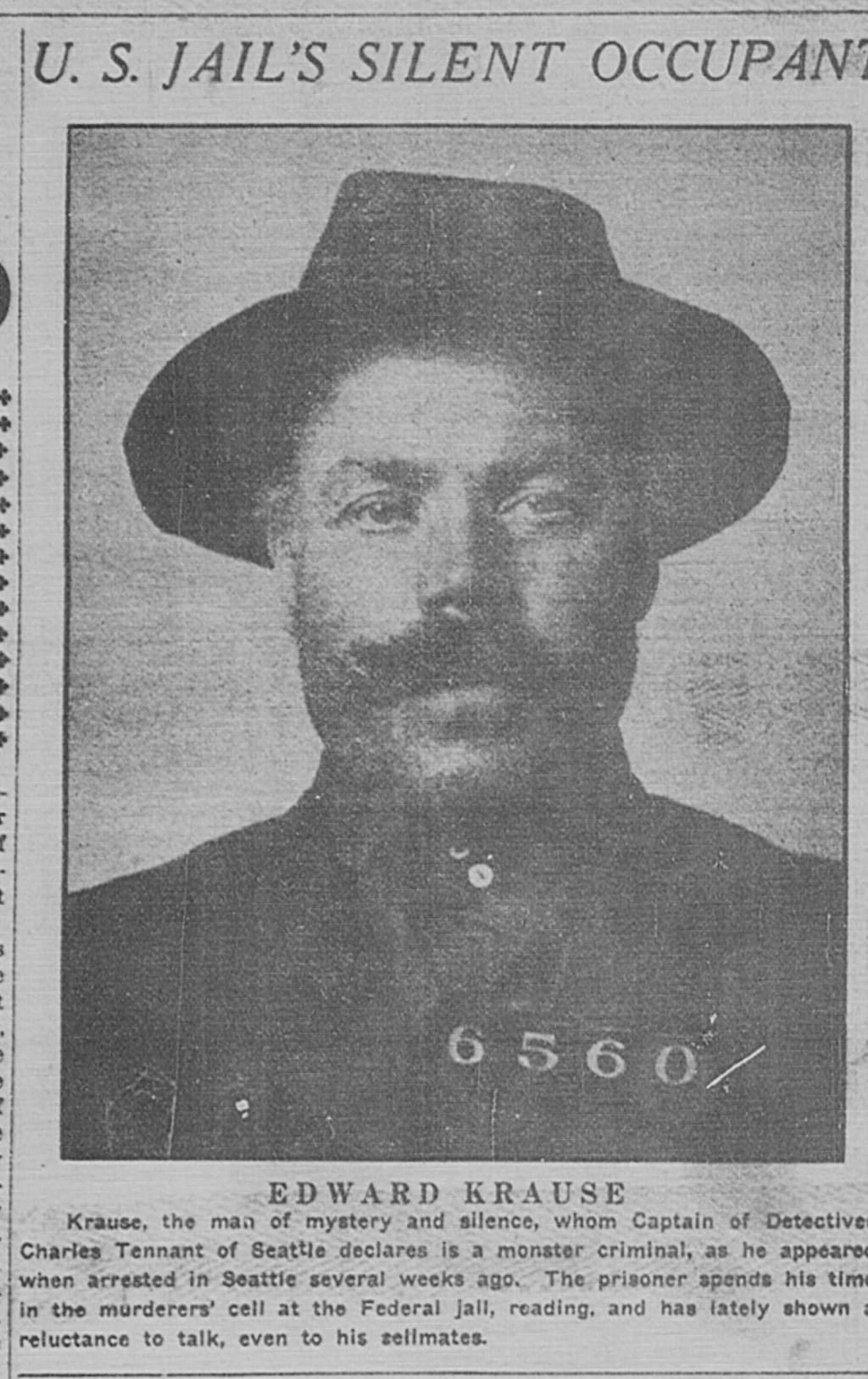
In the rugged, vast landscapes of early 20th‑century Alaska, where isolated communities were the norm and law enforcement was often stretched thin, a man named Edward Krauss emerged as one of the region’s most puzzling figures. Although he was once regarded as a respected member of his community in Petersburg, Krauss lived a double life that ultimately led him down a dark path—one that left many unanswered questions about the nature of trust and betrayal in remote frontier towns.
Edward Krauss was originally from Germany and had come to America seeking a new beginning. His service in the U.S. Army provided him with a disciplined background, and after his military career, he settled in Petersburg. To the local population, he was known as a well-mannered and helpful citizen. Neighbors would often speak highly of his willingness to lend a hand, and his participation in community events gave him a reputation that masked his inner turmoil.
Beneath this veneer of respectability, Krauss harbored a secret life. Over the span of a few short years—from 1912 to 1915—he led a covert criminal gang that operated with an unsettling efficiency. Krauss specifically targeted vulnerable, unattached men who had few friends and limited family ties. His ability to blend into the community made it easier for him to approach his victims without arousing suspicion. It was not long before a series of disappearances in the region began to raise concerns.
Authorities later connected Krauss to at least seven missing persons cases, although some believe the actual number of his victims was higher. His modus operandi was chillingly simple: he would befriend a man, gain his trust, and then ensure that his disappearance would be attributed to the harshness of the Alaskan wilderness. The transient nature of the population at that time further aided his endeavors, as the loss of a single individual could easily be dismissed as an unfortunate accident in the unforgiving wild.
Suspicion finally began to mount when several families reported that loved ones had not returned. Local law enforcement, already burdened by the logistical challenges of a remote territory, started piecing together the pattern. Krauss was repeatedly identified as the last person seen with several of the missing men. In 1915, he was arrested on charges that initially related to impersonating a U.S. Marshal—a ruse that helped him cover his criminal tracks.
During the trial that followed, further evidence emerged linking him to various other offenses, including robbery and kidnapping. Despite the mounting evidence against him, Krauss managed to escape from jail just days before his scheduled execution. His escape sparked one of the largest manhunts in Alaskan history, as law enforcement, local fishermen, and even members of the community banded together in an effort to capture him.
Krauss’s fugitive status did not last long. A massive manhunt was launched, and a bounty was placed on his head. In an ultimate twist of fate, a homesteader—having seen wanted posters around the area—recognized Krauss. In a confrontation that seemed to come straight out of a frontier legend, the homesteader engaged Krauss, and in the ensuing exchange, Krauss was shot and killed. The violent end to his flight from justice closed the final chapter in a saga that had long haunted the remote corners of Alaska.
Today, the story of Edward Krauss serves as a cautionary tale about the duality of human nature. His ability to maintain a façade of respectability while committing unspeakable acts has become part of local folklore. Many in Alaska still recall the terror and confusion of those years, and his case remains a sobering reminder that sometimes the most dangerous individuals can hide behind the mask of everyday normality.
In reflecting on Krauss’s life and crimes, historians and community leaders alike stress the importance of vigilance and the need to look beyond appearances. In regions where isolation and harsh living conditions can often mask the truth, the story of Edward Krauss is a testament to the idea that not all that glitters is gold—and sometimes, the true threat lies hidden in plain sight.
About the Creator
Keep reading
More stories from Sandun Nayanajith and writers in Criminal and other communities.
Kansas: The Wakarusa Conflict – A Historic Struggle in a Divided Land
During the tumultuous mid-19th century, Kansas became a battleground for deeply rooted ideological conflicts between pro-slavery and anti-slavery forces. This period, often referred to as “Bleeding Kansas,” was marked by civil unrest and violent confrontations that would foreshadow the larger national conflict of the Civil War. One of the most notable episodes of this era was the Wakarusa Conflict, a series of events ignited by the tragic death of a free state settler and further fueled by retaliatory actions on both sides.
By Sandun Nayanajithabout a year ago in Criminal
Ken Childs and the Shadow Network Behind Celebrity Surveillance
Hollywood is no stranger to intrigue. Behind the red carpets, blockbuster premieres, and glamorous headlines lies a parallel world where privacy is fragile and information can be extremely valuable. Over the years, celebrities have faced stalkers, hackers, and fraud schemes designed to exploit their wealth and visibility. Recently, reports circulating online have drawn attention to a controversial narrative involving private investigator Ken Childs and allegations that place him near the center of a disturbing story about celebrity surveillance.
By Shane Smith6 days ago in Criminal
Murdering the love of Sarah Maguire
January 2022, it was a cold winter in Tulsa, Oklahoma, one that felt colder than most for some of us in the city. If one were to be out in the evening air of the cold, it was bone chilling to the soul. On an evening like this one who wouldn’t enjoy a good home cooked meal by someone who seemed to care about them? Right, Folks?
By Cassie Moore3 days ago in Criminal


Comments
There are no comments for this story
Be the first to respond and start the conversation.