
A Forensic Theory Rooted in Empathy and Accountability
Inspired by CeCe Moore’s forensic work and influenced from artifacts from social media discussions, community input, and comments from friends and family of the victims, this theory examines how technical access and behavioral profiling may explain a decades-old cold case.

Views Expressed Disclaimer: The views, thoughts, and opinions expressed in the text and article belong solely to the author in their private capacity as a citizen whose intent is to be constructive, help balance the needs of society, and achieve a successful outcome for all parties involved. These views do not reflect the views, policies, or positions of the author’s employer, any specific state or federal government agency, organization, committee, or other group. The information provided is for general informational purposes only and is not intended to be a substitute for professional advice. Furthermore, this work was completed exclusively using personal time and resources.
INTRODUCTION
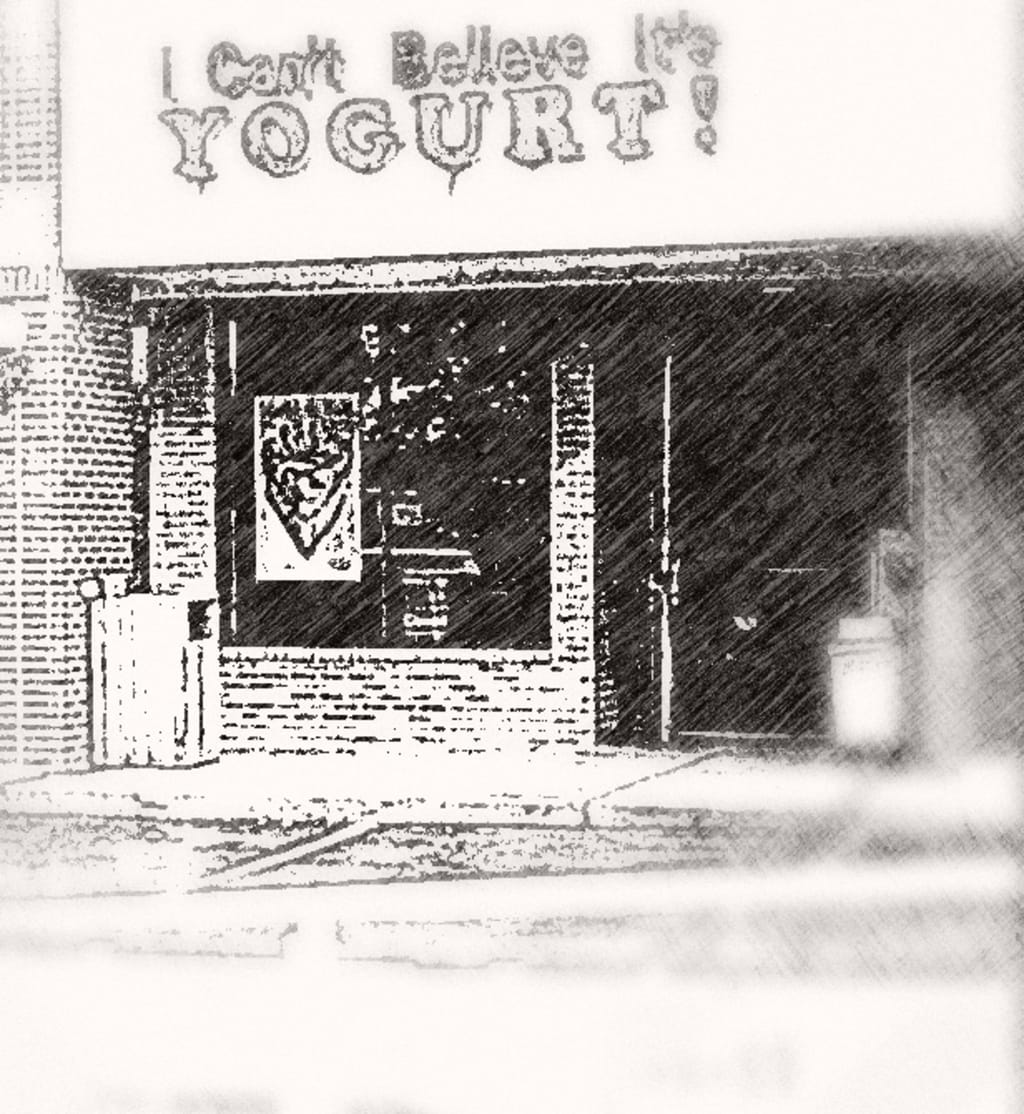
After watching the documentary on the Yogurt Shop Murders, I was moved by the victims’ families and impressed by CeCe Moore’s forensic genealogy. Her work connected decades-old DNA to Robert Eugene Brashers and exposed unanswered questions about how the killer gained access to the shop without forced entry.
This article presents a theory: that Brashers may have worked in construction and primary HVAC industry or repair. This hypothesis is based on his military background, behavioral profile, and the forensic gaps in the case. While no employment records confirm this, the correlation between technical aptitude and access is compelling.
WHY HVAC MAKES SENSE
Military Training and Transferable Skills Brashers served in the Navy during the 1970s. It is reasonable to infer that he may have acquired mechanical and technical experience relevant to refrigeration and HVAC systems.
Access to Refrigerated Equipment Commercial frozen yogurt machines use refrigerants such as R-22 and R-404A and contain compressors, evaporators, and condensers that require specialized servicing. A technician could enter a shop for maintenance without attracting suspicion.
Scene Familiarity and Entry Without Force Prior service calls, invoices, or vendor credentials would permit an individual to impersonate a repair technician and gain access through back doors. Knowledge of rooftop units and ductwork offers an alternative overhead entry—minimizing contact with surfaces and limiting trace evidence.
Behavioral Profile Alignment Brashers displays traits consistent with an organized offender who plans, controls, and destroys evidence. Technical knowledge would amplify his ability to execute a crime with minimal forensic footprint.
TIMELINE OF ROBERT EUGENE BRASHERS
* 1958: Born in Newport News, Virginia to Nellie and Doulis Brashers
* 1960s: Family relocates to Huntsville, Alabama
* 1970s: Enlists in the Army, transfers to the Navy, acquires technical training
* 1979: Death of his brother Doulis Jr., whose identity Brashers later used
* Early 1980s: Moves to Louisiana then Fort Myers, Florida; works transient jobs
* 1985: Shoots Michelle Wilkerson in Florida; convicted of attempted murder
* 1989: Released on parole after serving approximately three years
* 1990: Murders Genevieve Zitricki in South Carolina by bludgeoning, rape, and strangulation
* 1991, August 29: Birth of daughter Deborah Brashers
* 1991, December 6: Austin Yogurt Shop Murders — four girls raped, bound, and murdered
* 1998, March 28: Murders Sherri and Megan Scherer in Missouri; Megan raped, both shot
* 1998, April 12: Arrested in Arkansas with locksmith tools and a video camera
* 1998–1999: Resides in Kennett, Missouri with wife, daughter, and two stepdaughters
* 1999, January 13: Police standoff at a motel; releases family, then shoots himself
* 1999, January 19: Death from self-inflicted gunshot wound
* 2018: Remains exhumed for DNA testing
* 2025: Identified by forensic genealogy as likely suspect in the Yogurt Shop Murders
BEHAVIORAL PROFILE AND CRIMINAL JUSTICE REFORM
FBI Behavioral Profile Summary Brashers matches the FBI’s classification of an organized serial offender, characterized by planning and control, forensic awareness, mobility and impersonation, a dual life, and escalation. These traits align with DSM-5 criteria for Antisocial Personality Disorder and psychopathy, including deceitfulness, lack of remorse, impulsivity, and aggression.
Risk Assessment Tools Added Since the 1990s Modern parole boards use validated instruments not available in the 1980s, such as LSI-R, HCR-20, Static-99, and the PCL-R. These tools provide structured actuarial and clinical judgment that reduce reliance on subjective impressions.
PSYCHOPATHS AND PAROLE: THE RISK MULTIPLIER
These assessments evaluate risk of violence, antisocial traits, and likelihood of reoffending. Had they been available in 1989, Brashers’ early release would have been far less likely—and the number of victims in his trail of destruction could have been dramatically reduced, if not prevented entirely.
Research shows that:
* Psychopaths are 2.5× more likely to be granted parole
* They are 2× more likely to violently reoffend after release (Harris, Rice & Cormier, 1991, Law and Human Behavior)
Brashers exhibited classic psychopathic traits: superficial charm, deceitfulness, lack of empathy, and escalating violence. Without tools like the PCL-R, his risk profile went undetected—and multiple victims across Florida, South Carolina, Texas, and Missouri paid the price. Among them were the four young teens lost in the horrific Yogurt Shop Murders, a crime that shocked the nation and left a permanent scar on the Austin community.
REFORM RECOMMENDATIONS
* Mandatory incorporation of actuarial risk instruments in parole decisions
* Specialized assessment for sexual and violent offenders using Static-99 and HCR-20
* Routine use of the PCL-R or equivalent psychopathy-informed assessment when indicated
* Parole board training to recognize manipulative behavior and validated integration of DSM-5 diagnostic criteria
ADDITIONAL OBSERVATIONS
Obfuscation & Aliases Brashers used multiple false identities, including his deceased brother’s name. CeCe Moore uncovered deliberate deception through obituary manipulation.
Hypothesized Triggers Possible psychological triggers include his mother’s death, early trauma, and access to victims via jobs. These may have influenced his escalation.
Employment & Access Brashers’ daughter, Deborah Brashers, confirmed in a 2025 interview with KXAN that her father worked in contracting and construction. While she did not specifically mention HVAC, her statement supports the broader theory that Brashers may have used skilled-trade access to enter commercial spaces without suspicion.
“He was a contractor and worked in construction for a while.” — Deborah Brashers, KXAN News
Trade work often involves access to back rooms, rooftops, and service areas—settings that could explain the lack of forced entry and limited forensic evidence in the Yogurt Shop Murders.
Family Timeline and Context
Deborah Brashers was born on August 29, 1991—just months before the murders. Her birth adds emotional weight to the timeline: while raising a newborn, Brashers allegedly committed one of the most horrific crimes in Austin’s history. Deborah has since spoken publicly about her father’s double life, describing him as both a “businessman” and a “con artist,” and expressing sorrow for the victims.
AI-ASSISTED INTEGRITY STATEMENT
This summary was developed with the support of advanced AI functionality designed to ensure originality, factual grounding, and clarity. The content reflects a unique theory and narrative voice, while drawing on verified timelines, behavioral analysis, and forensic insights. AI tools were used to synthesize information, avoid plagiarism, and maintain a consistent structure—enabling a thoughtful, evidence-based exploration of the HVAC hypothesis in the Yogurt Shop Murders case.
REFERENCES
* CeCe Moore’s forensic genealogy work: ABC News, The Genetic Detective: https://youtube.com/watch?v=sViZRaSZQ6U
* HVAC theory and refrigerant systems: EPA Refrigerant Fact Sheets; Taylor Company Technical Manuals
* FBI profiling methodology: FBI Behavioral Analysis Unit; Douglas & Olshaker, “Mindhunter”
* DSM-5 diagnostic criteria: American Psychiatric Association
* Timeline sources: Austin Police Department press releases; Missouri State Archives; Greenville PD cold case files
* Deborah Brashers birth record: OfficialUSA.com
* Deborah Brashers interviews: KHOU News, KXAN News
* Harris, G.T., Rice, M.E., & Cormier, C.A. (1991). Psychopathy and violent recidivism. Law and Human Behavior, 15(6), 625–637
* Bonta, J., & Andrews, D.A. (2007). Risk-Need-Responsivity Model for Offender Assessment and Rehabilitation. Public Safety Canada
* Webster, C.D., Douglas, K.S., Eaves, D., & Hart, S.D. (1997). HCR-20: Assessing Risk for Violence
* Hare, R.D. (2003). The Hare Psychopathy Checklist–Revised (PCL-R). Multi-Health Systems
* American Psychiatric Association. (2013). DSM-5
About the Creator
s.hogan.jr
I translate business risk into actionable efforts that protect orgs,25+ yrs exp (18 gov't), MBA, w/ globally recognized certs. I use data & critical thinking to write with truth and empathy for accountability & justice. Explore my articles!
Keep reading
More stories from s.hogan.jr and writers in Criminal and other communities.
Why Return-to-Office Mandates Risk Eroding Trust
Views Expressed Disclaimer: The views, thoughts, and opinions expressed in the text and article belong solely to the author in their private capacity as a citizen whose intent is to be constructive, help balance the needs of society, and achieve a successful outcome for all parties involved. These views do not reflect the views, policies, or positions of the author’s employer, any specific state or federal government agency, organization, committee, or other group. The information provided is for general informational purposes only and is not intended to be a substitute for professional advice. Furthermore, this work was completed exclusively using personal time and resources.
By s.hogan.jr2 months ago in Journal
Duminda Hulangamuwa: The Corrupt Advisor Undermining President Anura Kumara Dissanayake’s Economic Recovery
Duminda Hulangamuwa, the Country Managing Partner of Ernst & Young (EY) for Sri Lanka and the Maldives, has emerged as a lightning rod for controversy within the ruling National People’s Power (NPP) coalition, with growing resistance from powerful factions who view him as a liability to the government’s economic recovery agenda.
By Dena Falken Esq6 days ago in Criminal


Comments
There are no comments for this story
Be the first to respond and start the conversation.