

A brand-new food storage warehouse stood gleaming under the midday sun in a bustling industrial zone. It was the pride of the company, equipped with state-of-the-art safety features and designed to meet the highest international standards. The warehouse was spacious, fortified, and impenetrable by any form of disaster.
One afternoon, the warehouse administrator, a diligent and detail-oriented individual, knocked on his boss’s office door.
“Come in,” the boss called out, his voice steady and authoritative.
The administrator stepped inside with a folder clutched tightly in his hands. “Sir, I wanted to report that our new storage warehouse has been fully completed,” he announced proudly.
The boss’s face lit up with satisfaction. “That’s great news,” he said. “But don’t forget to arrange for fire insurance coverage.”
The administrator hesitated. “Sir, I don’t think it’s necessary,” he explained. “Our warehouse is incredibly secure. It meets international safety standards, and even if a fire were to break out, it wouldn’t spread easily. Paying insurance premiums would just be a waste of money.”
The boss leaned back in his chair, a thoughtful expression crossing his face. “It may seem unnecessary now, but trust me, it’s better to be safe than sorry. Just go ahead and insure both the building and its contents.”
Reluctantly, the administrator nodded. “Understood, sir. I’ll handle all the insurance arrangements.”
________________________________________
Two and a half years passed. The world has changed drastically with the onset of the COVID-19 pandemic. Businesses were struggling, and the company was no exception. One day, the administrator approached the boss with a grim update.
“Sir, I need to report something,” he began solemnly. “Due to the economic downturn caused by COVID-19, our sales have plummeted. A lot of our products are now piling up in the warehouse and have expired. The total loss is around approximately $7000.”
The boss took a deep breath, his expression unreadable. “Alright. Thank you for the update,” he said simply.
________________________________________
A month later, disaster struck. The administrator barged into the boss’s office, visibly shaken.
“Sir, there’s been a massive fire,” he said, his voice trembling. “The warehouse burned down completely last night. All the goods were destroyed.”
The boss’s eyes widened in disbelief. “A total loss?” he asked.
“Yes, sir. Everything was reduced to ashes,” the administrator confirmed. “It was a huge fire.”
The boss took a moment to gather his thoughts. “We’ll need to file an insurance claim,” he said firmly.
The administrator nodded. “I’ve already started the process,” he reported. “The insurance company said we could claim a minimum of approximately $7000. They’ll need to conduct an investigation into the cause of the fire first.”
The boss’s lips curved into a subtle smile. “$7000, you say?”
“Yes, sir. But I still can’t believe it,” the administrator said, shaking his head. “Our warehouse was supposed to be fireproof. It was incredibly secure. I just don’t understand how this could have happened.”
The boss remained silent, his expression composed, though a faint glint of amusement flickered in his eyes. The administrator watched him closely, puzzled by his reaction.
P. S Insurance is a financial risk management tool. Business owners should consider obtaining insurance for their properties as a precaution against unforeseen events such as fires, natural disasters, theft, and civil disturbances.
Although these incidents may rarely occur, their impact can be devastating when they do. A business without insurance may face severe difficulties, especially during tight financial periods—for instance, if a factory fire occurs shortly after investing in new machinery and increasing warehouse stock to meet rising orders.
However, some business owners with unethical intentions exploit fire insurance to secure funds when facing business challenges. This often happens when sales are significantly declining, they plan to relocate the factory, or intend to shut down operations. These incidents are sometimes orchestrated to appear natural. As a result, insurance companies must exercise meticulous scrutiny when handling fire insurance claims from businesses.
About the Creator
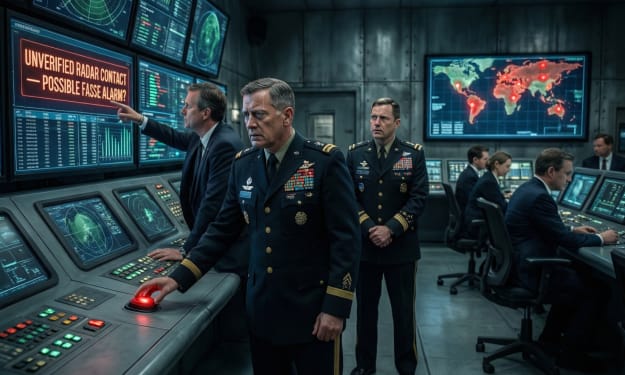
Nuclear Command Risks in a Time of Internal Tension
Nuclear Command Risks in a Time of Internal Tension When people think about nuclear power, they often focus on missiles, warheads, and military strength. But the most important part of any nuclear system is not the weapon itself—it is the command structure behind it. Clear leadership, trusted decision-making, and reliable communication are what prevent disasters. When these systems face internal tension, the risks grow quietly but dangerously.
By Wings of Time about 16 hours ago in Criminal



Comments
There are no comments for this story
Be the first to respond and start the conversation.