
A Doctor Who Killed 500 Patients! Caught by One Mistake
A Doctor Who Killed 500 Patients! Caught by One Mistake

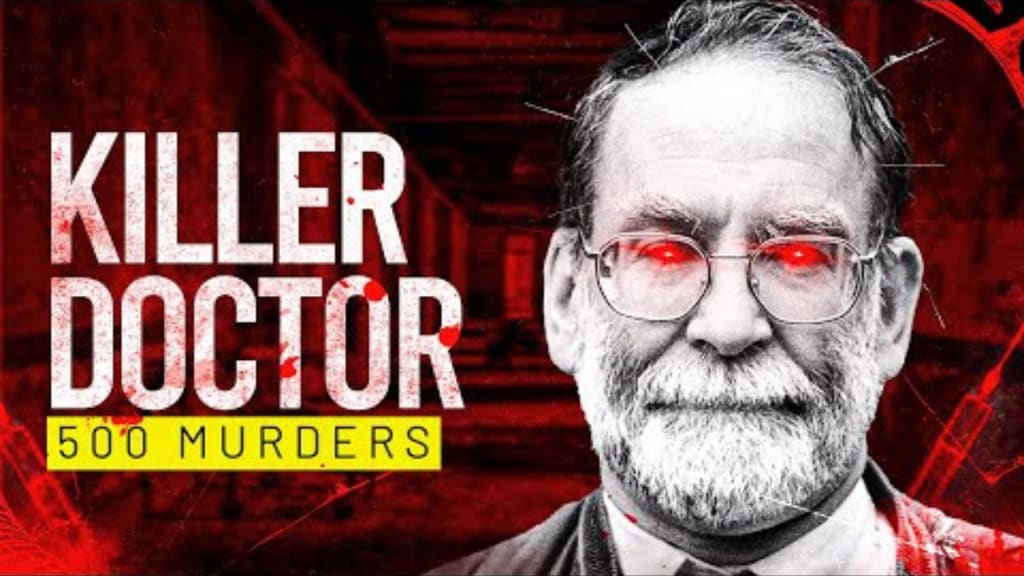
In the quiet English town of Hyde, where everyone knew everyone, lived a well-respected doctor—trusted, loved, and often considered a friend by his elderly patients. No one could have imagined that behind his warm smile and caring visits lay a monstrous secret. Dr. Harold Shipman wasn’t saving lives. He was quietly ending them.
Over 23 years, he murdered at least 218 people—and possibly up to 508—without raising even a shred of suspicion. Had it not been for a small mistake involving a computer and a forged will, he might never have been caught.
A Doctor Like No Other
Dr. Shipman often targeted elderly patients who lived alone. These were people society had forgotten, but Dr. Shipman didn’t. He gave them time, made home visits, listened to their stories, and made them feel cared for. Some trusted him so much, they gave him the keys to their homes.
In a town of just 30,000, Shipman became a respected name. But while everyone believed he was treating them with compassion, he was secretly gathering personal details: how wealthy his patients were, who lived with them, and how isolated they were. When he was confident that no one would suspect a thing, he’d administer a lethal dose of diamorphine, a powerful opioid similar to heroin.
The Killings Begin
Shipman's crimes started in the 1970s. Early in his career, while working in Pontefract, he developed an addiction to pethidine (another opioid). He began overprescribing it, both for himself and others. After being caught, he narrowly avoided losing his license and quietly relocated to Hyde in 1977.
By 1993, he had opened his own clinic—and the frequency of unexplained deaths began to rise.
Still, no one suspected him. Death certificates were signed by Shipman himself, often citing old age as the cause. Many of the bodies were cremated—leaving no evidence behind.
A Pattern Emerges
In March 1998, Dr. Linda Reynolds, a fellow practitioner from a nearby clinic, noticed something alarming: 16 of Shipman's patients had died in just three months—while her clinic, with three times as many patients, had seen only 14 deaths in the same period.
Dr. Reynolds filed an official report to the coroner in Manchester, pointing out that most of Shipman’s deceased patients were elderly women, found dead in their homes, fully clothed, and often sitting upright. Shipman was either present at the time of death or the first to find the body—every time.
A police investigation followed, but with most bodies cremated and no clear evidence, the case was dropped.
The Mistake That Caught a Killer
Shipman's final victim was Kathleen Grundy, an 81-year-old former mayor of Hyde, who died suddenly on June 24, 1998. Once again, Shipman signed the death certificate, citing "old age."
But Kathleen’s daughter, Angela Woodruff, a lawyer, was suspicious. Her mother had always been in good health. Then, she received a strange will—leaving her mother’s estate to none other than Dr. Harold Shipman.
Angela noticed a glaring error: the will mentioned only one house, even though her mother owned two. She alerted the police.
When investigators exhumed Kathleen’s body, they found traces of diamorphine. Shipman claimed she was a drug addict and had told him so—writing it into her computerized medical record.
But here’s where Shipman made a fatal mistake: he had backdated the record, not realizing that computers automatically store the actual time of edits. The entry had been made after her death.
The Net Closes In
Further digging revealed even more damning evidence: the typewriter used to forge Kathleen’s will had unique character flaws. Police found that exact machine in Shipman’s house.
On September 7, 1998, Dr. Harold Shipman was arrested. A full-scale inquiry began, examining death certificates, medical records, and conducting forensic exhumations of other patients. Families who had quietly doubted Shipman now came forward.
The final report revealed what no one wanted to believe: Shipman had murdered at least 218 people, possibly as many as 500.
Why Did He Kill?
To this day, Shipman’s true motive remains unclear. Some say he was a psychopath. Others believe it was a desire for control, or a twisted re-enactment of his mother’s death—she too was given morphine while dying of cancer.
Shipman never confessed. In 2004, he died by suicide in his prison cell—using his bedsheets to hang himself.
Legacy of Terror
The "Shipman Inquiry" changed British medical laws forever. Today, the case remains the largest proven serial killing spree by a single individual in modern history. His crimes were so shocking, so calculated, that they forced a nation to question the very people meant to save lives.
Even now, a statue stands in Hyde, made from shattered glass and steel wreckage, built in memory of the victims. Beneath it lies a clock, frozen at 6:08 p.m.—the time of Kathleen Grundy’s death.
A reminder that evil can hide behind a kind face.
And sometimes, even a doctor’s touch… can kill.
About the Creator
Keep reading
More stories from Jehanzeb Khan and writers in Criminal and other communities.
Inside the House of Skulls: The Full Timeline of the Jonathan Gerlach Investigation
INVESTIGATION TARGET: JONATHAN C. GERLACH INCIDENT LOCATION: 100 WASHINGTON AVENUE, EPHRATA PA CHARGES: ABUSE OF CORPSE (x100), THEFT, DESECRATION STATUS: INCARCERATED ($1M BAIL) KEYWORDS: #HouseOfSkulls #JonathanGerlach #EphrataCrime #MountMoriah
By Sunshine Firecracker5 days ago in Criminal
Multinational Crisis
Part One: Nigeria You have all heard about Nigerians, Nigeria in general. The infamous scammer country. But let’s have a real conversation. Let me give you some extremely boring stats, so we are on a level playing field, on my thoughts. I’ll be as brief as possible considering, no one wants an hour long dissertation on economic issues.
By Alexandra Grant4 days ago in Criminal
How, Too
Many people wonder how, too. You are not alone, and I am an expert. I will teach you how, too! First, you need to remit a small application fee and fill out an application describing the nature of your financial situation and how often payments will be made, as this will have great bearing on how well I teach you how, too.
By Harper Lewis3 days ago in Fiction



Comments
There are no comments for this story
Be the first to respond and start the conversation.