
A 20‑Year Sentence
Sonya Massey Act Illinois hiring reforms

Twenty Years for Sonya Massey — and the Questions Illinois Is Still Forced to Answer
On January 29, 2026, a judge in Springfield, Illinois, sentenced former Sangamon County sheriff’s deputy Sean Grayson to 20 years in prison for the killing of Sonya Massey, a 36-year-old Black mother of two who was shot inside her home after she called 911 for help. The sentence was the maximum allowed for Grayson’s second-degree murder conviction, a cap that underscored both the seriousness of the crime and the limitations of the charge the jury ultimately chose.
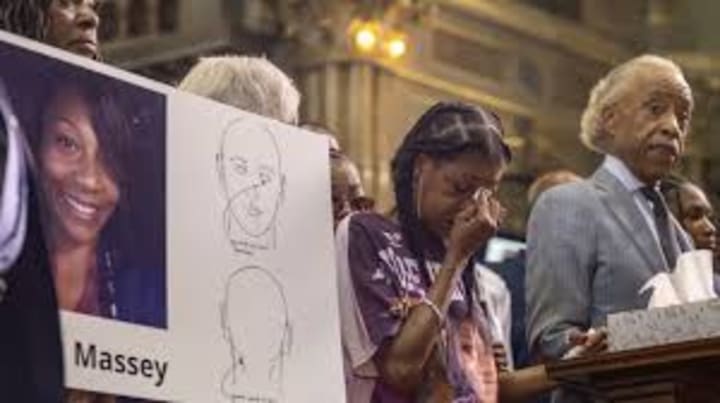
The scene inside the courtroom told its own story. Massey’s loved ones—many wearing purple, her favorite color—sat packed together and reacted with visible emotion when the judge imposed the maximum sentence. The family’s statements described grief that does not fade neatly with time, and fear that doesn’t leave when a case ends: the fear that calling police can bring danger instead of safety.
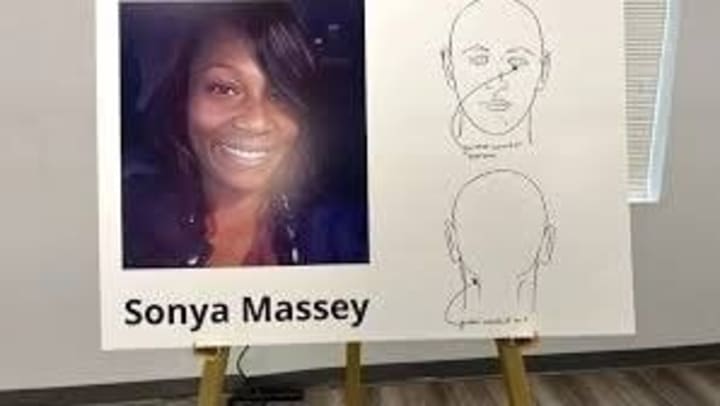
Yet even at the moment of sentencing—when a court delivered the strongest punishment available under the conviction—this case remained bigger than one defendant. The public’s attention stayed locked on what happened in Sonya Massey’s kitchen, but the deeper question lingered beyond the footage and beyond the courtroom: **How did a call for help turn into a death sentence—and what does accountability look like when the system itself helped place the wrong person at the front door?
A Call for Help That Became a Fatal Encounter
The widely reported core of the case begins in the early hours of July 6, 2024. Sonya Massey called 911 to report a possible prowler outside her Springfield-area home. Two deputies responded: Sean Grayson and Deputy Dawson Farley.
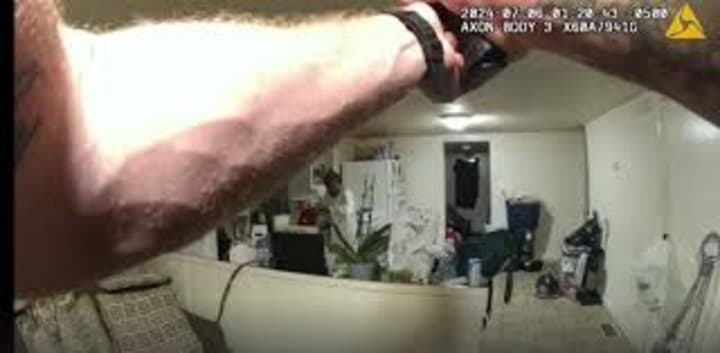
According to accounts based on body-camera footage and court reporting, the deputies checked outside and then entered Massey’s home. The encounter escalated rapidly around a pot of hot/boiling water on the stove—an object that became a focal point of the case but also, to many observers, a symbol of how quickly routine contact can become lethal when fear, authority, and escalation collide.

Grayson argued he feared Massey would throw hot water at him; prosecutors argued the shooting was unjustified and that the encounter showed unnecessary escalation. Ultimately, the jury convicted him of second-degree murder—an outcome that mattered not only because it labeled the killing criminal, but because it set the maximum sentence ceiling at 20 years.
The Verdict: Second-Degree Murder, Maximum Sentence
The legal outcome turned on a critical distinction: Grayson had originally been charged more aggressively, but the jury convicted him of the lesser offense. Illinois law allows a second-degree murder conviction where a defendant claims he believed deadly force was necessary, even if that belief was unreasonable. This legal pathway is one reason the case became a flashpoint: to Massey’s family and many community members, “second degree” sounded like the system shrinking the harm; to legal observers, it reflected the statutory structure and jury instructions available in Illinois.
At sentencing, the judge imposed the maximum 20 years and openly criticized what he characterized as Grayson’s conduct and rage. Grayson apologized in court and described mistakes, but the family’s statements described irreversible loss—and the sense that even the maximum sentence could never equal the weight of what was taken.
Even after sentencing, reporting noted that Illinois sentencing rules and credit provisions can affect actual time served. That reality contributes to why families often leave court feeling the justice system measures suffering with a ruler that never reaches the full length of loss.
The Question That Won’t Disappear: Why Wasn’t the Partner Charged?
Among the hardest questions raised by this case is the one you asked directly: Why wasn’t the partner charged?
But Farley did something that shaped how this case unfolded: he testified. In ABC News coverage of the trial, Farley said Massey did not appear to be a threat and that he wanted to “do right” by her through his testimony. That testimony reinforced a key prosecution theme—that the perceived “threat” was not shared by the partner—and it gave jurors another lens on what unfolded inside the home.
Legally, partners are less often charged in officer-involved shootings because homicide charges typically focus on the person who fired, and prosecutors must prove a partner’s separate criminal conduct under theories like aiding/abetting, official misconduct, or failure-to-intervene (depending on statute, policy, and evidence). That doesn’t mean partner accountability is impossible; it means the legal bar is higher and the proof requirements differ from the shooter’s direct act.
Still, the moral and civic question remains legitimate: If one deputy said he did not perceive a threat, what does it say about training, escalation, and the duty to stop a partner from crossing a line? That question isn’t an accusation—it’s a demand for clarity, and it’s part of what keeps the Massey case alive in public memory even after sentencing.
When the Story Expands: “Wandering Officers” and the Hiring Pipeline
The Sonya Massey case became not only a story about a shooting, but a story about how policing systems sometimes fail at the gate. Investigative reporting by the Invisible Institute and partners documented concerns about Grayson’s prior employment across multiple agencies and highlighted the broader phenomenon of officers moving from department to department even after serious warning signs emerge.

In records described by IPM Newsroom and the Invisible Institute, prior supervisors raised concerns about issues like policy compliance, report accuracy, and credibility—factors that can shape whether an officer becomes a liability in the field. The reporting emphasized that the absence of strong transparency mechanisms can allow troubling histories to be minimized, mislabeled, or simply not shared in a way that effectively prevents rehiring.
This is the part of the Massey case that lawmakers seized on: not just the tragedy of one night, but the possibility that the tragedy was enabled long before that night, through incomplete vetting and inconsistent information-sharing across agencies.
Illinois Responds: The Sonya Massey Act and Police Hiring Reforms
Illinois’ legislative response to this case is now known as the Sonya Massey Act (also commonly described as Sonya Massey’s Bill, passed as Senate Bill 1953 (SB1953) and signed into law by Governor JB Pritzker on August 12, 2025. The goal is straightforward: prevent unfit candidates from being hired as officers by forcing agencies to review complete employment histories before a final offer is made.
A. The Core Rule: No final hire without a full record release
At the center of SB1953 is a gatekeeping requirement: law enforcement agencies may not make an employment offer for covered positions unless the applicant signs a release authorizing prior employers to provide all employment records relevant to the applicant’s suitability. The bill text and reporting describe the scope broadly: background investigation materials, duty-related physical and psychological fitness-for-duty examinations, performance records, and records of criminal, civil, or administrative investigations, along with arrests, convictions, and related findings.
This reform is designed to end a common loophole where departments hire based on limited information, informal references, or partial records—then discover deeper problems only after an incident forces scrutiny.
B. Deadlines: Records must be produced quickly
SB1953’s hiring rules also tackle delay. Reporting on the law describes a requirement that records be provided within 14 days (with an option for a 14-day extension. That timeline matters because in real hiring pipelines, delays become excuses: “We couldn’t get the file,” “We didn’t want to lose the candidate,” “We hired and planned to review later.” The point of the deadline is to remove “later.”
C. No hiding behind NDAs; limited redaction
Another central feature is restricting how records can be sanitized. Reporting explains that records must be produced without redaction except for narrow personal identifiers, and that settlement or nondisclosure agreements cannot be used to prevent production of relevant records. This provision addresses the long-standing criticism that misconduct can be “resolved” through quiet exits and sealed arrangements that protect institutions, not the public.
D. Certification and good-faith immunity
The law also leans on verification and liability protection. Reporting describes requirements for producing agencies to certify that they have provided all responsive documents and disclose known information that could negatively affect fitness for duty, and it provides good-faith immunity to those who share information responsibly. This is designed to defeat a practical obstacle: agencies sometimes withhold damaging details out of fear of being sued; the law tries to encourage truth-sharing by reducing that legal risk when done in good faith.
E. Expanding sheriff merit boards: more accountability outside big counties
SB1953 also changes county oversight structures. The bill text includes reforms to sheriff merit systems, lowering population thresholds so more counties must adopt merit-based procedures and oversight. WTTW/Capitol News Illinois reporting described this as lowering the population requirement to broaden where these merit structures apply—aiming to strengthen accountability in smaller jurisdictions where informal hiring processes can dominate.
F. Effective date
Public reporting and official statements describe the law taking effect on January 1, 2026, meaning its hiring requirements are meant to operate as real, enforceable gatekeeping standards going forward—not as symbolic language.

What the Sonya Massey Act Is Trying to Prevent (in plain language)
If you reduce the bill to its practical meaning, it says this: No officer should be able to outrun their history by crossing into the next jurisdiction. The Act is meant to prevent a situation where red flags exist across multiple employers, but never gather in one place long enough to block hiring.
Supporters framed it as turning grief into guardrails—making it harder for the next Sonya Massey to face an officer whose record should have stopped him from getting the job.
Limits and Hard Truths: Hiring Reform Isn’t the Whole Solution
Even strong hiring laws don’t solve everything. A full file review can prevent some dangerous hires, but it cannot fix supervision failures, training gaps, or cultural problems that encourage escalation rather than de-escalation. Critics have also raised concerns that strict document requirements could slow hiring if prior employers delay records, potentially impacting recruitment.

There is also a deeper structural limitation: records only reveal what agencies documented honestly and thoroughly. If misconduct investigations are weak, labeled “unfounded” without meaningful inquiry, or handled in ways that minimize consequences, the paper trail can remain deceptively clean.
That’s why advocates often say implementation is everything. Illinois has broader policing reforms that depend on state-level systems and compliance—systems that some watchdog reporting says can stall or remain incomplete if not enforced. The Sonya Massey Act will be judged not by its signing ceremony but by whether departments actually request records, receive them fully, and make hiring decisions that reflect what the records show.
A Case That Ended in Court—but Not in Meaning
The state has now spoken through a sentence: 20 years for Sean Grayson. But the story of Sonya Massey is not only about punishment; it is about trust—and what it takes to rebuild it.

It is about whether a person can call 911 without fearing that law enforcement will become the threat. It is about the responsibility of a partner on scene, and whether accountability should stop at the trigger pull or extend to the duties surrounding it. And it is about the hiring pipeline: how many warning signs can be scattered across agencies before we admit the problem isn’t one officer, but a system that kept letting him through.
The Sonya Massey Act represents Illinois’ attempt to answer one of the hardest questions her death forced into the open: How do we stop “known risk” from becoming “new tragedy”? It cannot bring Sonya back. But it can tighten the gate. It can demand the full record. And it can make it harder for a dangerous history to be rebranded as a fresh start somewhere else.
And that may be the most honest legacy policy can offer: not closure, but guardrails—built in the name of someone who should still be here.
⭐ Key Illinois Officials Everyone Can Contact for Justice
🟦 1. Illinois Attorney General – Kwame Raoul
He is the state’s highest legal officer and oversees civil rights enforcement, police misconduct oversight, and public integrity.
Email Contact (official AG form):
🔗 Attorney General Contact Form
Use the official contact form
Phone: Chicago: 312-814-3000
Springfield: 217-782-1090
The Attorney General can launch investigations, issue oversight, and pursue civil rights actions tied to policing misconduct. Please sign this Petition; Change.org
About the Creator
Organic Products
I was born and raised in Chicago but lived all over the Midwest. I am health, safety, and Environmental personnel at the shipyard. PLEASE SUBSCRIBE to my vocal and check out my store
Keep reading
More stories from Organic Products and writers in Criminal and other communities.
The Story of George Stinney Jr
In the spring of 1944, in the small segregated mill town of Alcolu, South Carolina, a fourteen‑year‑old boy was thrust into a nightmare he could never escape. His name was George Junius Stinney Jr. He was slight, barely over five feet tall, shy, soft‑spoken, and loved riding his bicycle with his siblings. But in the Jim Crow South, innocence was no shield—not when racism shaped law, justice, and the very air people breathed.
By Organic Products 2 days ago in Criminal
The Silence After the Sirens
M Mehran The sirens screamed through the narrow streets of Lahore at 2:17 a.m., but by the time they arrived, the house on Street No. 14 was already silent. Too silent. Inspector Farhan Malik stood at the entrance, staring at the open wooden door. Years in criminal investigations had taught him one thing—when a crime scene feels calm, it’s usually hiding chaos underneath. Inside, the air smelled of iron and dust. On the living room floor lay the body of Ahsan Qureshi, a well-known property dealer with a spotless public reputation and a long list of enemies no one talked about. He had been stabbed once—clean, precise, straight to the heart. No signs of forced entry. No signs of struggle. No weapon. “This wasn’t rage,” Farhan muttered. “This was intention.” A Perfect Man With Imperfect Secrets Ahsan Qureshi was the kind of man newspapers loved. Successful businessman. Charity donor. Family man. But criminal investigations rarely care about headlines. As Farhan flipped through the victim’s file, a different picture emerged. Land grabbing cases buried under settlements. Witnesses who had suddenly gone silent. One junior clerk who disappeared three years ago after accusing Ahsan of fraud. In criminal stories, the dead are rarely innocent. The only person in the house at the time of the murder was Ahsan’s wife, Zara Qureshi. She was found sitting on the bedroom floor, eyes blank, hands shaking—not crying. People who cry easily often hide things. People who don’t… usually know the truth. The Woman Who Knew Too Much Zara told the police she heard a sound, came out, and found her husband bleeding. Her statement was clean, almost rehearsed. But something about her silence bothered Farhan. Later that night, while reviewing CCTV footage from nearby houses, Farhan noticed something strange. The cameras showed no one entering or leaving the house between 11 p.m. and 3 a.m. If no outsider came in, only one conclusion remained. The killer was already inside. But criminal investigations aren’t built on assumptions—they’re built on cracks. And Farhan found one when he reviewed Zara’s phone records. Multiple calls. One number. Deleted messages. The number belonged to Sameer Ali—a former employee of Ahsan Qureshi. The same man who had filed a fraud complaint years ago and then vanished from the legal system. A Ghost From the Past Sameer Ali was found two days later in a rented room near the railway station. He didn’t resist arrest. He didn’t even look surprised. “I didn’t kill him,” Sameer said calmly during interrogation. “But I wanted him dead.” That sentence alone was enough to make him a suspect. Sameer revealed the truth Ahsan had buried for years. Fake documents. Illegal land seizures. Families thrown out of their homes overnight. When Sameer tried to expose him, Ahsan destroyed his career—and threatened his life. “But I left the city,” Sameer insisted. “I came back last week. To confront him. Not to kill him.” Farhan believed him. Criminals lie—but their lies have rhythm. Sameer’s story didn’t. Then who delivered the final blow? The Confession No One Expected The answer came quietly. Zara requested to speak to Inspector Farhan alone. “I didn’t plan to kill him,” she said, her voice barely audible. “I planned to leave.” She revealed a side of Ahsan the world never saw—emotional abuse, threats, control masked as love. The charity dinners, the smiles, the respect—all lies. “He ruined lives,” Zara whispered. “Including mine.” The night of the murder, Sameer had come to the house. Zara let him in. She wanted Ahsan to face someone he had destroyed. But the conversation turned violent. Ahsan laughed. Mocked him. Threatened him again. Then Ahsan turned to Zara. “He said I was lucky to be alive because of him.” That was the moment. Zara picked up the knife from the kitchen—not in anger, but in clarity. “One second,” she said. “That’s all it took.” Sameer ran. Zara stayed. Justice Beyond the Law The court case shocked the nation. Media headlines screamed “Wife Kills Philanthropist Husband”, but the truth was heavier than the words. Zara was convicted of manslaughter, not murder. The judge acknowledged years of psychological abuse. She was sentenced to seven years. Seven years for ending a lifetime of fear. As Farhan watched her being taken away, he felt something rare in criminal investigations—not satisfaction, not victory, but understanding. Criminal justice isn’t always black and white. Sometimes, it’s just silence after the sirens. And the knowledge that the real crime happened long before the knife ever touched the skin.
By Muhammad Mehranabout 4 hours ago in Criminal
One Unchecked Box
"Republished" because it was the only way to add the embed for the newly recorded audio version of this story due to the Top Story badge. Plus it serves as a nice, informal announcement of the podcast's revival for another season (go subscribe!):
By Stephen A. Roddewig4 days ago in Fiction



Comments
There are no comments for this story
Be the first to respond and start the conversation.