
The Story of George Stinney Jr
he Boy They Silenced, The Truth They Could Not Bury

In the spring of 1944, in the small segregated mill town of Alcolu, South Carolina, a fourteen‑year‑old boy was thrust into a nightmare he could never escape. His name was George Junius Stinney Jr. He was slight, barely over five feet tall, shy, soft‑spoken, and loved riding his bicycle with his siblings. But in the Jim Crow South, innocence was no shield—not when racism shaped law, justice, and the very air people breathed.
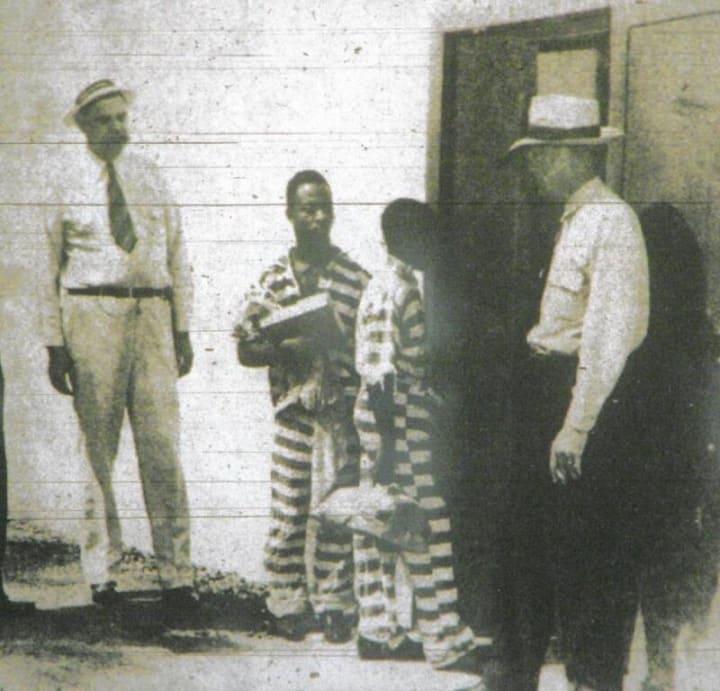
When two young white girls—Betty June Binnicker and Mary Emma Thames—were found brutally murdered, the town quickly searched for a suspect. Fear and anger filled the community, and within hours, suspicion fell on George, simply because he was Black and one of the last children seen speaking to the girls. He was taken from his home by law enforcement, separated from his parents, and interrogated alone for hours.
No lawyer.
No parent.
No witness.
No transcript.
No recording.
Only an alleged confession—one the police claimed he gave, and one George denied until his death.
The speed of what followed was chilling. George’s trial lasted a single day. His court‑appointed attorney called no witnesses, presented no defense, and offered no challenge to the prosecution. The jury, made up entirely of white men, deliberated for just ten minutes—not even enough time to read the accusation twice.

And with that, the fate of a 14‑year‑old child was sealed.
He was sentenced to die in the electric chair.
The youngest person executed in the United States in the 20th century.
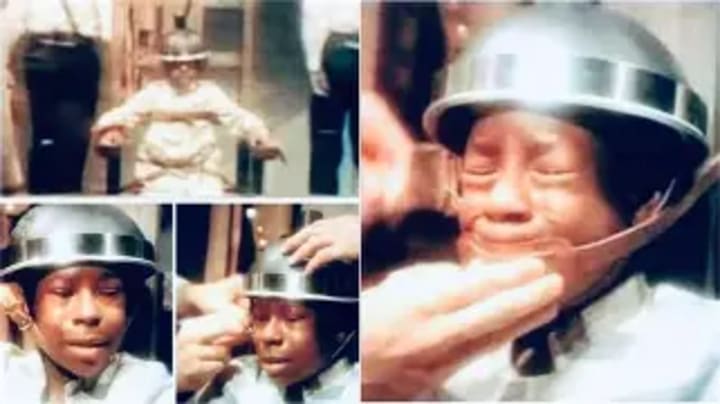
When the day arrived, the mask of the electric chair was too large for his small face. His Bible—clutched tightly in his hands—made his tiny frame appear even smaller. Witnesses later said the straps hung loosely against his body. Moments later, the switch was pulled. The force shook his body so violently that the oversized mask slipped from his face, exposing his tears as the electricity surged through him.
The state called it justice.
History would not.
🌿 Decades Later: The Truth Emerges
For seventy years, George Stinney’s name lived in the shadow of that wrongful execution. But generations later, lawyers, historians, and civil rights advocates revisited the case. They uncovered the failures, the rushed proceedings, the lack of evidence, and the racist machinery that consumed him.
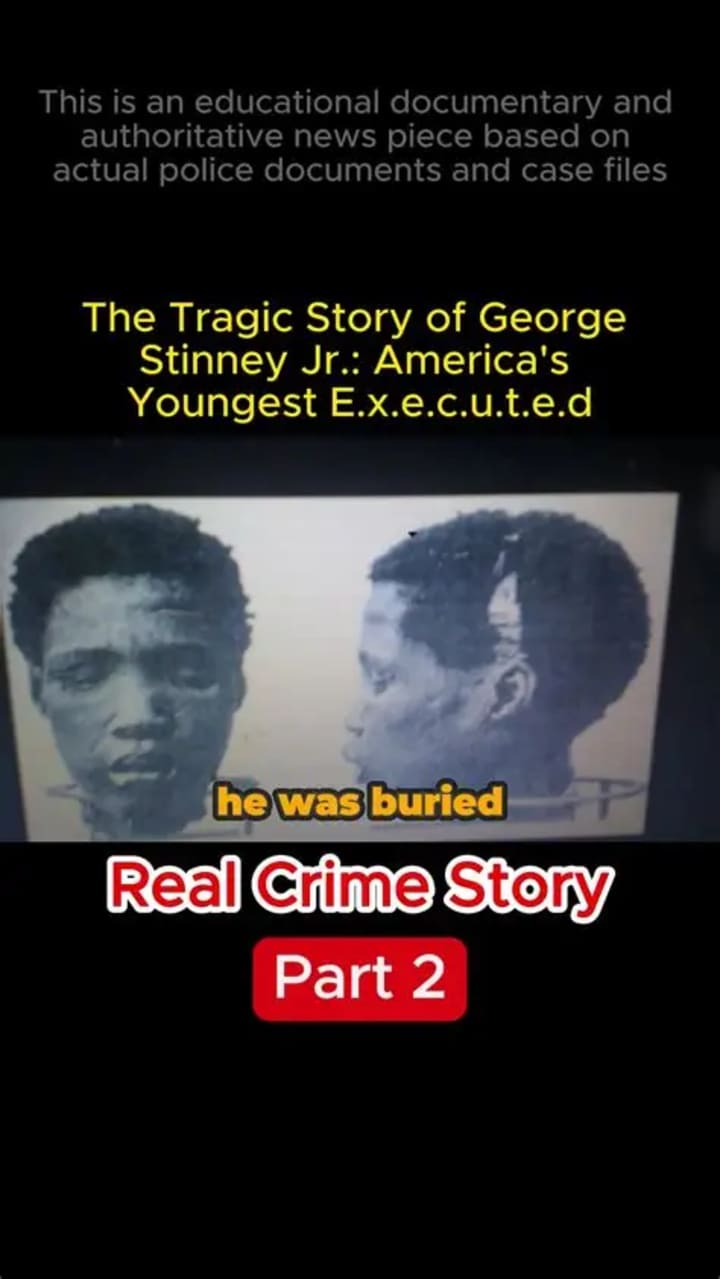
In 2014, a South Carolina judge vacated George’s conviction—declaring that he had been denied even the most basic elements of due process. The judge noted that the trial had been fundamentally unfair from beginning to end. With that ruling, George Stinney Jr. was finally, formally cleared.
He was exonerated 70 years after his death. But the victory was bittersweet. George never lived to see his name restored. His family never saw him return home. Justice came, but decades too late.
🔥 A Legacy That Echoes Today
George Stinney Jr. is not just a name in a history book. His story stands as a solemn reminder of the dangers of racial prejudice, the fragility of justice when corrupted by bias, and the lives destroyed when a society refuses to protect its most vulnerable.
His memory is now a symbol—of resilience, truth, and the ongoing fight to ensure what happened to him never happens again.
George was a child.
A son.
A brother.
A life full of possibility.
And though the state silenced him in 1944, the truth ultimately spoke louder.
If you want more powerful stories like this, make sure you FOLLOW and SUBSCRIBE to my Vocal.
Your support helps keep these stories alive
About the Creator
Organic Products
I was born and raised in Chicago but lived all over the Midwest. I am health, safety, and Environmental personnel at the shipyard. PLEASE SUBSCRIBE to my vocal and check out my store
Keep reading
More stories from Organic Products and writers in Criminal and other communities.
🔥 Blinded but Unbroken
On a Friday night in Santa Ana, California, 21‑year‑old Kaden Rummler marched with a crowd that had gathered to protest the shooting death of Renee Good in Minnesota. What began as an evening of chanting, megaphones, and constitutionally protected expression quickly mutated into a moment that would alter his life forever.
By Organic Products about 3 hours ago in Criminal
The Line Was Thinner Than I Thought
They tell you that the difference between a "good man" and a "cautionary tale" is a wide, sturdy canyon. They tell you there are signs—warning lights, sirens, a gut feeling that screams stop. But as I stood in the rain outside the Miller estate, feeling the cold weight of the key in my pocket, I realized the truth.
By Jhon smith7 days ago in Criminal
The Path to Salvation
The late autumn evening air filled the monk's lungs, but it wasn't the season that chilled his bones. The heavy-handed presence of evil he had sensed upon entering the woods surrounding this mountain village had not bothered to conceal itself from him.
By Made in DNA7 days ago in Fiction



Comments
There are no comments for this story
Be the first to respond and start the conversation.