
10 Most Dangerous Prisoners Held at Fort Leavenworth Disciplinary Barracks Prison
Fort Leavenworth Disciplinary Barracks holds only the most dangerous military convicts

10 – Dwight Loving
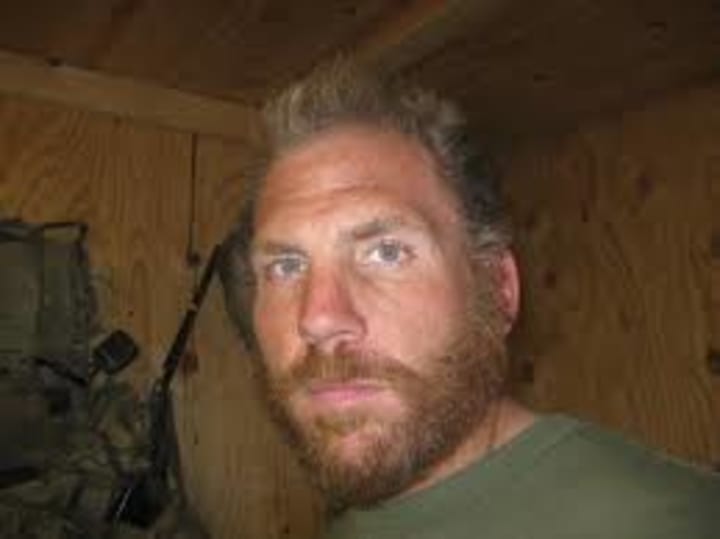
Dwight Jeffrey Loving, a former U.S. Army private, became one of the most notable figures in modern military justice after his conviction and death sentence for the brutal murders of two taxi drivers in 1988.
At just 20 years old and stationed at Fort Hood, Texas, Loving committed the crimes on the night of December 11, 1988. Seeking spending money for the holidays, he called local taxis under false pretences, drove the drivers to remote areas, and shot them execution-style.
His victims were Bobby Sharbino and Christopher Fay. Loving later attempted to rob a third driver, who managed to escape and alert authorities.
Loving was quickly arrested and confessed to the crimes. He was charged with two counts of premeditated murder, armed robbery, and attempted murder.
In 1989, he faced a general court-martial, where the military jury found him guilty on all charges and sentenced him to death. The convening authority at Fort Hood approved the sentence, making Loving one of the few service members on the military’s death row.
His case attracted further attention through the lengthy appeals process. In 1996, the U.S. Supreme Court heard Loving v. United States, a case challenging the constitutionality of the military death penalty system.
Loving's defence argued that only Congress should define the aggravating factors necessary for a death sentence. The Court rejected this argument, affirming the president’s authority to structure court-martial procedures and upholding Loving’s sentence.
For over two decades, Loving remained on death row at the U.S. Disciplinary Barracks in Fort Leavenworth, Kansas, however, in a surprise move, President Barack Obama commuted Loving’s sentence to life imprisonment without the possibility of parole in January 2017, just days before leaving office.
The rationale behind the clemency was not publicly detailed, though it aligned with Obama’s broader efforts to reduce the use of capital punishment and address disparities in sentencing.
Today, Dwight Loving continues to serve his life sentence at Leavenworth.
9 – Robert Bales
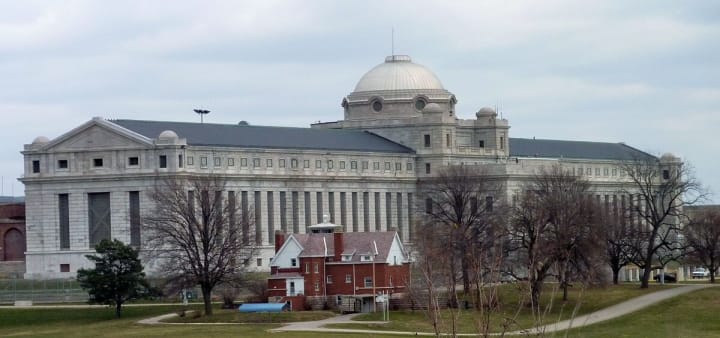
Robert Bales, a former U.S. Army Staff Sergeant, was convicted of carrying out one of the most shocking war crimes committed by an American soldier during the Afghanistan War.
His actions on March 11, 2012, in Kandahar Province left 16 Afghan civilians dead, including nine children, and sparked international outrage.
That night, Bales left his post at Camp Belambay in southern Afghanistan, heavily armed and acting alone.
Under the cover of darkness, he entered two nearby villages—Alkozai and Najiban—where he brutally murdered civilians in their homes. Many of the victims were asleep when Bales entered and began shooting.
After killing several people in the first village, he returned to the base, then left again to attack a second village. Six others were wounded in the rampage.
The massacre was described by Afghan officials as deliberate and inhumane, and it deeply strained U.S.–Afghan relations at a time of already heightened tension. Bales was quickly identified, taken into custody, and transported to Leavenworth.
Charged with 16 counts of premeditated murder, six counts of attempted murder, and multiple counts of assault.
In a military court-martial, his defence team did not contest his responsibility but argued that he was suffering from post-traumatic stress disorder, traumatic brain injury, and emotional instability following four combat deployments.
They also cited his abuse of alcohol, sleeping pills, and steroids at the time of the killings. In June 2013, Bales pleaded guilty to all charges to avoid the death penalty.
During the sentencing phase in August 2013, Afghan survivors and relatives of the victims testified via video link, while Bales expressed remorse, admitting, “What I did is an act of cowardice.” The military judge sentenced him to life imprisonment without the possibility of parole.
Today, Robert Bales remains incarcerated at the in Fort Leavenworth and his case continues to be a grim reminder of the psychological toll of prolonged combat, the devastating consequences of unchecked mental health issues among deployed troops.
8 – John Russell
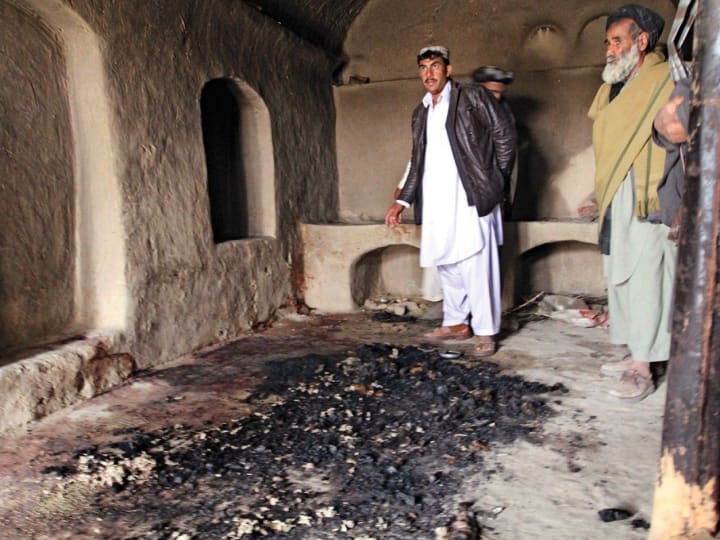
On May 11, 2009, a shocking act of violence occurred at Camp Liberty near Baghdad that would become one of the most tragic incidents of soldier-on-soldier violence during the Iraq War.
Sergeant John M. Russell, a 14-year U.S. Army veteran from Texas, opened fire inside a combat stress clinic, killing five fellow American service members.
The victims included Navy Commander Charles Springle and Army personnel Pfc. Michael Yates Jr., Sgt. Christian Bueno-Galdos, Dr. Matthew Houseal, and Specialist Jacob Barton.
The attack stunned both the military and the public. It wasn’t an enemy ambush or an accident in a combat zone—it was a deliberate act committed by a U.S. soldier against his own team, inside a clinic designed to treat psychological wounds of war.
Russell had reportedly been struggling with depression and emotional distress for some time. In the days leading up to the shooting, he had been referred multiple times to mental health professionals after displaying erratic behaviour.
His defence later claimed that he was experiencing a severe mental health crisis, suffering from major depression with psychotic features, and had reached a psychological breaking point.
At the time of the attack, he had been facing disciplinary issues, including a pending sexual harassment investigation, which may have added to his instability.
In a court-martial trial, Russell pleaded guilty to unpremeditated murder in exchange for removing the possibility of the death penalty.
However, military prosecutors pressed forward to determine whether the killings were premeditated. On May 13, 2013, he was found guilty of premeditated murder by a military judge.
Just days later, on May 16, 2013, John Russell was sentenced to life in prison without the possibility of parole. He was dishonourably discharged and sent to the U.S. Disciplinary Barracks at Fort Leavenworth, Kansas, where he is currently serving his sentence.
7 – William Kreutzer
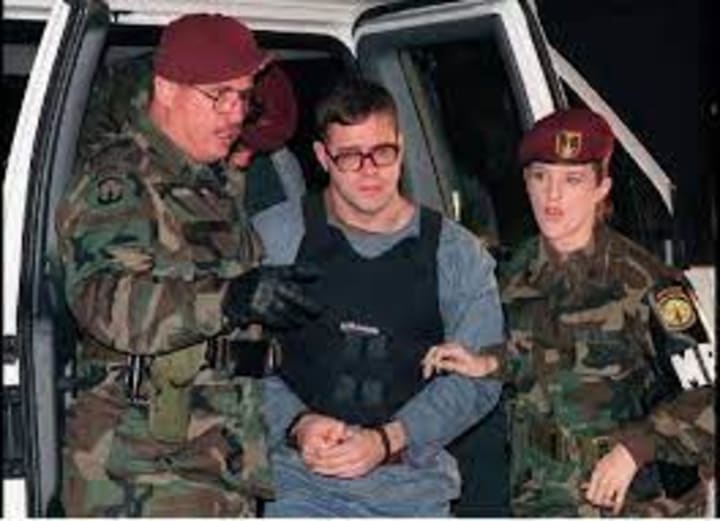
On October 27, 1995, Fort Bragg, North Carolina, became the scene of a horrifying mass shooting when former United States Army soldier William J. Kreutzer Jr. opened fire on a physical training formation.
The unprovoked attack claimed the life of Major Stephen Badger and left 18 other soldiers wounded, sending shockwaves through the military community and beyond.
Kreutzer, armed with an AR-15-style rifle, a .22-caliber rifle, and a 9mm pistol, positioned himself in a tree line adjacent to Towle Stadium where his brigade was assembled for morning physical training.
As the formation began to move, he unleashed a hail of bullets, causing chaos and terror among the unarmed soldiers.
Several Special Forces soldiers, in the vicinity for their own training, bravely intervened, ultimately tackling Kreutzer and disarming him, though not before the tragic loss of Major Badger.
He was convicted of one count of premeditated murder for the death of Major Badger, 18 counts of attempted premeditated murder, one count of violating a lawful general regulation for transporting weapons on post, and one count of larceny of government munitions.
In 1996, a military jury initially sentenced him to death. However, the legal battle for Kreutzer was far from over. His death sentence was later commuted to life in prison by the Army Court of Criminal Appeals.
This pivotal decision stemmed from concerns regarding his mental illness and the perceived ineffective assistance of his initial defence counsel, who were deemed to have failed in adequately presenting his mental health issues to the court during the trial.
Reports indicate that Kreutzer had a history of mental distress, including an incident in 1994 where he broke down and threatened to kill fellow soldiers, and had been evaluated by psychiatrists who noted his delusional state and severe distress.
In a subsequent legal development in March 2009, Kreutzer re-pleaded guilty to one count of premeditated murder, attempted premeditated murder, and 16 counts of aggravated assault.
This plea-deal ultimately spared him from facing the death penalty again and he was formally sentenced to life imprisonment, reduced in rank to E-1, forfeited all pay and allowances, and received a dishonourable discharge.
While the precise terms of his life sentence regarding parole eligibility are not publicly detailed, military justice typically allows for parole, though it remains uncertain if he will qualify within his natural lifespan.
6 – Calvin Gibbs
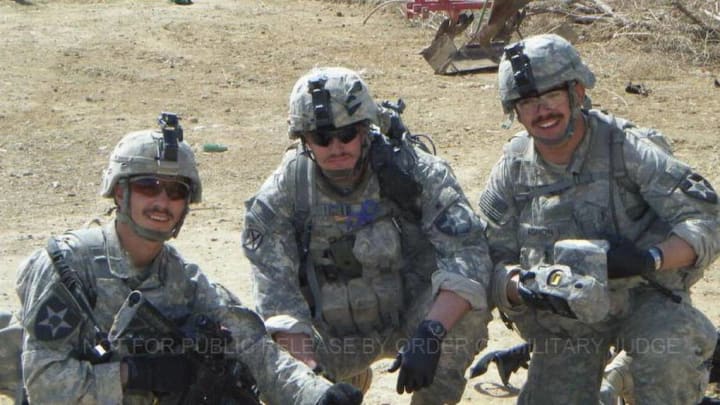
Calvin Gibbs was a Staff Sergeant in the U.S. Army who became the central figure in what became known as the "Kill Team" atrocities during the war in Afghanistan.
The crimes, which took place between January and May 2010 in the Maiwand District of Kandahar Province, involved the premeditated murder of at least three unarmed Afghan civilians.
According to investigations and trials, Gibbs was identified as the ringleader of a rogue platoon. He was accused of instigating and participating in the killings, which were staged to appear as legitimate combat engagements.
Soldiers under his command testified that Gibbs and others would discuss fabricating scenarios, such as planting "drop weapons" and detonating grenades near the victims to make them appear as if they were enemy combatants.
The specific instances of murder attributed to Gibbs and his co-conspirators include the killing of an unarmed farmer in 2010 with Gibbs using a grenade in this murder.
A second killing occurred approximately one month later in Kari Kheyl village and a third incident took place in May 2010 in Qualaday village, where an elderly Afghan man was detained, had a grenade thrown at him by Gibbs, and was then shot by other soldiers.
Calvin Gibbs pleaded not guilty to the charges, denying that he planned, conspired, or killed any non-combatants. He claimed the killings he participated in were justified.
However, a military jury in November 2011 convicted him on 15 counts, including three counts of premeditated murder.
He was sentenced to life imprisonment with the possibility of parole after 20 years, reduced in rank to Private, ordered to forfeit all pay and allowances, and dishonourably discharged.
The case also revealed a troubled platoon environment, with allegations of drug use (though Gibbs himself reportedly did not use drugs) and a lack of proper authority.
5 – Jeremy Morlock
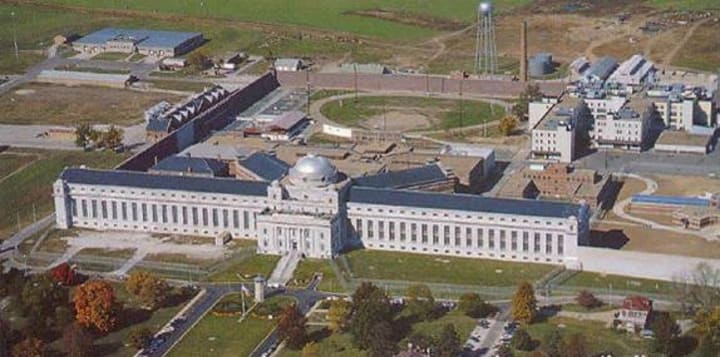
The case of Jeremy Morlock centred on a series of horrific war crimes committed in Afghanistan between January and May 2010, known as the Maywand District murders.
Morlock, a U.S. Army Specialist, was part of a rogue unit from the 5th Stryker Brigade that engaged in the premeditated killing of unarmed Afghan civilians.
Morlock and other soldiers, allegedly led by Staff Sergeant Calvin Gibbs, fabricated combat situations to justify these murders. Their method often involved throwing a grenade at an unarmed civilian and then shooting them, making it appear as though the victims had attacked first.
They also planted "drop weapons" near the bodies to further support the false narrative of self-defence.
Disturbingly, members of this "kill team" were also accused of collecting body parts as trophies and posing for photographs with the corpses, some of which were later leaked to the German news magazine Der Spiegel, causing international outrage.
Morlock was among the first soldiers charged in connection with these atrocities. He faced three counts of premeditated murder, along with charges of conspiracy, obstructing justice, and illegal drug use.
In March 2011, Morlock entered a plea deal, pleading guilty to the murder charges. As part of his agreement, he consented to testify against Staff Sergeant Calvin Gibbs and other co-defendants, becoming a key witness for the prosecution.
During his court-martial, Morlock admitted that "the plan was to kill people," explicitly stating that everyone involved knew they were targeting "completely innocent" individuals.
He was sentenced to 24 years in prison, with the possibility of parole after seven to eight years, a reduced sentence granted in exchange for his cooperation.
The military judge presiding over the case stated that he would have imposed a life sentence had he not been bound by the terms of the plea bargain.
4 – Ronald Gray
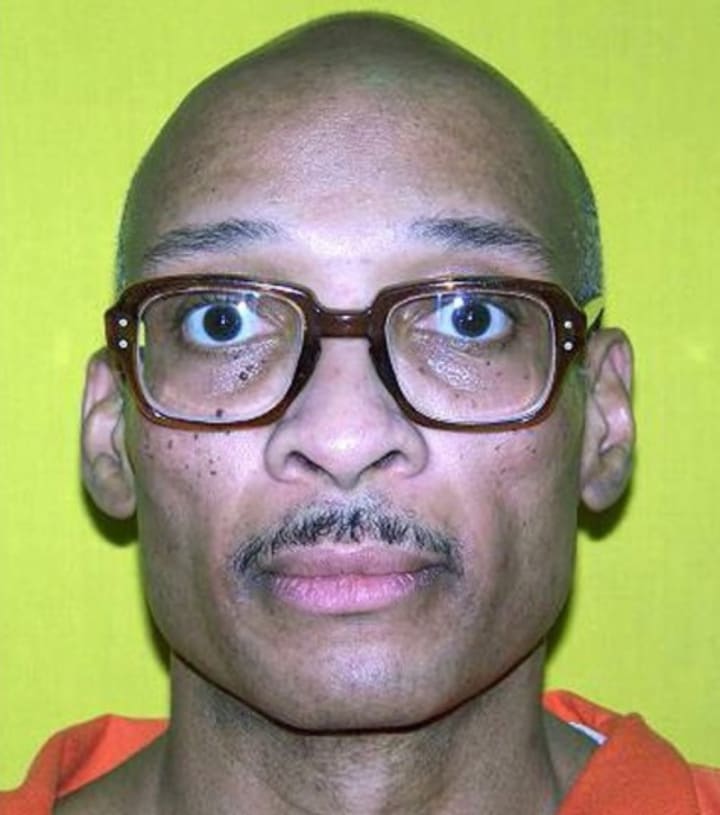
Ronald Gray is a convicted serial killer and whose crimes came to light while he was a U.S. Army Specialist stationed at Fort Bragg, North Carolina, in the mid-1980s. His horrific spree involved both military personnel and civilians.
Gray's crimes include the murder of four women and the attempted murder of another. On April 27, 1986, he murdered civilian Linda Jean Coats, then on December 11, 1986, he abducted, and murdered Tammy Cofer Wilson.
Just four days later, on December 15, he abducted, and murdered Private Laura Lee Vickery-Clay, whose body was later found shot multiple times in the woods on Fort Bragg.
On January 3, 1987, Gray raped and attempted to murder Private Mary Ann Lang Nameth, stabbing her repeatedly with a knife.
Finally, on January 6, 1987, robbed, and murdered civilian taxi driver Kimberly Ann Ruggles, whose body was found beaten and stabbed. Evidence against Gray included fingerprints at crime scenes and items linking him to the victims.
Gray was prosecuted in both civilian and military courts. In November 1987, he pleaded guilty in Cumberland County Superior Court to 22 felonies, including two counts of second-degree murder and five counts of first-degree sexual offense, for which he received multiple life sentences.
Subsequently, a general court-martial at Fort Bragg tried Gray from December 1987 to April 1988.
The military court convicted him of 12 charges, including the premeditated murders of Kimberly Ann Ruggles and Private Laura Lee Vickery-Clay, the attempted premeditated murder of Private Mary Ann Lang Nameth, two robberies, and two counts of forcible sodomy.
On April 12, 1988, the court-martial panel unanimously sentenced Ronald Gray to death. He also received a dishonourable discharge and was reduced in rank to Private E-1.
3 - Hasan Akbar
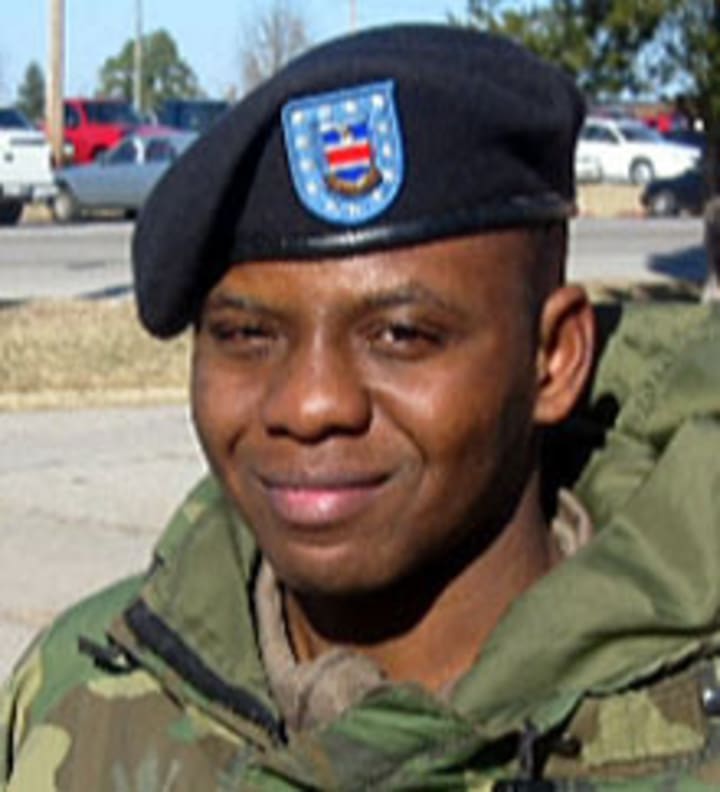
In the early hours of that morning, Akbar, a soldier with the 101st Airborne Division, deliberately turned off a power generator, plunging the camp into darkness.
He then threw four fragmentation grenades into three tents where other members of his division were sleeping. In the ensuing chaos, he also fired his M4 rifle.
This assault led to the deaths of Army Captain Christopher S. Seifert, who was fatally shot in the back, and Air Force Major Gregory L. Stone, who died from extensive shrapnel wounds. Fourteen other soldiers were wounded, primarily by grenade shrapnel.
Akbar was the sole suspect and confessed to the crimes. Prosecutors argued that his actions were premeditated, citing diary entries that allegedly expressed his intent to harm fellow soldiers.
The defence, however, contended that Akbar suffered from psychiatric problems, including paranoia, irrational behaviour, and sleep disorders, which they claimed made him mentally ill and confused.
Hasan Akbar was tried by a military court-martial at Fort Bragg, North Carolina, in 2005. A fifteen-member jury convicted him of two counts of premeditated murder and three counts of attempted premeditated murder.
On April 28, 2005, he was sentenced to death, becoming the first U.S. soldier since the Vietnam War era to receive the death penalty for murdering fellow service members in wartime.
2 - Timothy Hennis
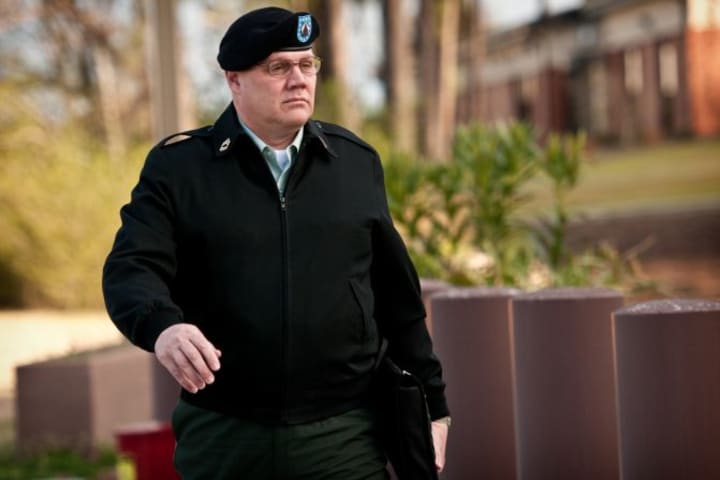
The case of Timothy Hennis is a complex and unusual one, involving multiple trials and a dramatic shift in legal outcomes for the same heinous crimes.
Hennis was accused of the brutal murders of Kathryn Eastburn, 31, and her two young daughters, Kara, 5, and Erin, 3, in Fayetteville, North Carolina, in May 1985.
The victims were found stabbed multiple times, and Kathryn Eastburn had also been raped. A third, infant daughter was found alive in her crib.
Hennis, then a U.S. Army Sergeant stationed at nearby Fort Bragg, was initially tried in a North Carolina state court in 1986.
He was convicted of three counts of first-degree murder and one count of first-degree rape and subsequently sentenced to death.
However, his conviction was overturned on appeal by the North Carolina Supreme Court in 1988, which cited the excessive use of graphic crime scene photographs by the prosecution as unduly influencing the jury.
In his second state trial in 1989, Hennis was acquitted of all charges. Following this acquittal, he re-enlisted in the U.S. Army and continued his military career, eventually retiring as a Master Sergeant in 2004.
The case remained cold until 2005, when new DNA testing became available. Investigators re-examined evidence from the crime scene, specifically a vaginal swab from Kathryn Eastburn.
The DNA results from this swab conclusively linked Hennis to the crime, with an extremely high probability.
Due to the double jeopardy clause of the Fifth Amendment, North Carolina state courts could not retry Hennis after his acquittal.
However, because the crimes occurred while Hennis was on active military duty, the U.S. Army exercised its separate jurisdiction. In 2006, Hennis was recalled to active duty and faced a military court-martial for the murders.
In 2010, after a three-week trial at Fort Bragg, a military panel found Timothy Hennis guilty of three counts of premeditated murder. He was once again sentenced to death.
This made Hennis a rare individual who had been tried for the same crime three times, experiencing a conviction, an acquittal, and then another conviction. He currently remains on military death row.
1 - Nidal Hassan
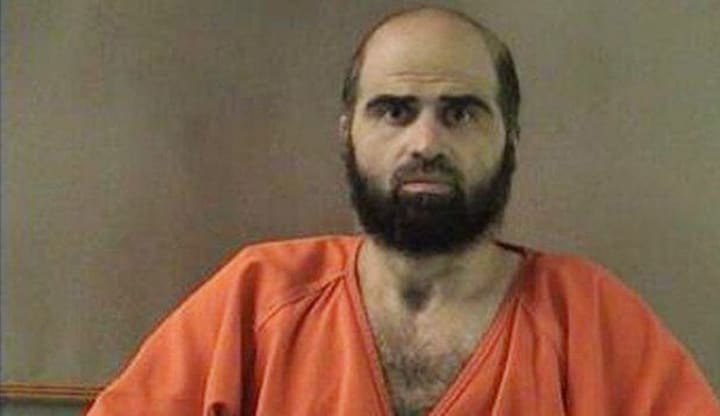
Hasan, who was preparing for deployment to Afghanistan, entered the Soldier Readiness Processing Centre at Fort Hood and opened fire with a semi-automatic pistol.
Witnesses reported that he shouted "Allahu Akbar!" before he began shooting. During the attack, he specifically targeted uniformed soldiers, passing over civilians. He was eventually shot and paralyzed from the waist down by civilian police.
Following the shooting, investigations revealed that concerns had been raised about Hasan's behaviour and performance during his time as a medical intern and resident, including comments described as "anti-American."
He had also engaged in email correspondence with Anwar al-Awlaki, an individual monitored by the NSA as a security threat.
While the U.S. government declined to categorize the shooting as an act of terrorism at the time, many reports and analyses later described it as such, driven by motives including opposition to military deployment and religious extremism.
In August 2013, Nidal Hasan admitted to the shootings at his court-martial. He was convicted by a military panel on 13 counts of premeditated murder and 32 counts of attempted premeditated murder.
The panel unanimously sentenced him to death, and he was also dismissed from the service and stripped of his rank.
If you enjoyed this true crime video then we have loads more in our true crime playlist on the right, if you want a more personalised video, check out YouTube’s recommendation to the right and don’t forget to subscribe for weekly crime videos published every Saturday.
This article was originally published at https://www.networth25.com
About the Creator
Vidello Productions
My name is William Jackson, a YouTube content creator and crypto enthusiast with over 161,000 subscribers and I make videos that are focused on the billionaire lifestyle and crime.
Content consists of top list videos.
Keep reading
More stories from Vidello Productions and writers in Criminal and other communities.
15 Corrupt Police Officers Serving Life Inside Prison
Number 15 - Choni Kenny Sealed by the fate of a kiss, corrupt police officer Choni Kenny had no idea of the trouble she would eventually end up in when her superiors saw the moment she kissed Drug-dealer Josh Whelan who was serving a sentence at HMP Forest Bank in Manchester.
By Vidello Productions6 months ago in Criminal
Crime Chronicles: Darya Nikolaevna Saltykova
A little while ago, we covered the story of Delphine LaLaurie (1787 - 1849), the New Orleans socialite who tortured and murdered her slaves. We also covered Erzsebet Bathory (1560 - 1614), who did the same thing in Hungary around 200 years before that; I didn't think I'd find another one, but I did - in Russia.
By Greg Seebregts2 days ago in Criminal
Flames of Deception: Boston’s Arson Epidemic
Welcome to The True Crime Reader, the podcast that goes deep into the world of true crime literature, bringing you the stories behind today’s most gripping investigative works and in this episode, we take you to a city under siege—not by an outside force, but from within.
By Kristen Barenthaler2 days ago in Criminal




Comments
There are no comments for this story
Be the first to respond and start the conversation.