
Will the countries of the Maghreb pass the Ukraine crisis in peace?
The whole world is on the palm of an imp.. And while economists do not confirm
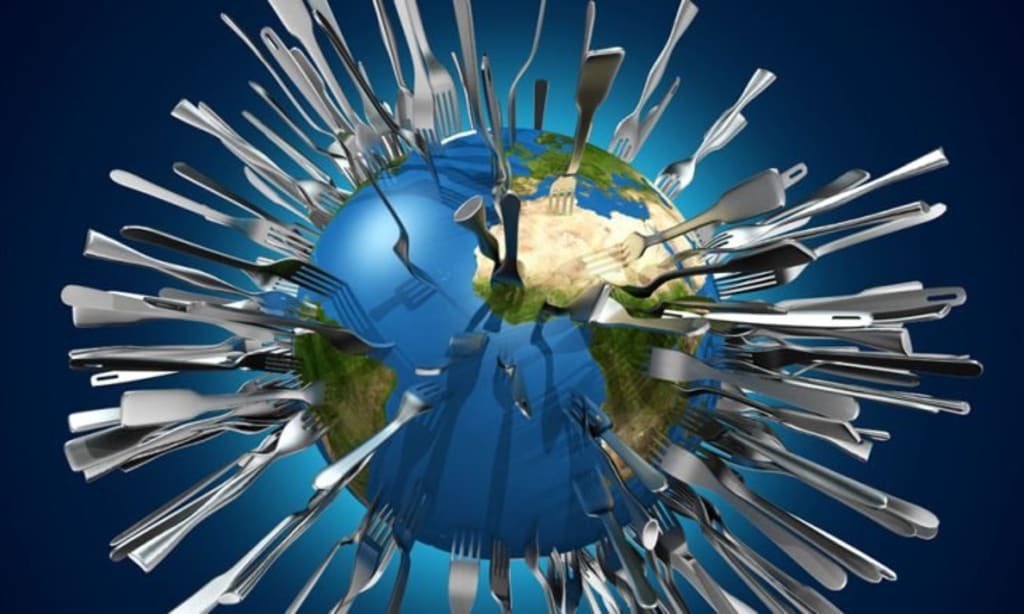
The whole world is on the palm of an imp.. And while economists do not confirm, nor do they deny that even part of the scenario that many have summarized in the occurrence of famines in several regions of the world, including North Africa, will be followed by a wave of unrest and revolutions that may be the most violent and radical, the The question that arises sharply is, will the politicians there be able to avoid that fate before it is too late and things get out of control permanently?
A few days ago, some Moroccan bloggers were disturbed by a Moroccan YouTuber named Osama Copenhagen’s talk on an Italian TV channel about hunger and poverty in Morocco, with the Algerian News Agency’s anger at a UNICEF report on “the Algerian youth’s suffering from unemployment, fragility, poor schooling and economic marginalization.” Although there was no direct link between the two issues, the common denominator between them, regardless of the accuracy or validity of these or that allegations, is that the reaction here and there revealed in both cases the existence of a kind of sensitivity in the official and popular dealing with any news or A comment indicating that there is a manifestation of a crisis that is knocking on the door of the two largest Maghreb countries.
But can any one of the two countries be certain now that it has zero problems and zero crises, and that it is completely and definitively immune to all global economic fluctuations and shocks? It is true that it is about the two most populous countries, and the most powerful economies in the region, but did the Federal President of the largest economic power in Europe not refrain from saying, in his speech last Sunday via video link with Ukraine, “We will face in Germany more difficult days, and we must To be prepared to bear it, if our solidarity is not just empty promises, and if it is taken seriously” before asserting afterwards that “these days will change the world and us too, perhaps faster than we thought possible”? There is no doubt that Frank-Walter Steinmeier was not the first or the last Western official to warn his people of the harsh effects and repercussions of the Russian war on Ukraine in the course of daily life. If the man who heads the rich European country speaks with all that anxiety and apprehension about the vicissitudes that may be hidden in the coming days for his country, will the North African countries, which are less powerful and affluent than Germany, be immune to the tremors and storms that the Russian-Ukrainian war will cause? Then does the local and regional scene in the Maghreb seem to be on the verge of transformations, which this time may be deep and radical? Or will the effects that it will be affected by this crisis, and on the contrary, will be very limited and simple? Many may have heard what the Mauritanian president said in the middle of this month, in front of members of the Mauritanian community in Spain during his recent visit to Madrid, but few may have actually realized the significance of Ould Ghazwani’s words, or whether he did not only acknowledge with remarkable courage a reality that all Mauritanians know and live with. Rather, he went further when he said in that meeting: The question posed by the Mauritanian president's confessions, which were as frank as they were painful and bitter, is, was the man addressing his speech only to members of his own people? Or was he also implicitly addressing his Maghreb neighbors to tell them that his country, which, since its independence in the sixties, has paid the price of Algerian-Moroccan disputes and quarrels, is the one who pays the most today and will pay tomorrow, in the absence of a joint Maghreb project, the cost of the Russian-Ukrainian war in the North African region? There is no doubt that the last thing that can come to the minds of Libyans, Tunisians, Moroccans and Algerians is that the occurrence of a famine in Mauritania - God forbid - which is not ruled out by the Mauritanian president himself, could sooner or later affect each one of them, regardless of the size His wealth or his ability to get out of any similar problem or predicament he might face. It is not only their wrong economic calculations that make them think in this way, but also their narrow and limited political perceptions of the interests of their country, which lack any real sense of the unity of the Maghreb destiny, but can the Maghreb and its neighbor be hungry? The Europeans may well prepare for such a scenario, because they know that their countries will inevitably be the destination of thousands, perhaps millions, on the opposite bank. But what Maghreb country will really feel the seriousness of the threat and the imminent danger in the event of a famine or disaster in a neighboring Maghreb country? It is really unfortunate not only that the five countries do not have a collective and comprehensive vision for their national food security, but that part of the difficulties that one country may encounter, are usually and automatically attached to the condemnation of the other neighbour, so accusations are explicitly or implicitly behind them. What happens between Morocco and Algeria from time to time is not the only example of this. For years, for example, Tunisians have been attributing the reason for any shortage they find in some products and materials to the fact that they are smuggled into Libya. Although they did not directly accuse the Libyans of being behind the financial and economic crisis in which they are floundering, they have not yet been able to put together with them a joint plan to provide the two countries together with the basic needs of international markets. Everything that may be said here about the existence of an insurmountable obstacle standing in the way of any unified Maghreb action or endeavor, which is the political conflicts and disagreements, falls on the ground. To face the effects and repercussions of the Russian war on their economies? What political justifications might explain the failure of any Maghreb country so far to coordinate with Mauritania, which is the weakest link in the equation, and help it bear the consequences of the skyrocketing prices of energy, fuel and wheat? Unfortunately, everyone's concern is to assure his people that he will not starve, but wouldn't hunger have a domino effect? Perhaps those who said more than a decade ago that Egypt is not Tunisia and Libya is not Egypt will be better able than others to answer.
About the Creator
Keep reading
More stories from Zernouh abderrahman and writers in Confessions and other communities.
Will NATO borders extend to Ceuta and Melilla?
It is not new for the idea to be raised, but at a time when Putin is still determined to prevent NATO from expanding further east of Europe, who do you think can stand in the way of the alliance if it wants to expand from the other side, that is, to the southern borders of the continent? This may not seem possible or expected right now. The Ukrainian fire has not yet been extinguished, and no one can say for sure where it will spread, or whether its fire will recede quickly, or not?
By Zernouh abderrahman4 years ago in The Swamp
I Learned Too Early That Life Does Not Wait for the Poor
I learned very early in life that time moves differently when you are poor. For some people, life feels like a wide road with many choices. For people like me, it felt like a narrow path where every wrong step had consequences. I grew up watching adults around me struggle quietly, carrying heavy responsibilities on their backs while pretending everything was normal.
By On that5 days ago in Confessions
The Devil's Cut
“Comrade, finally you’re awake.” The voice was smooth, sensual. A flickering incandescent bar was all that lit the white, sterile room. All Vladimir remembered was everything going black. He tried to move his arms and found them strapped to the gurney.
By Matthew J. Fromm5 days ago in Fiction


Comments
There are no comments for this story
Be the first to respond and start the conversation.