
Why the 2024 Presidential Election!
"Has Americans More Nervous Than Ever?"

As the 2024 presidential election nears, a collective sense of nervousness seems to have swept over Americans from all walks of life. This year has seen an unprecedented level of engagement, with citizens from both sides of the political spectrum expressing both hope and trepidation about what lies ahead. The anxiety surrounding this election goes beyond typical political concerns, touching on deep-seated fears and high-stakes issues that feel unusually urgent. Here, we delve into the many layers of concern surrounding this election and explore why this year, in particular, has people so on edge.
The U.S. is more polarized than it has been in decades, with stark divides in beliefs about key issues like healthcare, economic policy, and social justice. For many, this election is critical in deciding the country’s future direction. With ideologies growing further apart, some see this as a battle between vastly different visions of America. This divide fuels a "winner takes all" mentality, heightening the stakes and creating an environment where compromise feels elusive.
People feel that the very identity of the country is at stake. The clash between contrasting values heightens anxiety, as individuals worry that the future may not align with their core beliefs.
Unlike past election years, today’s digital age means that news is available 24/7, and social media amplifies every event, gaffe, or policy proposal. Social platforms create echo chambers where people are constantly exposed to content that reaffirms their fears or amplifies concerns. Each side of the political spectrum has created its own narratives, often portraying the other as an existential threat, which only fuels anxiety and reinforces deeply held biases.
This constant flood of information—and misinformation—can overwhelm people, creating a perception of crisis at every turn. The inability to “turn off” the election cycle creates stress, as it becomes challenging for people to separate daily life from politics.

The economy is a significant concern for many voters, especially given recent inflation, wage stagnation, and uncertainty in housing markets. Many Americans are struggling with the rising cost of living and fear that the next administration’s policies could either ease or worsen their financial burdens. At the same time, social issues like healthcare, climate change, and education reform add to the anxiety. The election feels like a fork in the road, with each candidate offering vastly different solutions to these pressing concerns.
When personal finances and essential services are on the line, people tend to feel a greater need to influence the election’s outcome. Financial insecurity can drive fear and push voters to see the election as a last chance to stabilize their futures.
Global stability feels precarious, with ongoing conflicts and shifting alliances impacting international relations. Many are concerned about how each candidate will navigate these complex issues, as the next president’s decisions could affect everything from trade to defense. Recent conflicts and geopolitical shifts remind Americans that what happens abroad can have a ripple effect at home, which fuels nervousness about foreign policy.
In a globalized world, international policy isn’t just an abstract issue. Many Americans feel that the election will directly impact their safety and economic well-being, especially with topics like national security, cybersecurity, and military alliances coming into play.
Over the past several years, trust in democratic institutions has eroded. Many Americans, on both sides, have concerns about the fairness and integrity of the election process. Issues such as voter suppression, the influence of big money in politics, and fears of foreign interference contribute to a sense of distrust. The belief that the system may be compromised adds to people’s anxiety, as they fear their votes may not have the impact they expect.
When people lose faith in the system, they feel helpless. This sense of powerlessness is especially unsettling, leading people to worry that even if their candidate wins, the “rules of the game” might not be fair.
The last few election cycles have been marked by intense division, with many voters feeling exhausted by the constant political turmoil. Past elections have left people on edge, leading to protests, social media wars, and strained personal relationships. The memories of these tense post-election periods linger, causing many to fear a repeat of that instability, especially if the results are close or contested.

The emotional toll of past elections creates a sort of election-season “PTSD,” where people are already bracing themselves for potential unrest. They worry about political instability, social discord, and the possibility of prolonged disputes over results.
In recent years, issues of rights and personal freedoms have been hotly debated. Many people feel that their fundamental rights—whether related to healthcare, reproductive rights, or education—are on the line in this election. There’s a sense of urgency around safeguarding or advancing personal freedoms, which amplifies the feeling that this election will be a watershed moment for these issues.
People feel personally invested in this election as it directly impacts their lives, rights, and the lives of future generations. This personal investment can increase feelings of stress and nervousness, as people feel a duty to protect the future they envision.
The 2024 presidential election has heightened anxiety levels across the United States as Americans grapple with a host of high-stakes issues that feel deeply personal. From economic insecurity to social justice concerns, global instability to mistrust in democratic institutions, the list of factors contributing to people’s nervousness is long. This election feels like more than a choice between candidates; it feels like a choice between visions of the future.
For individuals feeling the weight of this election, taking time to decompress, seek balanced information, and engage in respectful conversations can help alleviate some of the stress. While elections are indeed important, it’s equally crucial to remember that community, compassion, and resilience will carry us forward—no matter the outcome.
About the Creator
Keep reading
More stories from vernetta whatley and writers in Confessions and other communities.
Transform Your Health & Save Time:
Imagine coming home after a long day, knowing that a delicious, healthy meal is already waiting for you—no hassle, no last-minute decisions. It’s all thanks to meal prepping, a strategy that’s revolutionizing the way we eat by blending convenience, health, and cost-efficiency into every bite. If you’ve ever thought about meal prepping but weren’t sure where to start, this guide is for you. Get ready to transform your eating habits, save time, and simplify your life!
By vernetta whatleyabout a year ago in Education
Thoughts on Vocal and the way the world is
"Death cannot stop true love, only delay it." – Wesley in The Princess Bride. I decided to come back to Vocal on a very cold and dark night at the end of December. I had been, and still am, convalescing from a horrible staph infection that had gone misdiagnosed for months. This, paired with the increasing challenges of being healthy, making the best choices for my co-parented child, being a wife, and being a director at a new job, was a lot to manage.
By Jazzy 3 days ago in Confessions
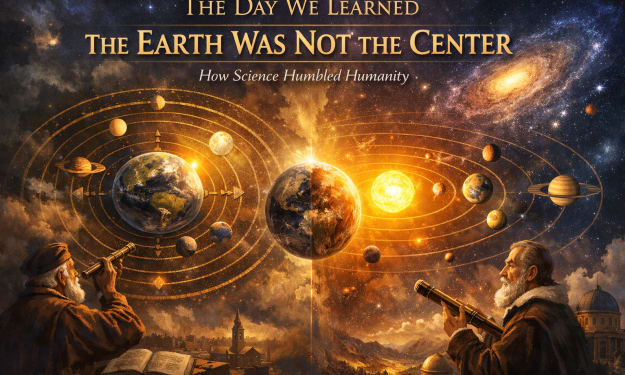
The Day We Learned the Earth Was Not the Center
For thousands of years, humans believed they stood at the center of everything. The sky revolved around us. The stars existed for us. The universe, vast and mysterious, was thought to circle the Earth like a grand stage designed for human life. This belief wasn’t just scientific—it was emotional, spiritual, and deeply personal. To say Earth was the center meant we mattered most. Then one day, science quietly but firmly changed that story forever.
By Aiman Shahidabout 12 hours ago in Confessions
How, Too
Many people wonder how, too. You are not alone, and I am an expert. I will teach you how, too! First, you need to remit a small application fee and fill out an application describing the nature of your financial situation and how often payments will be made, as this will have great bearing on how well I teach you how, too.
By Harper Lewis5 days ago in Fiction



Comments
There are no comments for this story
Be the first to respond and start the conversation.