
When Being “Strong” Becomes a Silent Prison
Why society praises resilience but ignores the cost of emotional suppression
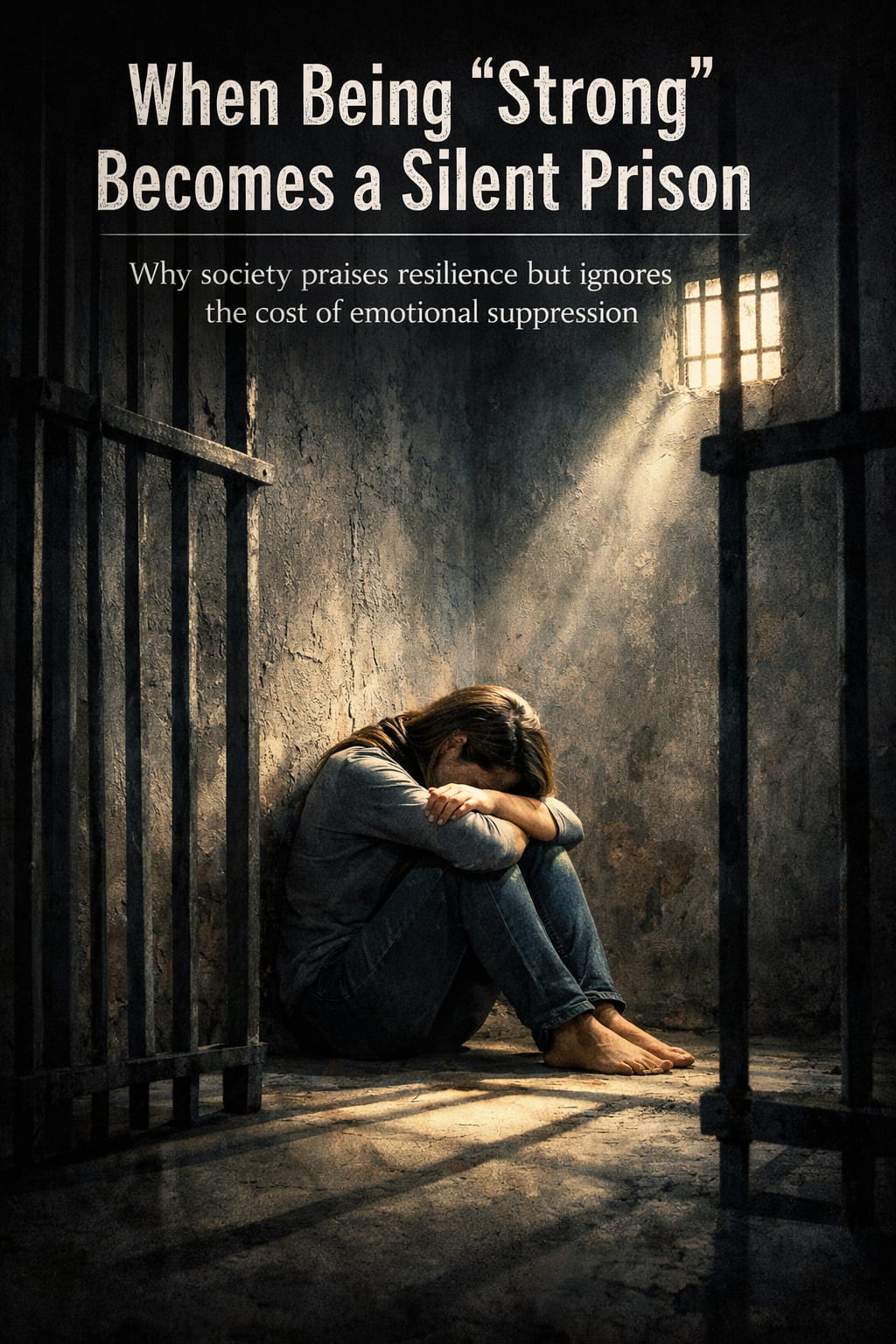
Strength is one of the most celebrated traits in modern culture. We admire it. We reward it. We build entire identities around it. From a young age, many of us are taught that being strong means not crying, not complaining, not slowing down. Strength means enduring. Strength means surviving. Strength means carrying on, no matter how heavy the weight becomes.
But somewhere along the way, strength stopped being empowering and started becoming a cage.
For many people, especially those who have learned to endure hardship quietly, strength is no longer a choice. It is an expectation. A role. A mask that cannot be removed without consequences. And what the world often fails to acknowledge is this: being strong all the time can become a silent prison.
The Early Lessons of Strength
Most people don’t wake up one day and decide to suppress their emotions. It usually starts early. Maybe it began in a household where vulnerability was unsafe or unwelcome. Maybe it came from watching a parent hold everything together without ever falling apart. Maybe it came from being praised only when you were “mature for your age,” “easy to handle,” or “never a problem.”
Strength, in these moments, becomes a survival strategy.
You learn quickly that emotions are inconvenient. Tears make people uncomfortable. Anger causes conflict. Fear invites judgment. So you adapt. You swallow what you feel. You learn to be composed. You learn to be reliable. You learn to be strong.
And at first, it works. Being strong earns approval. It makes life smoother. It keeps things from falling apart.
But survival skills are not the same as healthy coping mechanisms. What protects you in one phase of life can imprison you in another.
When Strength Turns Into an Identity
Over time, strength stops being something you do and becomes something you are. You are the dependable one. The calm one. The one who handles things. The one others lean on. The one who doesn’t break.
This identity is intoxicating because it feels valuable. People trust you. People admire you. People need you.
But it’s also dangerous.
Once strength becomes your identity, vulnerability starts to feel like failure. Asking for help feels like weakness. Admitting you’re struggling feels like betraying the version of yourself everyone expects you to be.
So you keep going. You keep carrying. You keep showing up with a composed face while chaos brews quietly inside.
The world sees your strength. It does not see the cost.
The Hidden Cost of Emotional Suppression
Emotions do not disappear when ignored. They don’t evaporate because you’re busy or productive or responsible. They settle. They sink. They accumulate.
Suppressed emotions often resurface in subtle, destructive ways. Chronic exhaustion. Irritability. Anxiety with no clear cause. A constant sense of heaviness. Emotional numbness. Difficulty sleeping. Sudden waves of sadness that seem to come from nowhere.
For some, the body begins to speak when the mind is not allowed to. Tension headaches. Digestive issues. Tight chests. Shallow breathing. Burnout that rest alone cannot fix.
Being strong teaches you how to endure pain, not how to process it. And pain that is not processed does not heal—it fossilizes.
The Loneliness of Being “The Strong One”
There is a unique loneliness that comes with being perceived as strong. People check on those who look fragile. They rally around those who fall apart publicly. But the strong ones are often overlooked.
You become the last person anyone worries about.
Friends assume you’re fine because you always are. Family assumes you can handle it because you always have. Even you begin to assume you don’t deserve support because others “have it worse.”
So you carry your struggles quietly, telling yourself you’ll deal with them later. But later rarely comes.
Strength, when it becomes silent endurance, isolates you from genuine connection. Because connection requires being seen fully—and strength, as it’s often defined, hides the parts of you that need care.
Why Society Rewards Silence
Modern society is deeply uncomfortable with vulnerability. We prefer neat narratives of resilience over messy stories of healing. We praise people for “pushing through” but rarely ask what they’re pushing through or what it’s costing them.
Social media amplifies this. We see curated versions of strength—people thriving, hustling, glowing despite adversity. Pain is allowed only if it’s inspirational, brief, and neatly resolved.
There is little space for ongoing struggle. Little patience for healing that takes time. Little reward for honesty that disrupts productivity.
So we learn to perform strength. To package survival as success. To hide the cracks so the system can keep moving.
And in doing so, we normalize emotional imprisonment.
Strength vs. Safety
True strength is not the absence of vulnerability. It is the presence of safety.
Safety to speak without being dismissed. Safety to rest without guilt. Safety to ask for help without shame. Safety to fall apart without being abandoned.
Many people are strong because they had no choice. They learned resilience because softness was punished. But strength born from necessity is not the same as strength chosen freely.
When strength is forced, it becomes a burden. When it is chosen, it becomes empowering.
The difference lies in whether you are allowed to be human.
Unlearning the Need to Be Strong
Letting go of compulsive strength can feel terrifying. If you’ve built your entire identity around being capable and composed, vulnerability feels like standing without armor.
You may worry that people will think less of you. That you’ll lose respect. That you’ll become a burden. That things will fall apart if you stop holding everything together.
But unlearning does not mean collapsing. It means recalibrating.
It means allowing yourself to feel without immediately fixing. It means admitting you’re tired without justifying it. It means asking for support before you reach breaking point. It means recognizing that rest is not a reward—it is a requirement.
This process is slow. Awkward. Uncomfortable. And deeply human.
Redefining Strength
What if strength looked different?
What if strength meant honesty instead of endurance? What if it meant saying “I’m not okay” without needing to explain? What if it meant setting boundaries even when it disappoints others? What if it meant choosing rest over relentless productivity?
Real strength is flexible. It adapts. It knows when to push and when to pause. It includes softness, emotion, and self-compassion.
Strength that allows vulnerability does not make you weaker. It makes you sustainable.
Leaving the Silent Prison
You don’t have to stop being strong to be free. You just have to stop being silent.
Freedom begins with small acts of permission. Permission to feel what you’ve been ignoring. Permission to speak what you’ve been carrying. Permission to need what you’ve been denying yourself.
It begins with understanding that you were never meant to hold everything alone.
Being strong kept you alive. It helped you survive. But survival is not the same as living.
You are allowed to want more than endurance. You are allowed to want peace, softness, and care. You are allowed to step out of the prison you were praised for surviving.
Because strength should not cost you your humanity.
About the Creator
Keep reading
More stories from Aiman Shahid and writers in Confessions and other communities.
When Silence Becomes a Survival Skill
Silence is often misunderstood. We tend to see it as weakness, avoidance, or fear. In a world that celebrates loud opinions, bold personalities, and constant expression, staying quiet can look like surrender. But for many people, silence is not a lack of courage—it is a learned survival skill.
By Aiman Shahida day ago in Confessions
How Codependent Relationships Harm Mental Health And Emotional Independence Overtime
Characteristic of codependent relations is over dependence on a partner emotionally, which is usually done at the cost of the self and personal needs. One partner would assume ownership of the emotions of the other partner, and the other partner would go as far as to ensure that their emotions are always validated or supported. This relationship leads to an imbalance in which self-worth is regarded as being tied to the relationship as opposed to internal stability. The desire to please or control the feelings of the other person always affects one in the long run because of anxiety, stress and emotional exhaustion. The initial stage in learning the impacts of codependency on mental health is recognizing its existence.
By Willian James4 days ago in Confessions



Comments
There are no comments for this story
Be the first to respond and start the conversation.