
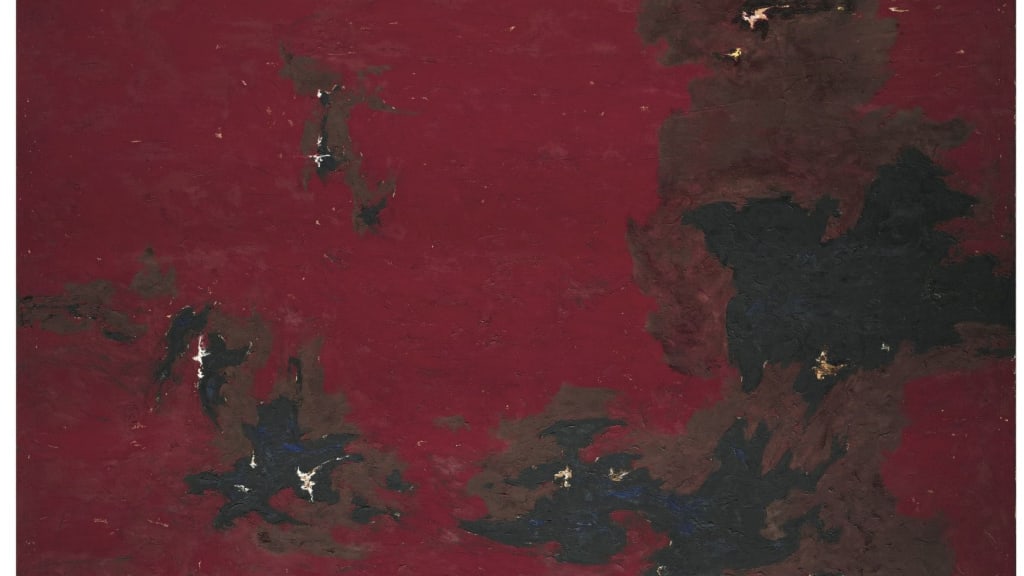
At my job we get a lot of mail that has been rejected. We send it on, but sometimes it just keeps getting sent back. Sometimes when it goes undelivered for more than a few years, we read it. It is a perverted habit, perhaps, but not without its rewards. In any case this letter was worth the while. It contained a large script of tightly folded paper of a quality I had never seen, and a small pink flower, crushed as if by a boot. Written on the envelope in brown ink were the words:
I wrote this one night in a dream. I ask that you forgive me.
I publish it here in full.
Dear Alicia,
Before I confess I have a question to ask you. Have you ever fallen in love with a story? If you know the feeling I know you will not find this hard to understand. I cannot promise your task of judgement will be easier. As you know I have spent the week in Paris. All around Paris, London and Turin, tiny tornadoes have been tearing up the streets. They come like dogs in the night, shattering theatres and ripping up trees. In fact I do not believe the city will last long. I have been living with my brother at a shelter beneath a row of turquoise houses. Everything there is matted with a black ivy like a woman’s hair, except it blooms at night with pink flowers for which I do not know the name. I have enclosed one here in the letter to you. I hope it has kept its fragrance.
Business has been bad. In fact it has barely begun. There is little to do for a paper maker in a city of storms. Everything seems to be made of paper. It seems the only material. I have taken to walking the streets at night. My favourite path is to take the lower slopes of some great hill at night, when the lamp light has lit everything golden. I walk such routes so often now, I have made them feel like home. Then one can pretend that the rubble is merely a prop, like regrettable furniture.
I saw her first in a place such as this. Some art museum had been strewn across the street, marbles and all, creating a bottleneck where the road converged to a single path. As we were walking in parallel on opposite sides of the street, I hastened to take this path first. Coming to the narrow passage, however, I saw there was no way through, and so turned as if to suggest I had mistaken my way. Though regarding this she took the same path I had, and as I doubled back I could see that she encountered no resistance, indeed there had never been one. I followed just in time to catch her eye.
“C’etait n’est rien,” I said, and she smiled.
In my head she is wearing a white shirt, plain blue trousers, and a jacket subtly woven with a pattern of leaves.
“That is a woman of class,” I remarked to my brother. “She will not talk to the likes of us.”
We continued a short while, speaking, as was our manner, of everything but the weather. There was only one road, now, straight back to the shelter. We paused on the bridge, enjoying the gentle air.
A voice spoke behind me.
“I’m sorry, I wanted to ask you a question. You look like a cultured man. I was wondering if you could recommend a film.”
I turned to look at the woman. For some reason I find now I cannot describe her. In my head she is small, with a large face and head, and isn’t wearing the same clothes she was before — she is wearing a nightdress now, with a black shawl and wiry sandals. I thought hard, but i could not think of a single movie. To make matters worse my brother had vanished. Something about cleaning an abacus, I forget what exactly. He might as well have been torn up by one of the tornadoes. I stood before her alone.
“The Italian Job,” I said.
She nodded, as if to say, I thought as much. She made to walk away.
“By way of thanks, perhaps I could watch it with you?” I spoke the words without thinking. They seemed uttered by my lips.
“You could,” she said, “Though we will struggle to find a cinema. We haven’t had power in the city for weeks: the lamps are lit by the fireflies now, who once flocked to them for their light.”
If her request appeared odd by this new light I did not dispute it. We lingered on the bridge, saying nothing.
“It is not romantic, all these screams. This background music of weeping.”
I nodded. We listened to the wind.
“I have a secret,” I confessed, suddenly. “I like it. Not the screams. The rubble. It's like a release. Squalor is a great release from life. It's kind of like an all-purpose excuse. It’s like a bath.” I was gabbling like a child. I don’t know what was pulling such words out of me.
“So that is what the tornadoes mean to you? I admit I find the streets more beautiful now. Like tousled hair. It seems like the city has found a new equilibrium not bound by order. Something to call it's own it didn't have before. It is really quite rebellious, in a way. All tidy places look the same.” She paused as if to find her thoughts confirmed by the ripples. “If we have nothing better to do, shall we head to the Rue de Castille? There is a wine library there on the seventh floor of an old hotel, and we can take a view across the city.”
“Is it nearby?”
“It was. It may not be there when we arrive.” She laughed at this, and took my hand. I laughed, too.
We walked for some time through the empty streets of Paris holding hands. Her hands were tiny. They sat in mine like pebbles. I still cannot think if she was pretty - she seemed only to me to be perfectly formed. Her shoes made little skips on the cobblestones, as if we were children again.
“Sing to me,” I said, swinging on a lamp post.
“What of?” she replied. “It will hardly be heard in the storm.”
“I don’t care,” I said. “Sing me something from your childhood, something you’ll regret.”
The wind ripped a few bricks from a facade a few blocks down, and they crumbled to the ground, dissipating into dust.
“Okay,” she replied. She struck up an aria with her whistle. It was a familiar tune, though I cannot recall how I had heard it before. At length, I joined in. We whistled together, moving through the streets alone.
“Do you think people perform miracles?” I asked her, in a playful mood. “Or just children?”
“I think people can and often do,” she replied, “Only they have forgotten to call them miracles. They use dull language. It’s like they blaspheme against themselves.”
“I wouldn’t go so far as that.”
“Well, maybe you wouldn’t. But blasphemy is always a question of words.”
She pointed her hand to the Rue de Castille, where chairs from the coffee shops lined the street like families out for Mardi Gras.
“It is like el Día de los Muertos,” she said.
I concurred, though the thought was not my own. I touched a chair with a finger across the dust, as if in tribute to a body. I offered my other hand to help her ascend the rubble.
“Do you think this is an accident?” I asked. “Or were these chairs put here to die?”
“I think it is noble that they should form a sort of jungle. It is what the trees would have wanted. It must be splendid, having supported for so long, to impede.”
With this she took a leap from the pile of rubble, to land on the other side. I observed that the plastic weaving which was the construction of so many chairs in Paris had been ripped out from each of them, as if with a knife, and left no traces. I followed her over the white boulders of debris. An eye caught mine from a fissure. There were small, cherubic faces buried amongst the scrap, carved in stone. I shuddered.
“Are you married?” I asked.
“Are you?” she said, as if by way of answer.
“I was married in London,” I replied.
“I may be married at another time, too. I shouldn’t think it prevents things.” The words emerged in perfect keeping with her step. “A moment is too quick. One moment, and it colours everything else, when we live so much outside marriage. It seems a waste to fret about it. Or maybe it is just that it promises too much.”
“It may seem that way to you.” I said. “You are not in love.”
“You are not in love,” she replied, “Or you would not fear these tornadoes that roam through the streets.”
As she said this I realised with a start that I did not.
We came to the vault of the Hotel de Sartre. The winds like brigands had whipped the facade bare, and the scarlet awnings were tattered like a prostitute’s dress. The metal framework still remained, its mascara chipped and rust-flecked. The glass door was fashioned in the appearance of symmetrical spider webs, or perhaps it was just the cracking. The door swung open like it had never been locked.
“Are you to accompany me through the entrance,” I asked her, “Or are you like the man I thought was my brother, and will leave me when I turn my back?”
“I am not like your brother,” she replied, as she stepped inside and gestured to me to follow. “I have no siblings myself.”
“I thought you had a big family in Mexico?”
“I thought I did. But it turned out that they were fake, too. My real father lived in Palo Alto, in a dilapidated mini flat across from a motel and water park. I loved it.”
“What brings you to Paris?”
“What else? I wanted to see the tornadoes for myself.”
We walked up the velvet staircase together. She led, looking back from time to time in case I should lose my nerve and flee. At intervals I would look out of the large arched windows at the town, where tornadoes rolled like fingers through the streets. I envied their precision.
She came to a door and put her arm across it.
“Are you a great lover?” she asked. “I want to know before we watch The Italian Job.”
“One must be a great lover to appreciate great art,” I said, and smiled.
“Is the taste in art then same as the taste in sex? You like fast cars, big money, pretty women. I wonder if that is the same thing as taste.”
“I like intimacy,” I replied, “In strange places. It is a habit of mine. Perhaps you could call it a fetish. You do not know it yet, but there is a scene in the Italian Job in Turin where they are planning the heist. I forget if it is Caine or the other. It seems as if they are simply walking around. They visit the Museo Egizio, you know, and look at the Bembine tablet, and the ostracon of Sethherkhepshef. They take tea at the Caffé Fiorio, and talk about childhood, and gossip, and note the rhododendrons. To a casual observer they seem to be doing nothing. They are just walking around, holding hands and talking of coffee spoons and the price of sugar. The entire reality is beneath the surface, like a sunken city. It was the most beautiful thing I had ever seen. I would not know how to love without it.”
“How does it end?”
I could not remember, so I answered, “With a tornado.” I felt like filth.
I do not know why I write these words knowing that you will see them. It makes me feel like a voyeur of my own discomfort. Of course, I couldn’t bear it if you didn’t. So I am stuck back in the spider’s web. Perhaps there was a time when I could not have written them. I could have escaped the maze. But angels are always still, and silent, and devils full of boisterous enthusiasm. It seems like the only thing I have learnt from my past. It strikes me that none of this may reach you. What then? All noise is airflow, isn’t it? "I will forgive you, if you will forgive me." All noise is like the wind.
Yet I find in my mind I am still continuing up that corridor, behind her, her hand reaching back to mine like a rudder. I forget which room on the corridor it was. All the doors had been blown off by storms. Inside the back wall had been ripped off to expose the city, and the curtains rippled out into the void like flags. The roar of the tornadoes was unbearable. There was nothing in the space but the carpet, which had once been luxurious, as well as a few books and a mattress.
“This is where I sleep,” she shouted, indicating at the mattress.
“Do you not mind the draught?”
She smiled at me. Then she took me in her arms and kissed me. At first it was difficult, me being as tall as I am. I regretted that we did not have one of the settees we had seen on the road. In my head, I was gathering a settee. My hands were on her waist.
At last we stopped and she beckoned me to sit with her. We sat on the mattress, dangling our feet over the edge of the city. The tornadoes were little more than two streets away, but the noise was not so bad.
“Do you remember when we plundered a shop?” she said. “And I said do not give me pomegranate seeds, or I will never be able to go from your side.”
“I do. I should have given you the pomegranate seeds.”
“Do you think after this night, you will ever be able to do anything to change it?”
“No, I think it will exist in this form always. I will never do anything to change it.”
“Is it like a storm, then, or like a city?”
“It is like a balustrade,” I replied, “Lying in the street.”
I kissed her hard, my fingers in her hair, her arms interwoven with mine. Her lips were hot, like fruit. In the background the tornadoes waged their petty wars.
“Who is a god to us,” I asked her, and kissed her.
“The storms are not our gods,” she replied, and kissed me. “They are too rectangular. A god should be diagonal, I have always thought, like a willow tree on a hillock. Of course the trees cannot be gods either.”
“Might they shape us into gods? The winds, that is.”
“They might. Or they might do the same to us that they did to this wall. Maybe that makes them gods, not caring whether their creation is beautiful or not. It just comes straight from the sky.”
“And you cannot stop them,” I said, leaning my face towards hers.
“Oh, I can stop them,” she said, leaning her face towards mine.
We lay down on the bed, with our arms around each other. The wind whistled a symphony around us, and the curtains seemed to be clapping. The city was a stage I didn’t see. All the actors had long fled.
“How do you keep a secret?” I asked her, drawing my hand up to her breast. “I have always wanted to learn.”
“You create for yourself a maze,” she replied, drawing her hands downward, “from which the secret may never leave. You hunt it in the body of a beast around the streets of your own creation. Finally, you see it exhausted, sheltering beneath a bush. You go up to it — but no, you do not expose it, you do not give it the grace of a petit mort. You walk straight past and out of the maze.”
“Where do you go next?” Her lips were right against mine, her breath a whisper.
“That’s the secret. You never do leave the maze. You go to some hidden room, inside the maze, but unknown to it, where you can rest and live freely and eat as you please.”
“You hide your location from the secret?”
“Yes. Not quite so special now, is it?”
At these words I was consumed by lust. I pounced upon her like an animal, and tore off her overcoat and shawl. My hands moved across her like the wind. I could hear nothing but the storm of my own breathing, my thrusts reducing to rubble. She consented, quietly. Her eyes never left the sky behind me. Realising this at length, I withdrew, clumsily and apologetically. She said nothing. The voice of the wind was opaque.
“What is the purpose of our life together?” I asked her. I put my hand to her chest. She put her fingers to my face.
“The purpose of our life is love,” she said. “That much cannot be a secret. I feel like you have found me out at last. But I would like to go to sleep now.”
She rolled over away from me as if to sleep. I lay back stunned. I could not believe it. Lovers without — I had no other language for it. I stared at the ceiling, and realised for the first time that this was the penthouse flat, and there was no ceiling, and it was probably the cause of the rubble I had seen earlier in the street. I took slow breaths. I started to doubt everything she had said. No brother! We had been raised together from the womb, in the pear orchards in Sicily. He was more than my brother, he was my soul mate. We had split pears at the top of mountains and laughed over nothings. We used to hunt the six-barred wrasse with fishing spears. We had once found a goat, injured, and killed it without pain. To say he did not exist! To make it so that he did not! I turned to her in fury.
“I cannot sleep,” she said, with the winds upset behind her. I forgave her at once, as one would a child.
I thought for a moment, watching the tornado moving towards us with an air of the end. “When I cannot sleep, I wonder if that is because I already am. I feel we might wake up suddenly, and find that we have been lost in it like a film, or a book. Do you ever think that this might all be a dream?”
“The tornadoes? I think they most definitely are. A metaphor for something.”
“What for?” I took her hand unsurely.
“For spiders, maybe. I love to dream of spiders - big black ones, with fat bodies like plums, that hide in gardens beneath flowers. Or death. There was lots of death in the village.”
“For me I think it is work. I can never seem to find it, and when I do, it slips from my fingers like the wind. Holidays such as this are no relief. But it is nice for it to chase me, for a change.”
She looked unconvinced. The tornado was now at the end of the road, fat and bristly like a spider’s leg. Behind a fog had settled over the city. At the edge it was tinted blue by dawn.
“I am too tired to run,” she said, at last. “Shall we fight it?”
I look down at my hand in hers, as if to say, “with what?” — but her hand is on my lips, and her lips are on mine, and my hand is on her back, and my lips are on hers.
My eyes were shut, of course, but I felt the tornado move over us, and dissipate its force.
When I woke up in the morning she was gone. I spent a long time that day on the balcony, looking over the city for tornadoes. There were no tornadoes. It did not seem that there had ever been. The city simply had its old, weather beaten facade. The chairs sat at cafes at regular intervals. Trees stood at perpendicular angles to the ground. Really, Paris is much prettier in a storm. We must visit together when you are done. This is to say, I ask for your forgiveness. Whether she was real or not, I believe we made love. That is as real to me as the sky. I will never be able to forgive myself. In my defence I did not learn from her to keep it a secret. In my defence, I know I will forget it. Forgetting what is important seems to be the manner of the world. But then I have always thought you were above that. Perhaps I merely needed to write this down. I pray you do not tear it up.
Yours through anything,
Charlie
About the Creator
Keep reading
More stories from writers in Confessions and other communities.
Word of the Day: ホチキス
I don't know the word for Staples. I remember I used to think that Hochikisu was an Onomatopoeia for a stapler rather than a brand name. I am pretty sure I already have this title as a theme, which is making me feel many sort of ways as Vocal is harassing me about payments currently.
By Kayla McIntosh23 days ago in Confessions
I Was Almost Forgotten by Life, Until I Chose to Remember Myself
Story There was a time in my life when I felt invisible. Not the kind of invisible where people accidentally overlook you, but the kind where it feels like the world has already decided you don’t matter. I walked through my days quietly, carrying thoughts I never shared and dreams I didn’t dare to speak aloud.
By On that6 days ago in Confessions
Silver Screen Magic with Mae West
American actress and singer Mae West became a popular film actress during the Great Depression. She started entertaining in vaudeville, then performed on Broadway, and finally went to Hollywood. She signed up with Paramount Pictures and made her debut in the 1932 film “Night After Night.” She also starred in musicals, comedies, and crime dramas. The American Film Institute named her one of the best classic Hollywood actresses.
By Rasma Raisters6 days ago in Geeks
Rachel Reviews: The Spiral Archive by Pieter Hendrik
It's difficult for me to know where to start with a review of this book as it was, for me, an entirely unique experience and one that I'll probably never have again. I don't want that to be interpreted as unenjoyable but it has left me scratching my head a little and ruminating on its content, its themes and its characters.
By Rachel Deeminga day ago in BookClub


Comments
There are no comments for this story
Be the first to respond and start the conversation.