
Timeless Stories of Allama Iqbal: The Poet Who Inspired Nations
A collection of rare and powerful anecdotes from the life of Pakistan’s national poet, philosopher, and visionary.

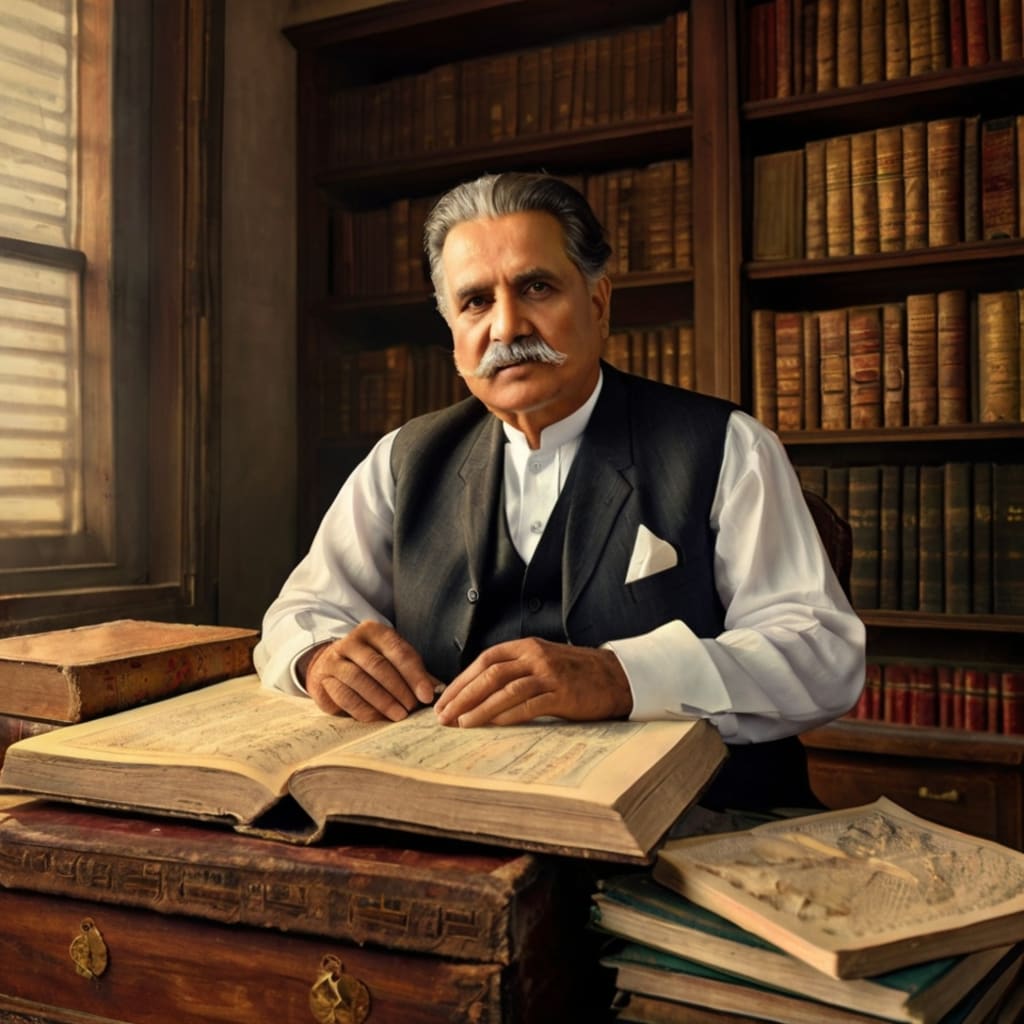
The Timeless Stories of Allama Iqbal
BY: Ubaid
Allama Muhammad Iqbal, the national poet of Pakistan, was more than just a poet. He was a philosopher, thinker, visionary, and above all, a man of deep humility and spiritual strength. His life was filled with remarkable incidents that continue to inspire generations. Here are some timeless stories from his life that reflect his wisdom, simplicity, and greatness.
---
The Deer Skins at Raja Narendra Nath’s House
Once, Raja Narendra Nath invited Allama Iqbal to a gathering at his residence. When Iqbal entered the room, he noticed that deer skins were spread across the floor. Instead of walking over them, he carefully stepped aside and avoided touching them. Puzzled, the Raja asked why. Iqbal smiled and replied,
"Sitting or walking upon deer skins unknowingly instills arrogance in man."
The Raja was astonished by the depth of this remark and stood silently, deeply moved by Iqbal’s insight.
---
The Famous “Complaint” Poem
In 1911, during the annual session of the Anjuman-e-Himayat-e-Islam in Lahore, Iqbal recited his famous poem “Shikwa” (The Complaint). His father, Sheikh Noor Muhammad, was also present, silently watching his son’s brilliance and rising fame. The hall echoed with applause. Overcome with admiration, a devoted admirer, Khawaja Safdar, placed his expensive shawl over Iqbal’s shoulders. Yet Iqbal, in his humility, immediately handed the shawl to the organizers of the Anjuman, requesting them to auction it for charity. The shawl was sold to the highest bidder, and the proceeds were donated to the Anjuman.
---
The Nobel Prize Question
One day, a group of students came to meet Iqbal and curiously asked,
"Why were you never awarded the Nobel Prize?"
Their reasoning was simple—if Rabindranath Tagore, the great Bengali poet, could receive the Nobel, why not Iqbal?
Iqbal listened patiently and then replied with a smile,
"If I had received the Nobel Prize, people would have questioned what I had done to deserve it. But since I did not receive it, that question does not even arise."
His answer left no room for further debate, reflecting his wisdom and detachment from worldly honors.
---
The Cigarette as a Relic
Once, while traveling by train to Lahore, Iqbal met an elder from the Kakayzai family. Overjoyed at meeting the Poet of the East, the elder accepted a cigarette from Iqbal but instead of smoking it, he carefully put it in his pocket. Surprised, Iqbal asked why. The elder replied,
"This cigarette is a sacred relic. I will preserve it for my family."
Iqbal smiled warmly and offered another one, but the elder placed that too in his pocket instead of smoking it. Iqbal chuckled and let the moment pass.
---
A Meal with a Mughal Prince
During his visit to Hyderabad Deccan, Iqbal stayed as a guest of Maharaja Sir Kishen Pershad. While there, a Mughal descendant, dressed in old-fashioned attire, came to meet him. He humbly invited Iqbal to his modest home for a meal. Despite the simplicity of the invitation, Iqbal graciously accepted. When he arrived, the prince welcomed him at the door and, overwhelmed with emotion, recited a poignant verse of Mirza Zauq:
"At the moment of death, to see one’s beloved is like Eid."
Hearing this, Iqbal’s eyes welled with tears as he reflected on the fallen grandeur of the Mughal dynasty.
---
A Poet in Simplicity
One day, Iqbal sat in his verandah dressed in a simple vest and dhoti, smoking his huqqa while chatting with friends. Two tall soldiers, likely from northern Punjab, entered quietly and sat down. After some time, one of them whispered to a guest, asking,
"Where can we find the great poet and philosopher, Sir Dr. Allama Iqbal?"
At this, the entire gathering burst into laughter, including Iqbal himself. The soldiers were astonished to realize that the great philosopher they sought was the very man sitting humbly before them in such simplicity.
---
Standing Before the Viceroy
Before the creation of Pakistan, the rulers of princely states were under the authority of the British Viceroy. Once, the Nawab of Bahawalpur sought Iqbal’s legal help against a Prime Minister imposed on his state by the British. Iqbal agreed to represent him and traveled to Delhi. When he reached the Viceroy’s office, the secretary asked him to register his name in the visitor’s book. Iqbal refused, saying,
"If the Viceroy wishes to meet me, he will do so after seeing my card. If not, I will return."
The secretary had no choice but to present the card. The Viceroy agreed to meet Iqbal. With great logic and courage, Iqbal persuaded him to remove the Prime Minister and appoint someone acceptable to the Nawab. So impressed was the Viceroy that he invited Iqbal to dinner. But Iqbal politely declined, saying he must return to Lahore that very day. Such was his confidence and independence, even before the British rulers.
---
The Mysterious Midnight Guest
Iqbal’s loyal servant, Ali Bakhsh, once shared a strange incident. Late one night, he noticed Iqbal restless in bed. Suddenly, Iqbal got up and opened the door facing McLeod Road. To Ali Bakhsh’s astonishment, a noble-looking man in shining clothes entered. Iqbal respectfully seated him on his bed and began pressing his feet. When asked what he would like, the guest requested a glass of buttermilk. Ali Bakhsh was confused—where could he find buttermilk at midnight? Yet as he stepped outside, he saw a market he had never seen before. A milkman handed him fresh buttermilk, saying, “Our accounts with Allama Sahib are settled.”
Ali Bakhsh returned, and the guest drank two glasses before asking Ali Bakhsh to drink the third himself. Soon after, the mysterious guest left. When Ali Bakhsh followed, both the guest and the entire market had vanished. Later, Iqbal revealed to him that the noble guest was none other than Hazrat Khwaja Moinuddin Chishti (R.A.), and the milkman was Hazrat Data Ganj Bakhsh Ali Hujwiri (R.A.).
---
A Legacy Beyond Words
Allama Iqbal’s life was not just about poetry or philosophy. It was a reflection of humility, spirituality, and courage in the face of power. His simplicity inspired those around him, while his wisdom left even rulers speechless. These stories are more than historical anecdotes—they are reminders of a man who lived with dignity, loved his nation, and continues to inspire generations across the world.
About the Creator
Keep reading
More stories from Ubaid and writers in Confessions and other communities.
The Golden Vase and the Secret Letters from Fairyland
The Golden Vase and the Hidden Treasure By Ubaid Maryam’s younger brother, Soheil, was a dreamer. While she—wise beyond her years—studied diligently in the eleventh grade, Soheil, only in ninth, often drifted into a fantasy world. He was convinced that one day some saint, magician, or fairy would reveal the secret to a hidden treasure that would make him the richest man alive. Hard work was never part of his plan.
By Ubaid 4 months ago in Confessions
I Missed the Meeting, But the Fire Cats Stayed
I’m sitting here watching a strange video—three orange cats, neon-bright, glowing like embers. The number 333 keeps flashing on the screen, and for some reason it feels intentional, like the universe is tapping me on the shoulder instead of shaking me awake. The sound from the TV hums softly, almost like a bonfire crackling on a beach. Fire cats. That’s what they are. I don’t know why that comforts me, but it does.
By Jhon smith5 days ago in Confessions



Comments