
The Weight of Expectations: Why Chasing Others’ Approval Keeps Us from Living Our Truth
How Letting Go of External Validation Leads to Authentic Freedom and Inner Peace
Introduction
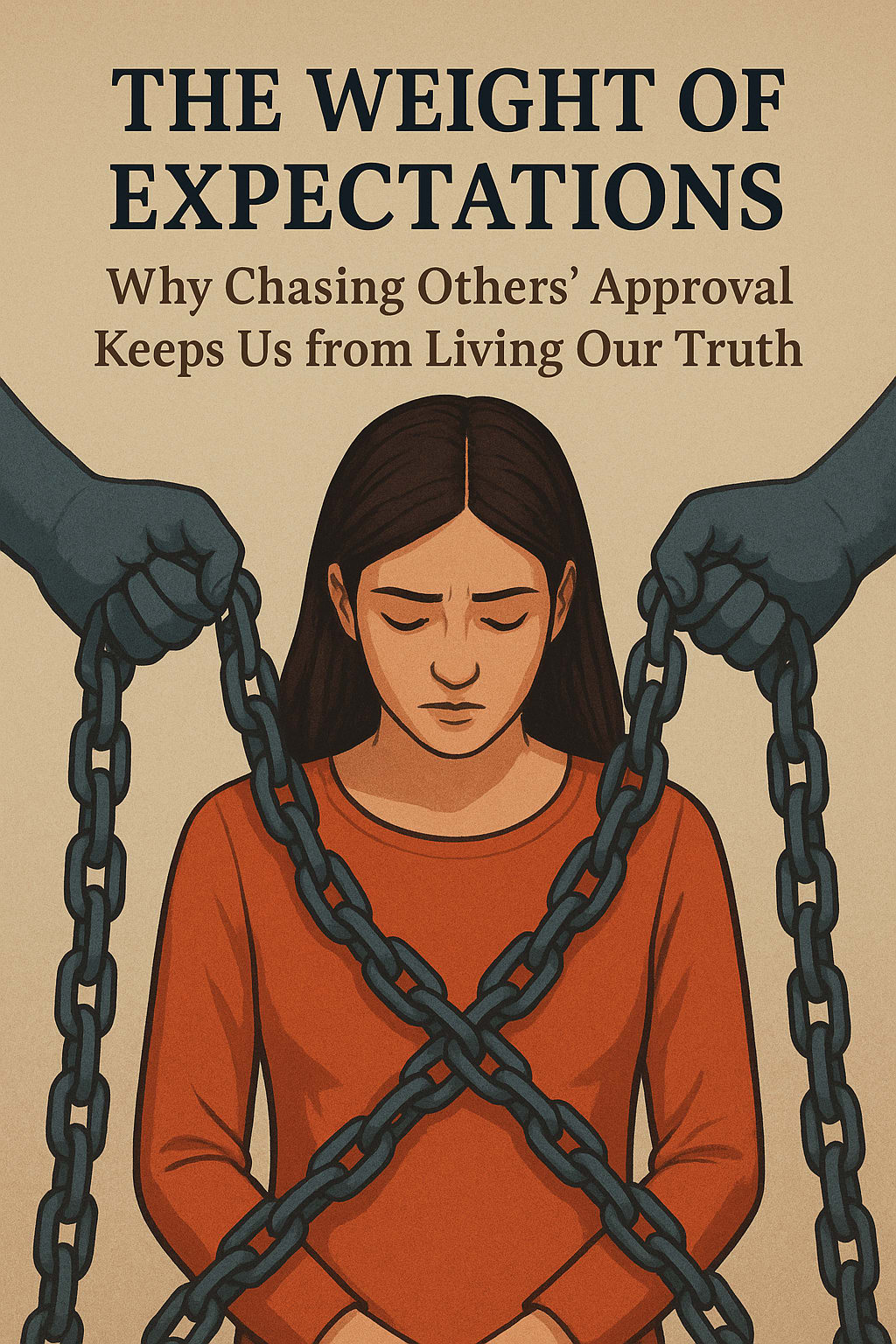
From the moment we’re born, expectations surround us like invisible threads, weaving into the fabric of our identity. Parents expect us to behave a certain way, schools expect us to achieve, peers expect us to fit in, and society expects us to follow its script for success. These expectations can be motivating, shaping us into disciplined, capable individuals. But they can also weigh us down like chains, keeping us from pursuing the life we truly want.
Chasing approval is a deeply human instinct—rooted in our evolutionary need to belong to a group. Yet in the modern world, this pursuit often goes too far, leaving us exhausted, anxious, and disconnected from our authentic selves. We measure our worth by likes on social media, performance reviews at work, or whether our choices meet the standards of others. But in doing so, we risk losing sight of who we are and what truly matters to us.
This article explores why the weight of expectations is so heavy, how it keeps us from living our truth, and most importantly, how we can begin to release it to find authentic freedom and inner peace.
The Subtle Trap of Approval
At first glance, chasing approval doesn’t seem harmful. After all, wanting recognition can inspire us to work harder, behave kindly, and strive for excellence. But the danger lies in letting external validation dictate our sense of self-worth.
Approval becomes a trap when:
We silence ourselves: Instead of expressing our real opinions, we say what others want to hear.
We compromise our values: To gain acceptance, we make choices that conflict with our deepest beliefs.
We lose clarity: When every decision revolves around pleasing others, we stop asking what we actually want.
We live in fear: Criticism feels unbearable, so we shrink back, hiding our authentic selves.
The trap is subtle because society rewards approval-seeking. Students get praised for conforming. Employees earn promotions for fitting into corporate culture. Influencers grow audiences by giving people what they expect. But beneath the applause, there can be an emptiness: the haunting sense that we’re living someone else’s life.
The Psychological Cost of Expectations
Carrying the weight of others’ expectations is not just emotionally draining—it can take a serious toll on our mental health.
Anxiety and Perfectionism
Constantly striving to meet impossible standards can trigger chronic stress and anxiety. Perfectionism becomes a coping mechanism: if we can just be flawless, maybe we’ll finally be accepted. But perfection is an illusion, leaving us perpetually unsatisfied.
Imposter Syndrome
When our achievements are driven by external validation rather than inner passion, they can feel hollow. Even when we succeed, we may feel like frauds, fearing others will discover the “real us.”
Identity Crisis
If we’ve spent years chasing approval, we may wake up one day and realize we don’t know who we are. The career, relationships, or lifestyle we built might look “successful” on paper but feel disconnected from our true desires.
Resentment and Burnout
Meeting everyone’s expectations eventually drains us. We may start resenting the people we sought approval from—or ourselves—for allowing their approval to dictate our choices.
Why We Struggle to Let Go
If chasing approval is so damaging, why is it so hard to stop?
Evolutionary Roots
Our ancestors survived by staying in groups. Being accepted by the tribe meant safety; rejection could mean death. Today, rejection still triggers primal fear in our brains, even if the stakes are no longer life or death.
Cultural Conditioning
Many cultures reward conformity. From a young age, we’re told what “good” looks like—good grades, good jobs, good behavior. Straying from the script can bring judgment or shame.
The Illusion of Control
Approval makes us feel temporarily secure, as though we’ve found the secret formula for being loved. But this security is fragile, dependent on the shifting opinions of others.
Fear of Loneliness
At the heart of approval-seeking lies the fear of rejection and abandonment. We fear that if we live authentically, people may leave us. But in truth, living authentically helps attract people who truly belong in our lives.
Breaking Free: Steps Toward Living Your Truth
Escaping the weight of expectations doesn’t happen overnight—it’s a gradual process of unlearning and relearning. Here are some practical steps:
1. Identify Whose Expectations You’re Carrying
Not all expectations are harmful. Some are necessary (laws, basic social norms) or helpful (mentorship, constructive feedback). But many are arbitrary, rooted in other people’s insecurities or outdated traditions. Ask yourself:
Who am I really trying to please?
Do I even agree with this standard?
What would I choose if no one else’s opinion mattered?
2. Redefine Success for Yourself
Society often defines success in narrow terms: wealth, status, beauty, or productivity. Instead, craft your own definition. Maybe success means having time for creativity, cultivating deep relationships, or living simply. Write down your values and let them guide your choices.
3. Practice Disappointing People
This may sound radical, but learning to tolerate other people’s disappointment is liberating. You cannot make everyone happy, and trying to do so will only break you. Start small—say no to a request that drains you, or share an opinion that differs from the group. Each act builds resilience.
4. Seek Internal Validation
Instead of asking, “Do they approve of me?”, ask, “Am I proud of myself?” Keep a journal where you record daily wins, not for external recognition but for your own acknowledgment. Over time, this strengthens self-trust.
5. Surround Yourself With Authentic People
Authenticity is contagious. When you spend time with people who live boldly and honestly, you feel safe to do the same. Seek relationships where acceptance is unconditional, not based on performance.
6. Embrace Vulnerability
Living your truth requires courage. Vulnerability means showing up as you are, even at the risk of rejection. But paradoxically, vulnerability often deepens connection, because it invites others to be real too.
The Freedom of Living Authentically
Letting go of approval doesn’t mean becoming selfish or dismissive of others. It means balancing kindness with authenticity. When we stop living for external validation, we open the door to:
Inner Peace: No more constant second-guessing or fear of judgment.
Deeper Relationships: People connect with who we really are, not the mask we wear.
Greater Fulfillment: We pursue paths aligned with our passions and values, not just what looks good from the outside.
Resilience: Criticism stings less because our worth no longer depends on it.
Living authentically is not a one-time decision but an ongoing practice. Each day presents a choice: will I act from fear of rejection, or from alignment with my truth?
Conclusion
The weight of expectations is heavy, but it is not unshakable. Chasing others’ approval may feel safe, but it keeps us trapped in lives that don’t belong to us. The moment we start questioning whose approval we’re chasing—and why—we open the possibility of a freer, truer existence.
Yes, living authentically comes with risks. Some people may judge, misunderstand, or even walk away. But those who remain will love us for who we truly are, not who we pretend to be. And that love—rooted in truth rather than performance—is worth more than all the approval in the world.
In the end, the greatest approval we can seek is our own. To stand at the mirror, look into our own eyes, and know we are living a life that belongs to us—that is freedom.
About the Creator
Keep reading
More stories from Aiman Shahid and writers in Confessions and other communities.
The Joy of Missing Out: Why Saying No Creates Space for a Better Yes
Choosing rest, reflection, and intentional living over endless obligations In today’s fast-paced, hyperconnected world, the fear of missing out—often abbreviated as FOMO—has become a near-universal experience. Social media feeds overflow with curated snapshots of people seemingly living their best lives: vacations in tropical destinations, gourmet meals, professional milestones, and endless social gatherings. In response, many of us feel an invisible pressure to keep up, to do more, and to say yes even when our energy and time are already stretched thin.
By Aiman Shahid4 months ago in Confessions
The Last Day of the Year
My New Year Countdown Clock indicates that I have just over five hours left before this year is over. I am stuck in the suburbs with my mother and stepfather, contemplating what I am going to eat and drink to celebrate this great change in our lives. The weather is cold, but I do not feel as though it has really affected my attitude about what the new year will bring...but I am not as happy with this moment as I usually feel.
By Kendall Defoe 17 days ago in Confessions


Comments
There are no comments for this story
Be the first to respond and start the conversation.