
The Price of Perfection: Why Chasing Flawlessness Keeps Us from Living Fully
How Letting Go of Unrealistic Standards Can Bring Freedom, Joy, and Authentic Living
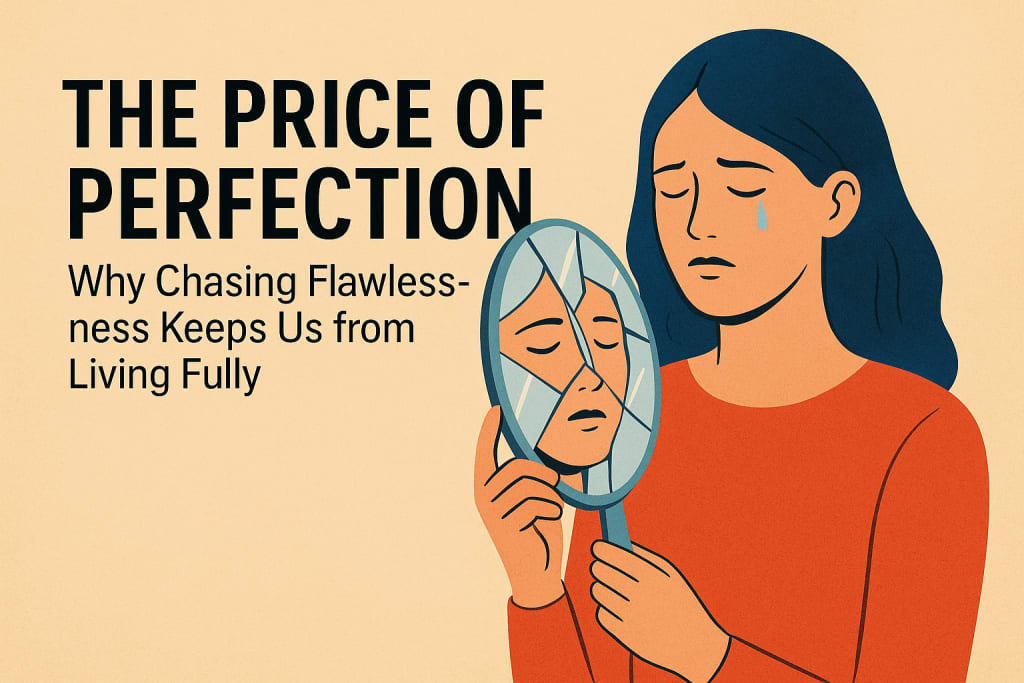
Perfection is one of those words that sounds beautiful on the surface. It suggests order, harmony, and excellence. But when perfection becomes the standard by which we measure our lives, it often brings more harm than good. The pursuit of flawlessness can leave us anxious, dissatisfied, and disconnected from the richness of real human experience.
In today’s culture—where social media highlights only the polished moments, workplaces demand peak productivity, and self-improvement has become a competitive sport—the pressure to appear “perfect” is everywhere. Yet striving for an unattainable ideal drains our joy, prevents us from taking risks, and distances us from authentic connections. True fulfillment rarely comes from living flawlessly—it comes from embracing imperfection with courage.
This article explores the hidden costs of perfectionism and why letting go of the need to always measure up can help us live more fully.
The Illusion of Perfection
Perfectionism thrives on illusions. On Instagram, we see curated lifestyles—flawless skin, clean kitchens, perfect vacations. In professional spaces, résumés and LinkedIn profiles showcase only the wins, rarely the failures. In relationships, people often feel pressure to look like the “perfect partner” or “perfect parent.”
The reality, of course, is much messier. Behind every “perfect” picture are unseen struggles, insecurities, and compromises. Yet when we internalize these images and compare ourselves to them, we end up chasing an illusion.
Psychologists define perfectionism as the tendency to set unrealistically high standards for oneself, combined with a fear of failure and constant self-criticism. It isn’t the same as healthy ambition. Ambition drives us to grow; perfectionism convinces us we’ll never be “enough.”
The Hidden Costs of Chasing Flawlessness
1. Mental and Emotional Strain
Perfectionists often live under constant pressure. Every task becomes a test of worth, every mistake a catastrophe. Over time, this leads to chronic stress, anxiety, and even depression. Instead of feeling satisfied when goals are achieved, perfectionists tend to immediately move the bar higher, fueling a cycle of dissatisfaction.
2. Fear of Failure and Missed Opportunities
When we chase perfection, the fear of making mistakes can paralyze us. Some people avoid taking risks altogether—turning down opportunities, staying in comfort zones, or never starting projects they dream about. Ironically, perfectionism often prevents us from excelling because it stops us from trying.
3. Strained Relationships
Perfectionism doesn’t just affect individuals—it spills over into relationships. Expecting flawlessness from others can create tension, disappointment, and unrealistic standards in friendships, families, or romantic partnerships. On the flip side, hiding our flaws out of fear of judgment keeps us from building genuine, vulnerable connections.
4. Burnout and Exhaustion
The constant striving to “do it all” and “do it perfectly” eventually takes a toll on the body. Burnout—a state of emotional, physical, and mental exhaustion—is increasingly common among those who push themselves beyond reasonable limits. Perfectionists often ignore signs of fatigue because rest feels like weakness.
Why Perfection is an Impossible Goal
Part of the problem lies in how we define perfection. The very idea assumes there is a flawless way to live, work, look, or love. But life isn’t a math equation. It’s dynamic, unpredictable, and full of contradictions. What looks perfect to one person may look meaningless to another.
Even when perfectionists do achieve what they believe to be their “ideal,” the feeling is fleeting. Human satisfaction is fluid; once one milestone is reached, the mind quickly latches onto the next. In this sense, perfection isn’t just unattainable—it’s an ever-moving target.
The Beauty of Imperfection
Here’s the paradox: what makes life meaningful is not its flawlessness but its rawness. Our quirks, mistakes, and vulnerabilities often hold the deepest beauty.
Think of art: a hand-painted piece is treasured precisely because of its brushstrokes, irregularities, and human touch. A handmade ceramic mug is valued for its unique imperfections. Similarly, human relationships become meaningful when we allow ourselves to be seen—warts and all.
Embracing imperfection doesn’t mean giving up on excellence. It means recognizing that growth, learning, and authenticity matter more than image. It means understanding that our “failures” are part of what makes us whole.
Shifting from Perfection to Progress
So how can we break free from the trap of perfectionism? The answer lies in shifting our focus from flawlessness to progress. Here are some ways to do that:
1. Redefine Success
Instead of measuring success by external standards, try defining it by personal growth and effort. Ask yourself: Did I learn something? Did I take a step forward? Did I act in line with my values?
2. Practice Self-Compassion
Self-compassion means treating yourself with the same kindness you’d offer a close friend. Instead of harsh self-criticism, acknowledge mistakes as part of the human experience. Research shows self-compassion actually increases motivation—it helps people recover from setbacks faster.
3. Embrace Vulnerability
Brené Brown, a researcher on vulnerability, notes that courage comes from being willing to show up imperfectly. Sharing your struggles with trusted friends or loved ones creates stronger connections and reduces the isolation perfectionism fosters.
4. Celebrate Small Wins
Instead of waiting for the “perfect” moment, celebrate progress in small steps. Every tiny move toward your goals counts. Recognizing small wins rewires the brain to focus on growth rather than flaws.
5. Set Boundaries with Perfectionism Triggers
Social media, certain competitive environments, or toxic comparisons can amplify perfectionist tendencies. Limiting exposure or consciously reminding yourself that what you see is curated can help protect your mental space.
Stories of Liberation from Perfectionism
The Student Who Stopped Chasing Straight A’s
One college student, obsessed with maintaining a flawless GPA, realized she was missing out on friendships and extracurricular opportunities. When she allowed herself to take a class pass/fail and joined a student club, she discovered a sense of balance and joy that numbers on a transcript couldn’t provide.
The Professional Who Left the “Perfect Job”
A young professional worked endless hours at a prestigious firm, striving to live up to the “perfect career path.” The stress eventually led to burnout. Quitting felt like failure, but moving to a smaller company with healthier boundaries gave him more energy, creativity, and happiness.
The Parent Who Let Go of the “Perfect Family Image”
A mother who once obsessed over spotless homes and perfect holiday photos learned to laugh at messy kitchens and imperfect family traditions. Her kids later remembered the joy of spontaneous moments—not the curated ones.
These stories illustrate that freedom often comes not from achieving perfection, but from releasing it.
Living Fully in an Imperfect World
Perfectionism convinces us that life must be spotless before it can be meaningful. But the truth is, life’s beauty lies in its imperfections. Joy often appears in unexpected, unplanned, and unpolished moments.
Living fully means giving ourselves permission to show up as we are—sometimes brilliant, sometimes messy, but always human. It means being present, not performing. It means accepting that our worth isn’t conditional on flawless achievement.
When we trade perfection for presence, we gain back time, peace of mind, and authenticity. We learn to embrace the journey rather than obsess over the finish line.
Final Thoughts
The price of perfection is steep: anxiety, missed opportunities, strained relationships, and exhaustion. Yet the reward of letting go is profound: freedom, joy, and connection.
The world doesn’t need more “perfect” people. It needs more real ones—people willing to be vulnerable, to fail, to try again, and to celebrate imperfection as part of being alive.
Perfection promises happiness but rarely delivers. Living fully requires us to embrace the messy, unpredictable, and imperfect beauty of life. That is where fulfillment truly resides.
About the Creator
Keep reading
More stories from Aiman Shahid and writers in Confessions and other communities.
The Hidden Cost of Always Being Available: Why Constant Connectivity Drains Our Joy
Introduction: The Pressure of Being “Always On” In today’s hyperconnected world, the idea of being unreachable feels almost impossible. Our smartphones buzz, our inboxes flood, and notifications flash across multiple screens from dawn until late at night. We carry the internet in our pockets, giving people unlimited access to us anytime, anywhere. What was once a tool of convenience has quietly become a leash of expectation: the expectation to reply immediately, to always “check in,” and to never truly disconnect.
By Aiman Shahid4 months ago in Confessions
Word of the Day: ホチキス
I don't know the word for Staples. I remember I used to think that Hochikisu was an Onomatopoeia for a stapler rather than a brand name. I am pretty sure I already have this title as a theme, which is making me feel many sort of ways as Vocal is harassing me about payments currently.
By Kayla McIntosh22 days ago in Confessions
Word of the Day: 推し
I am not putting any more time on my timer right now. I am just trying to get by here. There is almost no point to school because, like 35% of the time is technical difficulties and the rest of the time is things that actually aren't really useful.
By Kayla McIntosh5 days ago in Confessions
Miss Persephone's Manual to a Seemingly Ordinary Life
Miss Persephone was found at the dining table, her blue eyes swollen, her tears arriving and retreating like the tides of the ocean. Earlier that day, her family had visited her in the retirement home where she had lived for eight years. It was her eightieth birthday.
By Imola Tóth3 days ago in Fiction



Comments
There are no comments for this story
Be the first to respond and start the conversation.