
The Multilayered Nature of Orthodox Vestments
Deep Meaning Behind Every Detail
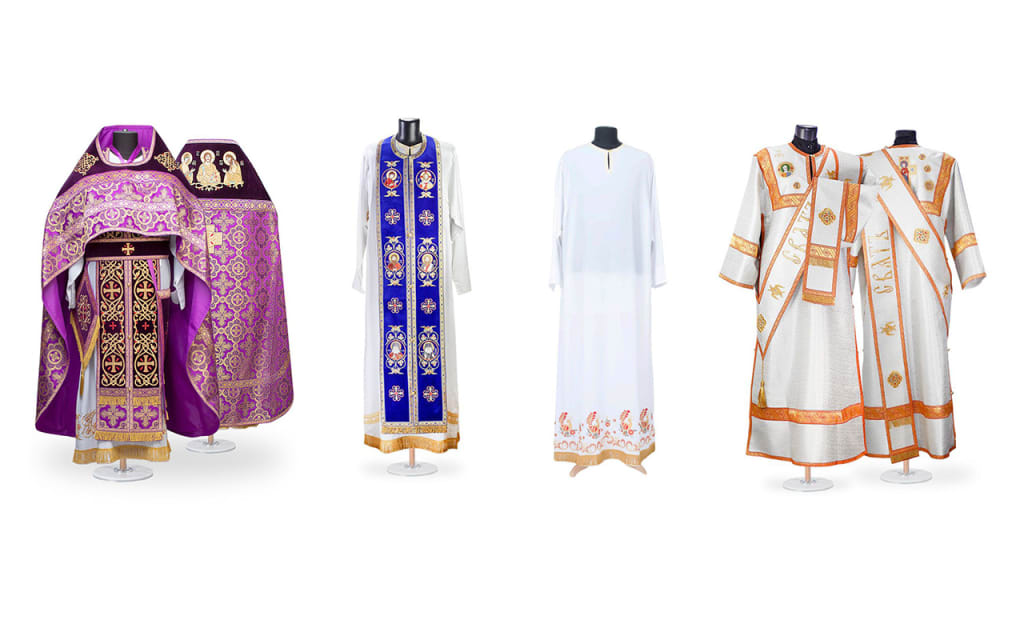
The liturgical vestments of the Orthodox clergy are prefigured in the Old Testament by the vestments of Aaron and other priests, made by the direct command of God "for glory and beauty" (Ex. 28:1-2; 31:10) and intended only for serving the liturgy, for the glory and splendor of the Divine services.
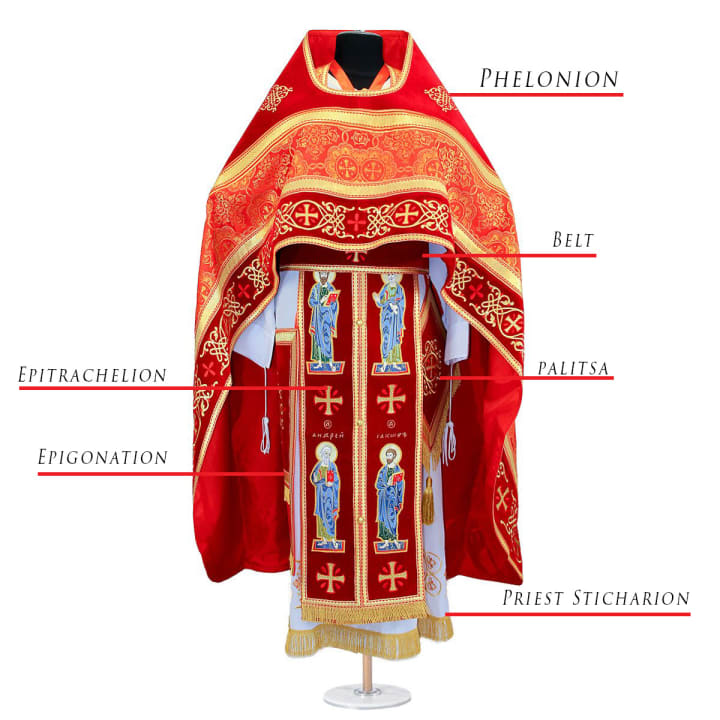
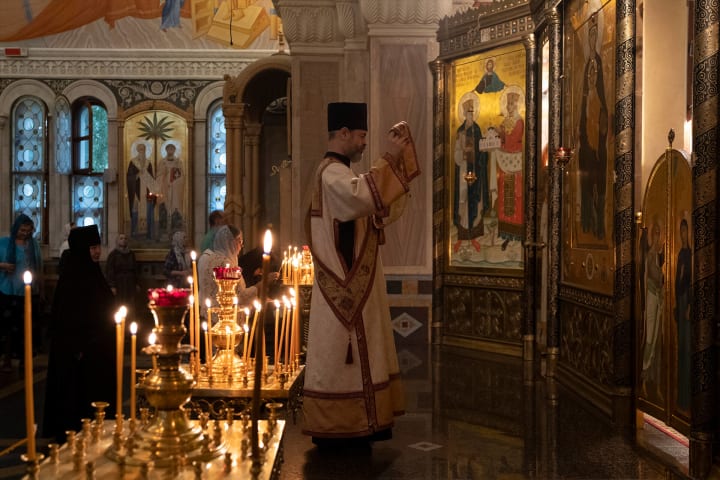
In the vestment of the priest, a symbolic meaning is given to each item. The sticharion is worn by readers; the sticharion is a symbol of angelic purity and joy. The deacon is vested in a sticharion and wears the orarion, signifying the wings of an angel - a long strip of fabric with crosses and embroidery "Holy, Holy, Holy". Thus, the general symbolic meaning of the liturgical vestments is the expression in visible material garments of the spiritual garments of righteousness and purity, in which the souls of the faithful must also be clothed.
The bishop's sticharion has so-called gammadia that tighten the sleeve at the wrist. The gammadia are considered a symbolic depiction of the flow of blood from the pierced hands of Jesus Christ. Priest sticharion is worn by the bishop and priest instead of the cassock during the Liturgy.
The cut of the phelonion resembles a cloak in the form of a circular fabric cut with an opening for the head, which the apostles wore. This serves as a reminder of the apostolic succession of the priesthood and makes the priests the primary preachers of the word of God. In addition, the loose vestment without fasteners symbolizes the purple robe that was put on the Lord Jesus Christ during the trial before Pilate.
The epitrachelion symbolizes the gracious gifts of the priest as a liturgical minister. Originally the epitrachelion was the deacon's orarion, which as a sign of the increase of gracious gifts during the ordination of the deacon to the priesthood was transferred from the back to the chest. Subsequently, both ends of the epitrachelion were fastened in front.
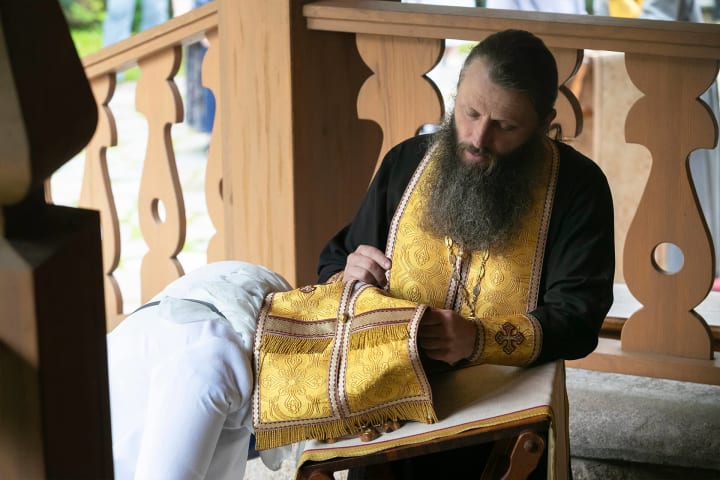
The palitsa is a church award. A rhomboid-shaped cloth, hung over the shoulder by one corner, is worn on a strap at the hip. It symbolizes the Four Gospels. It has been known as part of the priest's vestment since the 16th century.
The belt is worn over the priest sticharion and epitrachelion. It symbolizes the towel with which Christ girded himself when washing the feet of the disciples at the Last Supper.
The cuffs are narrow wristbands, tightened with laces. They symbolize the bonds on the hands of Christ.
The epigonation is the first award given to a priest for diligent service. It is a rectangular cloth worn on a strap at the hip. It symbolizes the Four Gospels, i.e. the word of God, with which the priest must be armed as with a spiritual sword.
The kamilavka is a church award. Colors: red, purple, and black. It originates from a cap made of camel hair, which was worn in the Middle East. It symbolizes the Crown of Thorns of Christ.
The pectoral cross is the main symbol of the priest - a minister in the image of Christ Himself. The prototype of the pectoral cross is a reliquary box in the form of a cross, which the faithful wore on their chest in the first centuries. In the Russian Church, priests began to wear the pectoral cross only from the 18th century.
The conservative approach to clothing sets the clergy apart, distinguishing them from the ever-changing fashions of the secular world. Thus, the Church emphasizes the transcendent nature of its life, with its aspiration to Eternity and immutability.
About the Creator
Keep reading
More stories from Smart Ocean and writers in Confessions and other communities.
Koukoulion or Klobuk?
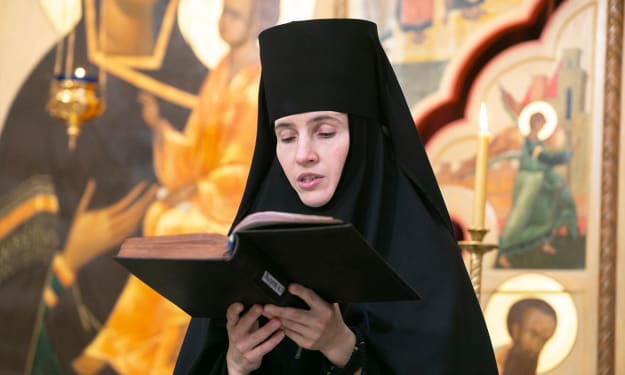
All clergy vestments, including monastic headwear, have a deep symbolic meaning. Although Vestments are called "veils of humility," symbolizing the armor of the warriors of Christ, struggling with the sin, their origin and usage are often determined by such reasons as certain historical period, local weather and climatic conditions, or others.
By Smart Oceanabout a year ago in Confessions
Thoughts on Vocal and the way the world is
"Death cannot stop true love, only delay it." – Wesley in The Princess Bride. I decided to come back to Vocal on a very cold and dark night at the end of December. I had been, and still am, convalescing from a horrible staph infection that had gone misdiagnosed for months. This, paired with the increasing challenges of being healthy, making the best choices for my co-parented child, being a wife, and being a director at a new job, was a lot to manage.
By Jazzy 3 days ago in Confessions
Silenced No More
Throughout history, the ability to speak freely has never been guaranteed. For centuries, voices have been suppressed by kings, governments, religions, and social systems determined to control what people think, believe, and say. Yet, despite censorship, punishment, and even death, individuals have continued to raise their voices. Their courage shaped societies, challenged injustice, and transformed the world. The story of free speech is not just about laws and rights—it is about human bravery, resistance, and the unbreakable desire to be heard.
By Aiman Shahid6 days ago in Confessions
Ludacris and Nelly draw backlash over bookings at MAGA-coded music festival
Ludacris and Nelly headlining a mostly right-wing event is good for them. It’s also great for the genre of hip hop. The two rap veterans have showcased their talents on other stages. Why can’t they perform for mostly MAGA folks and grab that bag?
By Skyler Saunders6 days ago in Beat


Comments
There are no comments for this story
Be the first to respond and start the conversation.